Catchiness is a measure of how easily a tune, phrase, or advertising slogan is remembered and how hard it is to forget. Songs with high catchiness trap the auditory cortex in repetitive memory loops, sometimes acting like mental parasites called earworms. It allows even simple or repetitive music to become wildly popular and easily shared between listeners.
By the edgi team We find the most surprising true thing about an idea and build a 60-second lesson around it.
An earworm isn't just a song you like; it is a cognitive glitch. Your auditory cortex treats a catchy melody like an open loop, constantly trying to finish the pattern.
Because the brain hates unfinished business, it plays the hook over and over, trying to reach a sense of closure that never arrives.
Engineered to stick
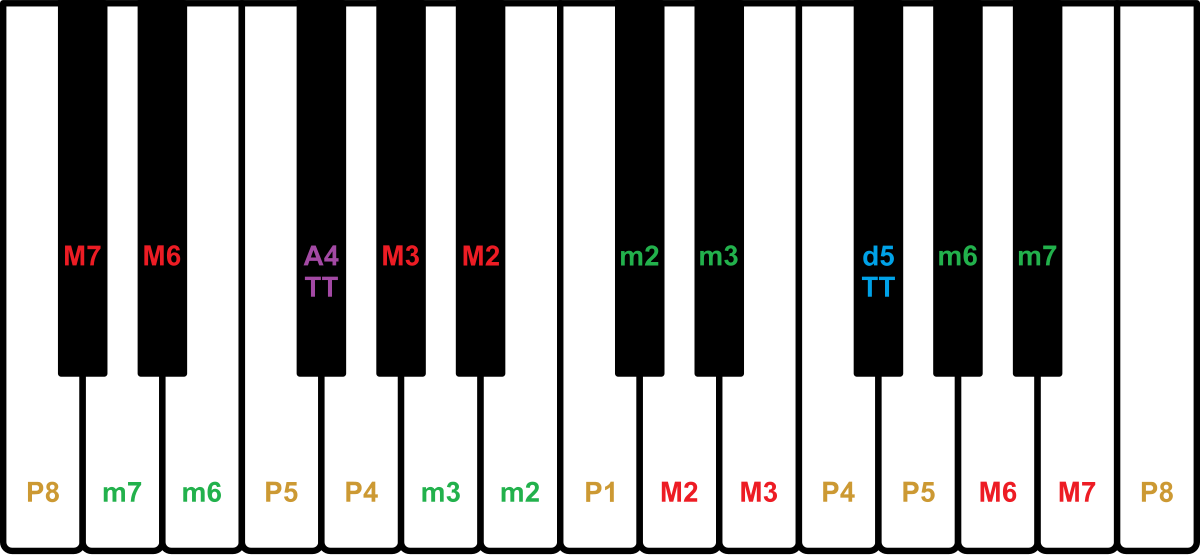
Songwriters use a hook, a short, rhythmic fragment, to trigger this response intentionally. They often rely on simple, predictable melodic intervals, like a perfect fourth or fifth, which the human ear finds naturally satisfying and easy to store.
Diagram of musical intervals starting from C on a piano keyboard, with white and black keys labeled with interval names. Georgezh9617, CC BY-SA 4.0, via Wikimedia Commons
Modern pop songs are engineered with mathematical precision to trigger this loop within the first seven seconds.
The only cure
You cannot force an earworm out of your head by simply trying to ignore it. Since your brain is hunting for closure, the most effective cure is actually listening to the entire song from start to finish.
Completing the pattern signals to your brain that the itch has been scratched, and it can finally let the loop go.
What makes a song catchy
A 2014 study by the University of Amsterdam and the Museum of Science and Industry identified the 1996 Spice Girls hit 'Wannabe' as the catchiest UK pop song of the previous sixty years. Surprising hooks do not create long-term memorability. Instead, the study found that conventional melodies, predictable rhythms, and relentless repetition stick best.
Songwriters rely on simplicity, familiar melodic intervals, and hooks to keep music memorable. Lyrical devices like alliteration and short, simple choruses make tracks easy for anyone to sing. Some tracks also use musical incongruity, such as mispronounced words or unusual syllable stress, to hold attention without breaking the underlying simplicity.
Why earworms get stuck in your head
Psychologist Tom Stafford and neurologist Oliver Sacks link earworms to the repetitive nature of pop music and the auditory slave system of the inner ear. Because memory responds strongly to repetition, rhythmic hooks enter human thoughts without conscious control.
Producers also exploit human psychology by denying listeners melodic closure. In 'Wannabe', the track ends on an unresolved a cappella line from the chorus. Because the human brain expects completion, cutting a melody short keeps the loop running inside the listener's head.
Test yourself
A jingle loops in your head all afternoon. Why won't your mind let it go?
It is searching for musical closure. Your brain treats an unresolved melody as an open loop, constantly replaying the fragment to reach a finish line that never arrives.
When a song is stuck in your head, what is your brain trying to do?
Complete an unfinished pattern. Your brain treats an earworm as an incomplete loop. It isn't playing the song because you like it, but because it is desperate to finish the pattern.
Play the lesson in edgi and the card is yours. It lands on your Map next to the ideas it connects to, and turns from matte to foil to gold as you learn more around it.
Research by Dr. Alison Pawley and Dr. Daniel Mullensiefen found that longer musical phrases, choruses with more pitches, and higher male vocals showing noticeable effort encourage sing-alongs. Queen's 'We Are the Champions' ranked as the top sing-along song under these factors.
What are the physical symptoms of catchiness?
Listening to catchy music often triggers involuntary physical reactions. Common signs include tapping a foot or continuously replaying the melody in your inner ear.