An earworm is a catchy piece of music or a phrase that continuously loops in your mind without your deliberate choice. It is a form of involuntary cognition that relies on the phonological loop, which is your brain's holding pen for verbal and auditory memory. Research shows about 98 percent of people experience them, usually looping short fragments between 15 and 30 seconds long.
By the edgi team We find the most surprising true thing about an idea and build a 60-second lesson around it.
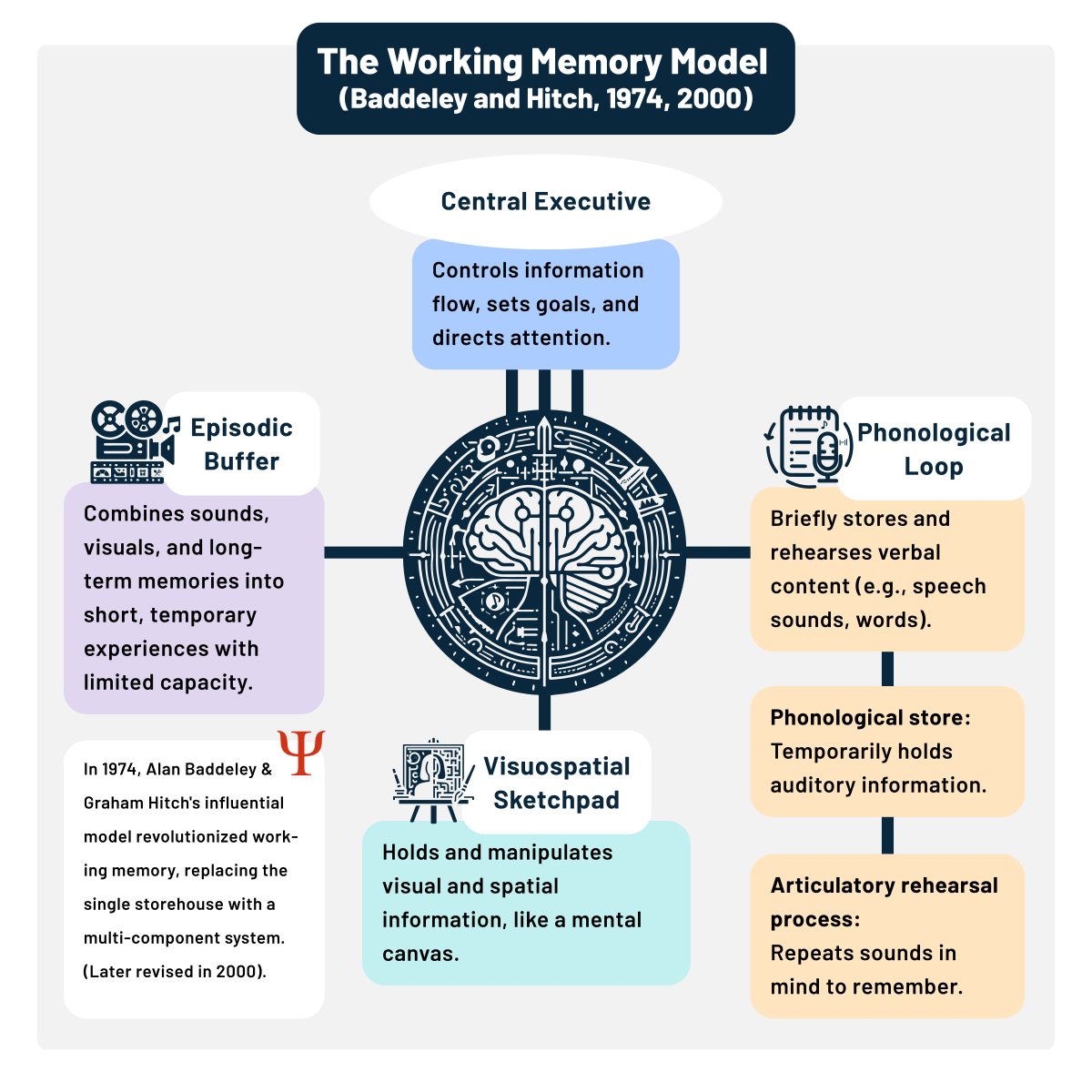
You are walking down the street when a chorus starts playing in your mind. You didn't choose it, and you cannot stop it. This is Involuntary Musical Imagery. It happens in your phonological loop, the part of your brain that acts as a short-term holding pen for verbal and auditory information.
Diagram of The Working Memory Model by Baddeley and Hitch (1974, updated 2000), illustrating its main components: the Central Executive, Episodic Buffer, Phonological Loop, and Visuospatial Sketchpad. UX Stalin, CC BY-SA 4.0, via Wikimedia Commons
Why it sticks
Your brain is a perfectionist. It hates leaving tasks unfinished. When you hear a song with a catchy, repetitive melody but a strange rhythmic twist, your brain treats it like an unresolved math problem.
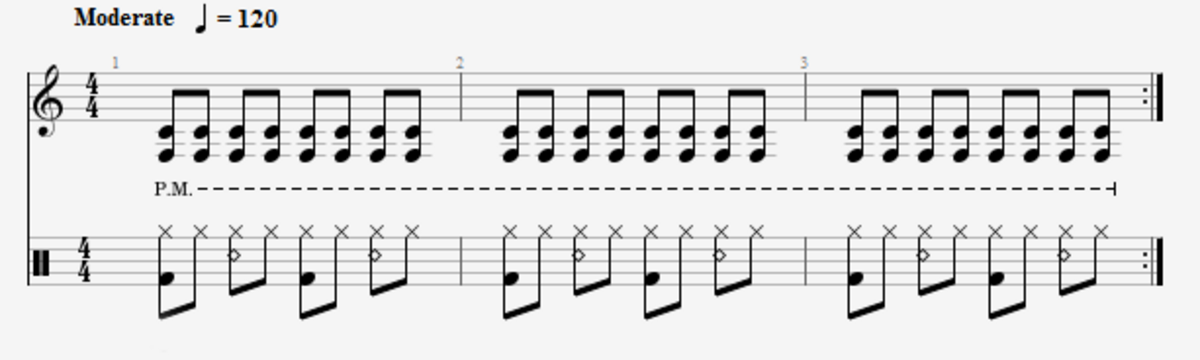
Musical notation showing a heavy rhythmic pattern, with a tempo marking of "Moderate J = 120". Vortiene, CC BY-SA 3.0, via Wikimedia Commons
It keeps looping the melody, searching for the resolution that makes the pattern feel complete.
How to kill it
Trying to force the song out of your head usually backfires. This is the ironic process theory: the more you try not to think about it, the more your brain monitors for it. Instead, give your brain the closure it craves. Listen to the song, specifically the ending.
Once your brain reaches that final resolution, the task is marked as complete, and the loop usually shuts down.
Musical notation showing a five-line staff with a double bar line at the right end, indicating the end of a musical section or piece. Music-endbar.png: User:Denelson83 derivative work: Gregors (talk) 15:47, 24 March 2011 (UTC), Public domain, via Wikimedia Commons
What triggers an earworm?
Songs with lyrics account for roughly 73.7 percent of earworms, while instrumental music accounts for only 7.7 percent. Earworms correlate with recent music exposure, but simple involuntary cues can also trigger them. Reading a single related word, hearing a brief sequence of notes, or experiencing a specific emotion can summon a song into your mind.
Both positive and negative music can create earworms. Positive melodies produce loops more frequently, whereas negative tunes cause fewer loops but trigger greater emotional distress. The phenomenon is equally common in men and women, though women tend to report that stuck songs last longer and cause more irritation.
How to stop a song stuck in your head
Chewing gum disrupts an earworm by blocking the subvocal rehearsal component of working memory, preventing the brain from generating the inner audio stream. Engaging in moderately difficult mental activities, such as solving anagrams, doing puzzles, or reading, occupies the same cognitive resources and stops the loop.
Playing the entire song from start to finish also works. Earworms are typically short fragments, and hearing the full piece provides the resolution and climax needed to break the repetition. People also replace loops with specific cure songs, such as Happy Birthday or God Save the King, or listen to the stuck song at a modified tempo or pitch.
Test yourself
Why does a repetitive, unresolved melody get stuck in your head?
Your brain loops it looking for closure. Your brain treats an unfinished musical pattern like an open loop, replaying it constantly to find the missing resolution.
What triggers an earworm?
An unfinished mental pattern. We assume catchy songs stick because they are repetitive, but the brain keeps them looping because it perceives a lack of closure in the melody's pattern.
Play the lesson in edgi and the card is yours. It lands on your Map next to the ideas it connects to, and turns from matte to foil to gold as you learn more around it.
The word is a translation of the German term Ohrwurm. Its earliest known appearance in English occurred in Desmond Bagley's 1978 novel Flyaway.
Are earworms the same as auditory hallucinations?
No, earworms are a form of involuntary cognition and are distinct from hallucinations. They differ from palinacousis, which is a medical condition caused by temporal lobe damage where an individual continues hearing external sounds long after they stop.
When is an earworm a medical concern?
Persistent earworms lasting longer than 24 hours can be associated with serious medical conditions such as stroke or cancer metastasizing to the brain. They can also appear in connection with migraines, unusual forms of epilepsy, psychotic syndromes, or obsessive-compulsive disorder.