Cognitive Behavioral Therapy: fact-checking your mind
Cognitive Behavioral Therapy (CBT) is a form of psychotherapy that treats distorted thoughts and unhelpful habits as things you can test and change. Instead of viewing automatic thoughts as facts, a person learns to evaluate them like scientific hypotheses. By altering these distorted thinking patterns and practicing new behaviors, people improve their emotional regulation and day-to-day coping skills.
By the edgi team We find the most surprising true thing about an idea and build a 60-second lesson around it.
Most of our suffering comes from automatic negative thoughts, or ANTs, instant, reflexive judgments that pop into our head. When you’re stressed, your brain often jumps to catastrophic conclusions without waiting for evidence.
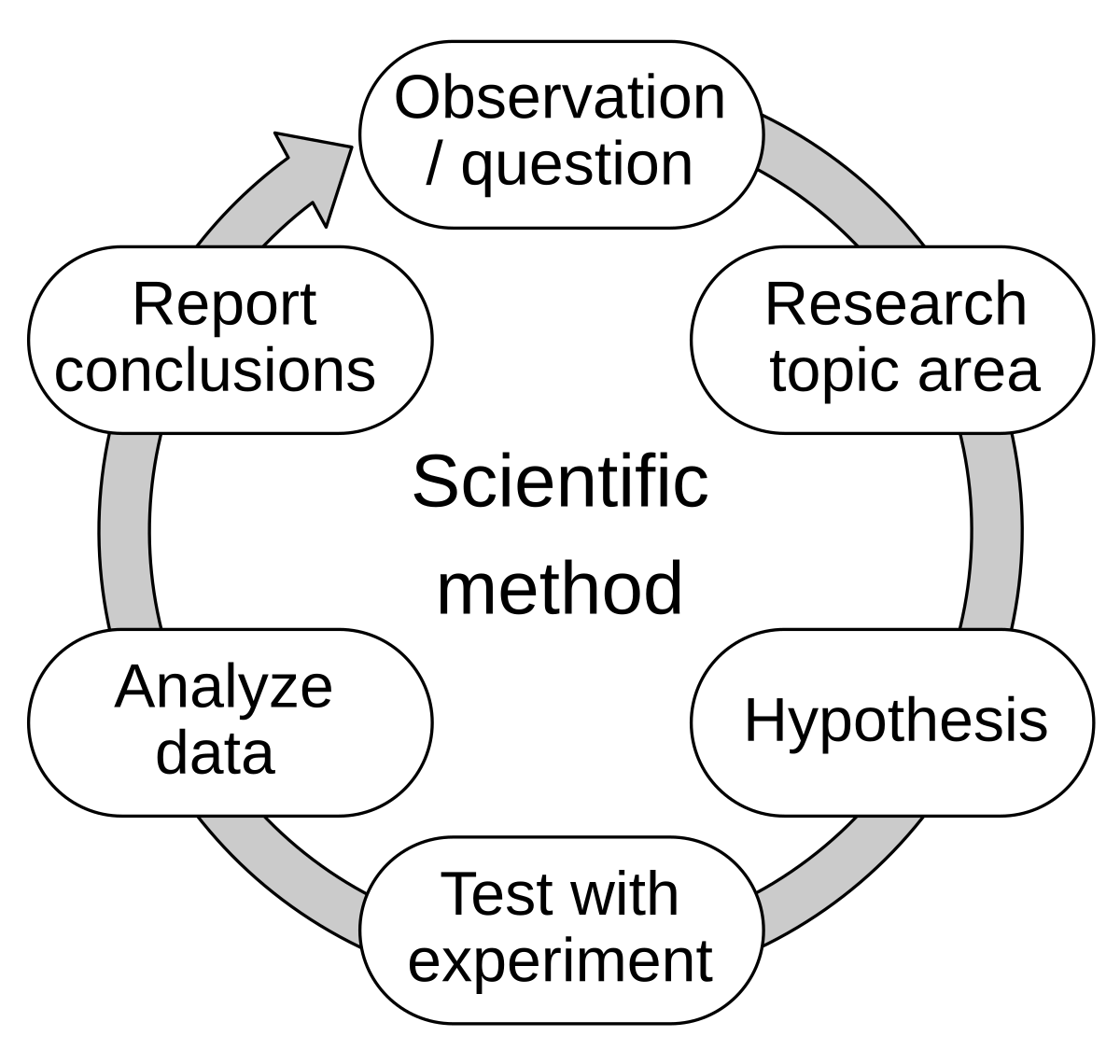
CBT treats these thoughts not as absolute truth, but as unverified hypotheses.
A circular diagram illustrating the Scientific Method as a continual improvement process. Efbrazil, CC BY-SA 4.0, via Wikimedia Commons
The scientific turn
In the 1960s, psychiatrist Aaron Beck noticed his patients were trapped in loops of negative self-talk. Instead of just digging into childhood, he asked patients to fact-check their thoughts like scientists.
If you think everyone hates you, he’d have you look for the actual evidence for, and against, that claim.
The payoff
This process is called cognitive reframing. It’s the art of catching a thought and asking: Is this true, or is this just a habit? You don't have to wait for your feelings to change. By correcting the thought, the emotion often follows.
It’s the difference between being a victim of your mood and becoming the architect of your reactions.
How does CBT work?
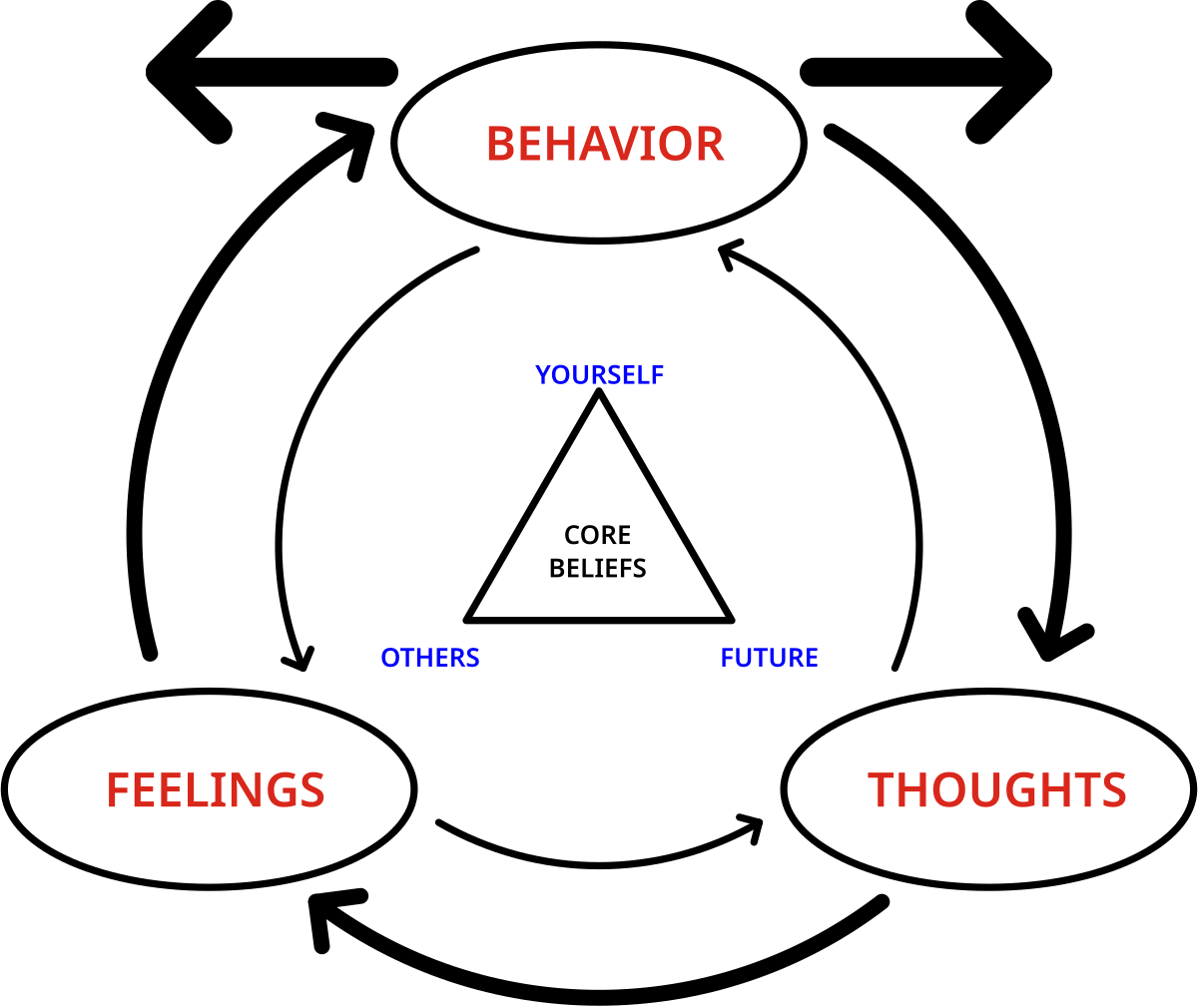
CBT operates on the principle that psychological distress is maintained by cognitive distortions, which are inaccurate beliefs and attitudes, combined with maladaptive behaviors. Rather than spending sessions analyzing distant childhood events, therapy is problem-focused and action-oriented. The therapist and client collaborate to identify specific obstacles and test unhelpful assumptions against real evidence.
Notice how thoughts, feelings, and behaviors form a connected loop around core beliefs, where changing one element directly alters the others. Urstadt, CC BY-SA 3.0, via Wikimedia Commons
Clients practice both cognitive and behavioral exercises. Cognitive strategies involve catching reflexive thoughts and actively reframing them. Behavioral strategies involve trying and training new actions to replace unhelpful habits, such as testing feared situations or adopting structured coping routines.
The three waves of CBT
CBT developed across three distinct historical phases. The first wave began in the 1920s through the 1950s, focusing purely on behaviorism and classical conditioning from figures like John B. Watson, Ivan Pavlov, and Joseph Wolpe. This early approach focused on unlearning fears and modifying actions without addressing internal thoughts.
The second wave emerged in the late 1950s and 1960s when Aaron Beck and others introduced cognitive therapy, merging thought modification with behavioral techniques to create classical CBT. A third wave arrived in the 1980s and 1990s, integrating mindfulness, acceptance, and Buddhist principles into variations such as dialectical behavior therapy and acceptance and commitment therapy.
What conditions does CBT treat?
Originally designed to treat depression, CBT is now an evidence-informed treatment for a wide range of mental health and medical conditions. Major medical bodies, including the American Psychiatric Association and the British National Health Service, recommend it as a first-line treatment for conditions like generalized anxiety disorder, obsessive-compulsive disorder, substance use disorders, and eating disorders.
It is also recommended as a primary treatment for children and adolescents dealing with aggression and conduct disorder. Critics, however, point to relatively high drop-out rates, a lack of double-blind testing, and a focus that often targets surface symptoms rather than underlying conditions.
Test yourself
When practicing cognitive reframing in Cognitive Behavioral Therapy, what is the primary objective?
Cross-examine internal negative thoughts. Cognitive reframing focuses on catching and testing automatic thoughts rather than digging into childhood or suppressing feelings.
Does Cognitive Behavioral Therapy treat negative thoughts as objective facts or unverified hypotheses?
Unverified hypotheses. Cognitive Behavioral Therapy treats negative thoughts as unverified hypotheses to test, rather than truths to accept.
An anxious person believes coworkers dislike them. What is the most effective mental intervention?
Treat the belief as an unverified theory. Feelings often follow corrected thoughts. Treating negative beliefs as hypotheses lets you test them rather than letting them dictate reality.
Play the lesson in edgi and the card is yours. It lands on your Map next to the ideas it connects to, and turns from matte to foil to gold as you learn more around it.
CBT traces philosophical roots to ancient Stoicism, particularly the idea that reactions to events matter more than the events themselves. Aaron Beck and Albert Ellis cited Stoic philosophers like Epictetus as early precursors to cognitive therapy.
What therapies fall under the CBT umbrella?
CBT serves as an umbrella term for multiple therapies. These include rational emotive behavior therapy, dialectical behavior therapy, mindfulness-based cognitive therapy, and eye movement desensitization and reprocessing.