A defence mechanism is an unconscious mental process that shields your mind from painful thoughts, anxiety, and internal conflicts. It operates automatically to maintain psychological balance when stressors threaten to overwhelm you. While these reactions lower tension in the short term, relying on them too heavily can harm your mental and physical health.
By the edgi team We find the most surprising true thing about an idea and build a 60-second lesson around it.
Your brain is a master liar, and it does it to keep you sane. These are called defence mechanisms: unconscious mental tricks designed to block out painful, anxiety-inducing realities.
They work like an immune system for your psyche, filtering out threats before you even know they are there.
The mapping of the armor
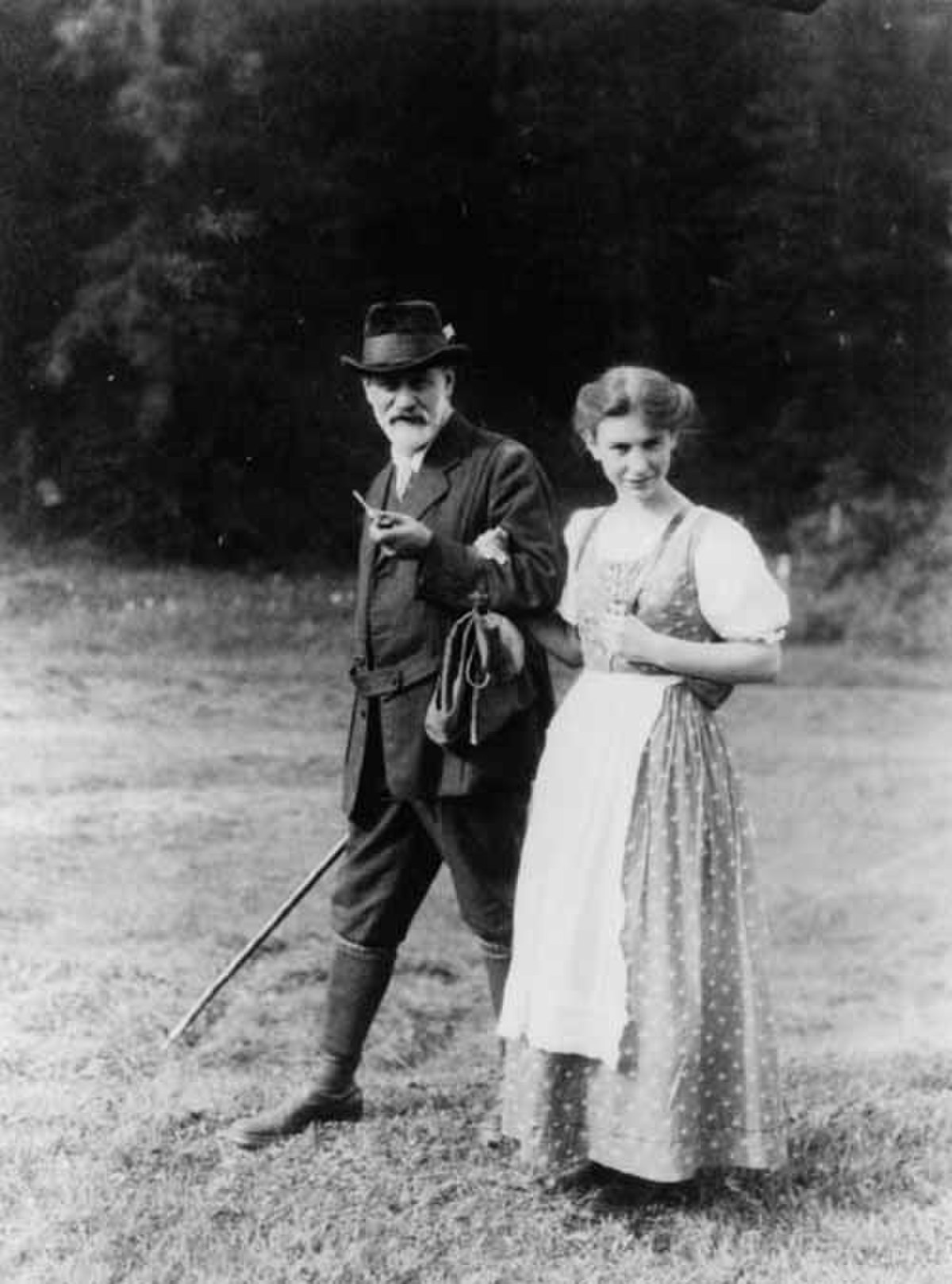
While Sigmund Freud invented the concept, his daughter Anna Freud did the heavy lifting. In her 1936 book, she mapped out the specific 'armor' we wear to navigate the world.
Anna Freud with her father Sigmund Freud in 1913, walking outdoors. Unknown authorUnknown author, Public domain, via Wikimedia Commons
She identified intellectualization, where you turn a traumatic feeling into a cold, clinical fact to avoid actually feeling it.
The cost of the lie
We also use rationalization, where we invent logical-sounding excuses for our failures to protect our fragile ego. Or regression, where we unconsciously retreat to childish behaviors to reclaim a feeling of safety.
Illustration of Aesop's fable "The Fox and the Grapes," showing a fox looking up at a bunch of grapes hanging from a vine on a tree. Milo Winter, Public domain, via Wikimedia Commons
These tricks lower your anxiety instantly, but they come at a cost. If you live behind these defenses too long, they stop being shields and start being a cage, locking you away from the reality you need to grow.
How signal anxiety triggers defences
Defence mechanisms do not start out of nowhere; they respond directly to an early warning alarm called signal anxiety. Anna Freud showed that signal anxiety acts as a biological warning system that alerts the ego to impending psychological threats. This warning appears as a noticeable spike in mental or physical tension.
Sigmund Freud's psychoanalytic couch in London, where early theories of unconscious psychological defence were developed. ROBERT HUFFSTUTTER, CC BY 2.0, via Wikimedia Commons
Once triggered, the brain automatically deploys specific psychological responses to restore equilibrium. Sigmund Freud explained that these tactics work by distorting or blocking unacceptable inner impulses so you do not have to confront them directly.
Common types of defence mechanisms
Defences take many distinct forms depending on the emotion being managed. In projection, a person spots their own unacceptable urges in other people rather than admitting to them. Reaction formation pushes someone to act in the direct opposite way of their hidden impulse, such as an unfaithful partner becoming obsessively affectionate.
Other common defences change how impulses are expressed. Sublimation redirects tension into productive activities like art, scholarship, or cultural work, making it one of the most socially acceptable defences. Repression simply pushes painful ideas out of conscious awareness entirely, though these hidden thoughts can still resurface in distorted forms.
When healthy shielding becomes pathological
Defences are normal survival tools, but their persistent use leads to maladaptive behavior that damages personal wellbeing. Healthy adults maintain object constancy, which is the understanding that positive and negative qualities can coexist in the same person. When defences become rigid, individuals lose this balance and distort reality instead of processing it.
Psychiatric frameworks like the DSM-IV group these reactions into tiers ranging from high adaptive levels like humor and altruism down to severe dysregulation like psychotic denial.
Test yourself
Do defense mechanisms operate through conscious intent or unconscious mental processes?
Unconscious processes. Defense mechanisms work automatically below the level of awareness to filter out anxiety-inducing threats before you consciously notice them.
True or False: Defence mechanisms are intentional choices made to avoid pain.
False. Defence mechanisms operate unconsciously; you do not actively choose them. They function like an immune system that shields you from anxiety before you are even aware of the threat.
Defense mechanisms are conscious strategies people use to manipulate others.
False. In classical psychoanalytic theory, defense mechanisms are seen as unconscious efforts to protect the ego from anxiety.
Play the lesson in edgi and the card is yours. It lands on your Map next to the ideas it connects to, and turns from matte to foil to gold as you learn more around it.
What is the difference between rationalization and intellectualization?
Rationalization creates logical-sounding excuses to justify unacceptable behaviors or protect the ego from failure. Intellectualization strips away emotional weight by treating a painful experience as a cold, clinical fact.
How does Plutchik link defence mechanisms to basic emotions?
Robert Plutchik proposed that each defence stems from a primary emotion. In his model, repression derives from fear, projection develops from disgust, displacement stems from anger, and intellectualization links directly to anticipation.