CRISPRBacterial immune systems adapted for gene editing
CRISPR is a specialized defense system in bacteria and archaea that stores snippets of DNA from past viral attackers in its own genome. When the same virus attacks again, the cell uses those stored sequences as guides to recognize and chop up the invader's DNA. Scientists adapted this mechanism into a tool to cut and edit specific genes in living organisms.
By the edgi team We find the most surprising true thing about an idea and build a 60-second lesson around it.
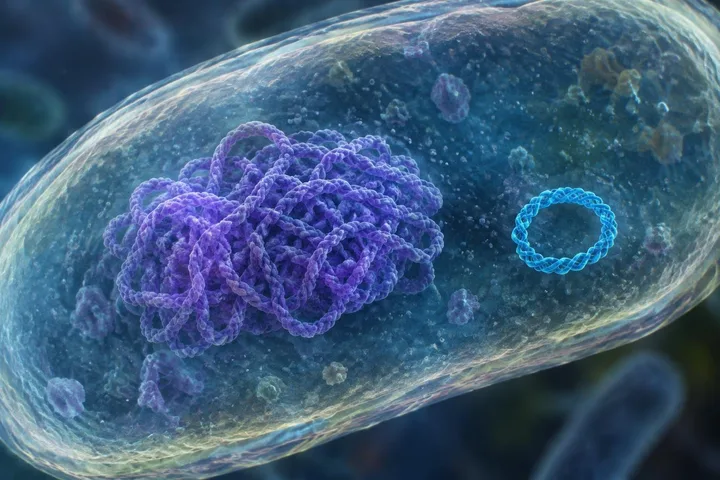
Imagine a bacterium surviving a viral attack. It snatches a piece of the invader's DNA and stores it in its own genome. This is a biological 'most wanted' list. The next time that specific virus shows up, the cell recognizes it and shreds it instantly.
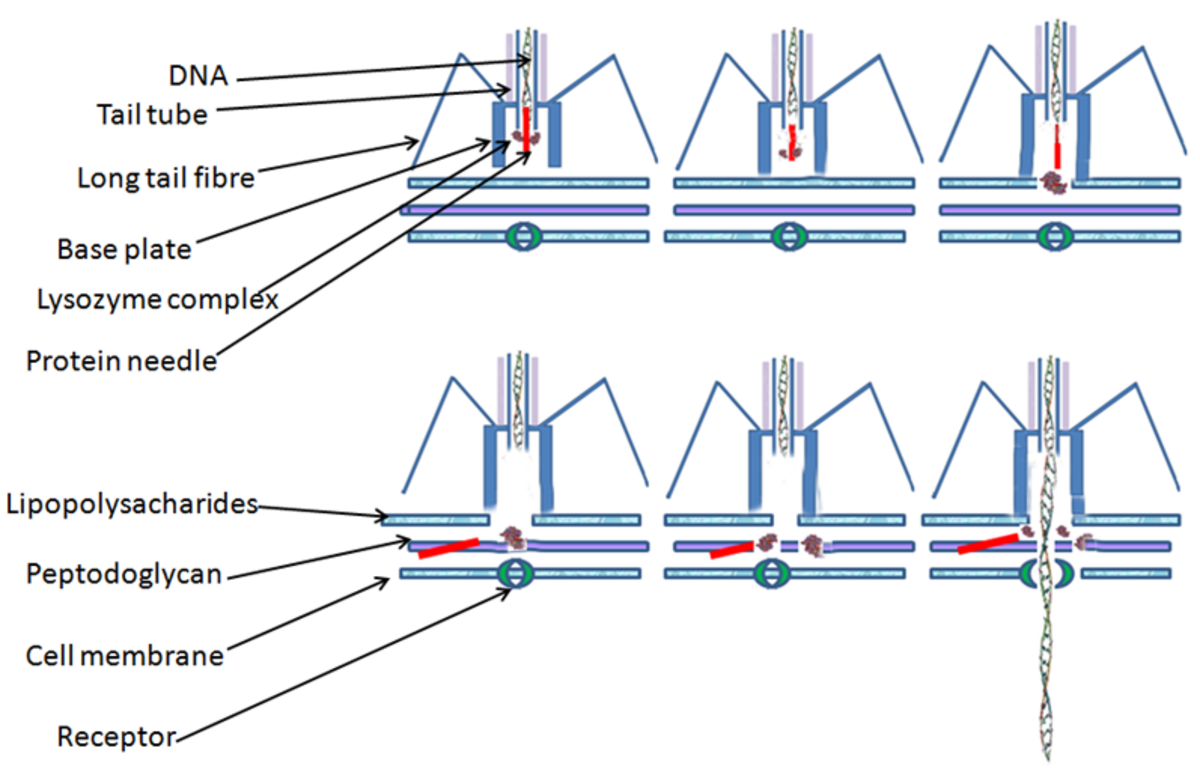
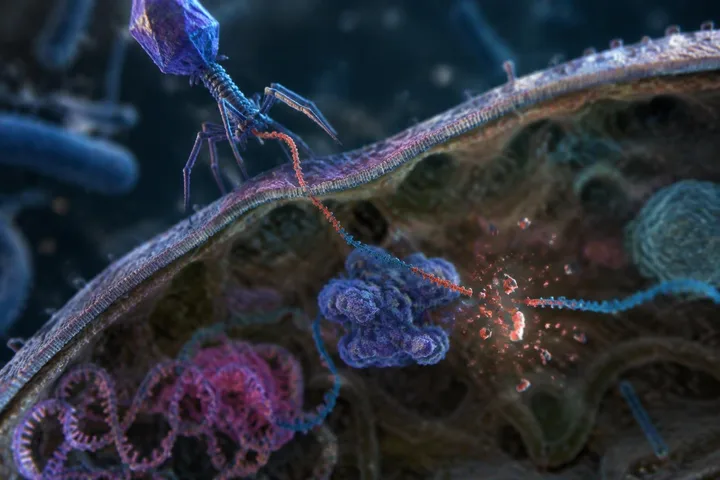
Diagram illustrating the DNA injection process of a bacteriophage into a bacterial cell. Dr Graham Beards, CC BY-SA 3.0, via Wikimedia Commons
This ancient defense system is called CRISPR. It is essentially the immune system of the microscopic world.
The great hack
In 2012, researchers Jennifer Doudna and Emmanuelle Charpentier realized they could hijack this system. They swapped the bacterial virus list with a custom sequence called guide RNA.
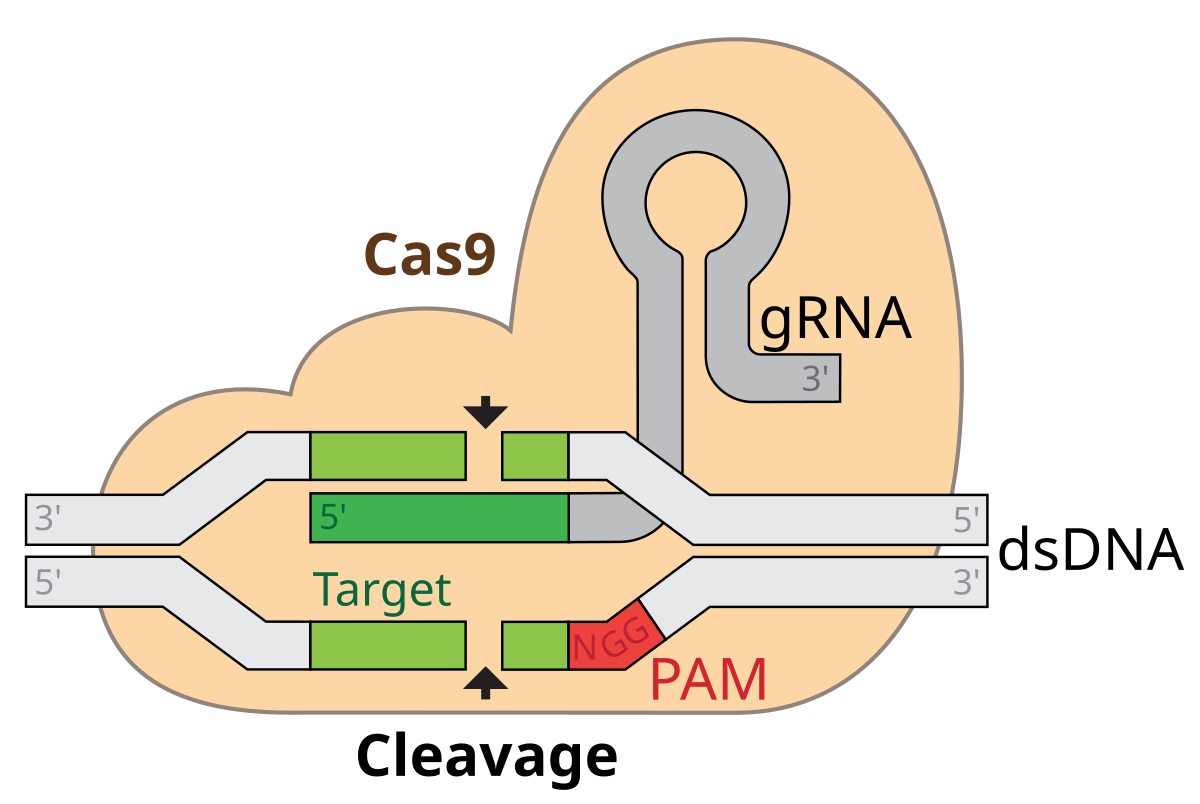
Diagram of the CRISPR-Cas9 complex showing the Cas9 enzyme bound to a guide RNA (gRNA) and a double-stranded DNA (dsDNA) molecule. marius walter, CC BY-SA 4.0, via Wikimedia Commons
This guide RNA acts like a GPS, hunting down any DNA target we choose. They paired it with an enzyme called Cas9, which acts as molecular scissors to snip the DNA exactly where we want.
Rewriting life
Suddenly, we could edit the three-billion-letter code of life with the ease of a word processor. We are now using this to potentially cure genetic diseases and engineer crops.
A system meant to kill a bacteriophage is now rewriting the future of biology.
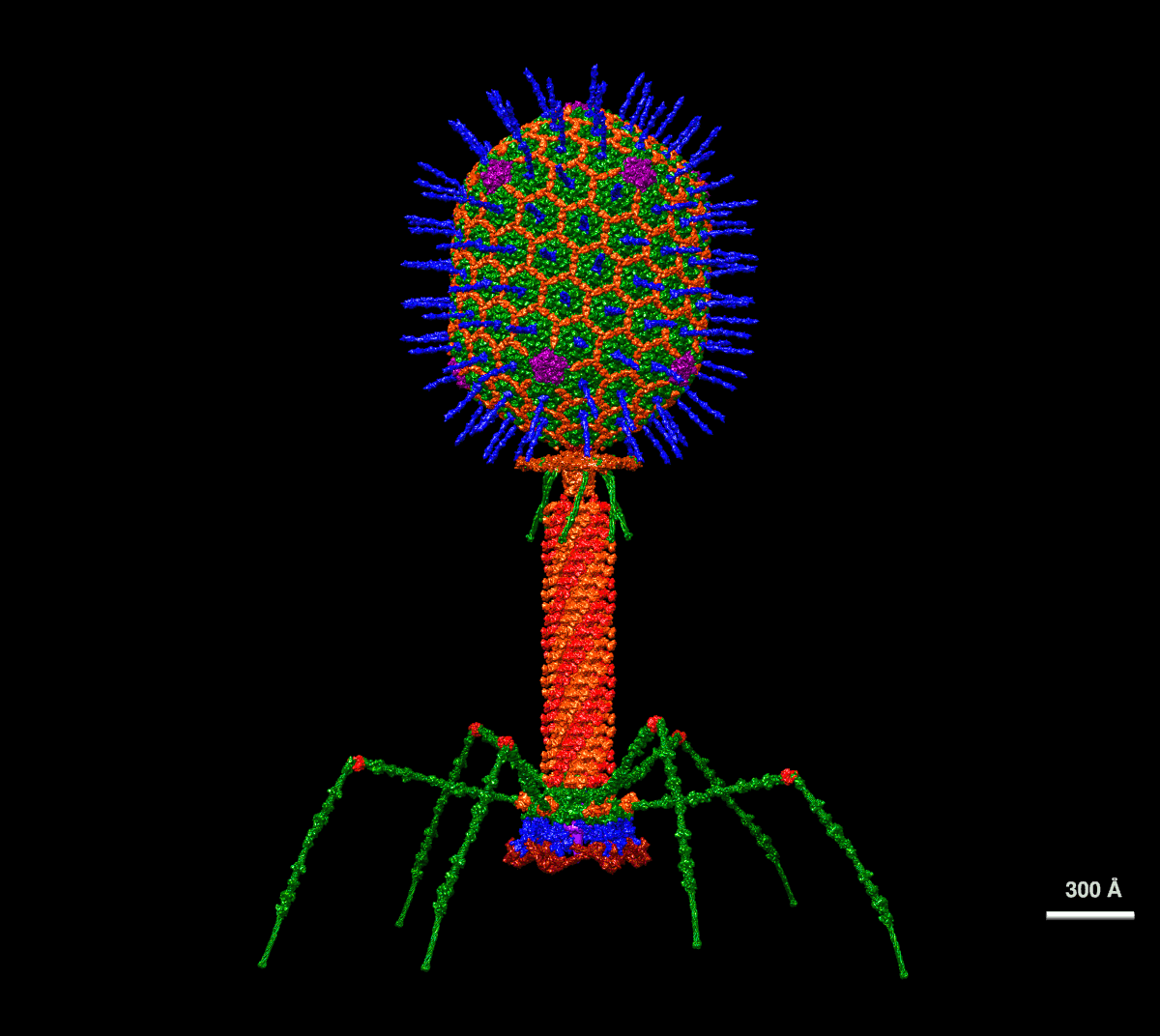
A detailed atomic resolution structure of bacteriophage T4, depicted in various colors against a black background. Dr. Victor Padilla-Sanchez, PhD https://www.drvictorpadillasanchez.com, CC BY-SA 4.0, via Wikimedia Commons
How bacteria store and target viral DNA
Around 50% of sequenced bacteria and nearly 90% of sequenced archaea carry CRISPR systems. When a bacterium survives a virus, it copies a fragment of the viral DNA and slots it directly into a repeating genomic array known as a spacer. This creates a heritable memory of the infection that passes to daughter cells.
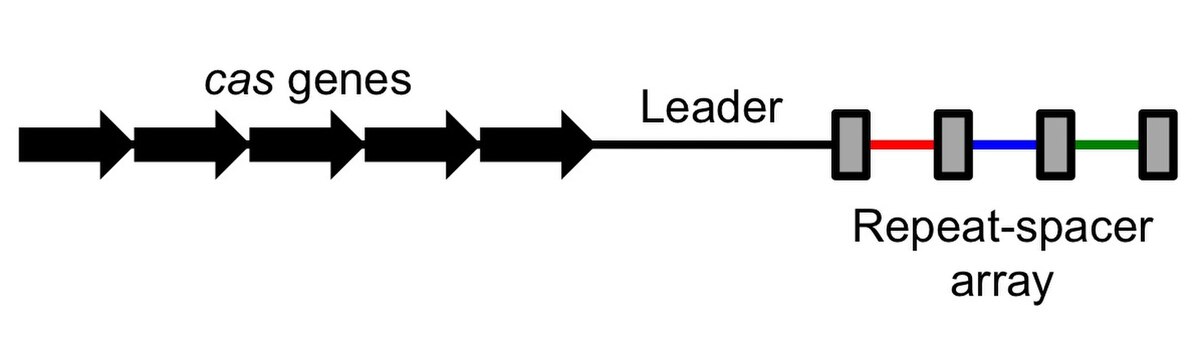
Notice how the CRISPR array alternates between repeated sequences (gray boxes) and spacer fragments taken from past invaders (colored bars). AnnaJune, CC BY-SA 3.0, via Wikimedia Commons
To use this memory, the cell transcribes the repeat-spacer sequence into RNA and processes it into small units called CRISPR RNA (crRNA). These crRNA molecules bind with Cas enzymes like Cas9, which use the sequence as a guide to locate matching double-stranded DNA and cut it open.
How CRISPR became a gene-editing tool
In nature, Cas enzymes only target foreign invaders using the bacterium's catalog of viral fragments. In 2012, researchers Jennifer Doudna and Emmanuelle Charpentier showed that replacing this natural guide sequence with a custom guide RNA allowed the Cas9 enzyme to target and cut any chosen DNA sequence.
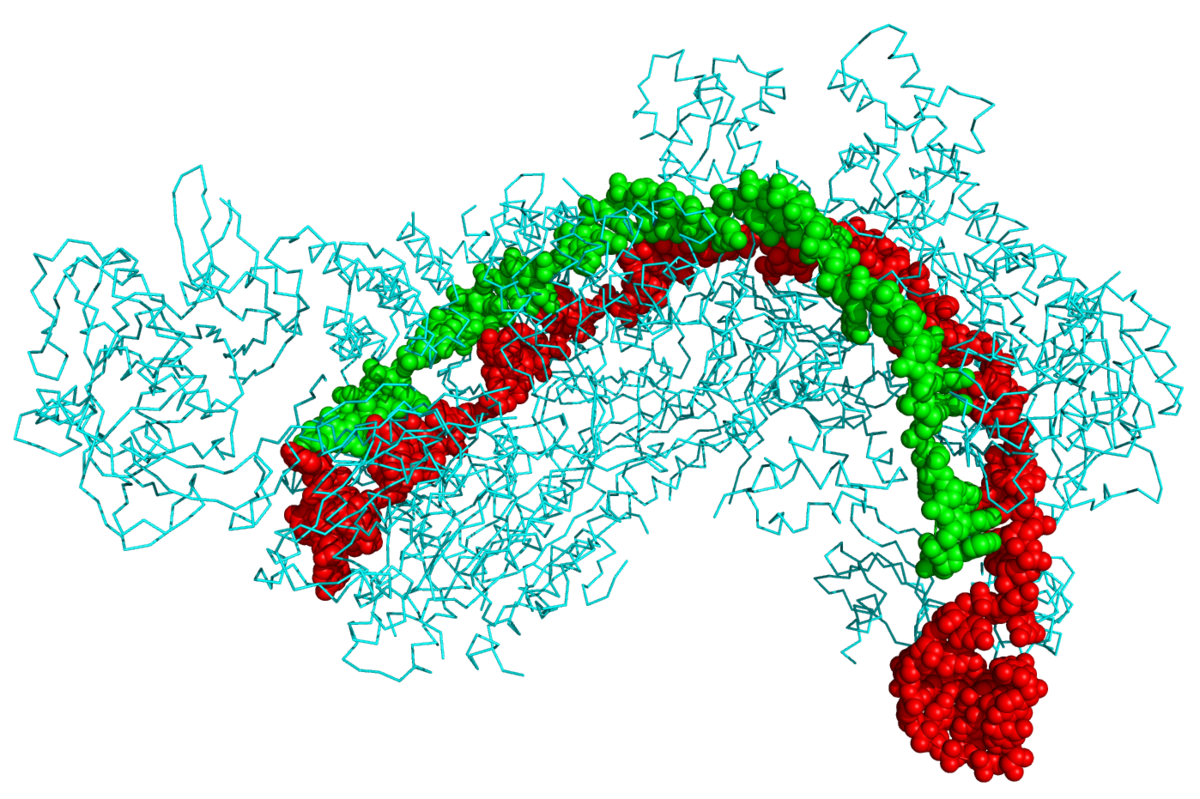
This 3D model shows a Cas protein wrapped around a guide nucleic acid strand to position it for cutting a matching target. Boghog, CC BY-SA 4.0, via Wikimedia Commons
By directing molecular cuts to exact positions in the genetic code, researchers can edit genes across living organisms. This discovery won the 2020 Nobel Prize in Chemistry and is applied in basic research, biotechnology, crop engineering, and disease treatment.
Test yourself
How does guide RNA function when researchers repurpose the CRISPR-Cas9 system?
It targets specific DNA sequences. Guide RNA acts as a GPS that locates a specific target sequence, while the Cas9 enzyme performs the actual cutting.
Does the natural CRISPR system in bacteria directly edit host genes during a viral invasion?
No, it destroys foreign invader DNA. CRISPR acts as an immune defense that targets and shreds foreign viral DNA, rather than altering the bacterium's own genes for editing.
What is the primary function of the bacterial DNA archive?
To recognize and destroy past invaders. Bacteria do not store viral DNA to mutate; they use it as a molecular most-wanted list to defend against repeat infections.
Play the lesson in edgi and the card is yours. It lands on your Map next to the ideas it connects to, and turns from matte to foil to gold as you learn more around it.
CRISPR stands for clustered regularly interspaced short palindromic repeats. The acronym was proposed in 2001 by Francisco Mojica and Ruud Jansen to describe the unusual pattern of repeating DNA sequences found in microbial genomes.
When was CRISPR first observed?
Researchers led by Yoshizumi Ishino first reported the clustered repeats in 1987 after accidentally cloning them alongside an Escherichia coli gene. Its function as an adaptive immune system was later demonstrated experimentally in 2007 using Streptococcus thermophilus.