Polymerase Chain ReactionCopying DNA with Yellowstone bacteria
Polymerase Chain Reaction (PCR) is a laboratory method that rapidly makes billions of copies of a specific piece of DNA. It uses repeated cycles of heating and cooling alongside a heat-resistant enzyme to multiply trace genetic material into testable quantities. This makes it possible to identify suspects from a single skin cell or read genetic material from 40,000-year-old Neanderthal bones.
By the edgi team We find the most surprising true thing about an idea and build a 60-second lesson around it.
In the early 1980s, analyzing DNA was a slow, manual nightmare. Scientists needed massive amounts of a sample to get any readable data, which made forensics and early medical testing nearly impossible.
Then, Kary Mullis had a breakthrough during a midnight drive: why not create a chain reaction that copies DNA automatically?
Portrait of Kary Mullis, a Nobel Prize-winning biochemist, wearing a tuxedo and a patterned bow tie. Dona Mapston, CC BY-SA 3.0, via Wikimedia Commons
The yellowstone hack
To copy DNA, you must heat it to separate the strands. But heat destroys most enzymes, the biological machines that actually do the copying.
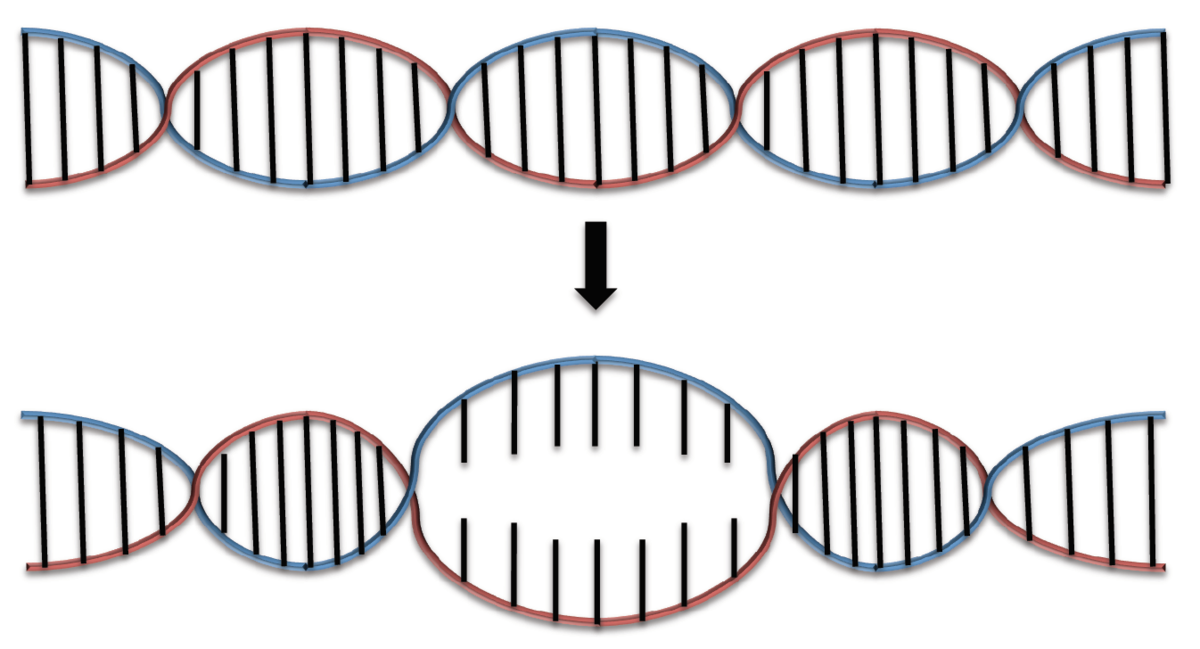
Diagram illustrating DNA denaturation, showing a double-stranded DNA molecule (top) where hydrogen bonds between base pairs are intact. Jerlynn5, CC BY-SA 4.0, via Wikimedia Commons
Mullis found the solution in Thermus aquaticus, a bacterium living in the near-boiling hot springs of Yellowstone. Its heat-resistant enzyme, Taq polymerase, could survive the heat cycles, allowing the reaction to run indefinitely.
The biological photocopier
Polymerase Chain Reaction acts like a biological photocopier. It finds one specific needle of DNA and turns it into a haystack of billions. This changed everything. It allows us to identify suspects from a single skin cell or detect a tiny viral load in blood.
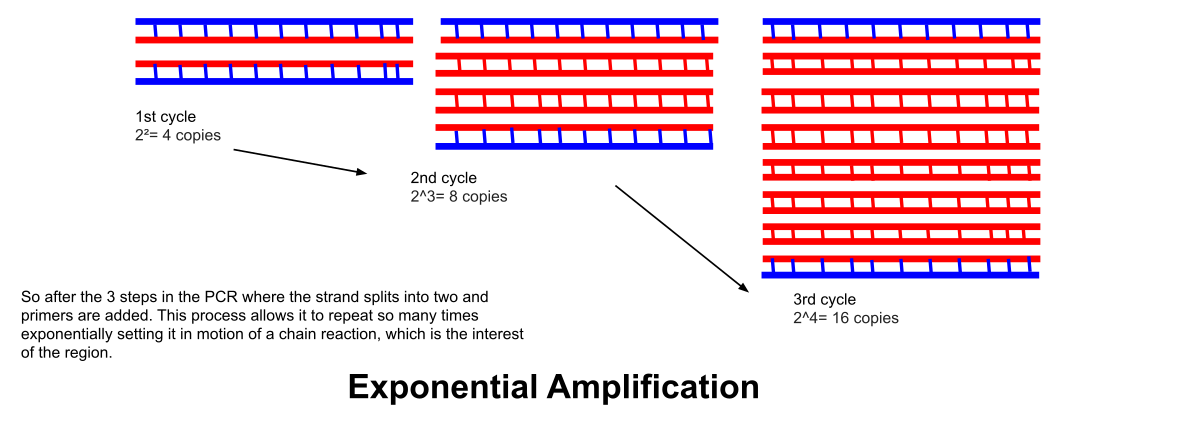
Diagram illustrating exponential amplification in PCR, showing how a single DNA strand is copied over three cycles. Fernando Gomez, CC BY-SA 4.0, via Wikimedia Commons
We can even use it to perform DNA extraction on 40,000-year-old Neanderthal bones.
How does PCR copy DNA?
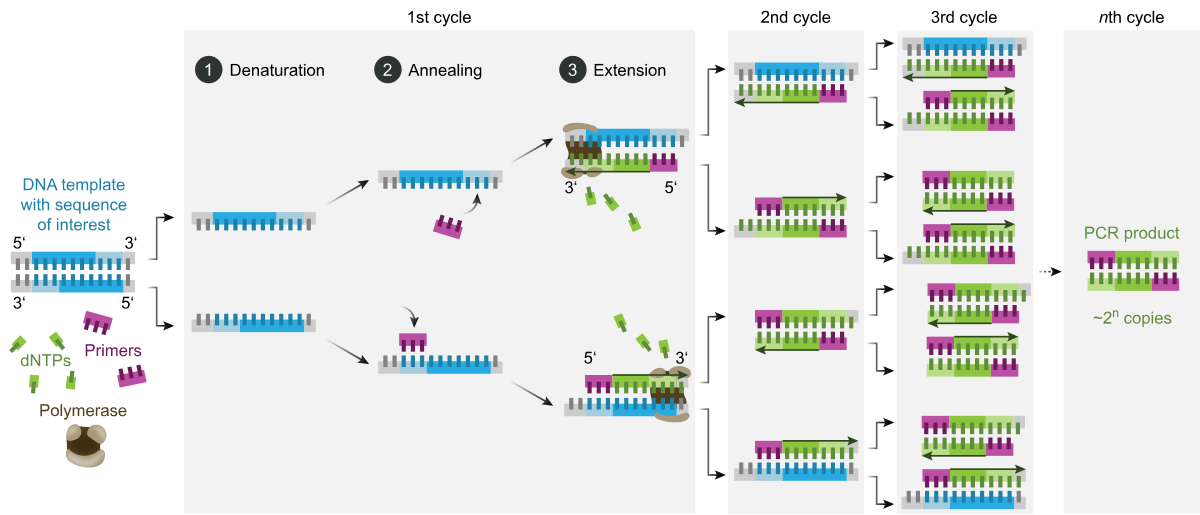
PCR relies on thermal cycling, which repeatedly heats and cools a reaction mixture through 20 to 40 cycles. Each cycle runs through discrete temperature steps. First, high heat separates the two strands of the DNA double helix in a process called denaturation. Next, the mixture cools so short single strands of custom DNA, called primers, can bind to the target sequence. Finally, a heat-resistant enzyme called DNA polymerase builds new complementary strands out of free nucleotide building blocks.
This schematic illustrates a single cycle of PCR, showing how heating separates DNA strands before primers attach and DNA polymerase synthesizes new strands. Enzoklop, CC BY-SA 4.0, via Wikimedia Commons
Because each newly created strand acts as a template in subsequent rounds, the amount of DNA doubles repeatedly in an exponential chain reaction. Most methods target DNA fragments between 0.1 and 10 kilo-base pairs in length. The reaction continues until essential substrates inside the tube run out.
What tools are needed for a PCR reaction?
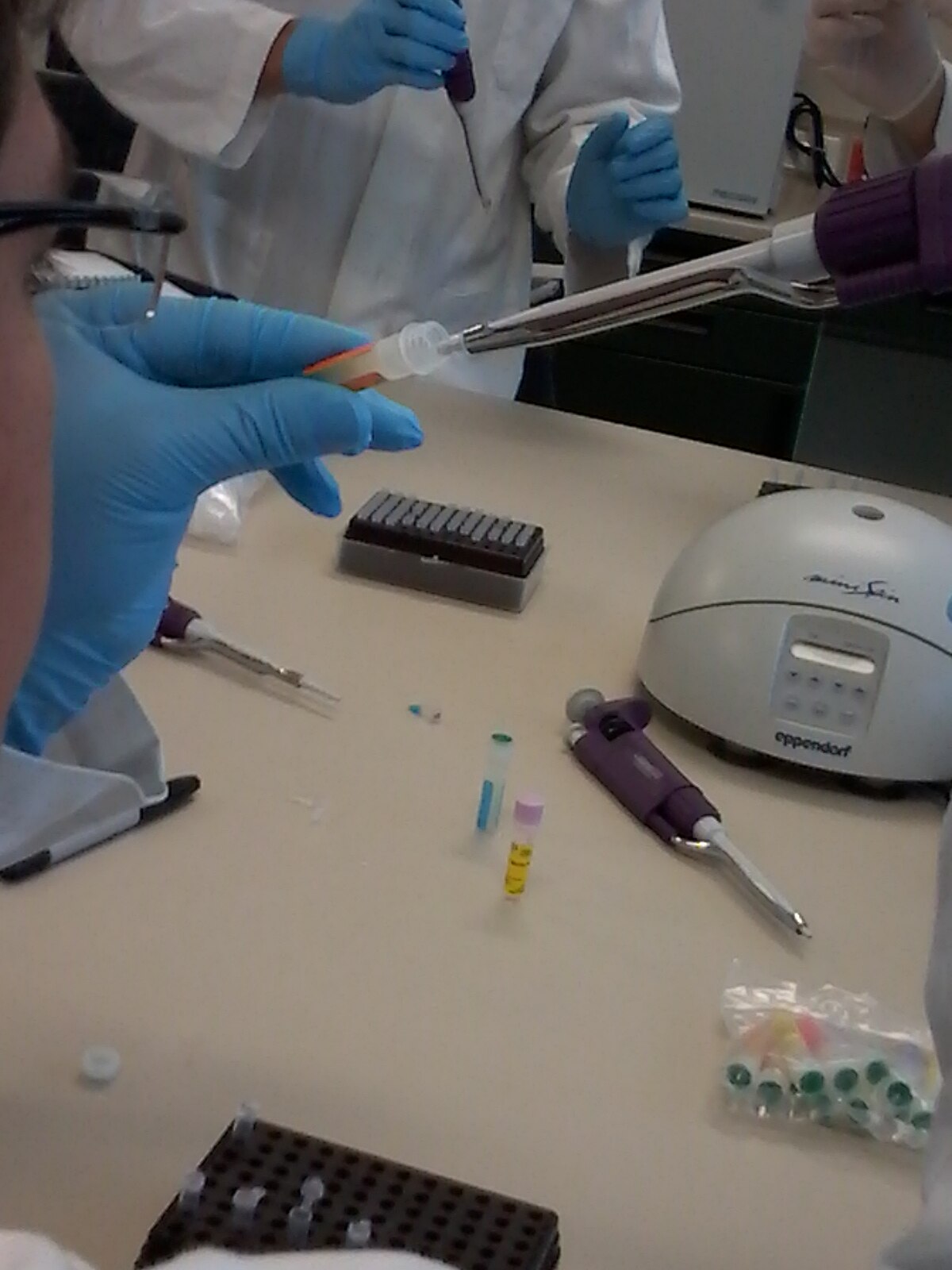
A standard PCR reaction takes place in small tubes holding just 10 to 200 microliters of liquid. Inside, the mixture contains the original DNA template, free deoxynucleoside triphosphates (dNTPs), custom primers, a buffer solution, and magnesium or potassium ions. Magnesium ions stabilize the reaction, while manganese ions can be substituted to deliberately raise error rates during DNA mutagenesis.
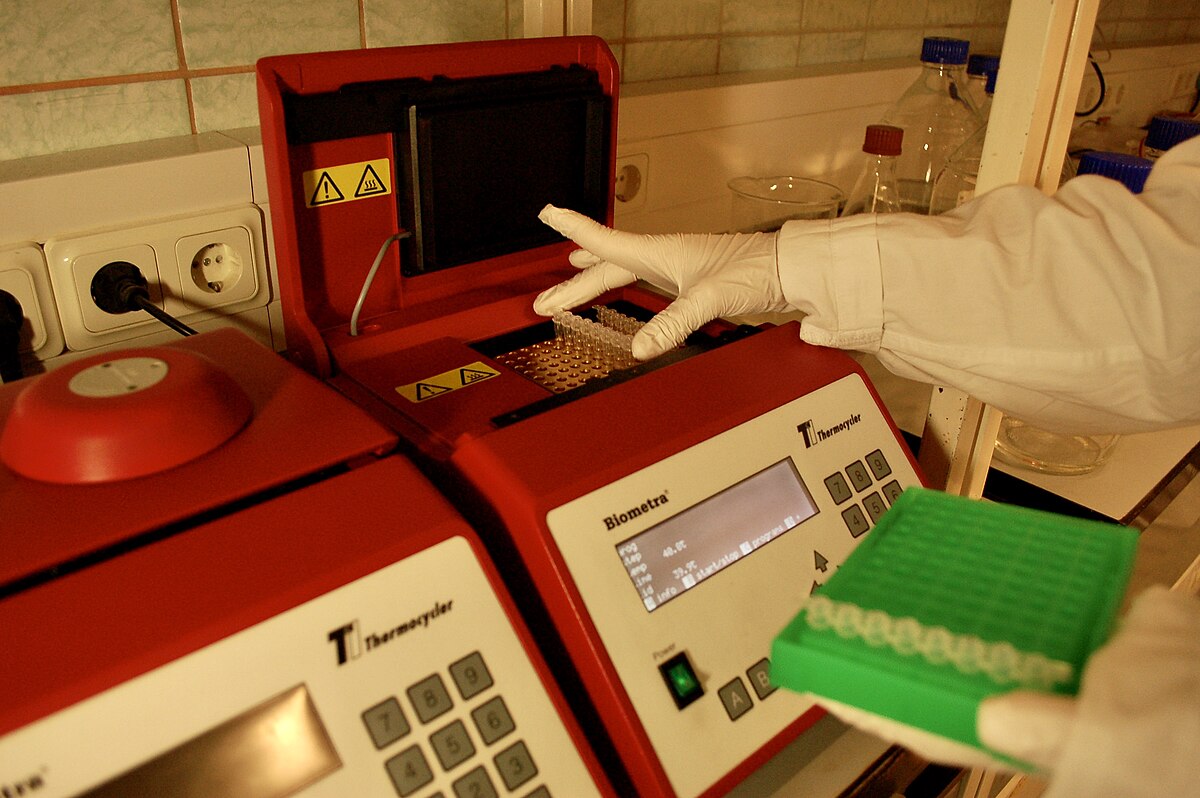
Thin-walled tubes containing the reaction mixture are placed directly into a thermal cycler, which precisely controls the heating and cooling cycles. Karl Mumm, CC BY-SA 3.0, via Wikimedia Commons
The reaction runs inside a machine called a thermal cycler. Many modern machines use a Peltier device, which rapidly heats and cools the metal block holding the tubes simply by reversing electric current. Heated lids on modern cyclers keep liquid from evaporating and condensing at the top of the tubes, replacing older techniques that required sealing the liquid beneath a layer of oil or a ball of wax.
Why is Taq polymerase essential?
Early DNA copying methods required scientists to manually add fresh enzymes after every single cycle because high denaturation temperatures destroyed them. The breakthrough came from Taq polymerase, an enzyme isolated from Thermus aquaticus, a bacterium that lives in the scalding hot springs of Yellowstone.
Taq polymerase survives high heat without denaturing, allowing the entire thermal cycling process to run automatically. Scientists also use Pfu polymerase, another heat-stable enzyme that proofreads as it copies. While Pfu is more accurate than Taq, it works slower; combining small amounts of Pfu with Taq yields both speed and high fidelity.
Test yourself
In Polymerase Chain Reaction, what causes standard copying enzymes to fail?
Heat destroys them. Separating DNA strands requires high heat, which naturally denatures and destroys standard biological enzymes.
Why must Polymerase Chain Reaction rely on a specialized enzyme from hot springs?
To survive repeated thermal cycling. The cycling process repeatedly reaches near-boiling temperatures, requiring an enzyme that remains stable under extreme heat.
In Polymerase Chain Reaction, what causes standard copying enzymes to fail?
Heat destroys them. Separating DNA strands requires high heat, which naturally denatures and destroys standard biological enzymes.
Play the lesson in edgi and the card is yours. It lands on your Map next to the ideas it connects to, and turns from matte to foil to gold as you learn more around it.
American biochemist Kary Mullis invented PCR in 1983 while working at Cetus Corporation. He shared the 1993 Nobel Prize in Chemistry with Michael Smith for his work.
Why are primers necessary in PCR?
DNA polymerase cannot start copying from a single strand of isolated DNA on its own. It requires a double-stranded starting point, which primers provide by binding specifically to the exact ends of the target sequence.
What is PCR used for in medicine and forensics?
Laboratories use PCR to detect pathogens in infectious disease tests, run parentage tests, and diagnose genetic disorders. Forensic scientists use it to generate DNA profiles from tiny biological samples found at crime scenes.