The window shutter
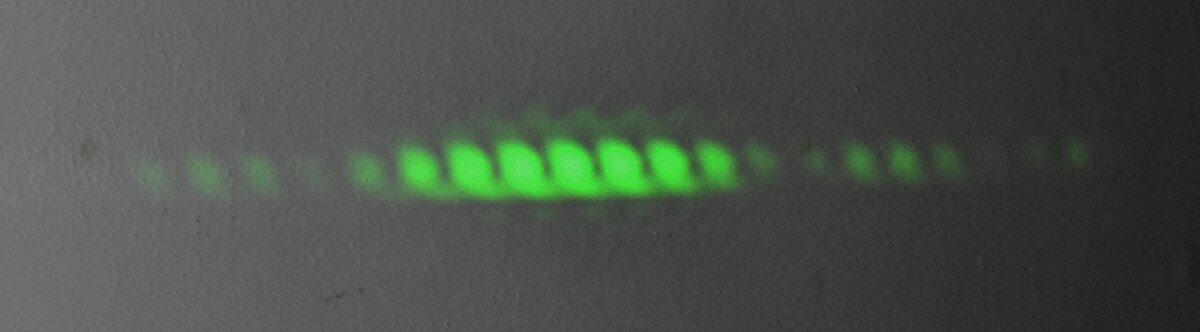
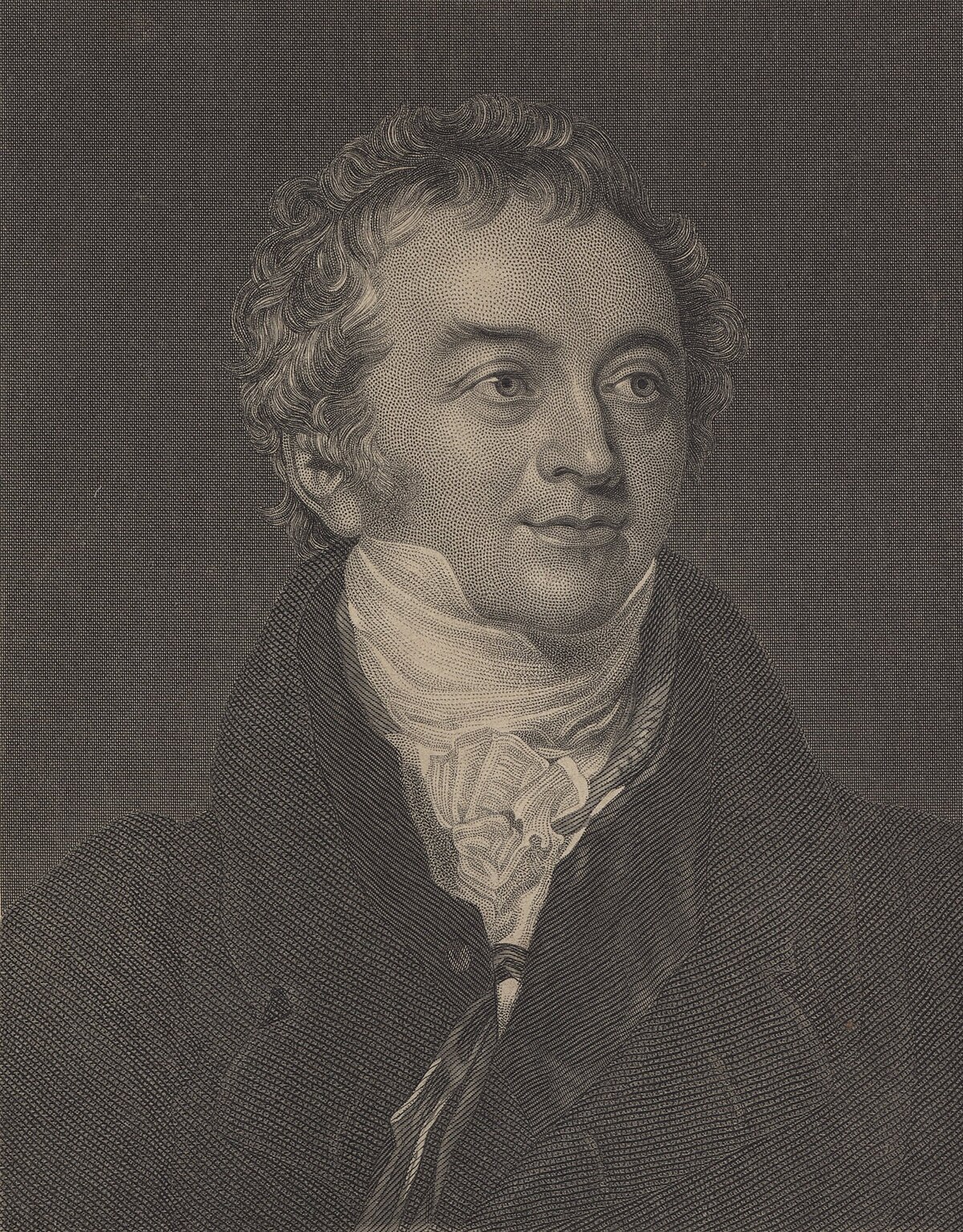
In 1801, Thomas Young poked two small holes in a window shutter and let sunlight pass through to a wall. Instead of two bright spots, he saw a striped pattern of light and dark bands, proving light was a wave.
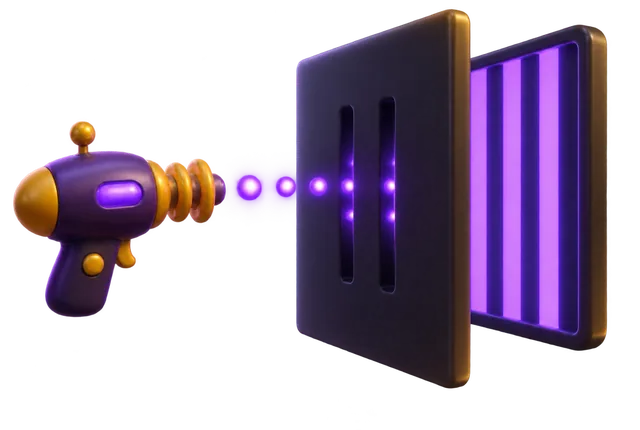
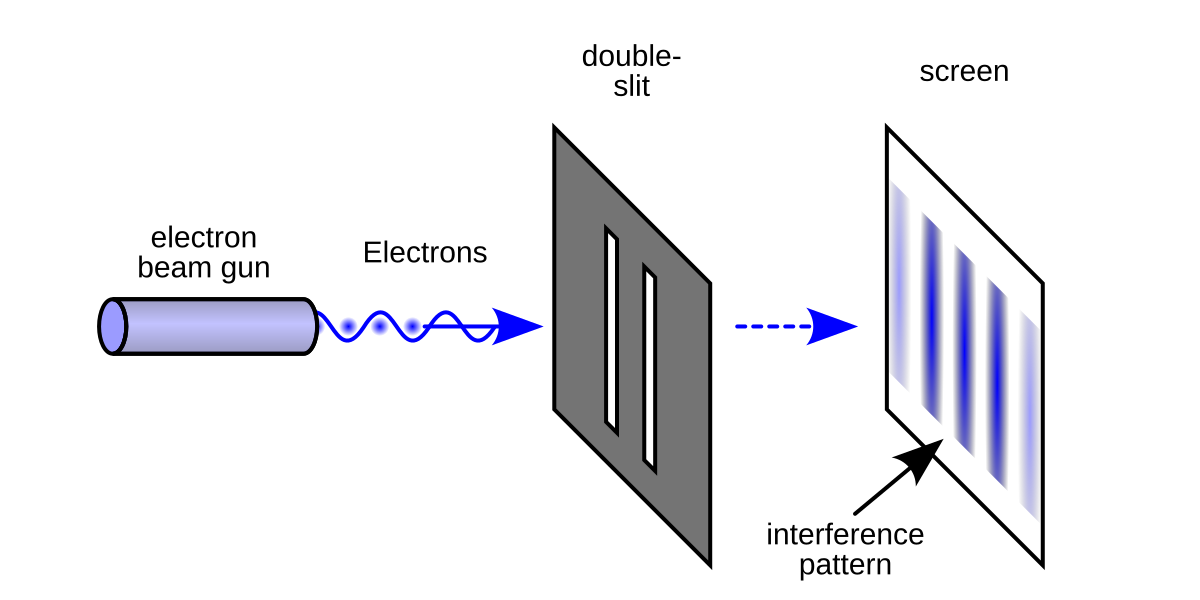
The double-slit experiment is a physics test where particles like light or electrons pass through two thin openings onto a detector screen. Instead of forming two straight lines, they create a striped pattern of alternating bands, proving that matter and light travel as waves. Surprisingly, detecting which specific slit a particle enters destroys this wave pattern, forcing it to land like a standard particle.

By the edgi team We find the most surprising true thing about an idea and build a 60-second lesson around it.
In 1801, Thomas Young poked two small holes in a window shutter and let sunlight pass through to a wall. Instead of two bright spots, he saw a striped pattern of light and dark bands, proving light was a wave.
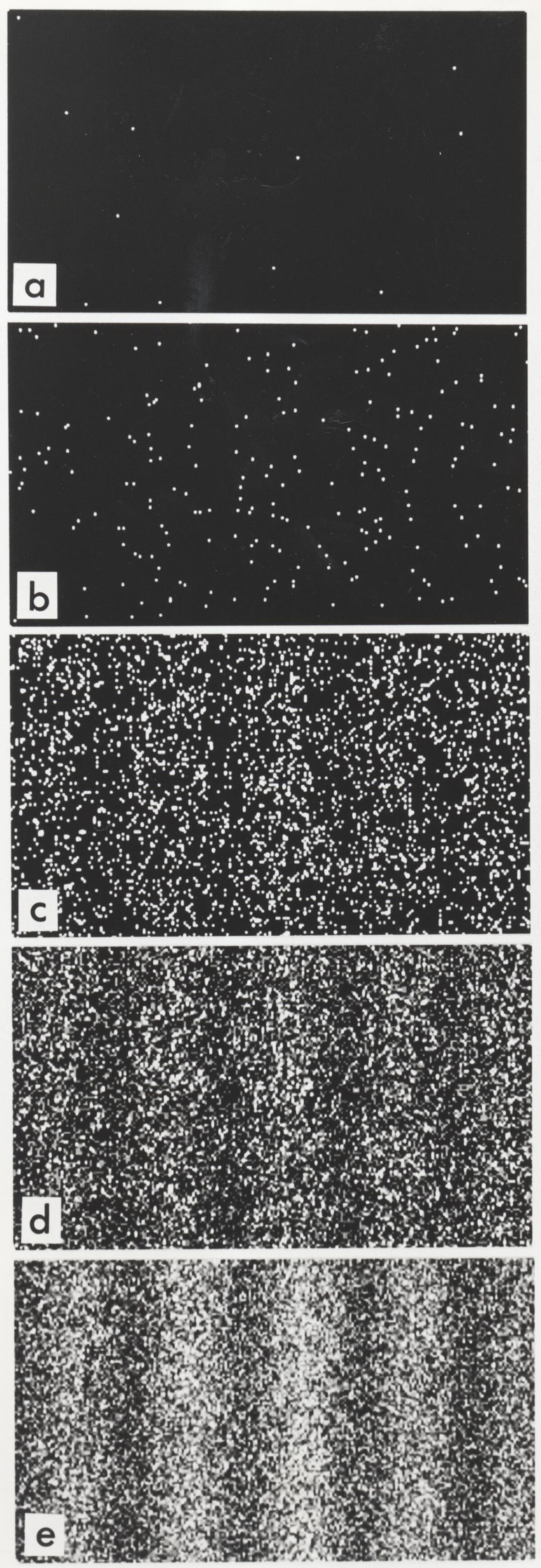
Physicists later repeated this with individual photons and electrons fired one at a time. Even a single particle creates that same wave pattern over time, as if it is interfering with its own ghost.
When scientists placed a detector at the slits to watch which path a particle took, the wave pattern vanished. The mere act of measuring a quantum system forces the universe to choose a single definite location.
When a coherent beam from a light source hits a barrier with two parallel slits, the waves emerge from both openings and overlap on the other side. Peaks and troughs combine, producing alternating light and dark bands on the background screen. The width of these bands depends directly on the frequency of the light.
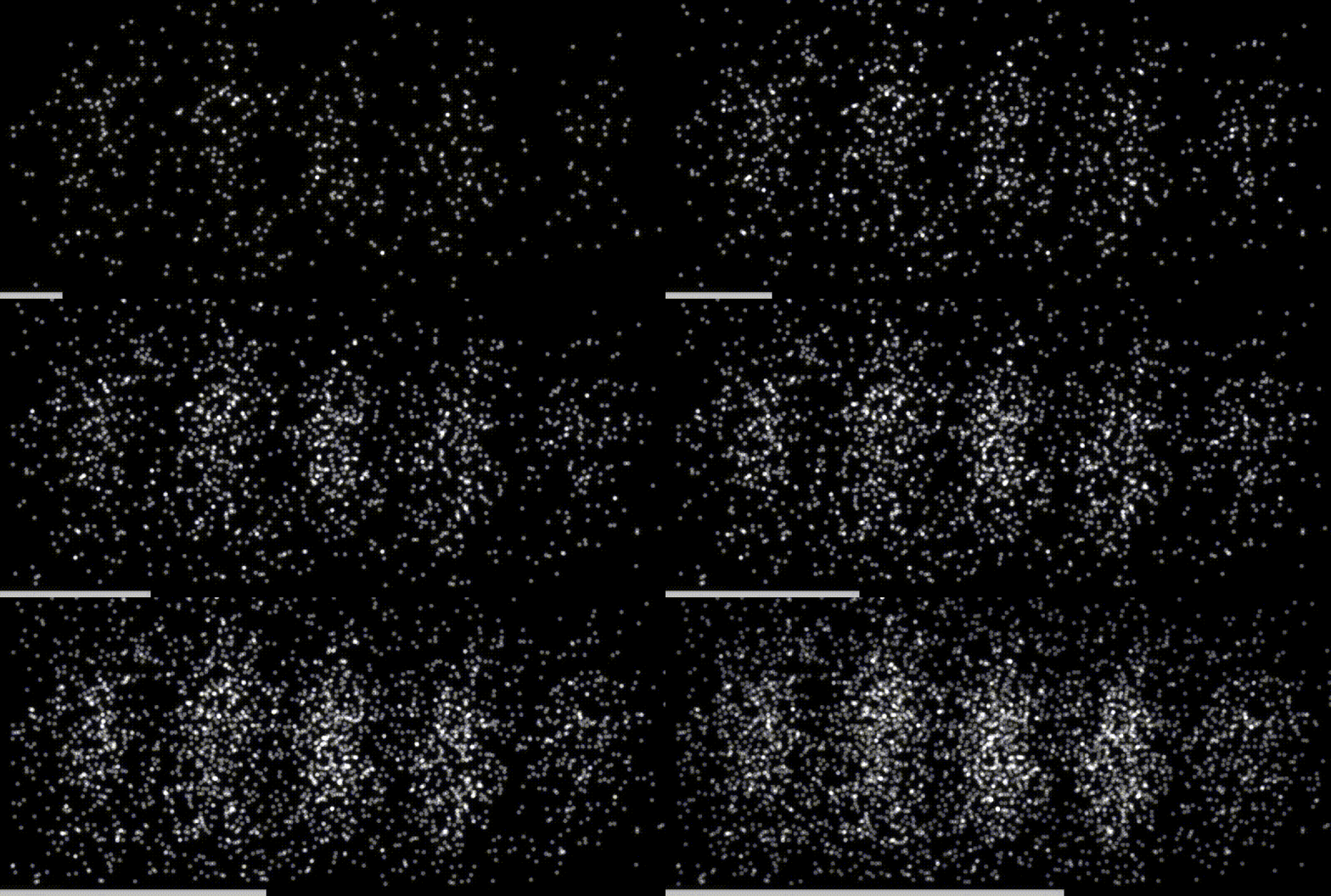
The surprise happens when particles arrive individually. Light is absorbed at the screen at discrete, individual points rather than as a continuous wash. Over time, those separate hits build up the exact same wave interference pattern. If scientists place detectors at the slits to determine which path each particle took, the interference disappears, leaving only the sum of two single-slit patterns.
In 1927, Davisson and Germer, alongside George Paget Thomson and Alexander Reid, proved that electrons create the same wave interference as light. Claus Jönsson confirmed this with electron beams passing through multiple slits in 1961.
The wave effect extends far beyond subatomic particles. Physicists have successfully generated double-slit interference with massive molecules containing 2,000 atoms and a mass of 25,000 daltons, as well as nanoparticles composed of up to 10,000 sodium atoms. Performing the experiment becomes more difficult as the mass and size of the entity increase.
What does the Double-Slit Experiment reveal about the fundamental nature of matter and light?
They exhibit both particle and wave behavior. The experiment demonstrates that light and matter display properties of both waves and particles depending on observation.
How do individual photons and electrons behave when fired one at a time through the double slits?
They build up a wave pattern over time. Even fired one by one, single particles gradually build the same striped interference pattern, interfering with themselves.
In the Double-Slit Experiment, what causes the wave interference pattern to vanish?
Placing a detector at the slits. Measuring which path a particle takes forces the system to choose a definite location, destroying the wave pattern.
Collectible card
Play the lesson in edgi and the card is yours. It lands on your Map next to the ideas it connects to, and turns from matte to foil to gold as you learn more around it.
Passing light through a single slit does not create a simple outline of the opening. Instead, the beam spreads out into a diffraction pattern with a bright center and faint side bands. Narrower slits produce a wider angle of spread.
It is another type of double-path experiment that uses a beam splitter instead of physical slits to divide a light path. It demonstrates the same wave interference, even when light passes through the system one photon at a time.
G. I. Taylor carried out a low-intensity double-slit experiment in 1909. He reduced the incoming light until individual emission and absorption events happened separately without overlapping.
Part of the Set · 8 cards
Fire electrons at two slits one at a time, and they still paint stripes that no single particle should.
Lesson complete
You finished the lesson. In edgi, the card goes on your Map next to everything else you learn.