Quantum SuperpositionOne particle, several states at once
Quantum superposition is a rule in quantum physics where a particle's state is a combination of several possible states at the same time instead of just one. This is not just a gap in our knowledge about a state the particle already has. Measuring it gives one definite outcome, with odds set by how the states were combined.
By the edgi team We find the most surprising true thing about an idea and build a 60-second lesson around it.
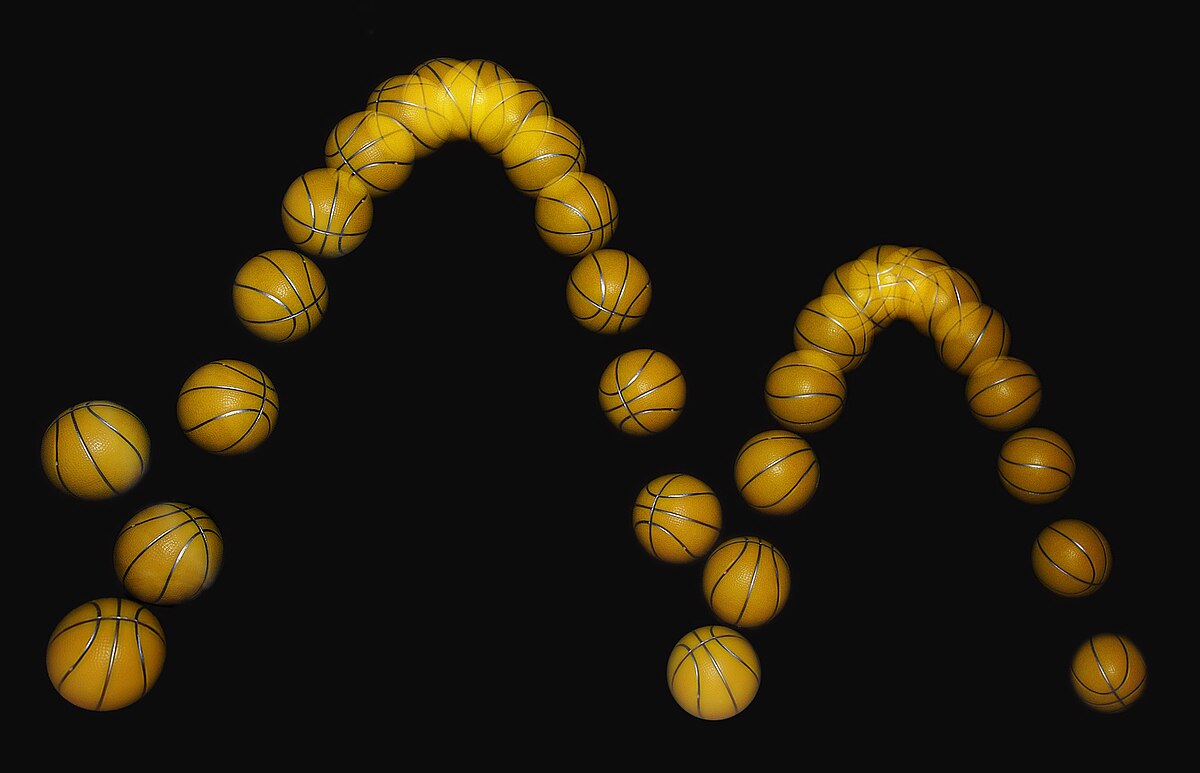
In our daily lives, a ball is either here or there. In the world of quantum mechanics, it is essentially everywhere at once. This is called superposition: a particle existing in a mathematical haze of every possible state simultaneously.
A stroboscopic image captures the path of a bouncing ball, showing multiple instances of the ball at different points in its trajectory. MichaelMaggs Edit by Richard Bartz, CC BY-SA 3.0, via Wikimedia Commons
The act of looking
The moment you measure or observe the particle, this haze collapses into a single, definite position. It is not that we simply lacked the information to know where it was; it literally had not decided yet.
The famous joke
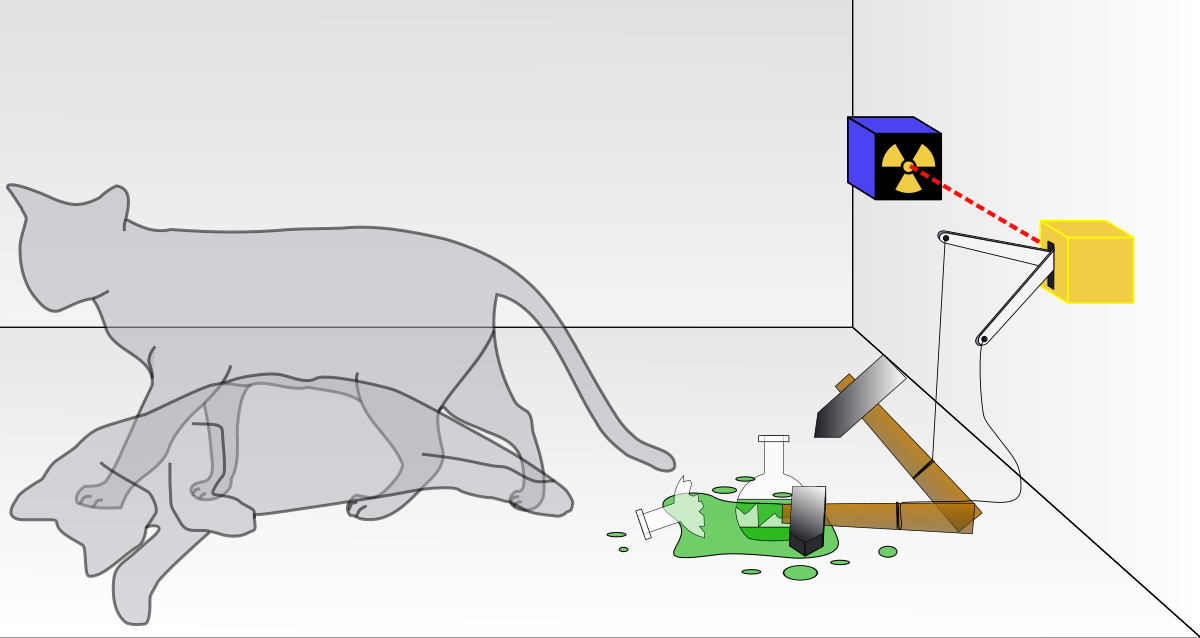
Erwin Schrödinger hated this idea. To mock it, he imagined a cat in a box with a random trigger based on a quantum event. According to the math, the cat was both dead and alive until you opened the lid. He meant it as an absurdity, but it became the theory's most famous definition.
Illustration of Schrödinger's cat paradox, showing a cat inside a box with a flask of poison, a radioactive source, and a Geiger counter. Dhatfield, CC BY-SA 3.0, via Wikimedia Commons
The computing leap
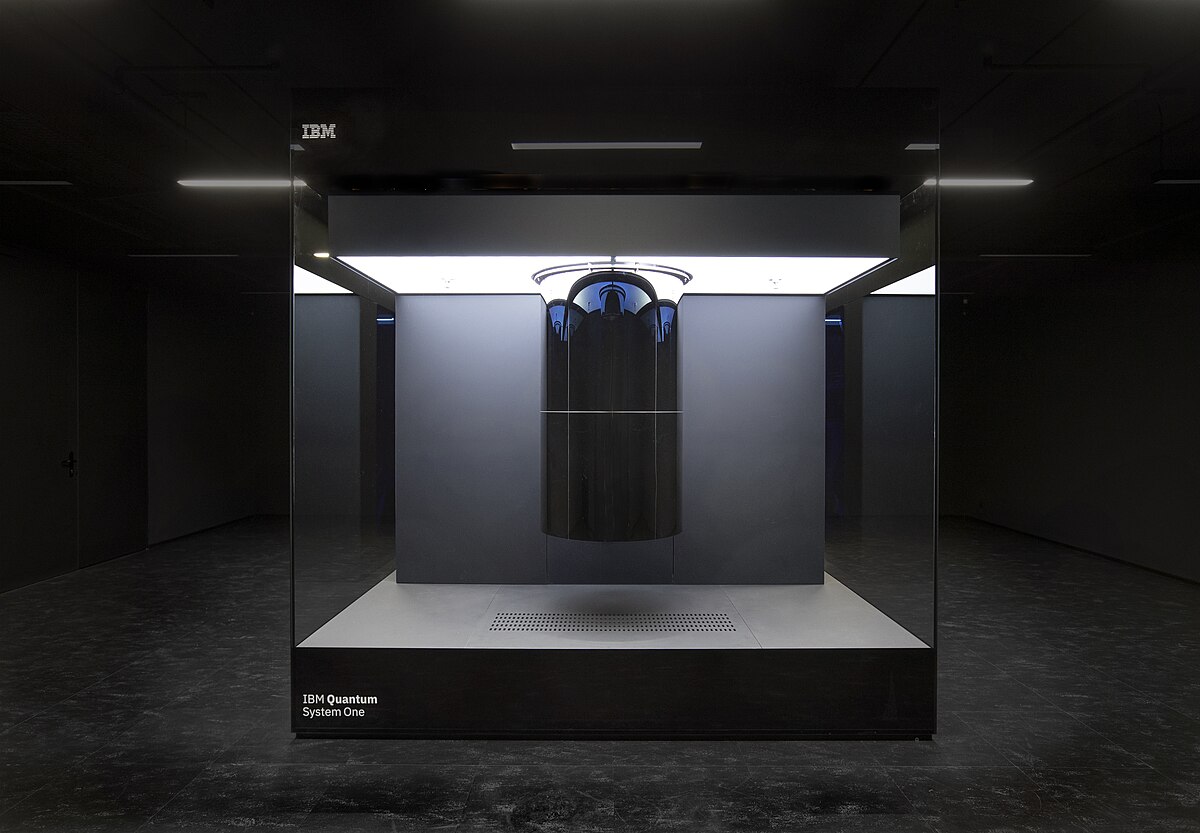
This property is the engine of next-generation tech. Quantum computers use this both-at-once state to perform massive calculations simultaneously. While a normal computer bit is a 0 or 1, a qubit is both, unlocking processing power that feels like magic.
The IBM Quantum System One, a quantum computer from 2019 with 20 superconducting qubits, is displayed within a glass enclosure in a dark room. IBM Research, CC BY 2.0, via Wikimedia Commons
The mathematics behind superposition
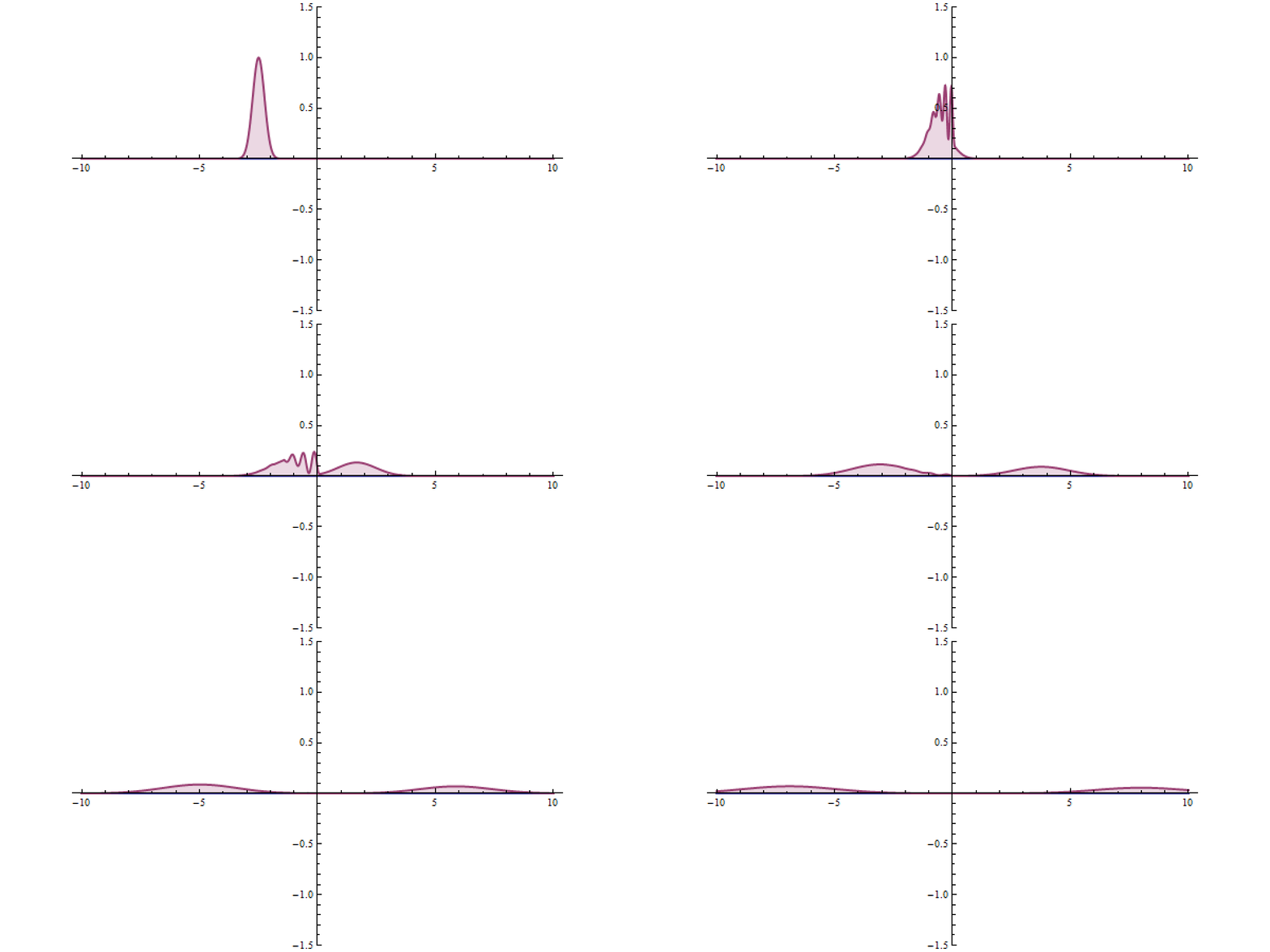
In quantum mechanics, a wave equation describes the complete state of a physical system at all times. Because the Schrödinger equation is a linear and homogeneous differential equation, adding any of its valid solutions together produces another valid solution.
The overall state of a system is a linear combination of its component states, known as eigenfunctions. Each possible solution is multiplied by a complex number called a probability amplitude, which sets the likelihood of finding the particle in that specific state upon measurement.
Superposition in quantum computing
A classical computer stores data in bits that must be either a 0 or a 1. A quantum computer uses quantum bits, or qubits, which exist in a superposition of both the 0 and 1 states simultaneously.
The state of a qubit is expressed as a combination of basis states weighted by complex probability amplitudes. Measuring a qubit always gives a single result, 0 or 1, with the probability of each set by those amplitudes.
Transforming positions and momenta
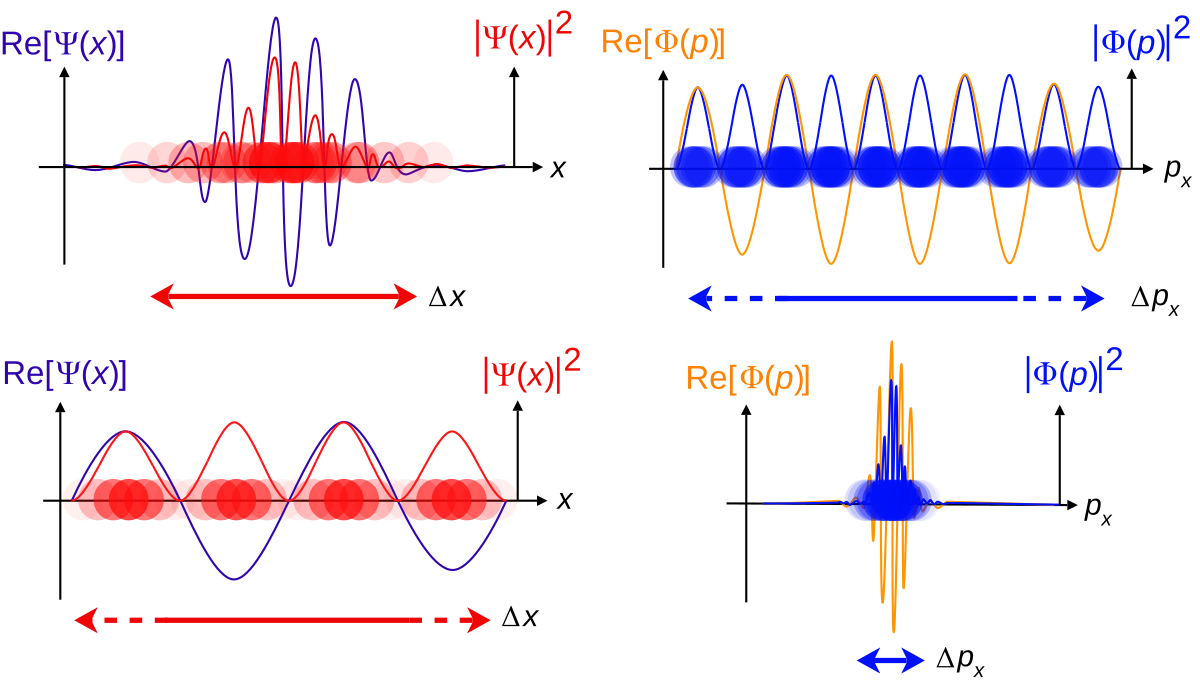
The quantum wave equation can be solved as a function of position or as a function of momentum. Because superposition applies to both, any position wave function can be written as a superposition of momentum wave functions through a Fourier transformation.
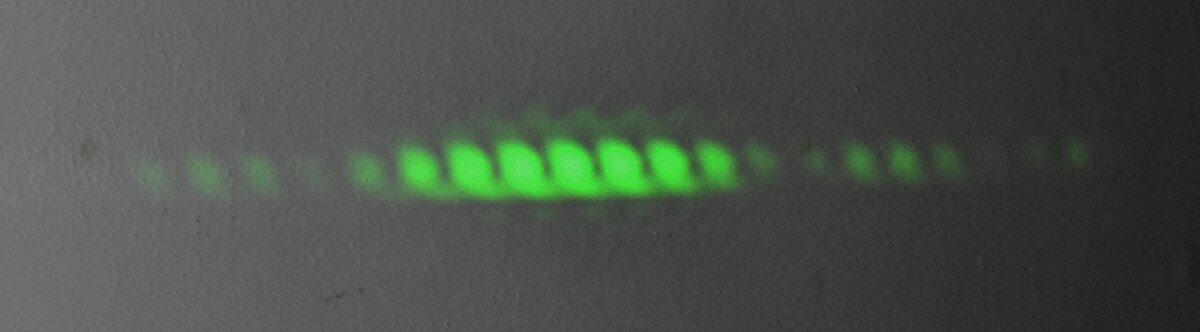
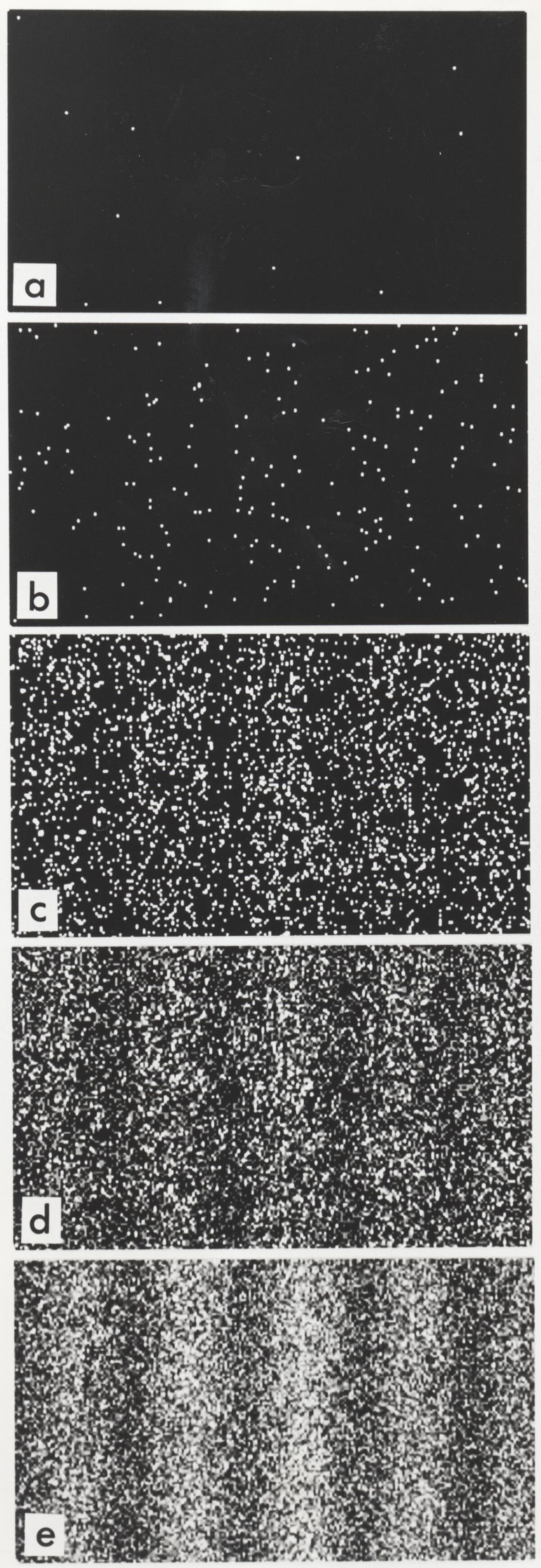
Physical evidence of this wave-like combination appears outside pure mathematics as well. The interference fringes seen in the double-slit experiment are a direct physical demonstration of the superposition principle in action.
Test yourself
Quantum superposition: what can a particle's state be before measurement?
A combination of possible states. A superposition is a combination of states, not merely uncertainty about which single state the particle already occupies.
Quantum superposition: what happens when a qubit in a superposition is measured?
It yields a definite result, 0 or 1. A qubit can be in a combination of 0 and 1 before measurement, but measurement gives one definite result; superposition is not just hidden classical uncertainty.
Quantum superposition: what happens when a qubit in a superposition is measured?
It yields a definite result, 0 or 1. A qubit can be in a combination of 0 and 1 before measurement, but measurement gives one definite result; superposition is not just hidden classical uncertainty.
Play the lesson in edgi and the card is yours. It lands on your Map next to the ideas it connects to, and turns from matte to foil to gold as you learn more around it.
What determines the probability of measuring a specific state?
The probability comes from the Born rule. It is calculated by taking the squared absolute value of the complex probability amplitude assigned to that state.
What is Schrödinger's cat meant to illustrate?
Erwin Schrödinger proposed a cat linked to a quantum trigger to point out the perceived absurdity of quantum theory. According to the mathematics, the unobserved cat would remain both alive and dead until the box was opened.