Heisenberg's Uncertainty PrincipleThe seesaw of quantum reality
Heisenberg's Uncertainty Principle is a law of quantum mechanics stating that you cannot simultaneously know both the exact position and exact momentum (speed multiplied by mass) of an object. The more accurately you pin down where a particle is, the less accurately you can know where it is going. This limit is built into nature itself and is governed by Planck's constant.
By the edgi team We find the most surprising true thing about an idea and build a 60-second lesson around it.
We used to think the universe was a predictable, giant clockwork machine. The idea was that if we knew the position and speed of every atom, we could calculate the entire future.
A close-up view of the intricate brass gears and mechanisms of a clockwork movement. HNH, CC BY-SA 3.0, via Wikimedia Commons
In 1927, Werner Heisenberg shattered that dream by realizing the math of Quantum mechanics simply doesn't allow it.
The measurement trap
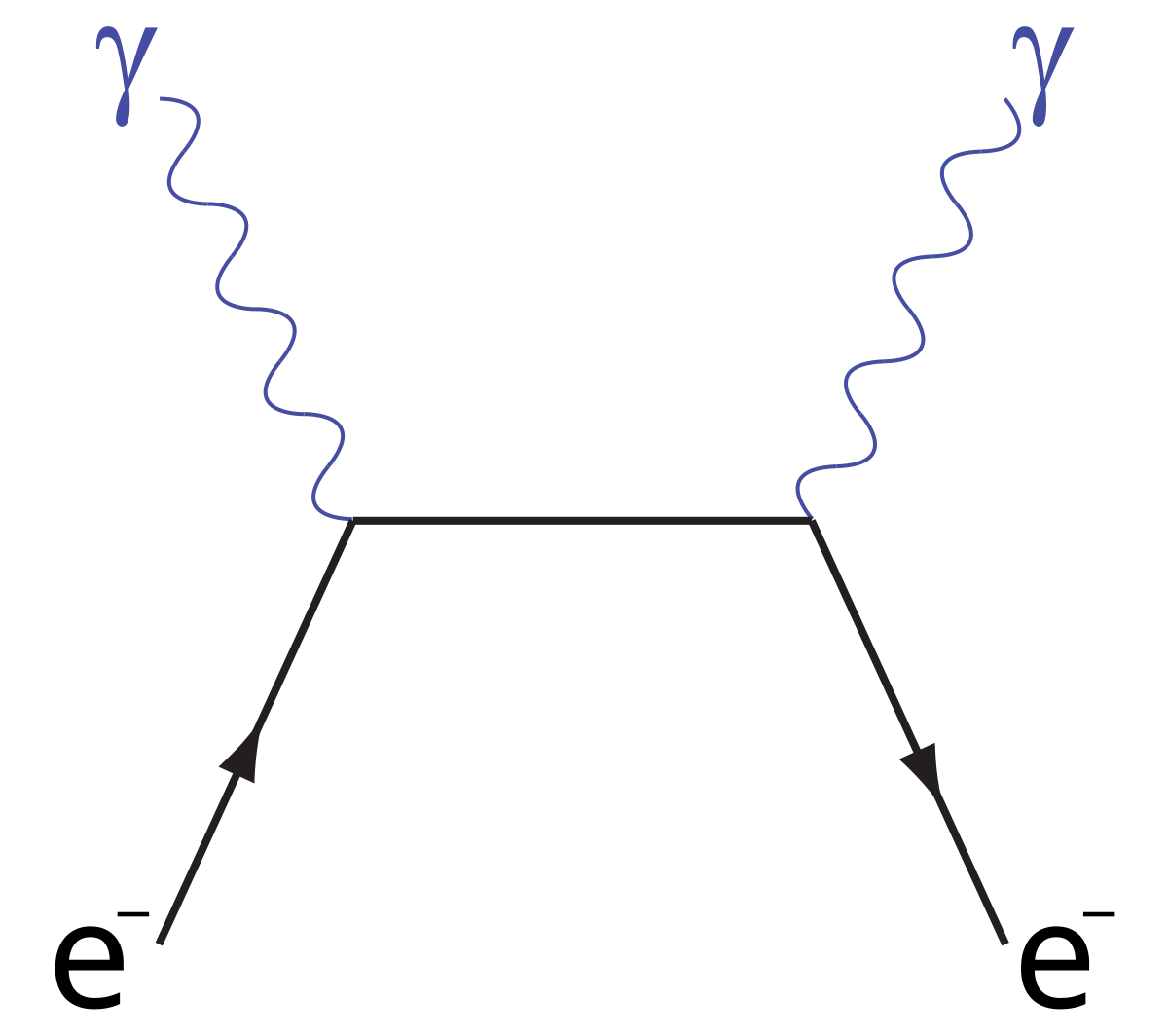
To see a particle, you must hit it with a photon, which is a packet of light. But photons are energetic. Bouncing one off a tiny electron gives it a massive kick, changing its velocity.
A Feynman diagram illustrating Compton scattering, showing an incoming photon (gamma) and electron (e-) interacting and then scattering as an outgoing photon (gamma) and electron (e-). JabberWok at English Wikipedia, CC BY-SA 3.0, via Wikimedia Commons
The more precise your light, the harder the kick. You change the very thing you are trying to measure.
A law of probability
This isn't a failure of our tools. It is a fundamental limit governed by Planck's constant. Position and momentum are locked in a seesaw relationship. You can sharpen one, but only by blurring the other.
The universe doesn't follow a single, fixed path. It exists as a cloud of probabilities until the moment you look.
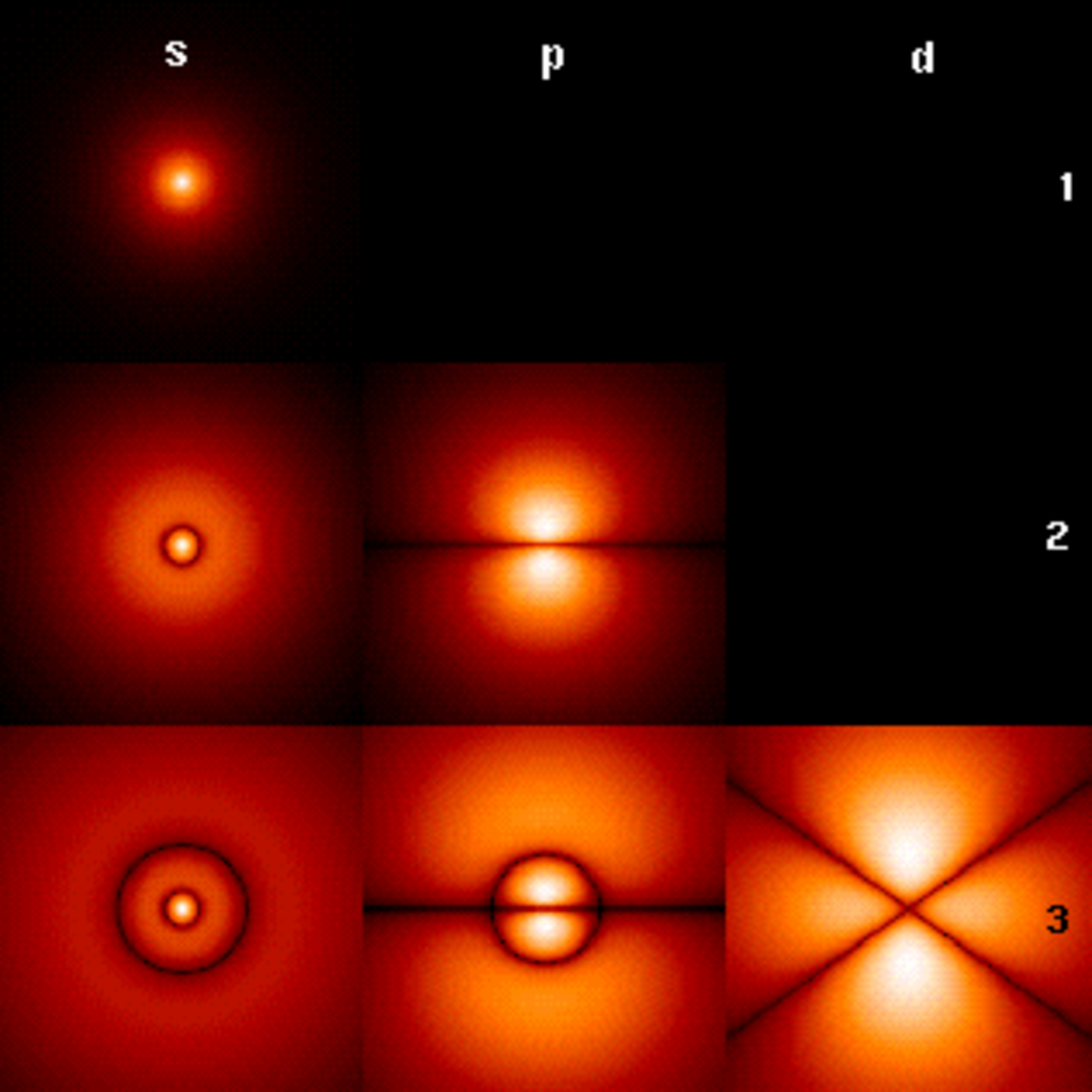
Diagram illustrating the s, p, and d orbitals of a hydrogen atom at three different energy levels (1, 2, 3). Unknown authorUnknown author, CC BY-SA 3.0, via Wikimedia Commons
How the uncertainty principle works
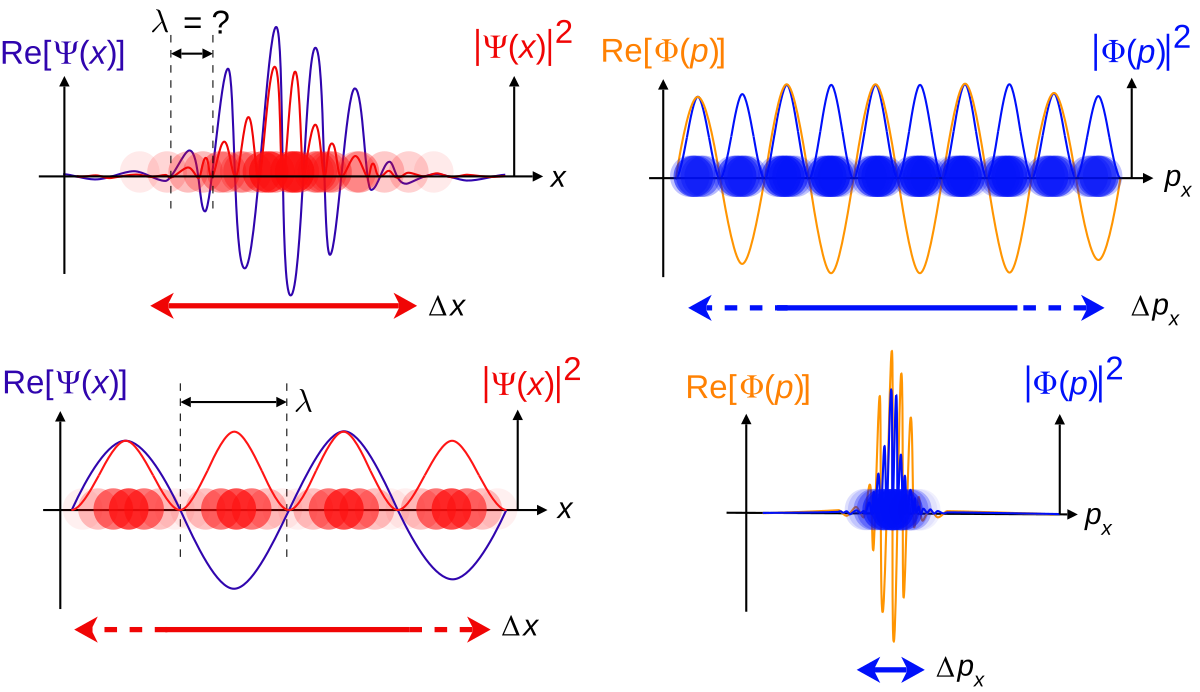
In quantum mechanics, every particle behaves as a matter wave according to the de Broglie hypothesis. Because of this wave nature, the wavefunction describing a particle's position and the wavefunction describing its momentum are Fourier transforms of each other. A function and its Fourier transform cannot both be sharply localized at the same time.
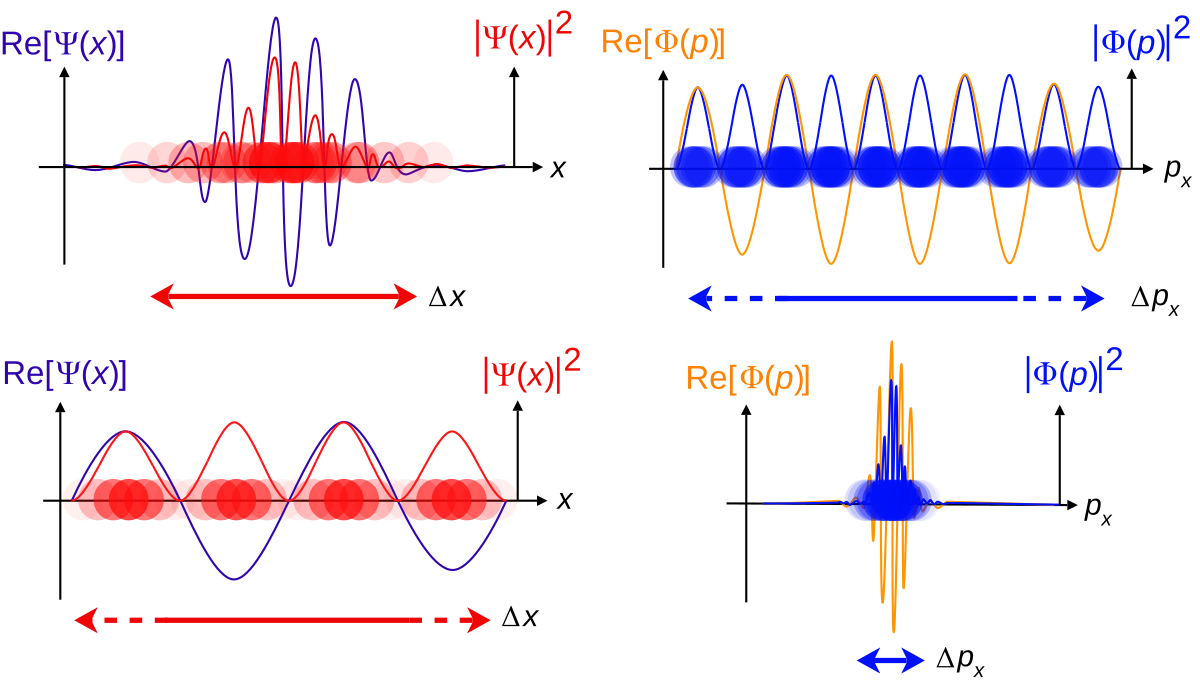
Notice how sharpening the probability density of a particle's position x directly spreads out the probability density of its momentum p. Maschen, CC0, via Wikimedia Commons
When a position wavefunction narrows into a sharp spike, the particle's location is well defined, but its corresponding momentum wavefunction spreads out over a wide range. Conversely, pinning down a precise momentum causes the position wavefunction to spread across space. This mathematical tradeoff also appears outside quantum mechanics in sound waves, where a pure single-frequency tone corresponds to a completely spread-out wave in time.
Why macroscopic objects seem unaffected
Every physical object from elementary particles to planets is subject to the uncertainty principle. However, the limit depends on the reduced Planck constant, which is an extremely small number. Because this constant is so small, the uncertainty effect is significant only for the motion of microscopic objects and is negligible for macroscopic everyday items.
Werner Heisenberg introduced the principle in 1927. Later that year, Earle Hesse Kennard derived the mathematical inequality relating the standard deviation of position and the standard deviation of momentum, followed by Hermann Weyl in 1928. Beyond position and momentum, the principle applies to other complementary variable pairs, including energy and time.
Test yourself
With Heisenberg's uncertainty principle, what follows from sharpening a particle's position?
Its momentum becomes less precisely determined. Position and momentum have a fundamental tradeoff in precision. Sharpening position increases the range of possible momentum values.
With Heisenberg's uncertainty principle, what follows from sharpening a particle's position?
Its momentum becomes less precisely determined. Position and momentum have a fundamental tradeoff in precision. Sharpening position increases the range of possible momentum values.
With Heisenberg's uncertainty principle, what follows from sharpening a particle's position?
Its momentum becomes less precisely determined. Position and momentum have a fundamental tradeoff in precision. Sharpening position increases the range of possible momentum values.
Play the lesson in edgi and the card is yours. It lands on your Map next to the ideas it connects to, and turns from matte to foil to gold as you learn more around it.
Conjugate variables, also called complementary variables, are pairs of physical properties related by Fourier transforms in wave mechanics or non-commuting operators in matrix mechanics. Position and momentum are the classic example.
Does the uncertainty principle apply to energy and time?
Yes. An energy-time uncertainty relationship is widely used in quantum physics to relate the lifetime of a quantum state to its measured energy width.