Schrödinger's CatThe joke that became a pillar of physics
Schrödinger's cat is a thought experiment about quantum superposition, which is the idea that an unobserved object can exist in multiple contradictory states at the same time. Physicist Erwin Schrödinger devised it to show how ridiculous quantum theory seemed if applied to everyday life: a cat trapped with a poison vial triggered by an atom would be simultaneously alive and dead until someone opened the box. Instead of disproving the theory, the scenario became one of the central problems in modern physics.
By the edgi team We find the most surprising true thing about an idea and build a 60-second lesson around it.
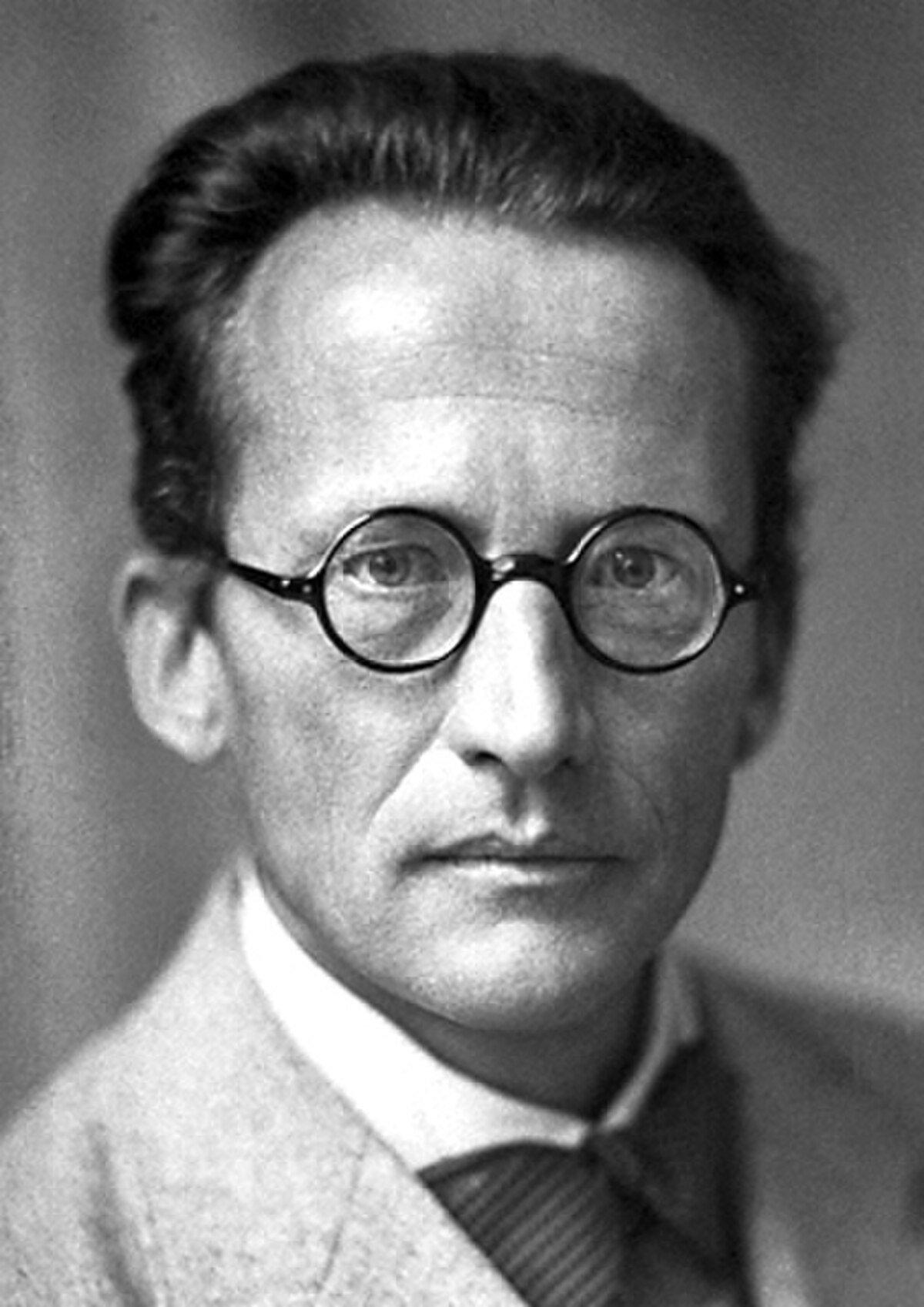
Erwin Schrödinger did not invent his famous cat to explain quantum mechanics. He invented it as a joke. Frustrated by the Copenhagen Interpretation, he wanted to expose the absurdities of quantum theory by scaling it up.
A black and white portrait of Erwin Schrödinger, taken in 1933, shows him wearing round glasses, a suit jacket, and a tie. Nobel foundation, Public domain, via Wikimedia Commons
He argued that if a tiny atom can exist in two states at once, a trapped cat linked to it would have to be both alive and dead.
The experiment
In a 1935 letter to Albert Einstein, Schrödinger described a steel chamber containing a cat, poison, and a radioactive atom. If the atom decays, it shatters the vial and kills the cat. If it does not, the cat lives.
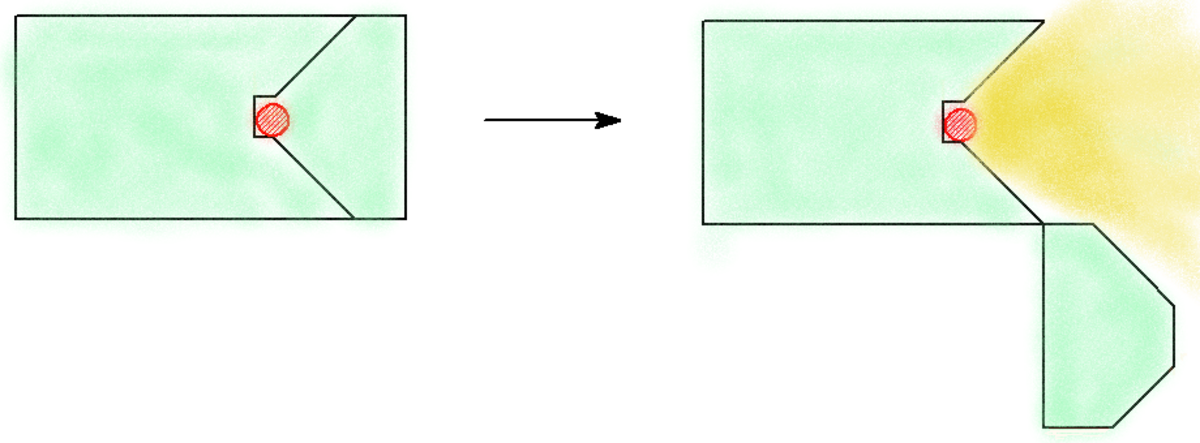
Diagram illustrating a torch-type industrial radiography camera that uses a hinge mechanism to expose a radioactive source. Public domain, via Wikimedia Commons
According to the theory he hated, the cat remains suspended in a blur of life and death until someone opens the box.
The backfire
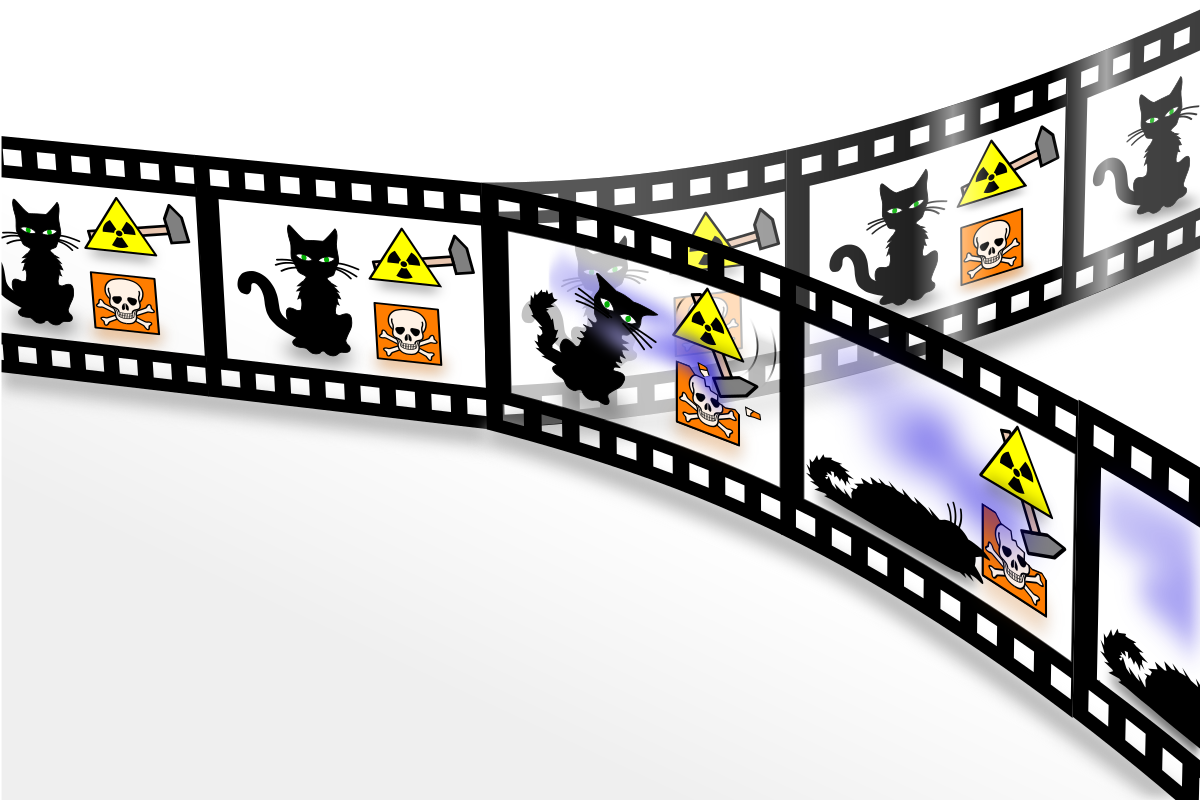
Schrödinger meant to prove the math was missing a crucial piece of reality. Instead, physicists embraced the paradox. Some later proposed the Many-Worlds Interpretation, suggesting the universe splits into two branches every time the box is opened.
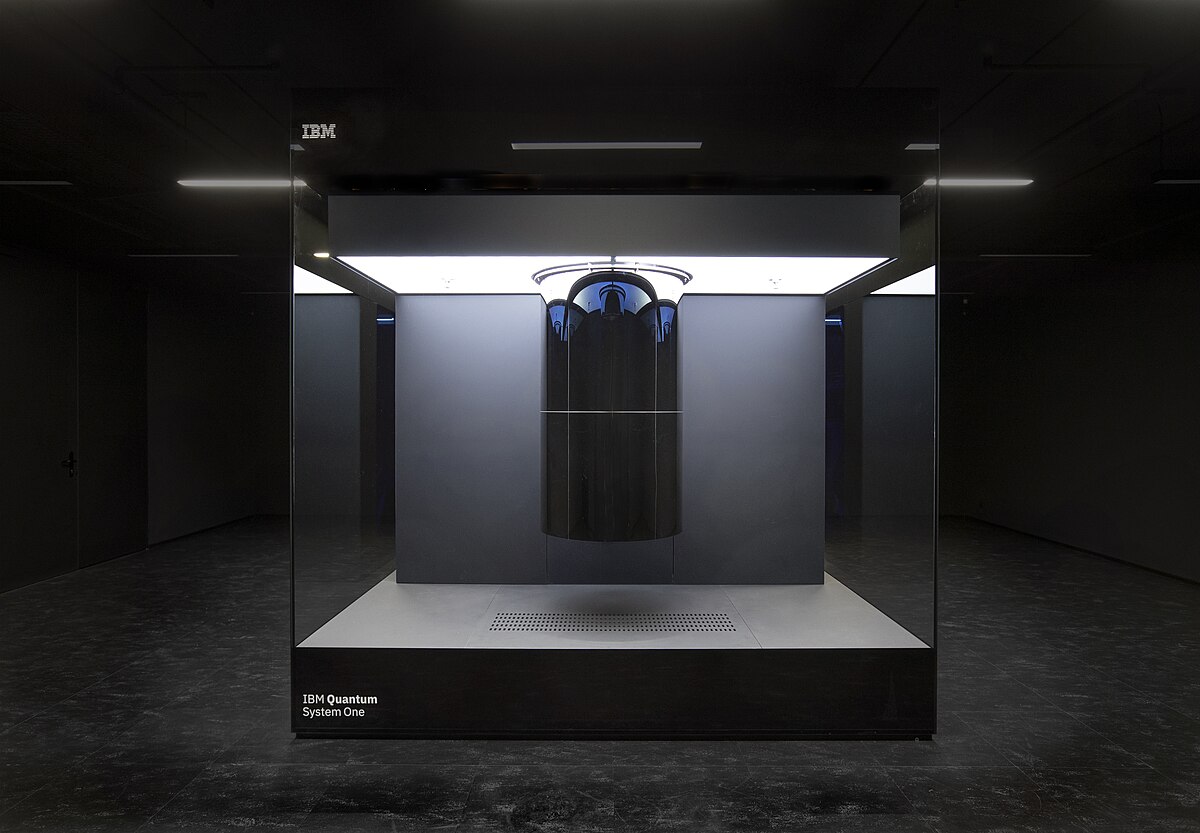
Today, engineers use these exact principles to build a cat qubit quantum computer, turning a physicist's punchline into modern technology.
The IBM Q System One, the first circuit-based commercial quantum computer, is displayed within a large glass enclosure. IBM Research, CC BY 2.0, via Wikimedia Commons
How the thought experiment works
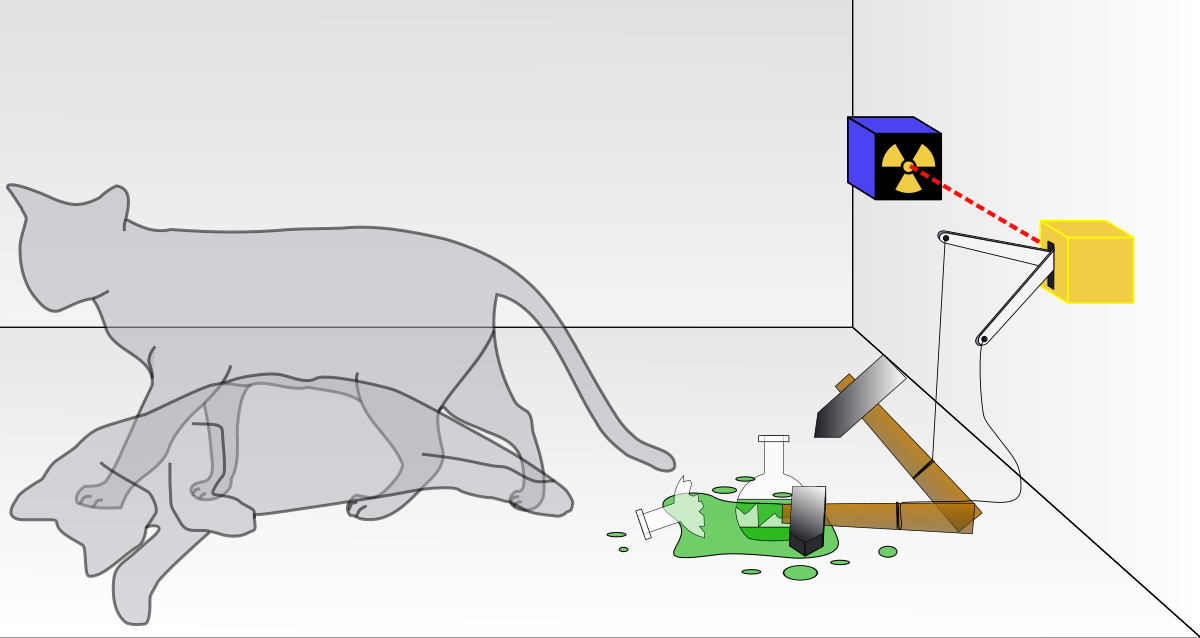
In Schrödinger's 1935 setup, a cat sits inside a sealed steel chamber alongside a flask of hydrocyanic acid, a Geiger counter, and a tiny amount of radioactive material. Over the course of an hour, there is an equal chance that a single atom decays or that none decays. If an atom decays, the counter triggers a relay that drops a hammer, shatters the flask, and poisons the cat. If no atom decays, the cat remains unharmed.
The diagram displays how an atomic decay event triggers the hammer and poison vial, trapping the cat in a superposition of life and death. Dhatfield, CC BY-SA 3.0, via Wikimedia Commons
Under the standard Copenhagen view of quantum mechanics, the wave function describing the contents remains in a superposition of both outcomes. The entire system stays suspended as a mixture of an alive cat and a dead cat. Only when an observer opens the chamber does reality resolve into one definite outcome.
Why Schrödinger invented the paradox
Schrödinger designed the scenario as a farcical reductio ad absurdum during letters with Albert Einstein. Einstein had previously pointed out that quantum mathematics treated an unstable keg of gunpowder as a superposition of exploded and unexploded states. Both physicists wanted to challenge the philosophical views of Niels Bohr and Werner Heisenberg.
This diagram shows the Many-Worlds interpretation, where the universe splits into separate reality branches for the living and dead cat. Christian Schirm, CC0, via Wikimedia Commons
Schrödinger argued that an indeterminacy restricted to the atomic scale could not simply be scaled up to macroscopic objects without exposing the incompleteness of the math. He compared the standard quantum wave function to an out-of-focus photograph rather than an accurate picture of physical reality. To his surprise, physicists did not discard the theory, but began treating superpositions as a genuine description of nature.
Test yourself
What result would count against Many-Worlds?
Large objects collapsing spontaneously. Many-Worlds says nothing ever collapses. Spontaneous collapse of big objects would contradict that, while superposed molecules and single-cat observations fit both views.
Why can't most experiments tell Many-Worlds from standard quantum theory?
They predict the same results. Many-Worlds keeps the same equations and drops only the collapse step, so ordinary experiments give identical predictions for both.
Why is Many-Worlds so hard to test against standard quantum theory?
They predict nearly the same results. Both approaches use the same math for almost every experiment, so seeing one outcome cannot separate them. The extra branches cannot be visited.
Play the lesson in edgi and the card is yours. It lands on your Map next to the ideas it connects to, and turns from matte to foil to gold as you learn more around it.
No, it is strictly a thought experiment intended to illustrate the mathematics of atoms. Performing the experiment on a real, macroscopic cat would present massive technical difficulties.
Have scientists ever tested superposition in real life?
Yes, experiments at the atomic scale have confirmed that very small objects can exist in quantum superpositions. Modern engineers even use these principles to build cat qubit quantum computers.