Etymology is the scientific study of the origins of words and how their sounds and meanings change over time. By comparing related words across different languages, it reveals that modern speech is built from ancestral roots that stretch back thousands of years. It allows researchers to reconstruct prehistoric languages even when ancient speakers left behind no written records.
By the edgi team We find the most surprising true thing about an idea and build a 60-second lesson around it.
In 1786, a judge in India named Sir William Jones noticed something strange. The Sanskrit word for mother, 'matr,' sounded exactly like the Latin 'mater' and the Greek 'meter.'
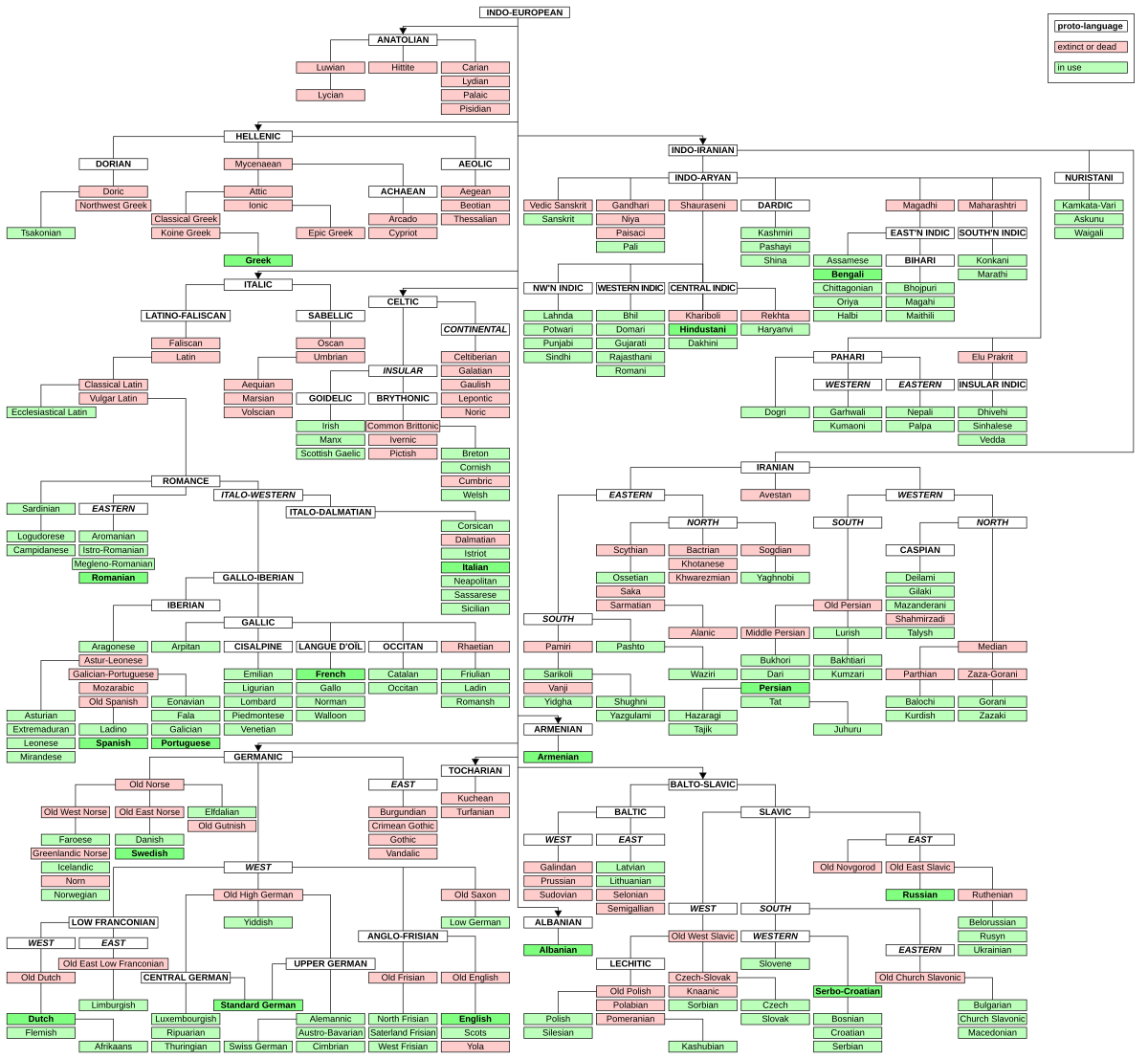
He realized these weren't coincidences. They were cousins descending from a single, lost language family now called the Indo-European languages.
A detailed Indo-European language family tree, showing the relationships and divergence of various language branches. Mandrak, CC BY-SA 3.0, via Wikimedia Commons
The detective work
Etymology treats words like biological fossils. By comparing cognates, words that share a common ancestor, we can reconstruct languages that left no written records. It is a process called linguistic reconstruction. You work backward from modern speech to find the 'ghost' roots of prehistory.
This turned etymology from a hobby for monks into a rigorous science.
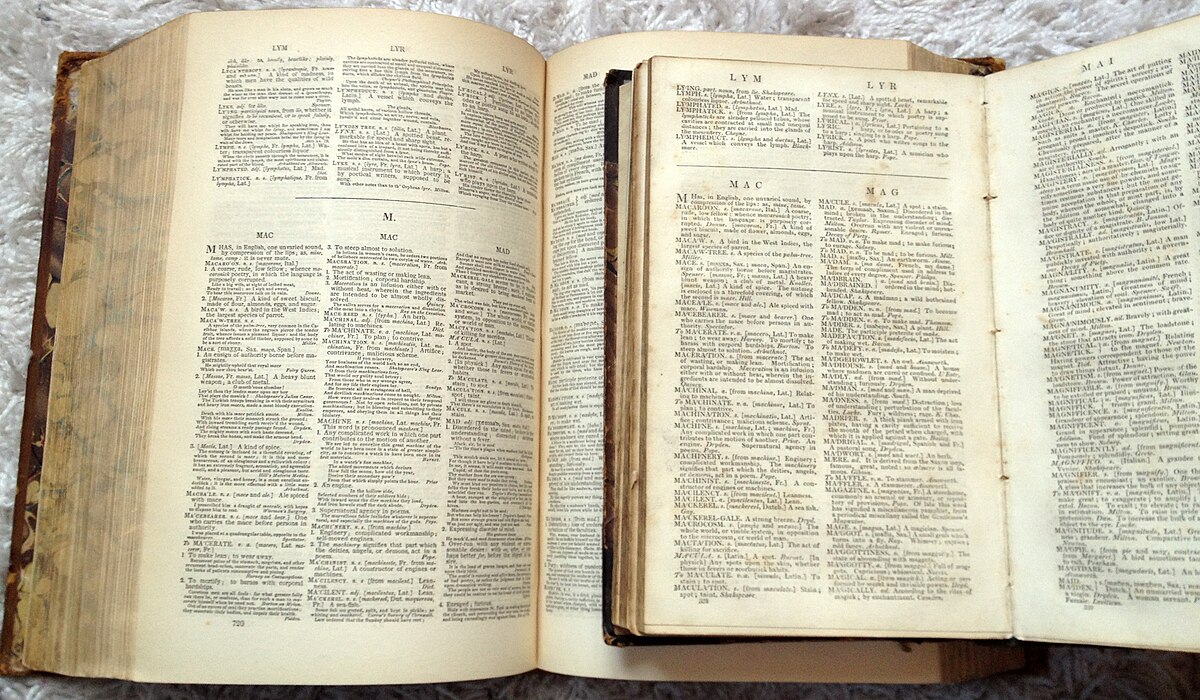
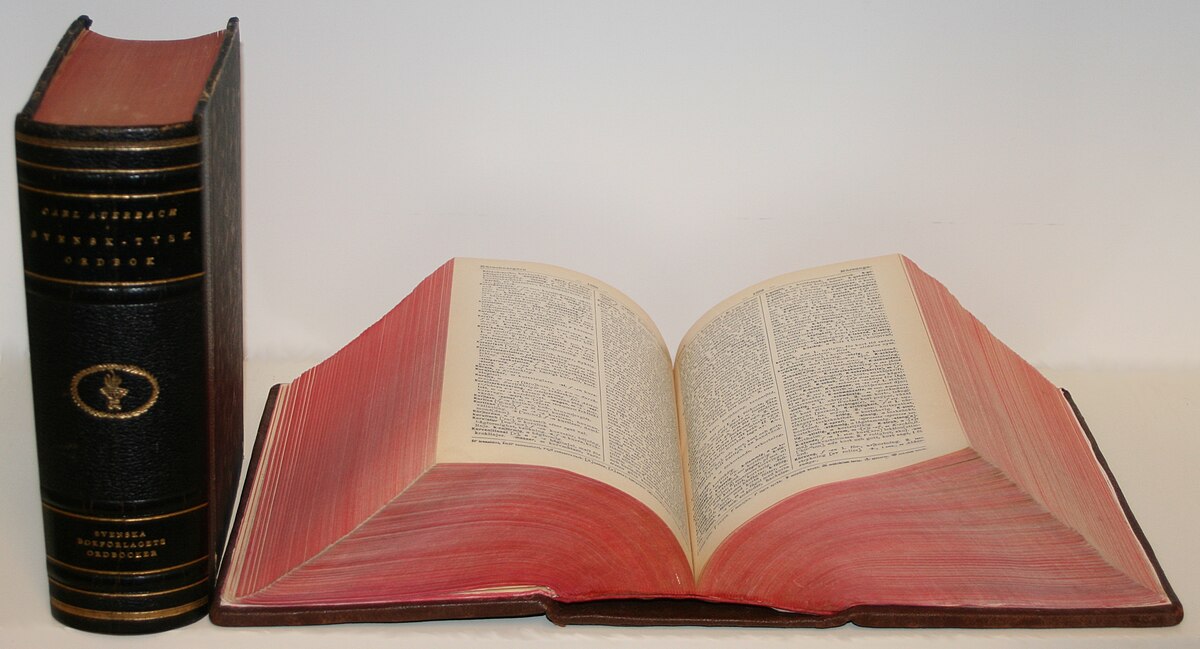
Samuel Johnson's Folio and Abridged Dictionaries are displayed open side-by-side, revealing pages of text with multiple columns and definitions. Jkarjalainen, CC BY-SA 3.0, via Wikimedia Commons
Living fossils
Some words are linguistic ghosts. Take 'kith' in the phrase 'kith and kin.' It meant 'acquaintance' in Old English, but it vanished from the language everywhere else.
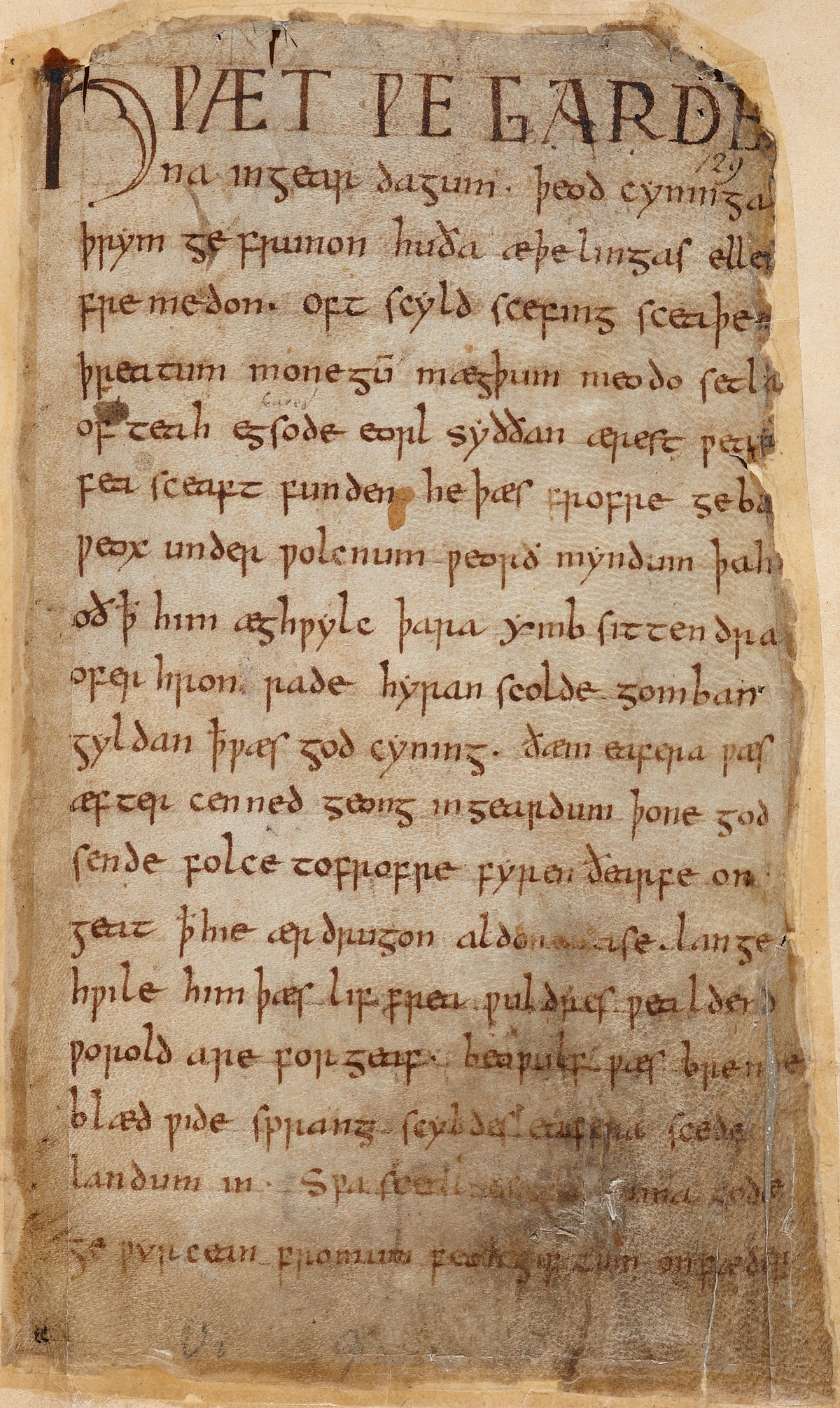
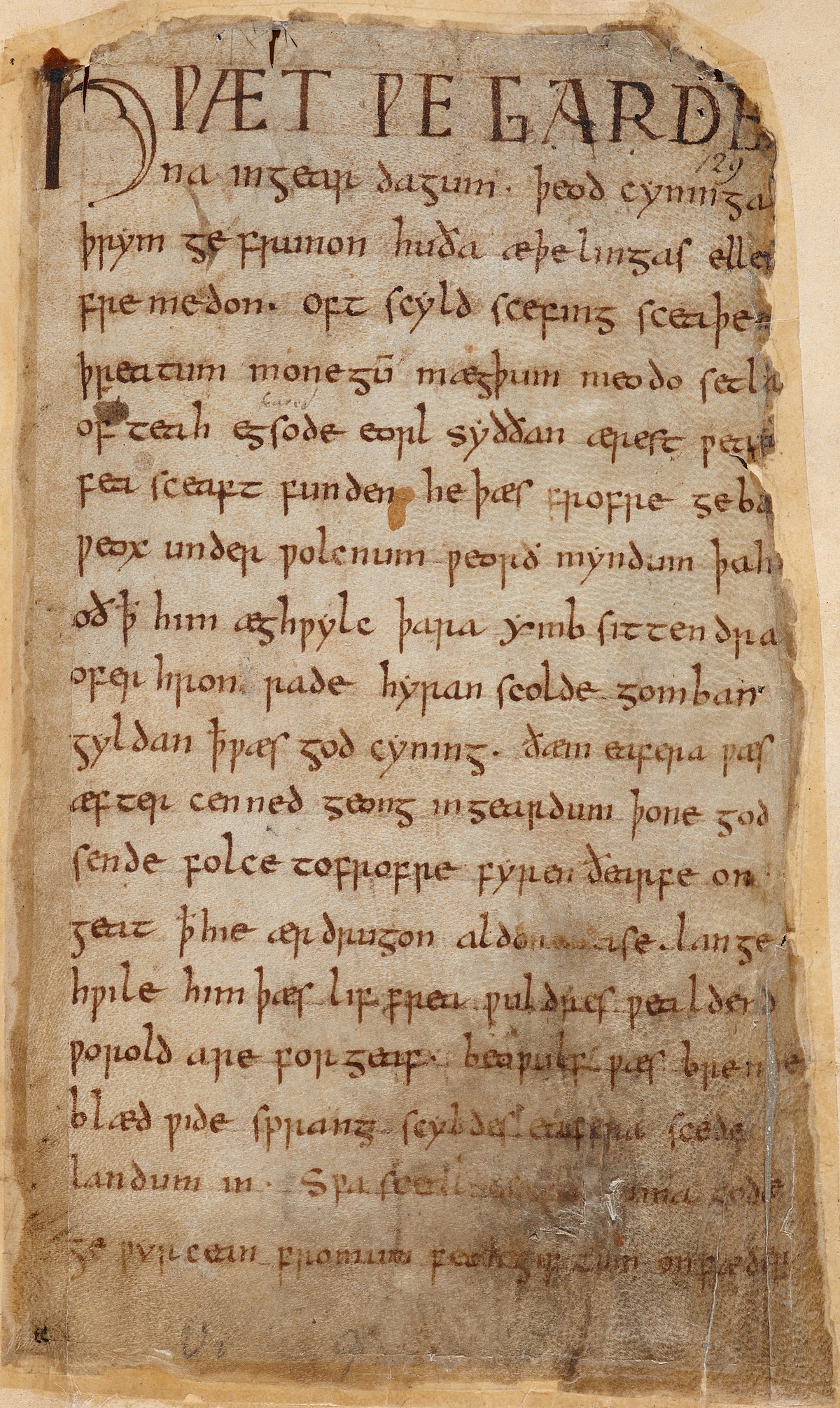
The first page of the Beowulf manuscript, Cotton MS Vitellius A XV, f. anonymous Anglo-Saxon poet, Public domain, via Wikimedia Commons
We keep saying the phrase, but we are unknowingly reciting a fossil word that went extinct everywhere except in that one specific pair. Every time you speak, you are using a vocabulary built from the debris of thousands of years of human collision.
How do linguists trace the history of words?
The English word bless originated as a derivative term meaning 'to mark with blood', but centuries of sound and meaning changes obscured that connection. Etymologists use several core methods to uncover these lost links. When written records exist, researchers turn to philological research, examining ancient texts to track changes in a word form and definition across eras.
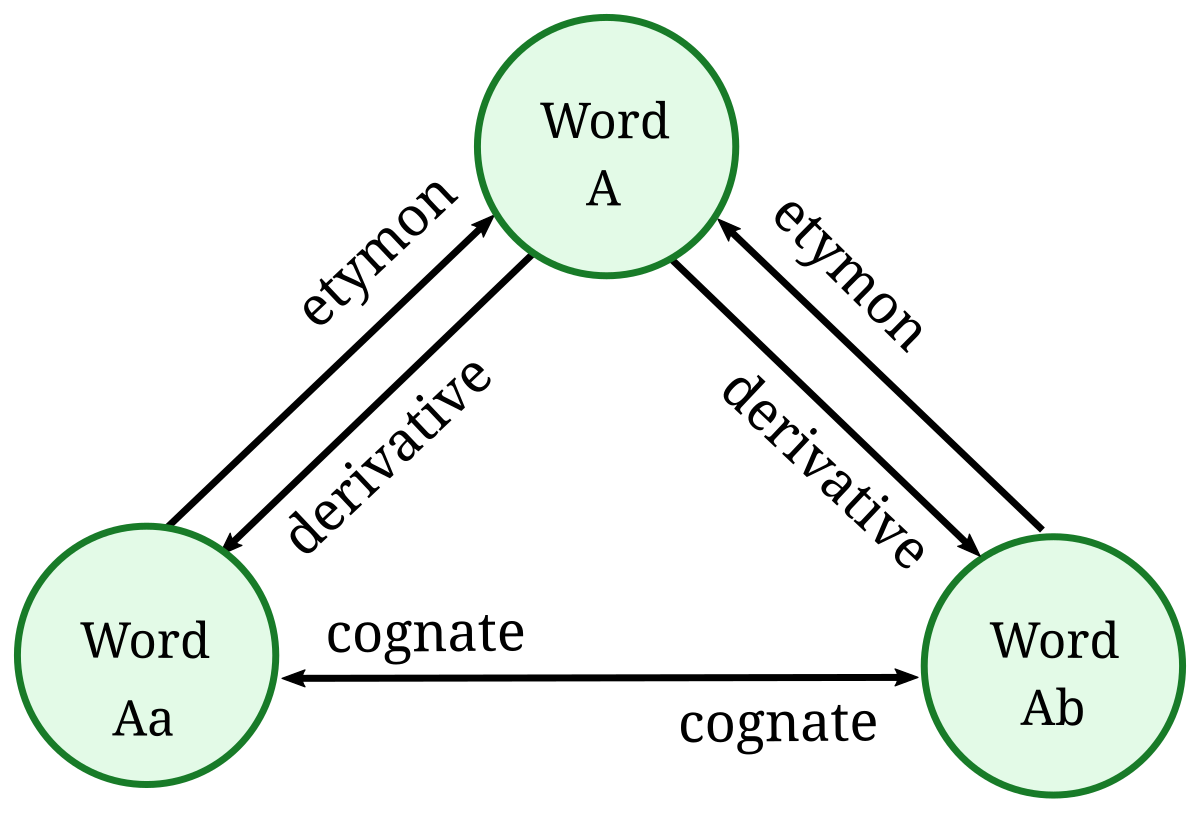
This chart illustrates how an etymon serves as the shared ancestral root that branches into modern descendant words across languages. Gufosowa, CC BY-SA 4.0, via Wikimedia Commons
When no early writing is preserved, linguists apply the comparative method. They systematically compare vocabulary across related daughter languages, such as modern European languages or members of the Uralic and Austronesian families. This allows them to deduce the ancestral root, known as an etymon, and identify which words were inherited from a shared parent language versus which were borrowed from neighbors.
The mechanisms behind word origins and shifts
Words change meaning through semantic shifts, often by making metaphors part of daily life. The English word bead originally meant 'prayer'. It shifted to its current meaning because people counted their recited prayers on strings of small pierced spheres. Similarly, trauma once described an open physical hole in the body before it shifted into a term for psychological wounds.
Beyond semantic shifts, new words emerge through a handful of distinct mechanisms. Languages borrow loanwords from other cultures, combine existing terms through compounding and derivation, or invent imitative words like click and grunt through onomatopoeia. Over time, sound shifts can make related pairs hard to spot: the word set was originally formed as a causative variation of sit.
Test yourself
How does etymology reconstruct prehistoric languages that left no written records?
By comparing cognates across languages. Etymology uses cognates, which are words sharing a common ancestor, to work backward and rebuild lost ancestral tongues.
Does etymology identify ancient word origins by finding coincidental similarities?
No, by tracing shared ancestry. Etymology relies on cognates sharing a common ancestor rather than random coincidences. Identifying these systematic relationships allows linguists to reconstruct languages that left no written records.
Etymology is the study of how words have evolved from their origins.
True. Etymology is the study of word origins, investigating how a word's form and meaning have changed over time.
Play the lesson in edgi and the card is yours. It lands on your Map next to the ideas it connects to, and turns from matte to foil to gold as you learn more around it.
What is the difference between a root and an etymon?
A root is the foundational source of related words within a single language, such as happy giving rise to unhappy. An etymon is the older ancestral term from an earlier parent language from which a later word derives, like the Latin candidus serving as the etymon for the English candid.
What are cognates and doublets?
Cognates are words in different languages that descend directly from a shared ancestral root in a common parent language. Doublets are a specific type of cognate occurring within the exact same language, where two words share a common root but took different historical routes to enter the vocabulary.
What is a reflex in linguistics?
A reflex is a descendant word found in a daughter language that evolved directly from an ancestral form in an earlier language. For instance, the Modern English word heat is the reflex of the Old English term hǣtu.