Proto-GermanicThe unwritten root of modern English
Proto-Germanic is the unrecorded ancestor language that gave rise to all modern Germanic tongues, including English, German, Dutch, and Swedish. Because its speakers left no written records, linguists reconstructed its words by tracking predictable sound shifts backwards from later languages. It reveals that widely separated modern languages share a single northern European root.
By the edgi team We find the most surprising true thing about an idea and build a 60-second lesson around it.
Proto-Germanic is a language that technically never existed in history books. It was never written down; no one left a diary or a receipt in it. Yet, linguists have reconstructed it almost entirely by working backward from the languages it spawned, like English, German, and the extinct Gothic language.
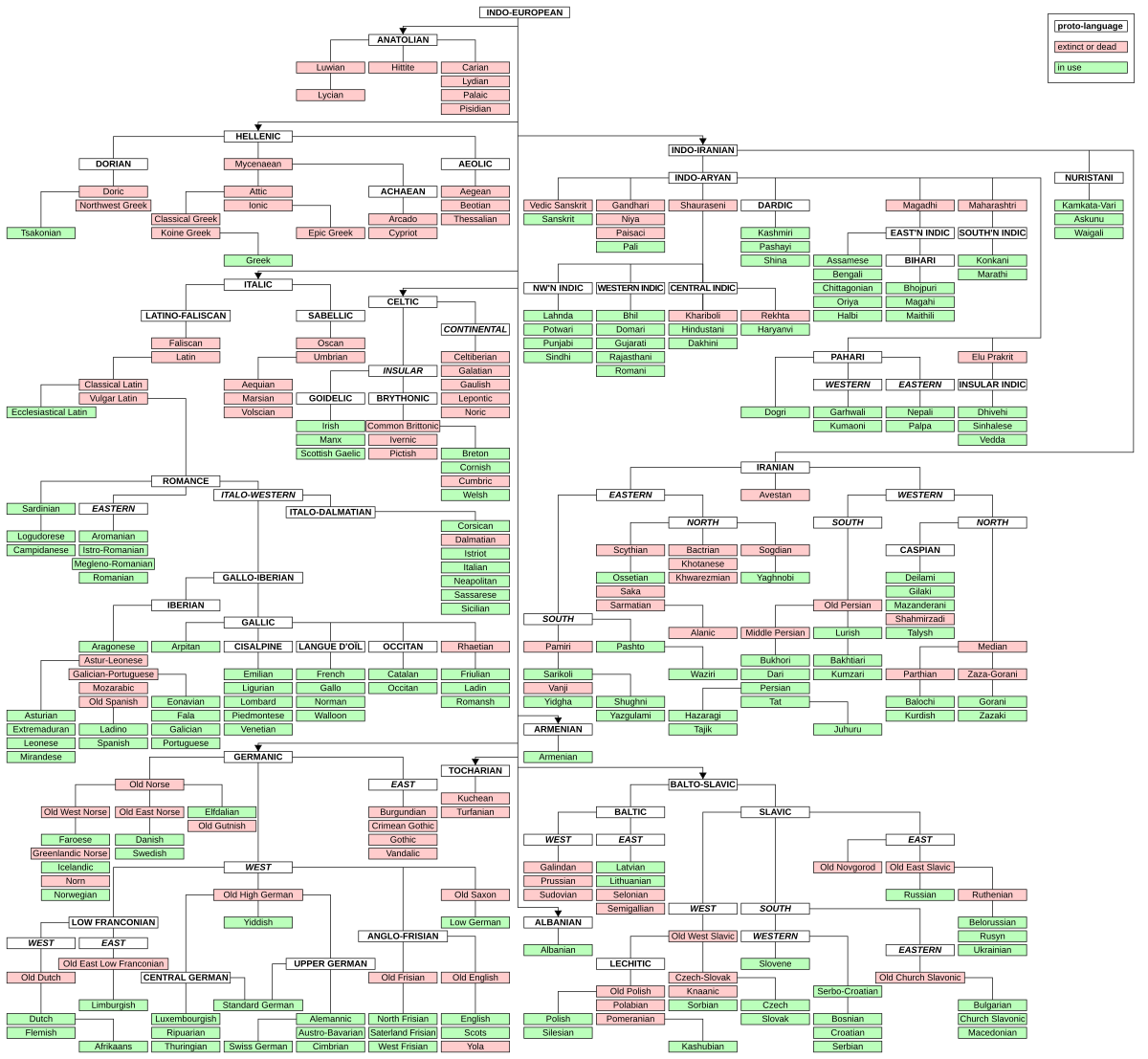
Detailed phylogenetic tree classifying Indo-European languages, with red boxes indicating extinct languages and white boxes indicating categories or unattested proto-languages. Mandrak, CC BY-SA 3.0, via Wikimedia Commons
The great sound shift
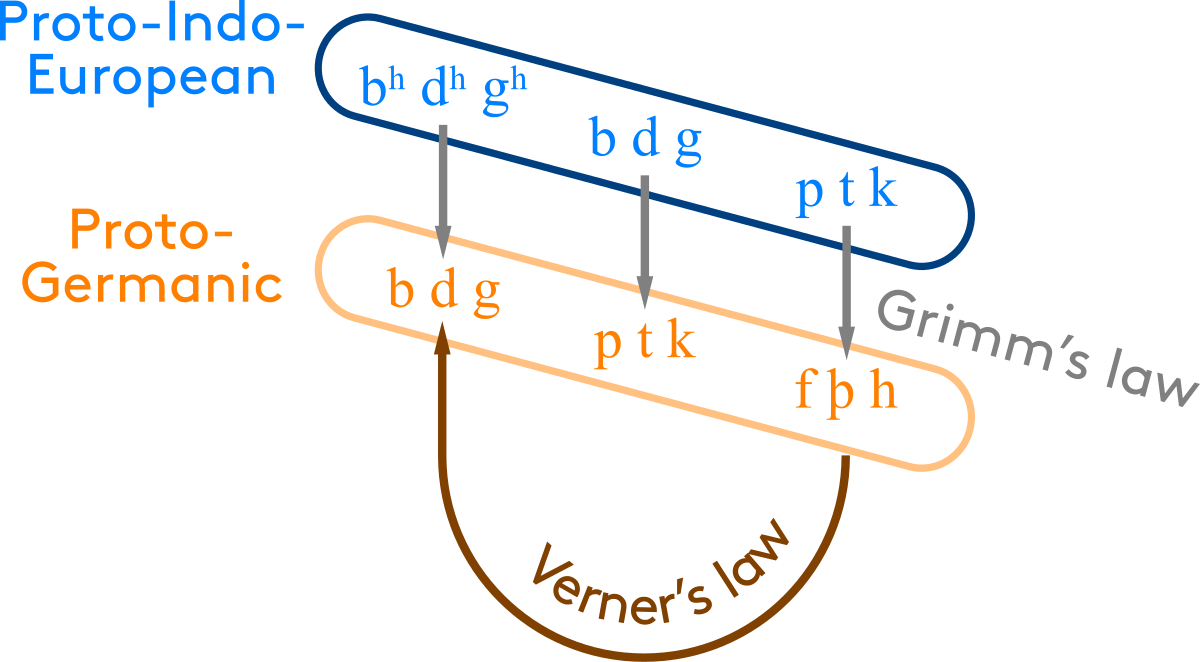
The key to the reconstruction is a pattern of sound changes known as Grimm's law. Jacob Grimm, yes, the fairy tale guy, realized that sounds shifted with mathematical precision as languages diverged.
Diagram illustrating Grimm's law and Verner's law, showing sound changes from Proto-Indo-European to Proto-Germanic. DDG9912, CC BY 4.0, via Wikimedia Commons
In Latin, the word for father is pater. In Germanic languages, that 'p' consistently shifted to an 'f', giving us father. By tracing these shifts, we mapped the ancestor's skeleton.
The branching roots
Proto-Germanic was the common ancestor spoken by tribes in Northern Europe roughly 2,000 years ago. As these tribes migrated, their shared tongue fractured into distinct branches, eventually becoming the West, North, and East Germanic languages.
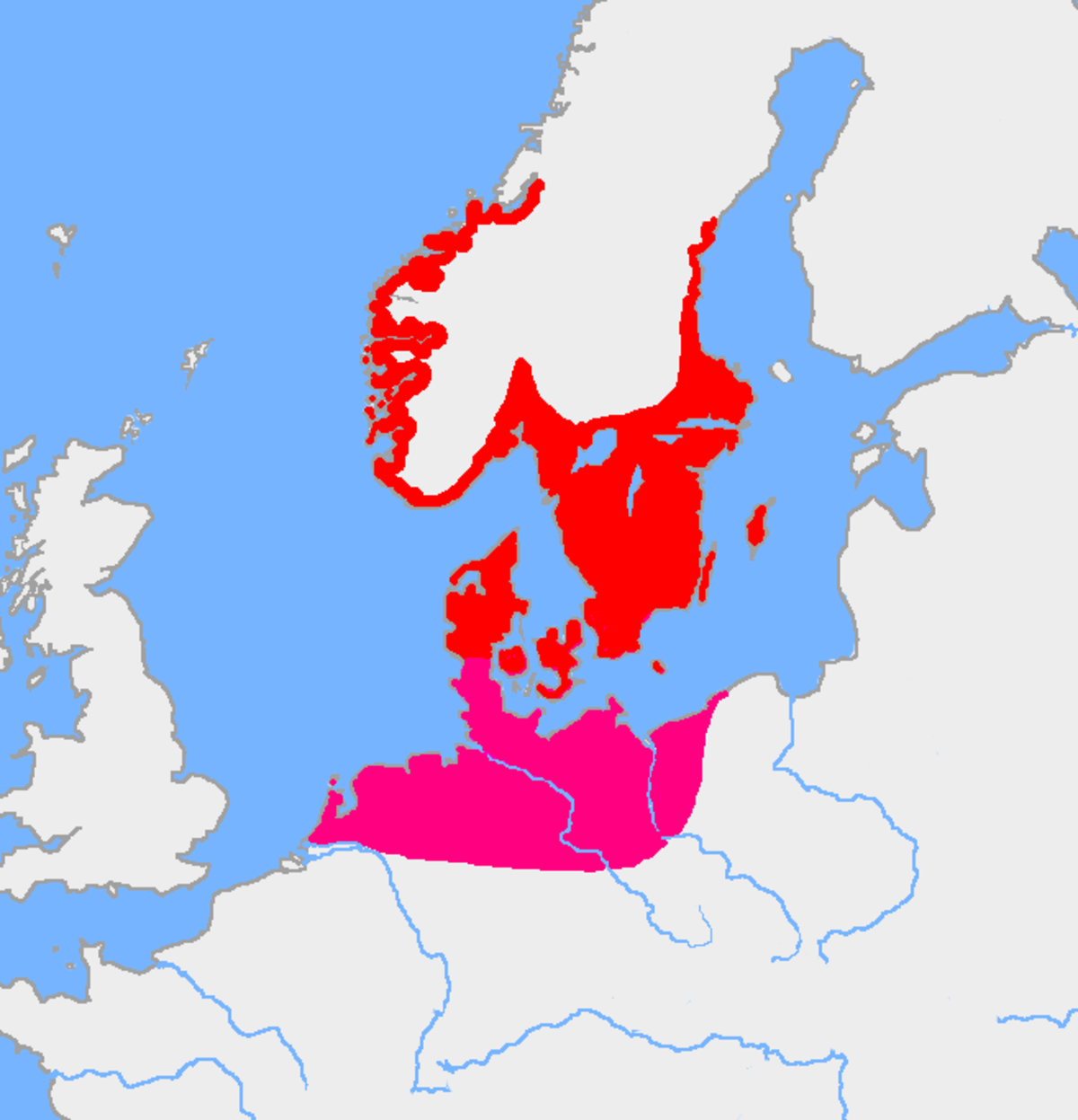
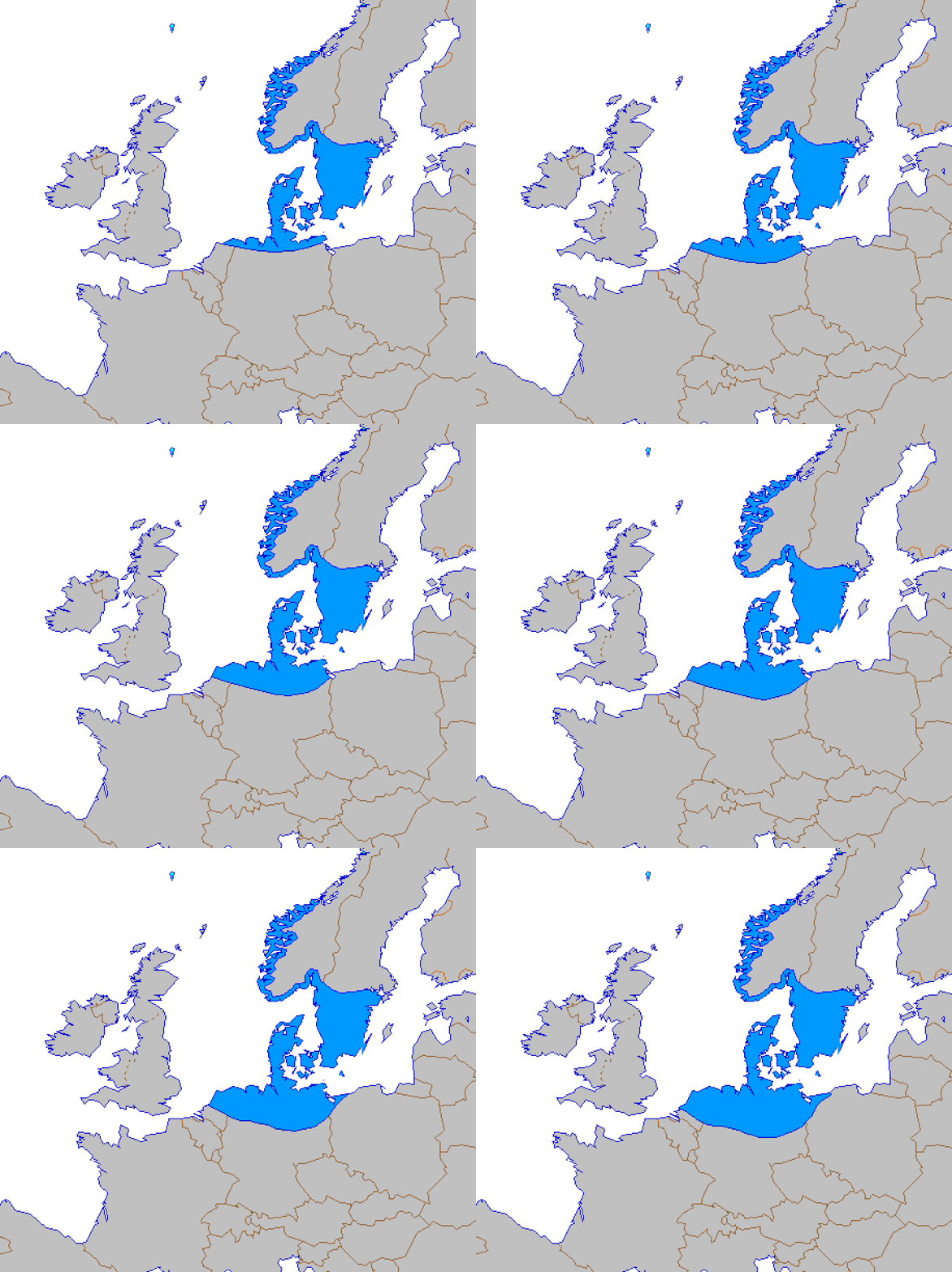
A map of Northern Europe shows the distribution of cultures associated with Proto-Germanic during the pre-Roman Iron Age, around 500 BC. Copied from en:, uploaded by Wiglaf, Public domain, via Wikimedia Commons
That is why an English speaker, a German speaker, and an Icelandic speaker can all look at their vocabularies and find the same ancient roots hiding in plain sight.
How linguists reconstructed an unwritten language
Proto-Germanic has no direct written records, yet linguists know its grammar and vocabulary in detail. They used the comparative method, matching later Indo-European languages against early Germanic evidence.
Crucial clues survived outside Germanic territory. Finnish preserved ancient Germanic loanwords with almost no alteration, such as kuningas for 'king'. Linguists also cross-referenced Roman transcriptions from authors like Tacitus, second-century Danish runic inscriptions from Vimose, and the non-runic Negau helmet from the second century BC.
The bedrock of this reconstruction is Grimm's law, a predictable shift in consonants that occurred as Proto-Germanic broke away from Proto-Indo-European. By following these mathematical sound rules, researchers reverse-engineered the lost mother tongue.
Where and when Proto-Germanic was spoken
Proto-Germanic emerged around 500 BC during the Pre-Roman Iron Age. Its homeland, or Urheimat, spanned southern Scandinavia (Denmark, southern Sweden, and southern Norway) and northernmost Germany in Schleswig-Holstein and Lower Saxony, closely matching the archaeological Jastorf culture.
As Germanic speakers expanded south toward the Upper Rhine and Danube, they encountered Celtic populations from the La Tène culture and absorbed Celtic loanwords. By the third century AD, their descendants spanned over 1,200 kilometers from the Rhine to the Dniepr.
This vast expansion fractured the language into distinct groups. By the fourth century AD, the East Germanic branch produced the first coherent Germanic text: the Gothic Bible, translated after Thervingi Gothic Christians moved to Moesia.
Play the lesson in edgi and the card is yours. It lands on your Map next to the ideas it connects to, and turns from matte to foil to gold as you learn more around it.
The earliest coherent text in any Germanic language is the Gothic Bible from the late fourth century AD. Earlier Germanic writing exists only as short individual names and runic inscriptions, such as those found on the second-century Vimose artifacts.
What is the difference between Proto-Germanic and Proto-Norse?
Proto-Germanic is the common ancestor of all Germanic branches, dating back to roughly 500 BC. Proto-Norse developed later, appearing around the second century AD in early Scandinavian runic inscriptions like the Tune Runestone as the North Germanic branch began to split away.
Did Proto-Germanic borrow words from other languages?
Yes. During the Pre-Roman Iron Age expansion, Proto-Germanic speakers came into contact with Continental Celtic cultures and adopted several Celtic loanwords before spreading further across Europe.