Proto-Indo-EuropeanHow linguists rebuilt a lost tongue
Proto-Indo-European is the prehistoric, unwritten ancestor language of modern tongues like English, Spanish, Russian, and Hindi. Linguists reverse-engineered it by comparing shared vocabulary and grammar across its surviving daughter languages. Because its speakers left no written records, every detail of the language has been reconstructed purely through historical detective work.
By the edgi team We find the most surprising true thing about an idea and build a 60-second lesson around it.
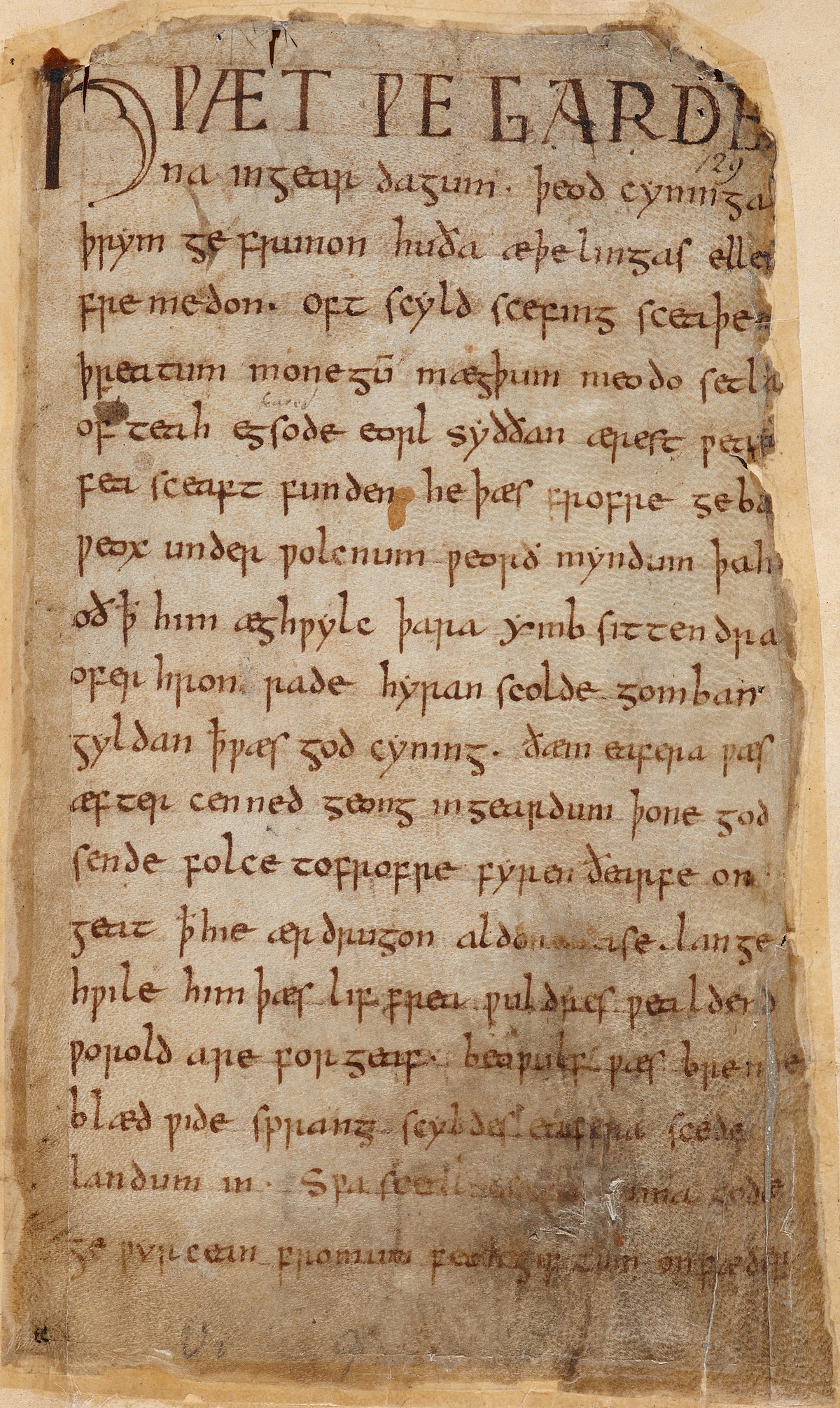
In 1786, a British judge named William Jones noticed something odd while studying Sanskrit in India. It shared structural DNA with Latin and Greek, languages thousands of miles apart.
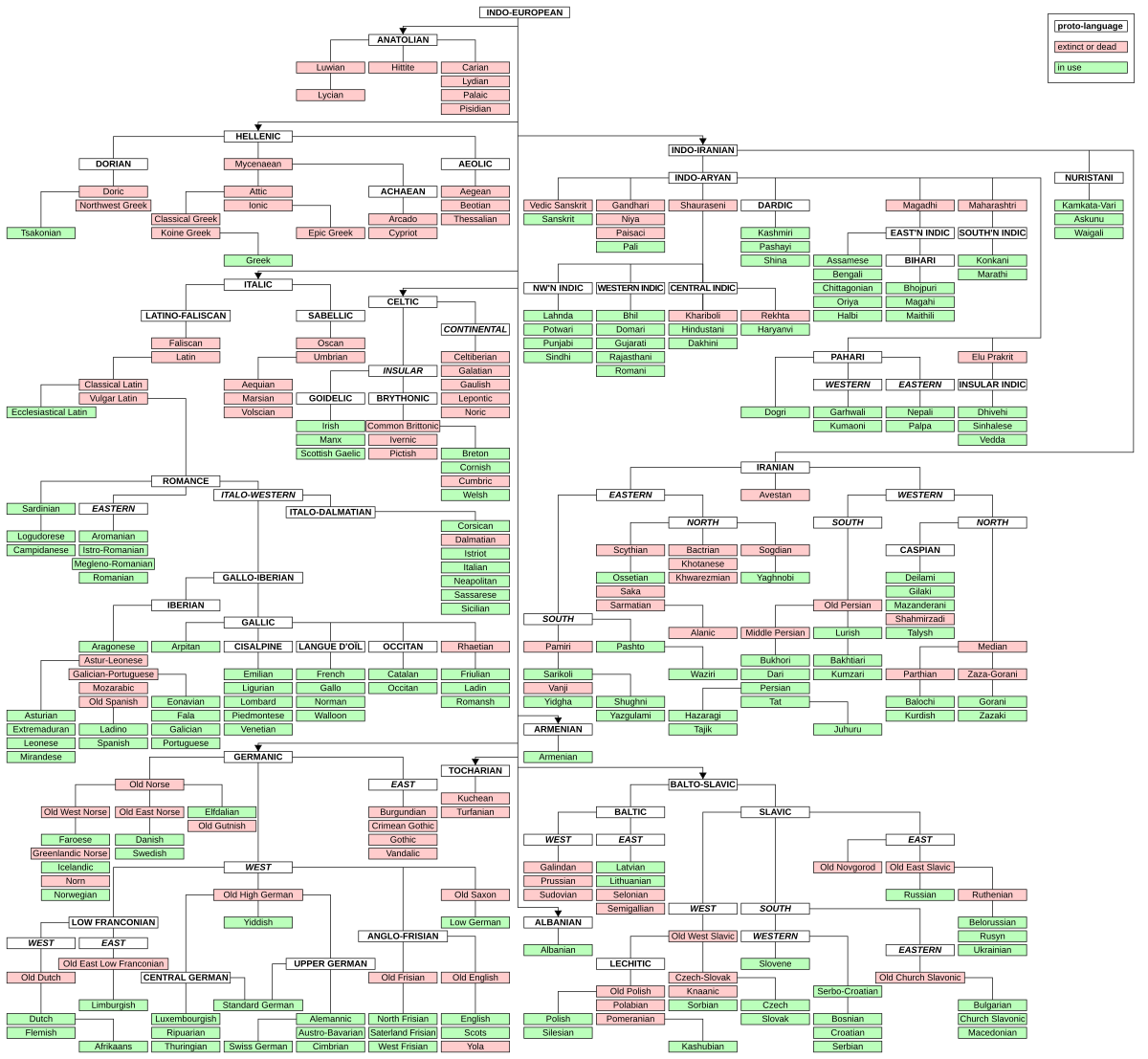
Detailed phylogenetic tree classifying Indo-European languages, with red boxes indicating extinct languages and white boxes indicating categories or unattested proto-languages. Mandrak, CC BY-SA 3.0, via Wikimedia Commons
He realized they weren't coincidences. They were siblings, descending from a single, vanished common source.
Reverse engineering
Since there are no written records, linguists use the comparative method to look backward. By mapping sound shifts, where one consonant predictably morphs into another over time, they can rebuild ancient words.
They reconstruct a root word, like ph₂tḗr, and watch it evolve into "father" in English, "pater" in Latin, and "vater" in German. This reconstructed ghost language is called Proto-Indo-European.
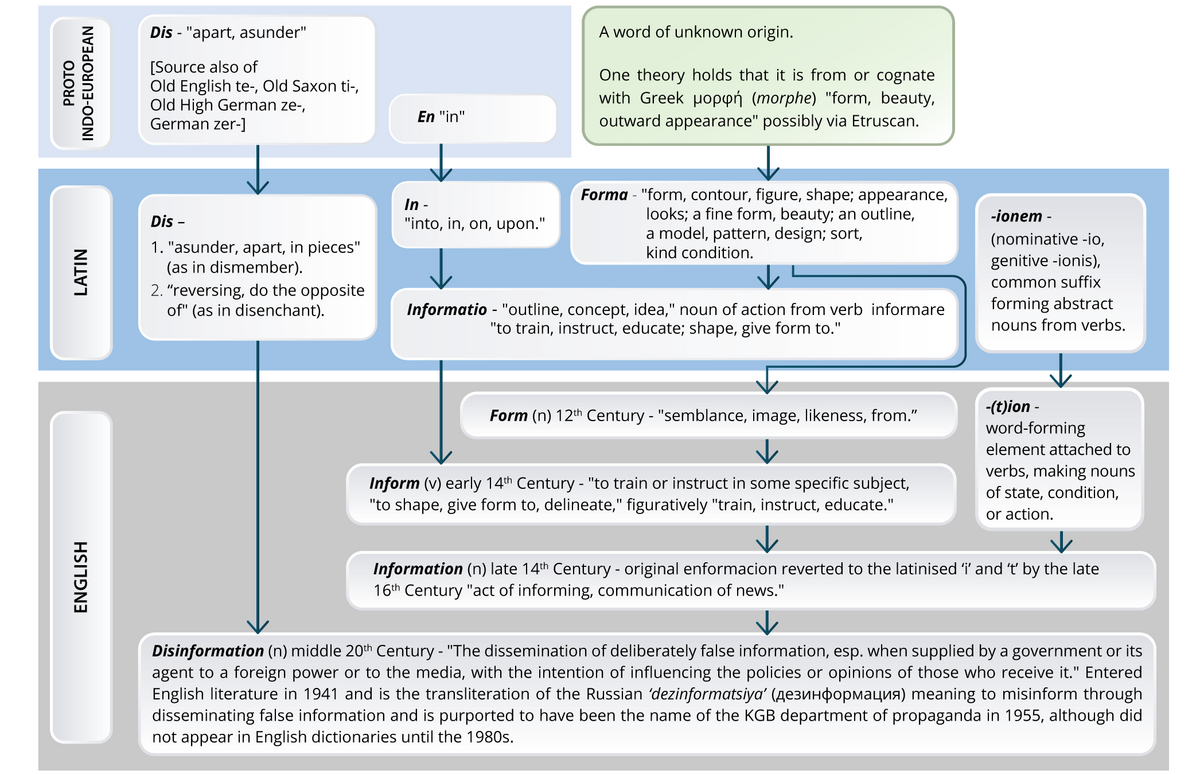
A flowchart titled "The Etymology of Disinformation" traces the linguistic origins of the word "disinformation" from Proto-Indo-European roots through Latin and into English. AlphaFIMI2022, CC BY-SA 4.0, via Wikimedia Commons
The nomads
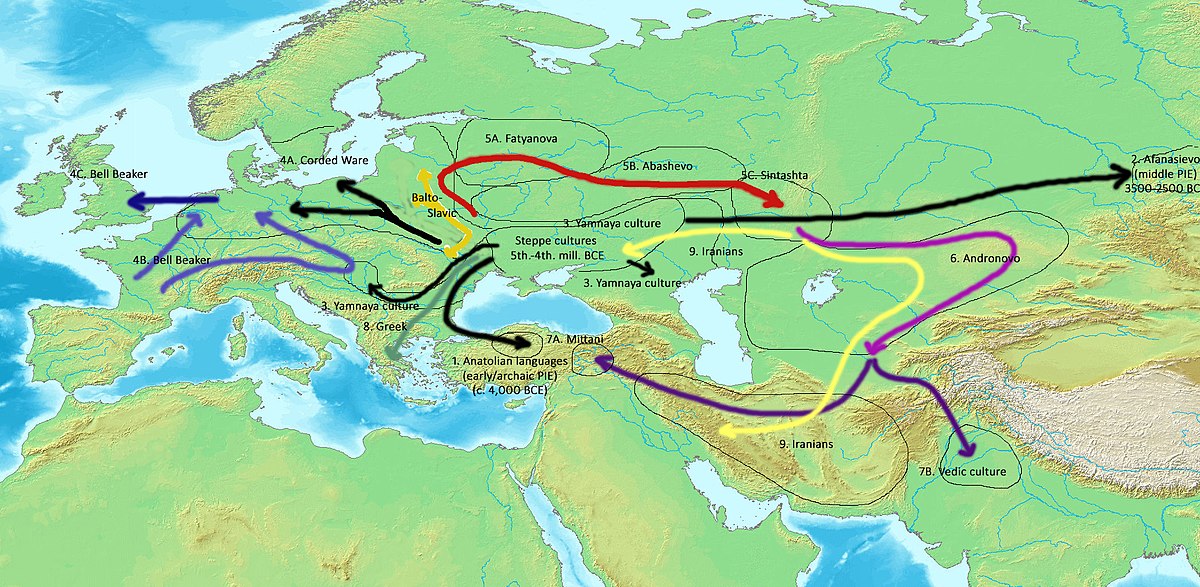
Who spoke this ghost language? The leading theory is the Kurgan hypothesis. They were likely horse-riding nomads roaming the Eurasian steppe around 4,000 BCE.
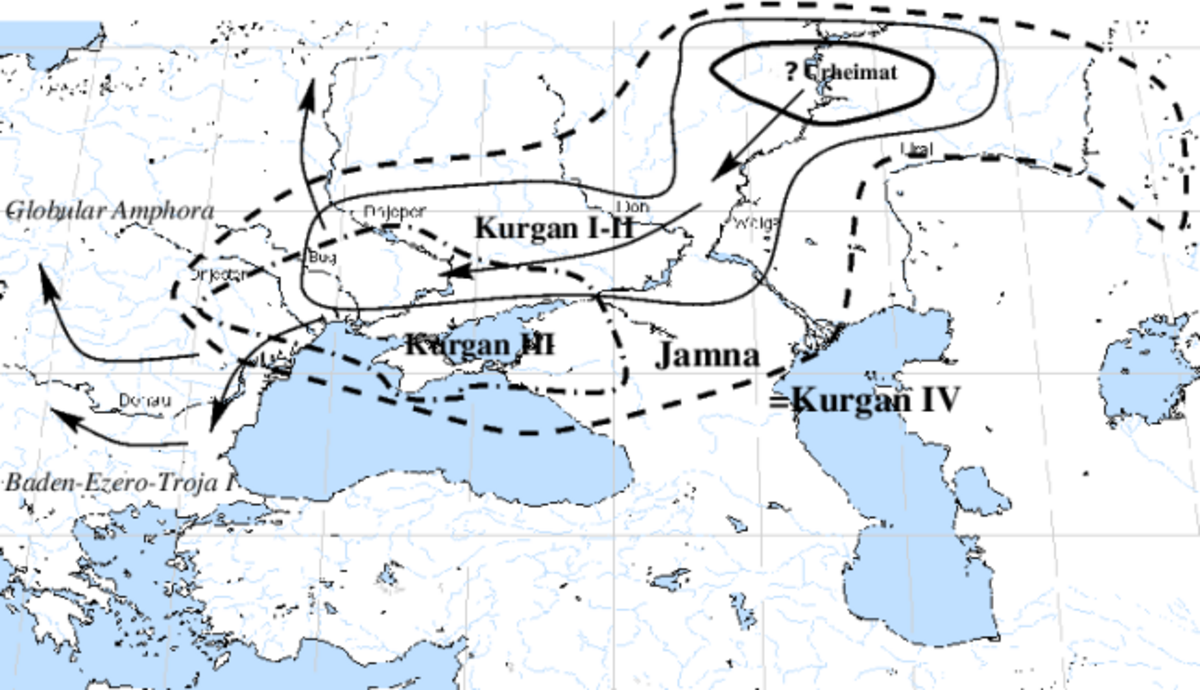
A map provides an overview of the Kurgan hypothesis, illustrating various cultural expansions and migrations across Europe and parts of Asia. Public domain, via Wikimedia Commons
As they migrated, their language branched off, splintering into the massive Indo-European language family that now covers half the globe.
How do linguists reconstruct an unwritten language?
Every reconstructed Proto-Indo-European word is marked with an asterisk because no human ever wrote it down. Linguists rely on the comparative method, identifying systematic sound laws that alter consonants and vowels across centuries. For instance, the consistent shift between the initial Italian "p" in piede, padre, and pesce and the English "f" in foot, father, and fish is not random.
In the 1870s, a group of linguists called the Neogrammarians established that these sound laws operate without exception. When an apparent exception arises, rules like Verner's law demonstrate how elements like word stress explain the variation. Through these rigorous rules, researchers reconstructed roots such as *wódr̥ for water, *ḱwn̥tós for hound, and *tréyes for three.
Who spoke it and when?
Scholars estimate Proto-Indo-European was spoken as a single language between roughly 4500 BCE and 2500 BCE, spanning the Late Neolithic to the Early Bronze Age. According to the Kurgan hypothesis, its speakers were pastoralists living in the Pontic-Caspian steppe of eastern Europe and central Asia.
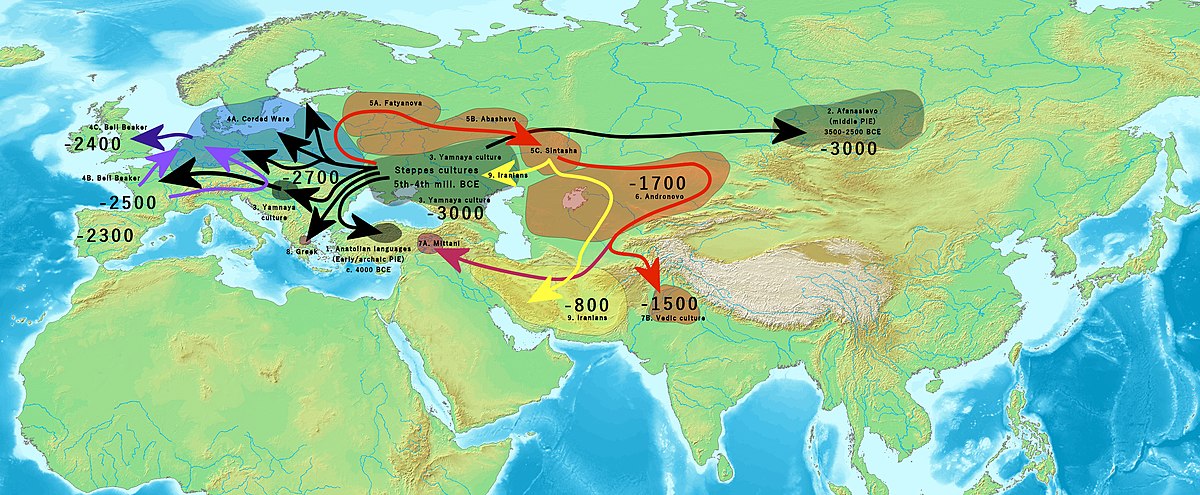
This map shows the proposed migration routes out of the Pontic-Caspian steppe that carried the language across Europe and Asia under the Kurgan hypothesis. Background: Map created from DEMIS Mapserver, which are public domain. Koba-chan Drawings: पाटलिपुत्र (talk), CC BY-SA 3.0, via Wikimedia Commons
As these groups migrated across Eurasia, their regional dialects grew isolated from one another. Each branch underwent separate shifts in pronunciation, vocabulary, and grammar, eventually evolving into ancient languages like Latin, Sanskrit, and Ancient Greek, and ultimately into the modern Indo-European languages.
What features did the language have?
Proto-Indo-European possessed a complex grammatical structure. It used inflectional suffixes to mark grammatical relationships and featured ablaut, a system of internal vowel changes still visible in modern English forms like sing, sang, sung, and song.
Its nouns and pronouns relied on an elaborate system of declension, while verbs operated through extensive conjugation patterns. By studying these reconstructed words, linguists and archaeologists have also pieced together evidence of a pastoral culture and patriarchal religion among its original speakers.
Play the lesson in edgi and the card is yours. It lands on your Map next to the ideas it connects to, and turns from matte to foil to gold as you learn more around it.
Was William Jones the first person to notice the language family?
No, earlier European visitors to India had noticed links between Indo-Iranian and European languages in the 16th century. Marcus Zuerius van Boxhorn proposed a shared ancestral language for several European and Iranian families in 1653, and Gaston-Laurent Coeurdoux demonstrated analogies between Sanskrit and European languages in 1767.
What is the laryngeal theory?
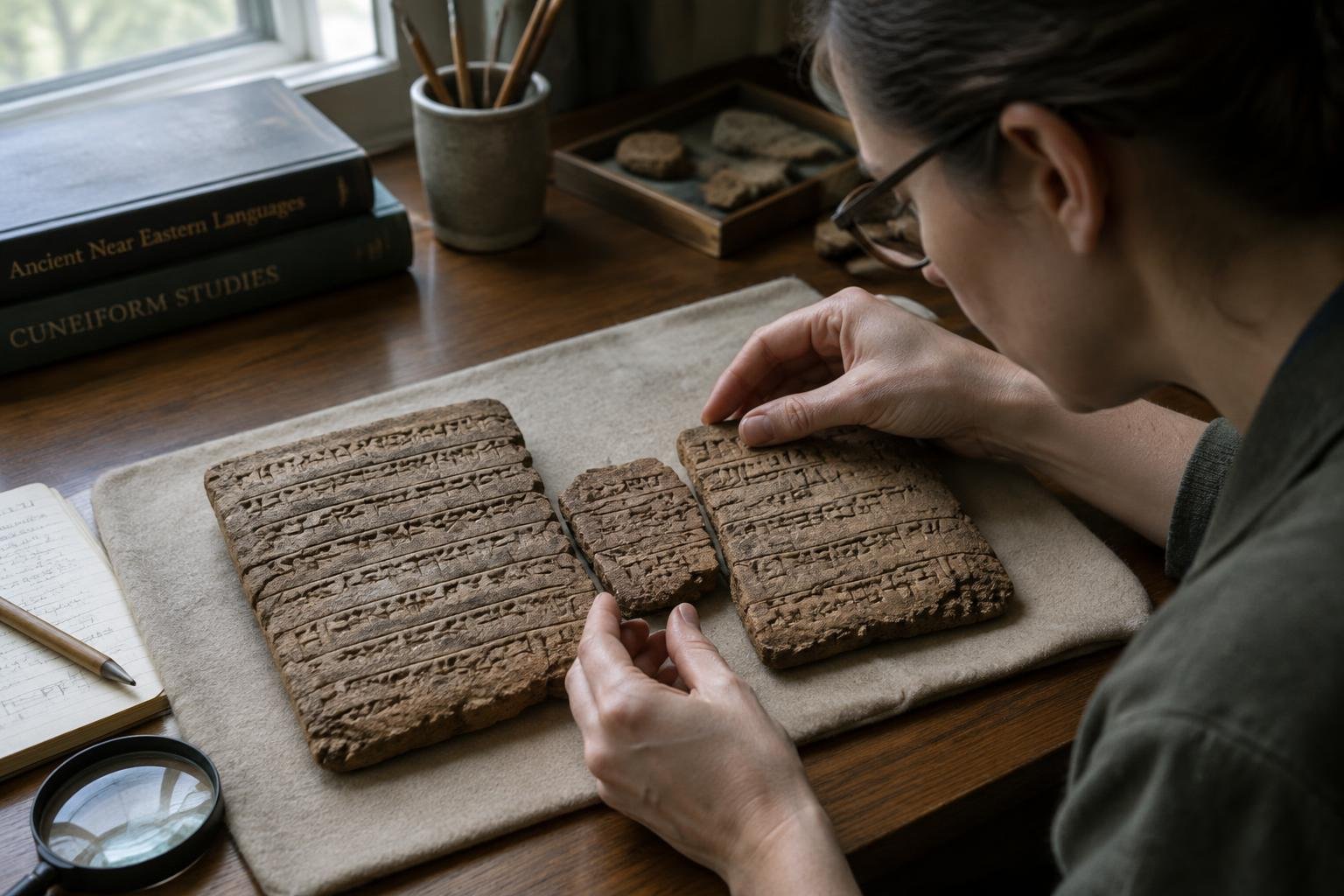
The laryngeal theory proposes that Proto-Indo-European contained specific lost sounds, known as laryngeals, to explain phonological irregularities in reconstructed roots. These theoretical sounds gained major support when evidence for them appeared in excavated Anatolian cuneiform tablets.