Gamma-Aminobutyric acidThe brain's calming chemical
Gamma-Aminobutyric acid, or GABA, is the main chemical messenger that dampens nerve cell activity in the adult mammalian nervous system. By blocking excessive electrical signals, it keeps brain activity stable and prevents over-excitation. Without enough of it, unchecked neural firing can lead to conditions like seizures and panic attacks.
By the edgi team We find the most surprising true thing about an idea and build a 60-second lesson around it.
Your brain is constantly humming with electrical activity that could easily spiral into seizures if left unchecked. Gamma-Aminobutyric acid, known as GABA, acts as the nervous system's chief brake pedal.
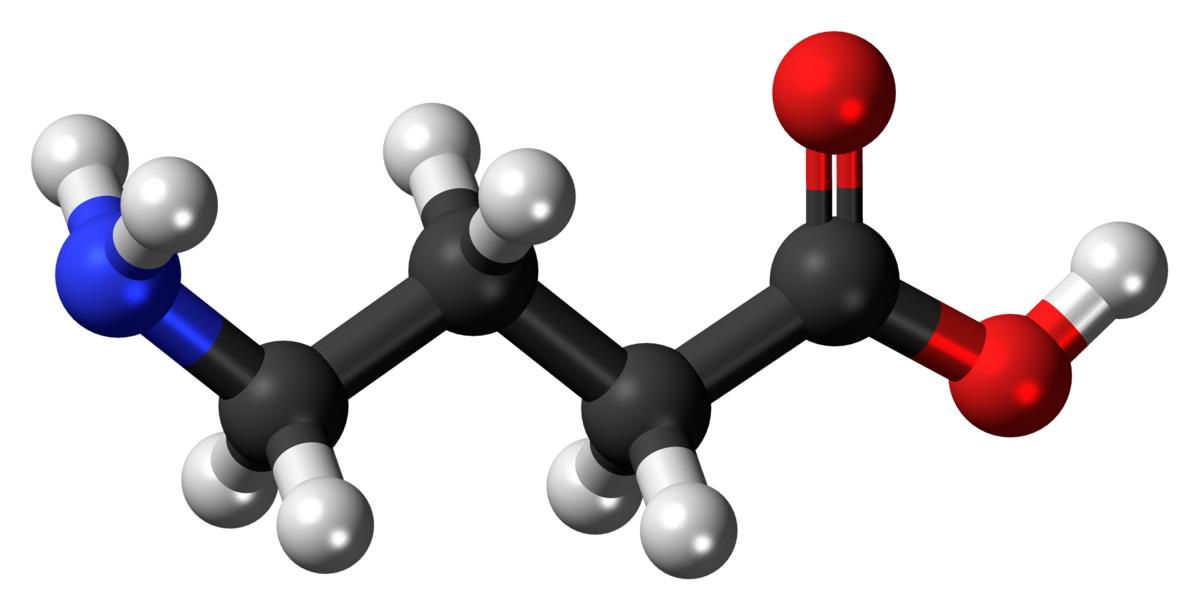
A 3D ball-and-stick model of a GABA molecule, with atoms represented by spheres: black for carbon (C), white for hydrogen (H), red for oxygen (O), and blue for nitrogen (N). Jynto (talk), CC0, via Wikimedia Commons
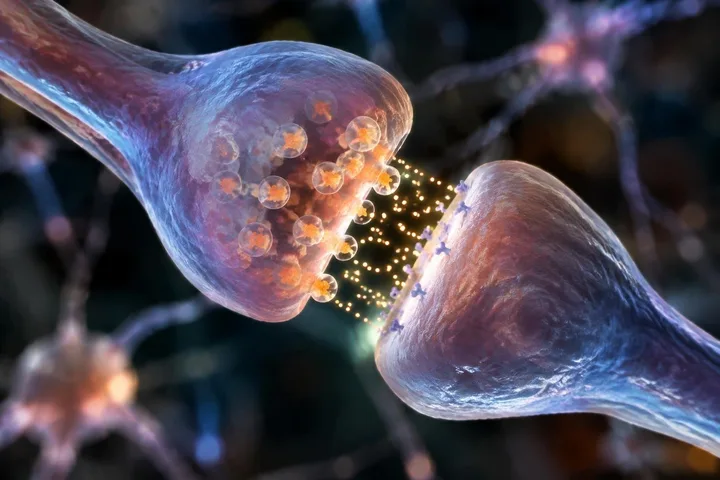
It turns down the volume of neuronal firing, allowing for focus, sleep, and a sense of calm.
The discovery
In 1950, researchers Eugene Roberts and Sam Frankel discovered GABA while studying the chemical makeup of mouse brains. They initially thought it was just a metabolic byproduct, but soon realized it was a critical regulator of the entire mind.
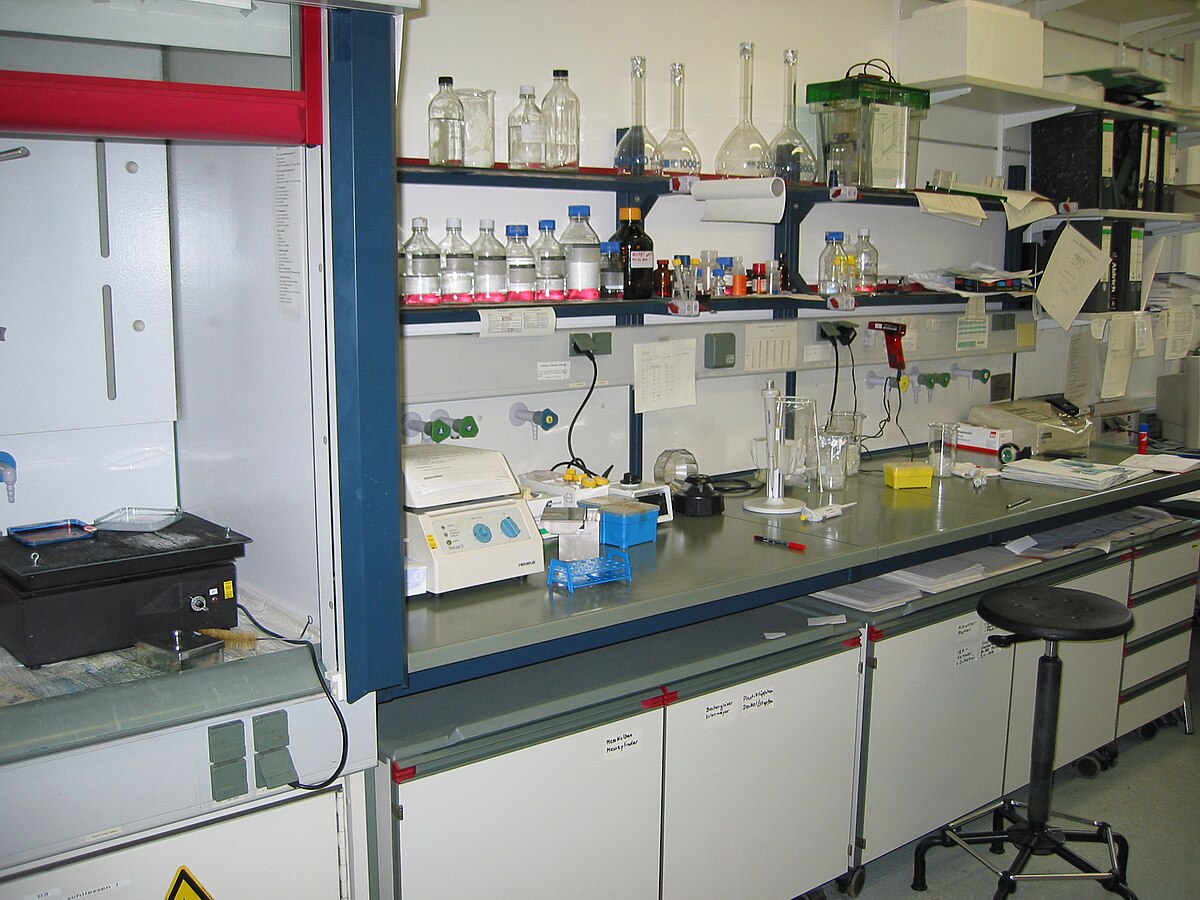
A laboratory bench at the Institute of Biochemistry, University of Cologne in Germany, equipped with various glassware, bottles of reagents, and scientific instruments. Magnus Manske, CC BY 1.0, via Wikimedia Commons
Without enough of this neurotransmitter, the brain enters a state of hyper-excitability seen in conditions like epilepsy.
Medicating calm
Modern medicine exploits this inhibitory mechanism using drugs like a sedative or a benzodiazepine. These substances make the brain's receptors more sensitive to GABA's calming touch, halting panic attacks and inducing sleep.
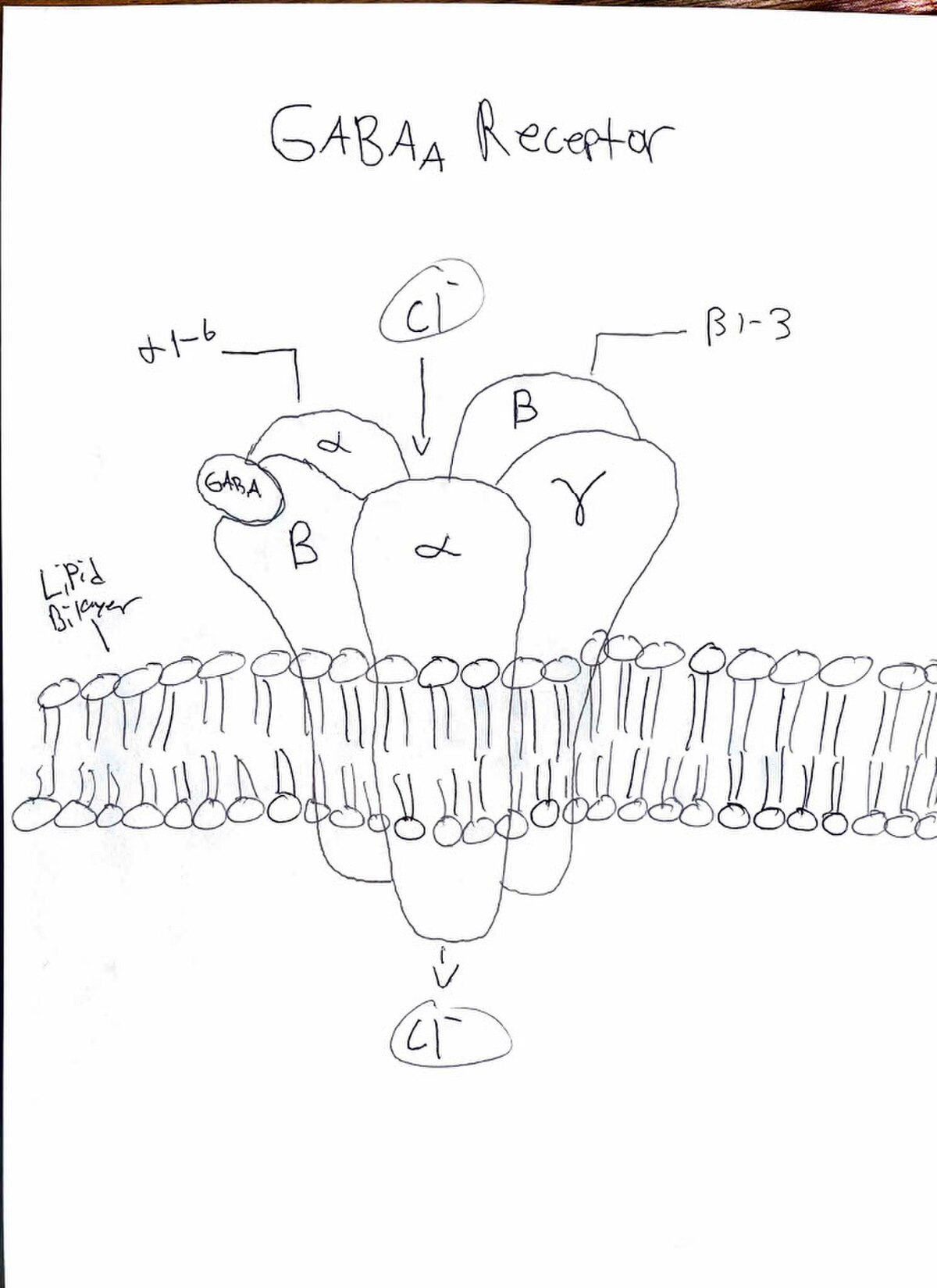
Hand-drawn diagram illustrating the general structure of a GABA-A Receptor embedded in a lipid bilayer. Cmb299, CC0, via Wikimedia Commons
It is the chemical anchor that keeps human consciousness from drifting into a storm of static.
How GABA receptors quiet nerve cells
GABA functions through two main classes of receptors on cell membranes: GABAA and GABAB. GABAA receptors are ligand-gated chloride ion channels. When GABA binds to them, chloride ions pass through the channel. In adult brains, this flow typically drives negative chloride into the cell, making the cell membrane more negative and far harder to excite.
GABAB receptors work differently as metabotropic G protein-coupled receptors that open or close ion channels indirectly through helper proteins. In addition to fast signals, low amounts of GABA lingering outside synapses produce a slow, continuous suppression called tonic inhibition.
Why GABA acts as an accelerator in developing brains
In developing brains before synapses fully mature, GABA serves as the primary excitatory chemical rather than an inhibitory one. Immature neurons contain higher concentrations of NKCC1 transporters relative to KCC2 transporters, reversing the internal chloride balance. When GABA binds to receptors on an immature neuron, chloride flows out, creating an activating electrical current.
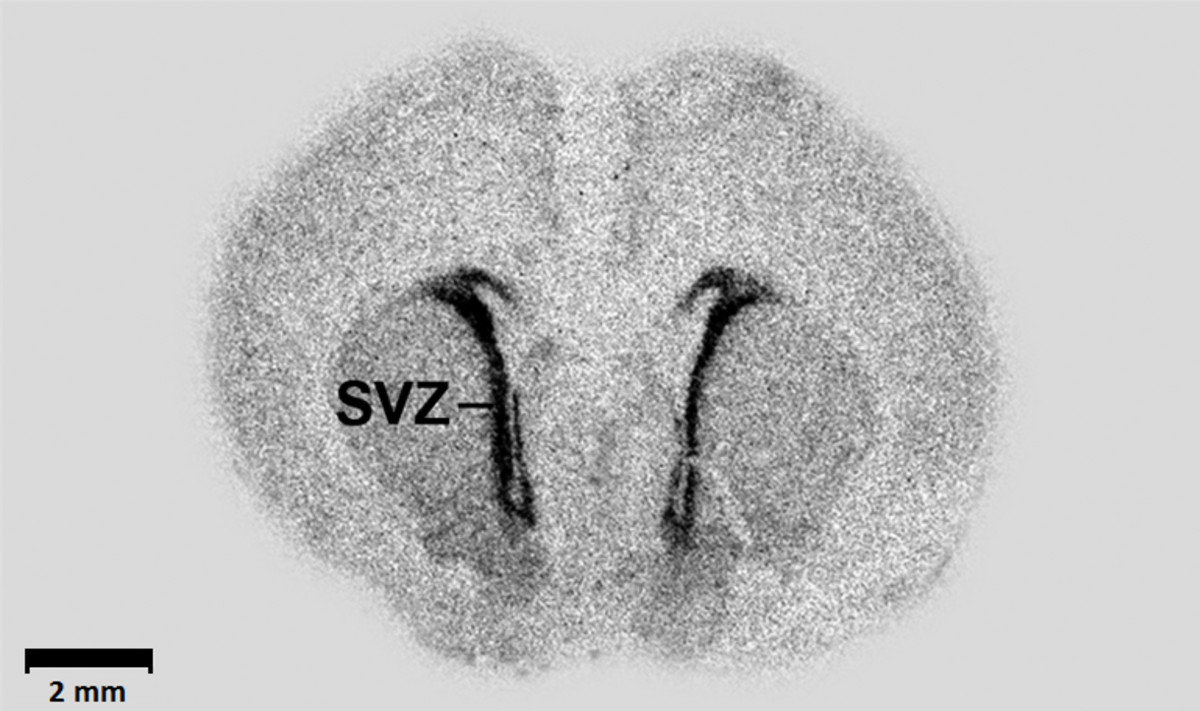
Expression of the GABA-producing enzyme GAD67 highlights active developmental regions in a newborn rat brain section. Popp A, Urbach A, Witte OW, Frahm C, CC BY 2.5, via Wikimedia Commons
This early excitatory signaling guides brain assembly. GABA directs stem cell growth, coordinates the movement and differentiation of neural progenitor cells, and spurs synapse formation.
GABA functions outside the brain
Outside the nervous system, the highest levels of GABA appear in the insulin-producing beta cells of the pancreas. Beta cells release GABA alongside insulin. This GABA binds to neighboring alpha cells and stops them from secreting glucagon, which would otherwise counteract the insulin.
Immune cells also display GABA receptors. Administering GABA suppresses inflammatory immune responses and cytokine secretion in animal studies. Smaller traces of GABA exist in peripheral tissues such as the intestines, stomach, lungs, liver, and kidneys.
Play the lesson in edgi and the card is yours. It lands on your Map next to the ideas it connects to, and turns from matte to foil to gold as you learn more around it.
Do GABA supplements cross the blood-brain barrier?
Traditional consensus held that oral GABA supplements cannot cross the blood-brain barrier into the brain. Studies in rats from the 2010s showed that whether exogenous GABA crosses remains unclear.
Does GABA ever excite neurons in adult mammals?
Yes, specific cell types can break the rule. Chandelier cells are GABAergic neurons in mammals that can excite their glutamatergic partner cells, and GABAB activation can trigger excitatory calcium channels.
What role does GABA play in insects?
In insects, GABA carries both inhibitory and excitatory signals. It mediates muscle activation at the junctions between nerves and muscle cells and stimulates certain insect glands.