Cortisol is a steroid hormone produced by your adrenal glands that mobilizes energy and helps regulate the immune system. Rather than being just a harmful stress chemical, it follows a daily cycle that releases glucose to wake your brain and fuel your tissues. It acts inside cells by binding to specific receptors to alter gene expression.
By the edgi team We find the most surprising true thing about an idea and build a 60-second lesson around it.
Most people think cortisol is just the villain that causes weight gain and anxiety. In reality, it is your body's essential morning alarm clock.
Before you even open your eyes, your adrenal glands release a surge of this steroid to mobilize glucose and wake your brain. It is designed to get you out of bed, not to keep you up at night.
The accidental discovery
In the 1930s, researcher Hans Selye was trying to discover a new hormone in rats. He failed, but he noticed something strange: no matter how he stressed the animals, their adrenal glands always swelled up.
He called this the General Adaptation Syndrome. He realized the body treats all threats, a predator or a deadline, with the same intense, energy-mobilizing chemical response.
The redline effect
Our ancestors used this burst of energy to escape immediate danger, then recovered quickly. Today, we trigger that same ancient alarm for emails, traffic, and social anxiety.
A traffic jam in Baltimore, Maryland, shows multiple cars bumper-to-bumper on a highway. US gov, Public domain, via Wikimedia Commons
We are essentially running a high-performance engine at the redline while sitting in gridlock. This chronic state, or allostatic load, is what turns a lifesaving survival tool into a source of long-term exhaustion.
How does cortisol fuel the body?
Cortisol increases blood sugar to guarantee a steady fuel supply for the brain and other tissues. It does this mainly by stimulating gluconeogenesis, which is the creation of new glucose from non-carbohydrate sources in the liver, kidneys, and small intestine. It also reduces glucose uptake in muscle and fat tissues, keeping more sugar circulating in the bloodstream.
To provide the raw ingredients for glucose synthesis, cortisol promotes the breakdown of stored proteins in muscle into amino acids. It also encourages lipolysis, the breakdown of stored fats into fatty acids. In liver tissue, it works alongside hormones like adrenaline and glucagon to speed up glycogen breakdown, ensuring rapid energy mobilization during acute stress.
How does cortisol control the immune system?
Cortisol acts as a natural brake on inflammation. When immune cells detect an infection or injury, they release inflammatory signals like interleukin-1, interleukin-6, and tumor necrosis factor alpha. These chemicals trigger the brain to signal the adrenal glands, producing cortisol to keep the inflammatory response from running out of control.
Inside the immune system, cortisol suppresses cellular responses by stopping T-cells from multiplying and blocking substances like interferon gamma. At the same time, it shifts activity toward antibody-mediated pathways by increasing cytokines such as interleukin-4 and interleukin-10. This anti-inflammatory power makes synthetic cortisol, sold as hydrocortisone, an effective treatment for skin rashes, allergies, and rheumatoid conditions.
Where is cortisol made and how does it act?
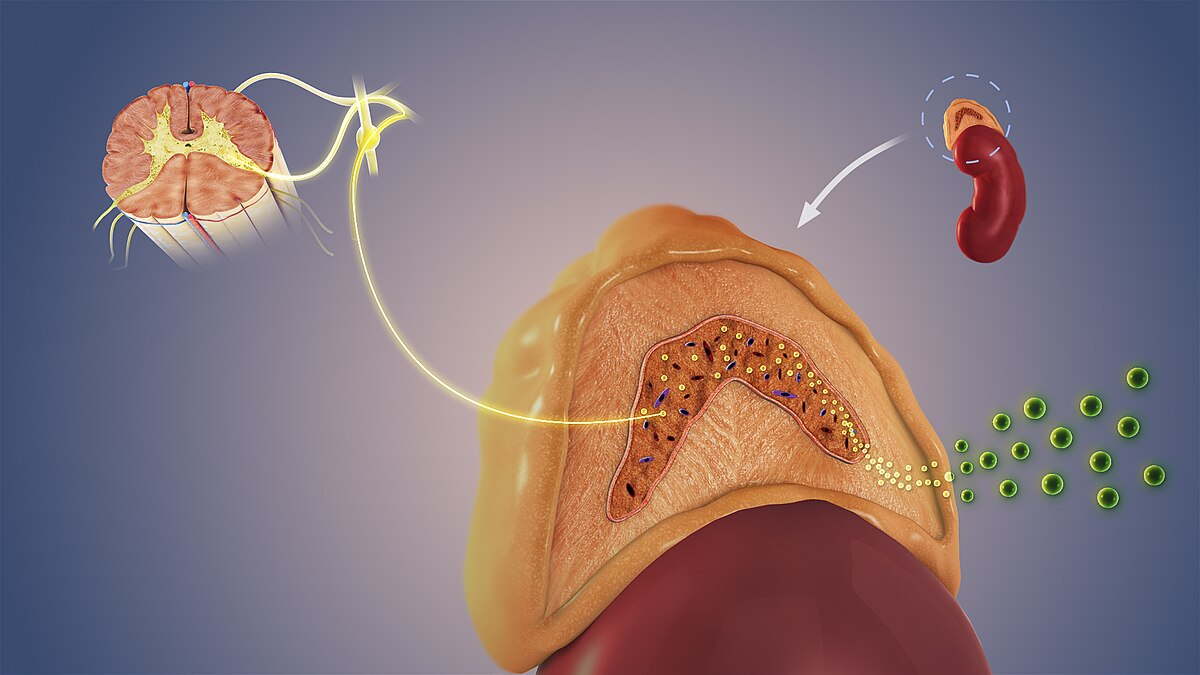
The primary site of cortisol production is the zona fasciculata, a specific layer in the cortex of the adrenal glands. Other tissues also produce it, but in much smaller quantities.
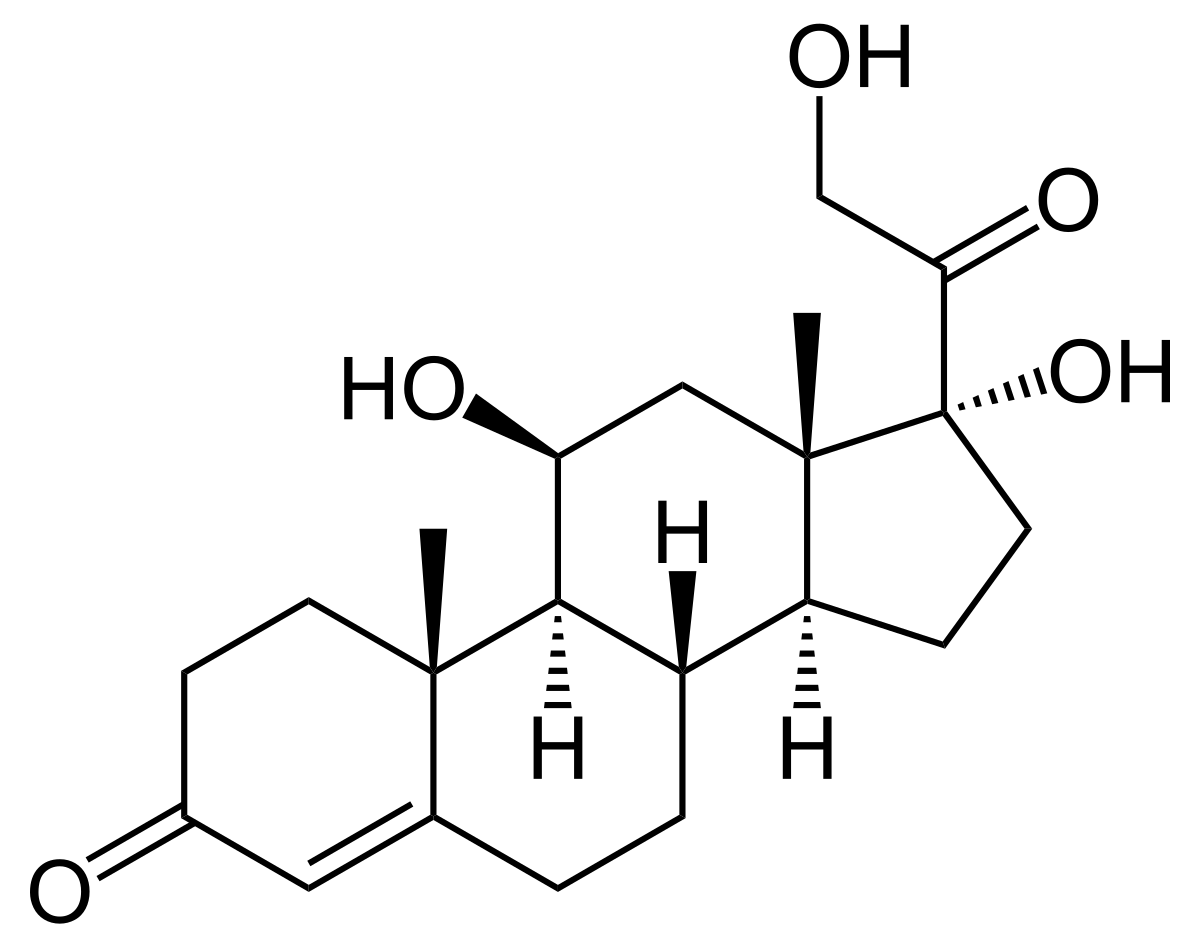
This chemical structure shows the four-ring steroid core and functional groups that allow cortisol to bind to glucocorticoid and mineralocorticoid receptors. NEUROtiker, Public domain, via Wikimedia Commons
Once in circulation, cortisol crosses cell membranes and binds to glucocorticoid and mineralocorticoid receptors. These activated receptors bind directly to DNA to adjust gene expression. Cortisol also interacts with cell surface receptors and acts as a regulator of GABAA receptors, altering their activity depending on its concentration in the blood.
Test yourself
How can everyday stress turn cortisol's useful response into a burden?
Repeated alarms keep mobilizing energy without enough recovery. Cortisol's energy-mobilizing response is useful for short-lived threats. Repeated stress can keep it activated, creating allostatic load.
How does cortisol help the body during its normal morning rise?
It mobilizes energy and helps wake the brain. The morning rise helps prepare the body for the day by mobilizing glucose and waking the brain; it is not meant to keep the alarm ringing.
Cortisol can help make stored energy available during stress.
True. Cortisol helps the body make energy available as part of its response to stress.
Play the lesson in edgi and the card is yours. It lands on your Map next to the ideas it connects to, and turns from matte to foil to gold as you learn more around it.
Hydrocortisone is the medical name for cortisol when it is used as a medication. Doctors and over-the-counter treatments use low-dose topical hydrocortisone to soothe inflammatory skin conditions like eczema and rashes.
Why does prolonged high cortisol cause muscle loss?
When cortisol remains elevated over long periods, it continuously triggers proteolysis, the breakdown of muscle proteins. The body takes the resulting amino acids and converts them into glucose in the liver, leading to muscle wasting.
Does cortisol affect bone formation?
Yes, cortisol directly decreases bone formation. By binding to glucocorticoid receptors inside cells, it changes gene expression to slow the creation of new bone tissue.