Beta EndorphinsThe internal painkiller stronger than morphine
Beta endorphins are peptide molecules, chains of amino acids made in the brain, that act as the body's natural painkillers. They bind to the same opioid receptors targeted by morphine, muting pain signals and relieving stress. In 1977, researchers discovered that beta endorphin is actually more potent at relieving pain than morphine itself.
By the edgi team We find the most surprising true thing about an idea and build a 60-second lesson around it.
In 1975, researchers John Hughes and Hans Kosterlitz isolated a substance from a pig's brain that acted exactly like opium. They realized the brain wasn't built to crave poppies. It was built to manage its own crises.
They named these molecules endorphins, a shorthand for endogenous morphine, or morphine that grows from within.
How it works
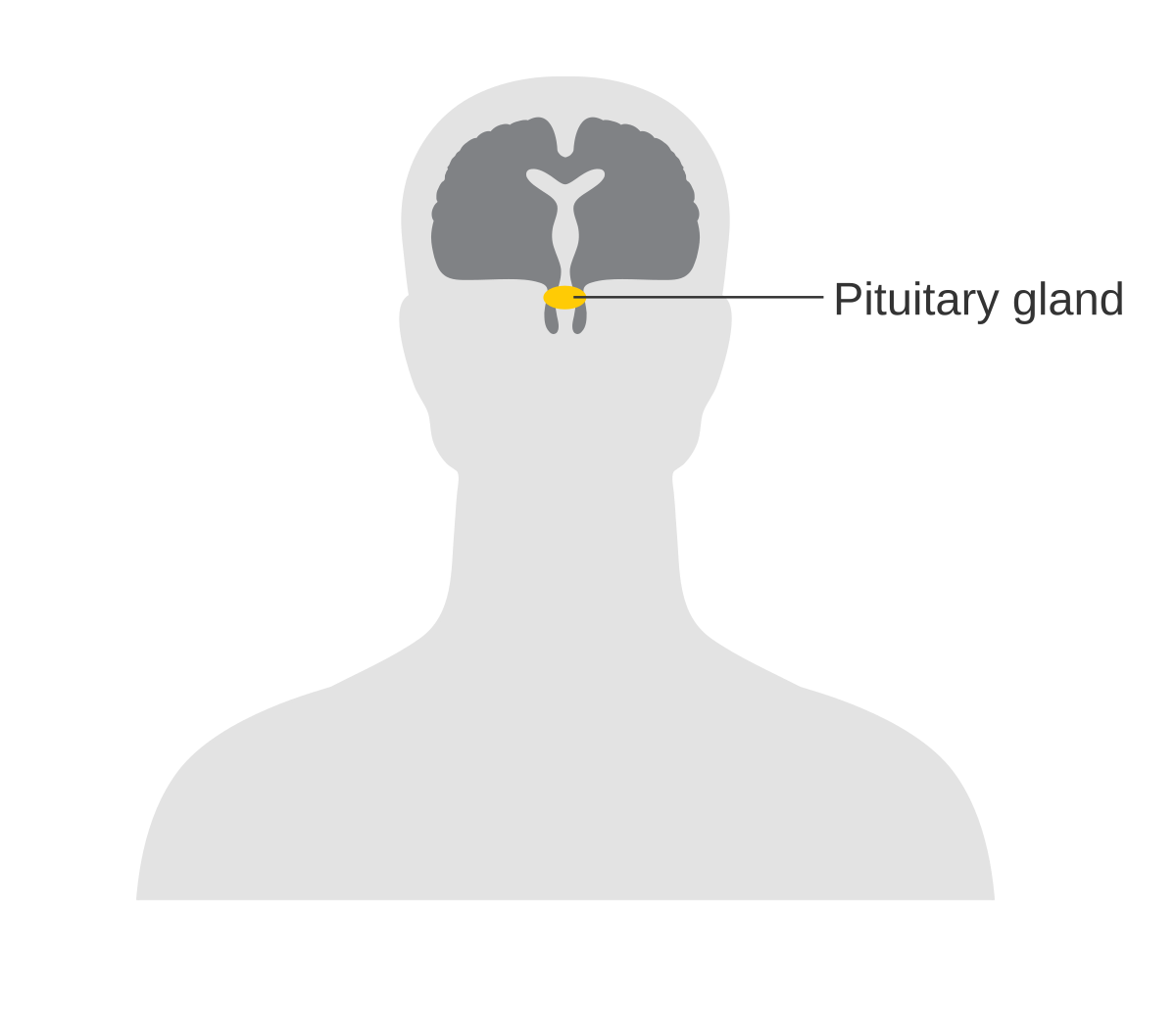
Beta endorphins are peptides, or chains of amino acids, stored in your pituitary gland. When you face extreme stress, injury, or intense physical exertion, your brain dumps these chemicals into your system.
Diagram showing the position of the pituitary gland within the human brain, depicted in a sagittal view of a head silhouette. Cancer Research UK uploader, CC BY-SA 4.0, via Wikimedia Commons
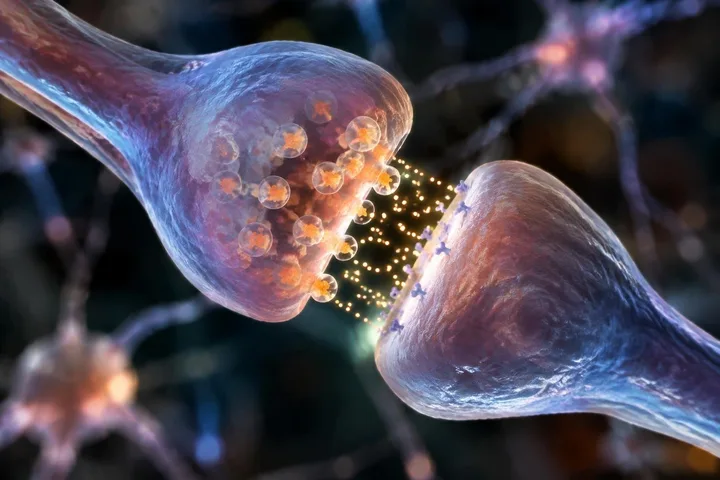
They lock onto the same receptors in your brain as powerful opioid drugs, effectively silencing the alarm bells of your nervous system.
The survival hack
This isn't just about feeling good. It is a vital survival mechanism. By dulling pain, these chemicals ensure a wounded animal or a prehistoric hunter could keep moving to safety despite a broken bone or a deep cut.
An oil painting depicts a European bison being hunted by a pack of dogs in a forest. Kanuty Rusiecki, Public domain, via Wikimedia Commons
Today, we trigger this same ancient response during a long run, turning physical exhaustion into the euphoria known as a runner's high.
How beta endorphins block pain
Beta endorphins work across both the central and peripheral nervous systems by binding to mu-opioid receptors. In the peripheral nervous system, they block nerves from releasing substance P, a neurotransmitter that transmits pain signals.
In the central nervous system, they block the inhibitory neurotransmitter gamma-aminobutyric acid, or GABA. Shutting down GABA triggers an increased release of dopamine, a chemical associated with reward learning and well-being. Because of their affinity for opioid receptors, their pain-relieving effects can be reversed by the opioid antagonist naloxone.
How the body builds beta endorphins
All endorphins begin as a single large precursor protein called proopiomelanocortin, or POMC, produced primarily in the pituitary gland. Enzymes split POMC into smaller pieces, first yielding beta-lipotropin, which is then sliced by proprotein convertase 2 to create beta endorphin.
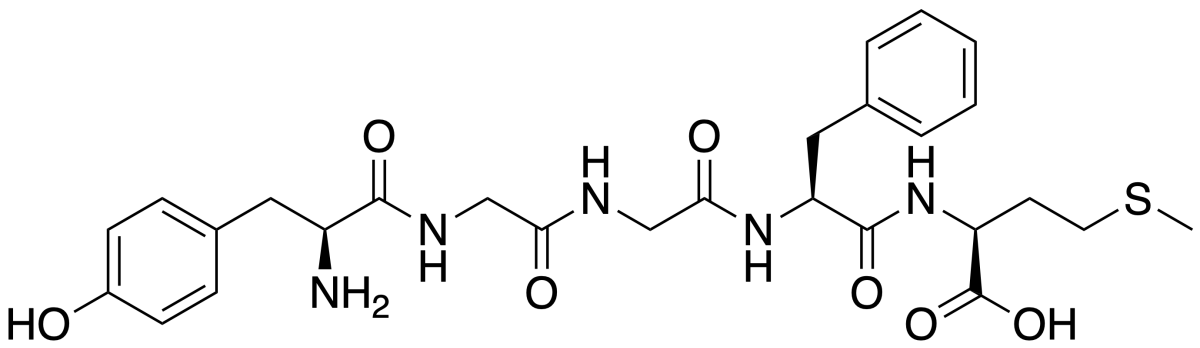
The chemical structure of Met-enkephalin, a peptide motif shared at the starting end of all endorphin chains. Vortioxetine, Public domain, via Wikimedia Commons
Beta endorphin has the longest sequence of the three endorphin types: alpha, beta, and gamma. Further trimming of beta endorphin creates alpha-endorphin and gamma-endorphin, but only beta endorphin binds strongly to opioid receptors to produce powerful analgesic effects.
Test yourself
How do beta endorphins reduce pain during intense effort?
They bind opioid receptors and dampen pain signals.. Beta endorphins act on the same receptors as opioid drugs, muting pain signals rather than healing the injury.
After an injury, why might someone keep moving despite pain?
Beta endorphins can temporarily dampen pain to support escape.. In a crisis, beta endorphins can mute pain as a short-term survival aid, but they do not repair the injury.
How do beta endorphins differ from opioid pain drugs?
They are peptides made by the body that act on opioid receptors.. Beta endorphins are endogenous peptides, but they act on the same receptors as opioid drugs to reduce pain.
Play the lesson in edgi and the card is yours. It lands on your Map next to the ideas it connects to, and turns from matte to foil to gold as you learn more around it.
The pituitary gland releases beta endorphins during physical pain, intense aerobic exercise, stress, orgasm, and deep meditation. Laughter and inflammation can also stimulate their release to raise the body's pain threshold.
Are beta endorphins solely responsible for the runner's high?
Not entirely. While beta endorphins contribute to exercise-induced pain relief, blocking opioid receptors does not stop the feeling of euphoria during exercise. Other brain chemicals, such as endocannabinoids, appear to be responsible for the euphoric high.