Index FundWhy doing no research beats stock picking
An index fund is an investment fund that mirrors a specific list of securities, such as a stock or bond market index, by buying the same assets in the same proportions. Instead of paying managers to pick winning stocks, it runs on passive management to match the index's return before fees. Because it avoids costly research and frequent trading, it outearns most actively managed funds over long horizons.
By the edgi team We find the most surprising true thing about an idea and build a 60-second lesson around it.
An index fund buys everything on a published list, in the proportions the list uses, and never decides that one company looks better than another. Matching the list is the whole product. Nothing has to be researched, so there is little to charge for. At the end of 2024 index equity funds carried an average expense ratio of 0.05% a year, against 0.64% for actively managed funds.
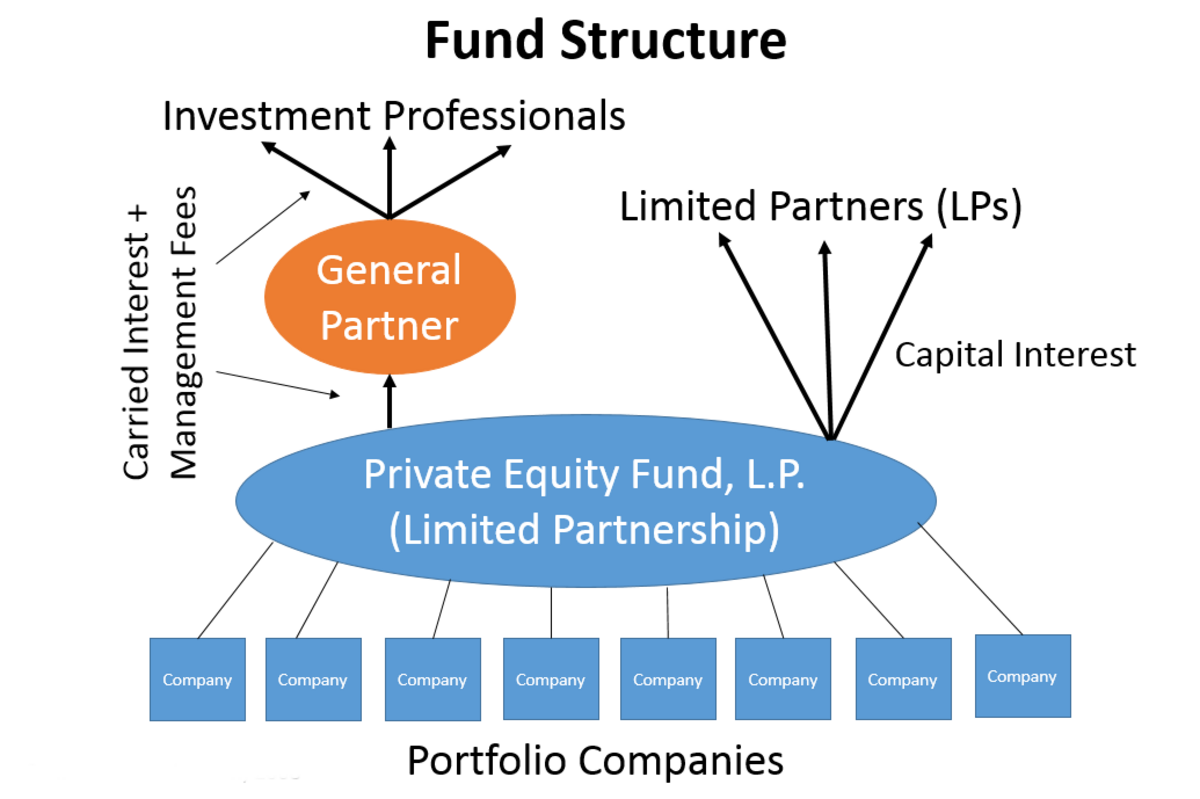
A diagram titled "Fund Structure" illustrates the organization of a private equity or hedge fund, showing Investment Professionals and Limited Partners (LPs) interacting with a General Partner, which… Guest2625, CC BY-SA 3.0, via Wikimedia Commons
Six tenths of a point sounds like rounding. At 7% a year, a fee that size takes about 15% of your ending balance over 30 years, and about 20% over 40.
The part that is arithmetic
Every share is held by somebody every day. Index investors hold their slice and leave it there, so everyone else, added together, owns the rest of the market. That settles the answer before anyone trades. Active investors as a group hold the market's shares between them, so before costs they earn what the market earns.
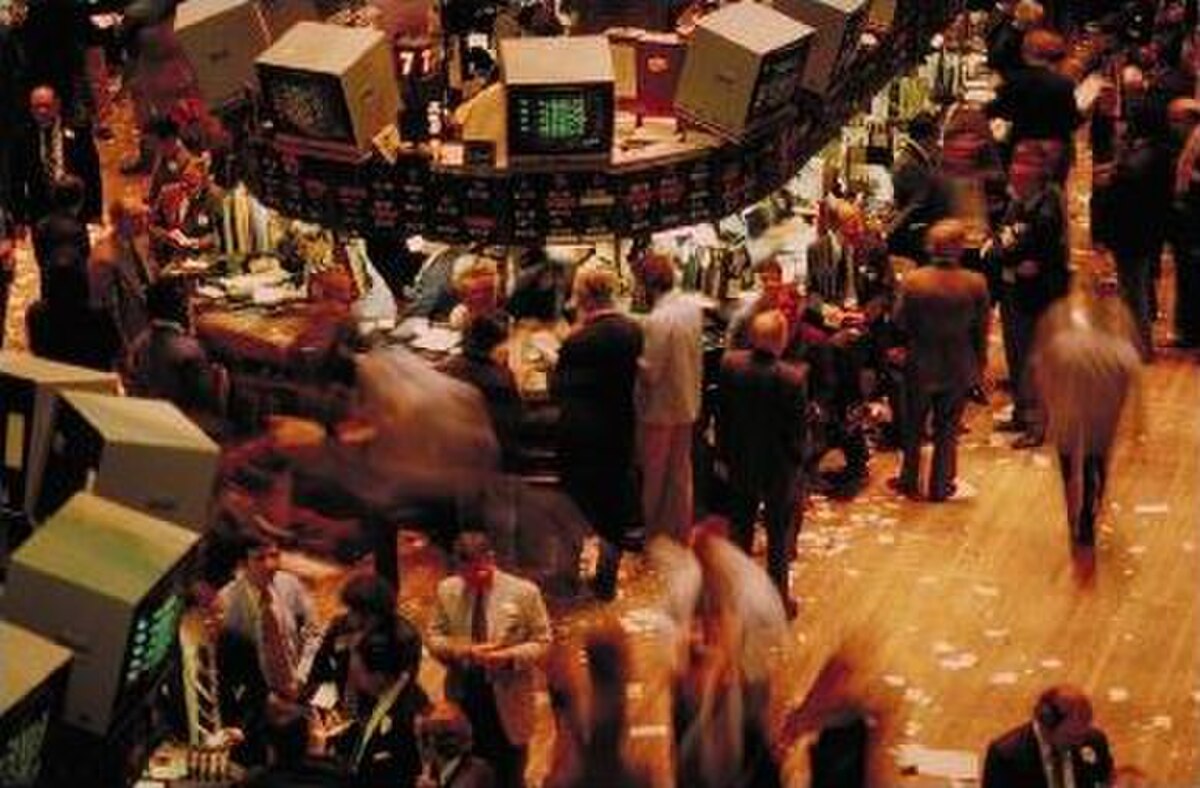
Traders are actively working on the floor of a stock exchange, with some figures blurred due to motion, indicating a busy environment. en:User:Taak, Public domain, via Wikimedia Commons
Costs are all that is left to separate them. Active funds charge more and trade more, so as a group they have to finish behind, and no view about who is clever is needed to get there. The record agrees. In 2024 alone, 65% of active US large-cap funds finished behind the S&P 500, and the longer the window, the fewer stay ahead of it.
The fund nobody wanted
In 1976 John Bogle put the idea in front of ordinary investors for the first time at any scale. The underwriting for his First Index Investment Trust closed on 31 August having raised $11.3 million. He had been hoping for as much as $150 million. Wall Street called it Bogle's Folly and the idea un-American, on the grounds that settling for the average was no way to invest.
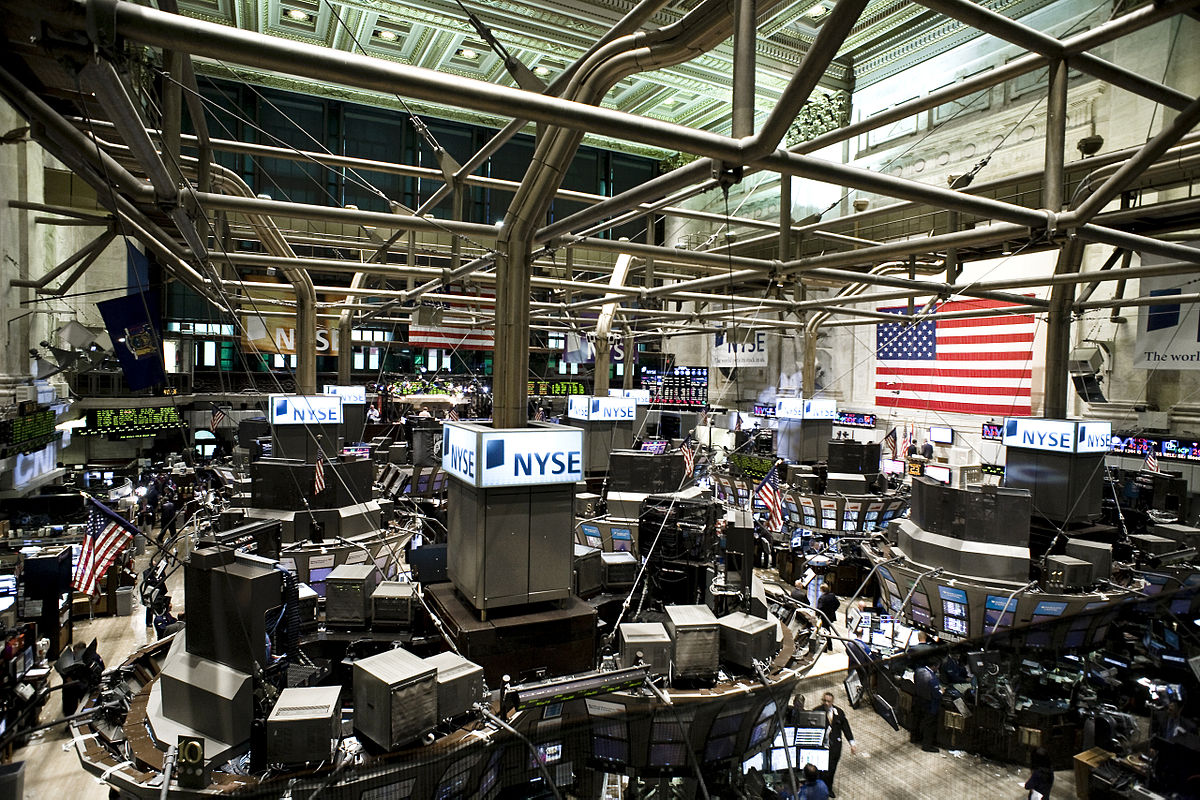
The trading floor of the New York Stock Exchange in 2009, showing a busy scene with numerous traders and multiple trading posts equipped with screens. Government of Thailand, CC BY 2.0, via Wikimedia Commons
That fund now sits underneath a great deal of ordinary retirement money. Its method never improved. The cost it removed simply went on not being paid, year after year.
How an index fund works
An index fund operates by holding the exact assets that make up a benchmark index, like the S&P 500, in identical proportions. Synthetic exchange-traded funds achieve this return through derivatives, while traditional funds simply own the underlying shares directly.
Fund managers make no active judgments about which company will outperform. Instead of aiming for excess returns, their goal is to minimize tracking error, which is the difference between the fund's returns and the benchmark, and to keep operational costs low.
Some funds, called modified index funds, introduce targeted variations. These funds alter risk, yield, or weighting by excluding certain sectors, applying equal weighting, adding leverage, or using covered call strategies.
The early failures that shaped modern indexing
Early index funds struggled because they tracked the wrong types of lists. In 1970, the Qualidex Fund tracked the 30 stocks of the Dow Jones Industrial Average, but because the Dow is price weighted rather than market-cap weighted, the fund required frequent, expensive rebalancing. The Samsonite pension fund tried an equally weighted index of the New York Stock Exchange in the early 1970s and ran into the same impractical rebalancing demands.
Market-cap weighted indexing solved this problem by letting the fund hold larger stakes in larger companies naturally. Institutional funds at Wells Fargo and American National Bank adopted the Standard and Poor's Composite Index in 1973 for clients like Illinois Bell, while Vanguard launched the first retail S&P 500 index fund in late 1975.
By May 2026, assets in U.S. index funds reached $22 trillion, spreading from original stock portfolios into bond indices and institutional pension schemes for companies like AT&T, Ford, and Exxon.
Test yourself
Why do actively managed funds struggle to beat the market index over long periods?
Higher fees and trading costs drag them down.. Active investors collectively own the market before costs, meaning higher management fees and trading expenses ensure the group finishes behind.
How does an index fund approach building its portfolio?
It replicates a published market index.. An index fund simply buys everything on a published list in matching proportions without trying to pick winners.
Two funds hold the same 500 companies at 0.05% and 0.64% a year. What differs over 30 years?
The cheaper fund ends ahead by the fees saved. The holdings are the same, so the fee is the only thing left to separate them. It is charged every year, so the gap keeps widening.
Play the lesson in edgi and the card is yours. It lands on your Map next to the ideas it connects to, and turns from matte to foil to gold as you learn more around it.
Yes. Index funds exist for both stock market and bond market indices. Vanguard introduced the first bond index fund in 1986.
What is the difference between an index mutual fund and an index ETF?
Both follow passive management to track a target index. An index fund can be structured as either a standard open-end mutual fund or an exchange-traded fund, which trades on public exchanges throughout the trading day.