Inflation is a general rise in the average price of goods and services across an entire economy. When prices climb, each unit of currency buys less than it did before, which steadily reduces the purchasing power of your money. Even at low annual rates that seem harmless year to year, the compounding effect cuts the real value of uninvested cash in half over normal working lifespans.
By the edgi team We find the most surprising true thing about an idea and build a 60-second lesson around it.
US consumer prices are about 32 times what they were in 1913. One dollar divided by 32 is where the three cents comes from. That is inflation averaging 3.2% a year for 111 years. In any single year a rate that small is barely visible on a receipt. The repetition is what does the work.
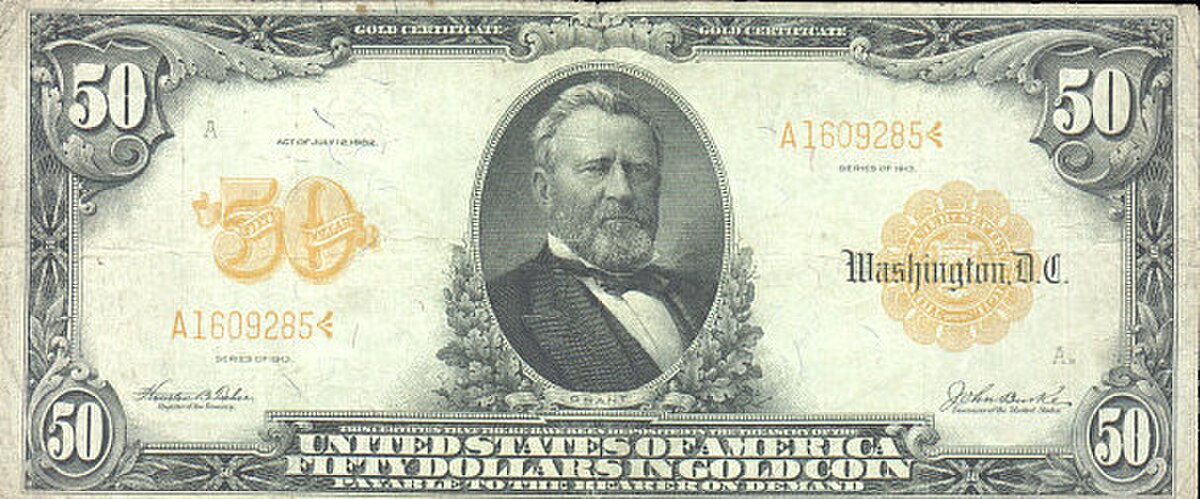
Front of a U.S. This is an image of a United States gold certificate. As the source says, it is a crop of w:File:Goldcertificate.jpg, wh, Public domain, via Wikimedia Commons
Nothing is deducted from your account. Your balance stays exactly the number it was, and the prices move instead, so the same number buys less of everything.
What it does to saved money
$10,000 left in a savings account paying 1% a year becomes $11,046 after ten years. Every statement across that decade shows a gain. If prices rose 3% a year over the same ten years, that $11,046 buys what about $8,220 bought on the day you opened the account. Purchasing power fell by almost a fifth while the balance rose.
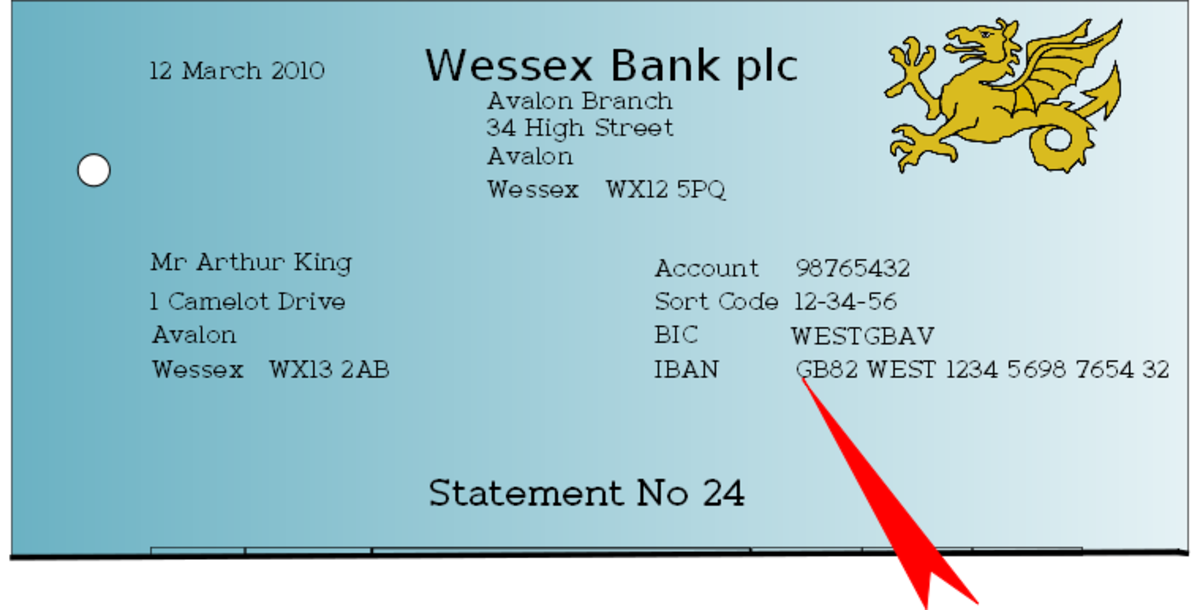
A fictitious bank statement header from Wessex Bank plc, dated 12 March 2010, shows account details for Mr Arthur King. [[User:hilary |Martinvl]], CC BY-SA 3.0, via Wikimedia Commons
Holding cash is a decision with a return of its own. The balance is a fixed number, the price level is not, and the only question is which of them is moving faster.
How long until half is gone
At 3% a year, money held as cash loses half of what it can buy in about 23 years. The Rule of 72 gets you close without a calculator: 72 divided by the rate, and 72 divided by 3 is 24. That is one working life. Cash held from 30 to 55 comes out the other end buying about half as much, with no bad decision recorded anywhere.
Cash is the right place for money you will spend soon, since prices cannot move far in a year or two. The money you will not touch for a decade is the money quietly losing.
A black wire shopping cart with orange plastic handles and trim is parked on a concrete floor with yellow painted lines. Andrevruas, CC BY 3.0, via Wikimedia Commons
What causes inflation?
Inflation occurs when the value of money falls relative to the items it buys, rather than a price shift in a single item like cucumbers or tomatoes. Broad price increases come from rapid growth in the money supply, shifts in real demand, supply shocks like energy crises, major interest rate cuts by central banks, or changing public expectations about future prices.
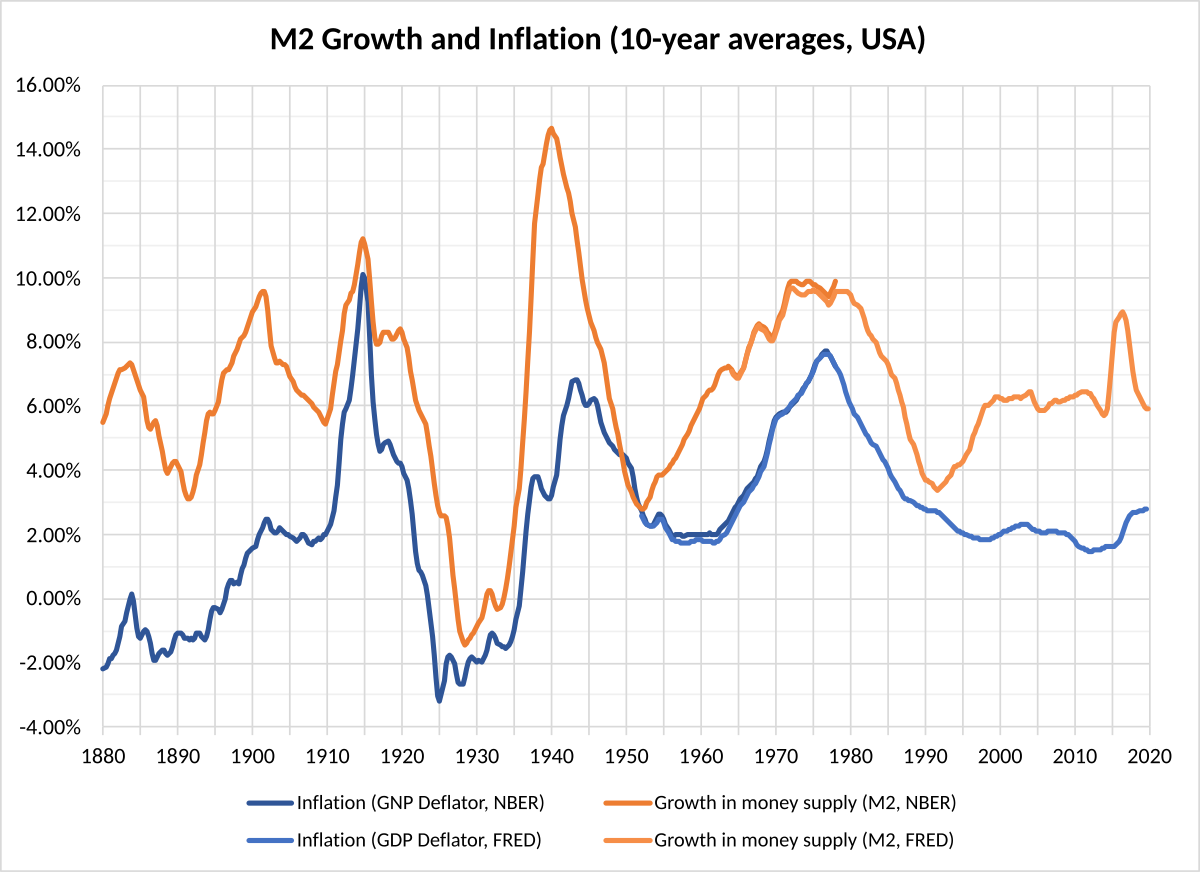
This chart shows how annual changes in the broad money supply track movements in the general inflation rate over time. AlphaMikeOmega, CC0, via Wikimedia Commons
Historically, the term inflation referred directly to the devaluation of currency rather than the price tags on goods. When money was linked to precious metals, discovering large new deposits of gold or silver reduced the currency's value, making everything else more expensive. During the American Civil War, private banknotes were printed in quantities that exceeded available metal reserves, cementing the modern link between currency expansion and rising prices.
Why central banks target low inflation
Most modern economists favor a low and steady inflation rate rather than zero or negative inflation. A modest rate helps labor markets adjust more quickly, prevents the economy from slipping into recessions, and stops liquidity traps from disabling monetary policy.
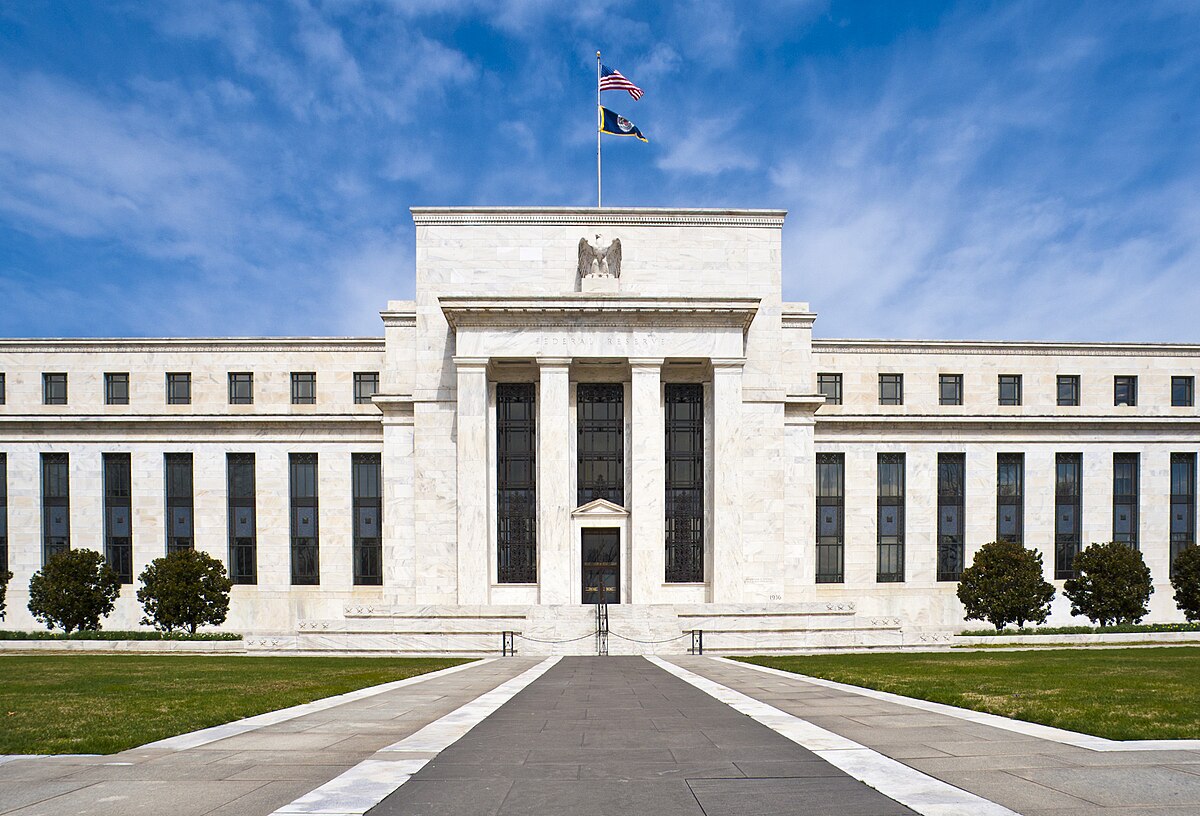
The Federal Reserve Board building in Washington, D.C., where central bank officials set interest rates to manage inflation. Federalreserve, Public domain, via Wikimedia Commons
Central banks, like the Federal Reserve, steer inflation toward stable targets using open market operations and interest rate adjustments. High inflation brings severe costs: it discourages saving, forces workers into stressful wage renegotiations, and can lead to hoarding and shortages as buyers rush to beat future price hikes.
Test yourself
Does inflation reduce wealth by removing money from a bank account?
No, it leaves balances alone and raises prices. Inflation requires no deduction from your balance. The nominal number stays the same while the rising price level quietly reduces what that balance can buy.
Why does holding cash for long periods create a hidden loss even with positive interest?
Price growth outpaces the slow interest rate. If inflation outpaces your interest rate, your purchasing power shrinks despite a growing nominal balance. The damage happens because prices move faster than your returns.
A country runs 6% inflation. About how long before cash there buys half as much?
About 12 years. 72 divided by 6 is 12. Doubling the rate halves the time, which is why savings in a high-inflation country can lose half their value inside a decade.
Play the lesson in edgi and the card is yours. It lands on your Map next to the ideas it connects to, and turns from matte to foil to gold as you learn more around it.
What is the difference between inflation and deflation?
Inflation is an increase in the general price level of goods and services, which lowers the purchasing power of money. Deflation is the exact opposite, where the general price level falls over time.
What is hyperinflation?
Hyperinflation is an extreme, out-of-control inflationary spiral where prices rise rapidly. Notable historical examples include the Weimar Republic in Germany and Venezuela, which reached an annual inflation rate of 833,997% in 2018.
How is inflation measured?
Inflation is measured using a price index, most commonly a consumer price index (CPI). The standard metric is the inflation rate, which is the annualized percentage change in that index.