Instant noodles: why flash-frying makes them cook fast
Instant noodles are precooked, dried blocks of noodles that rehydrate in boiling water in just a few minutes. Flash-frying or air-drying creates a porous structure that lets hot water penetrate the dough almost instantly instead of cooking raw flour from scratch. Today, people eat over 100 billion servings worldwide each year.
By the edgi team We find the most surprising true thing about an idea and build a 60-second lesson around it.
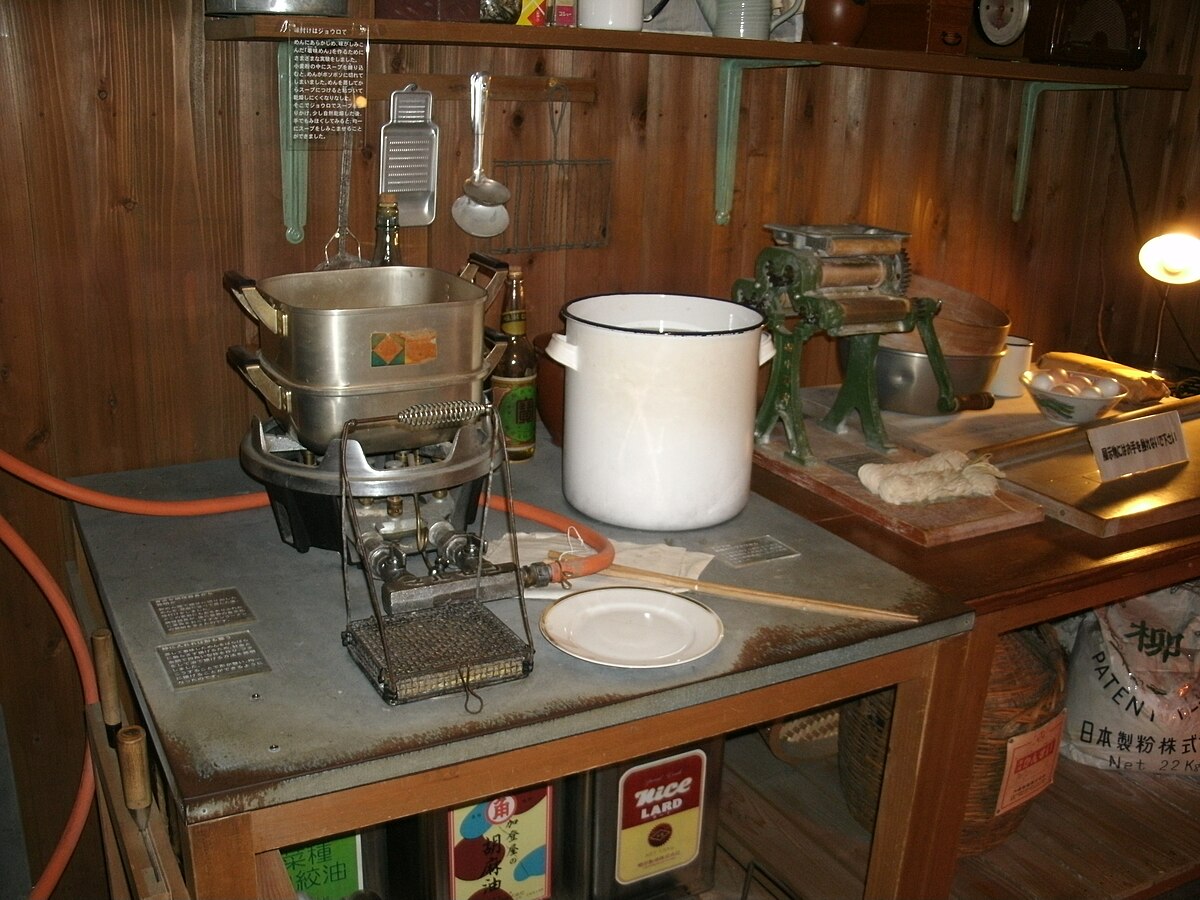
In 1958, Momofuku Ando spent months in a backyard shed in Osaka, desperate to solve post-war food shortages. He found his answer watching his wife fry tempura. The hot oil dehydrated the batter instantly, leaving a porous, crispy structure.
A recreation of Momofuku Ando's workshop, where instant noodles were created, features a vintage kitchen setup with a stovetop, pots, and a noodle press. Mr.ちゅらさん, CC BY-SA 4.0, via Wikimedia Commons
The tunnel effect
Instant noodles are flash-fried to evaporate the water inside the dough. This creates millions of microscopic tunnels throughout the noodle.
When you add boiling water, you aren't cooking raw flour; you're simply rehydrating those tunnels in seconds.
A global staple
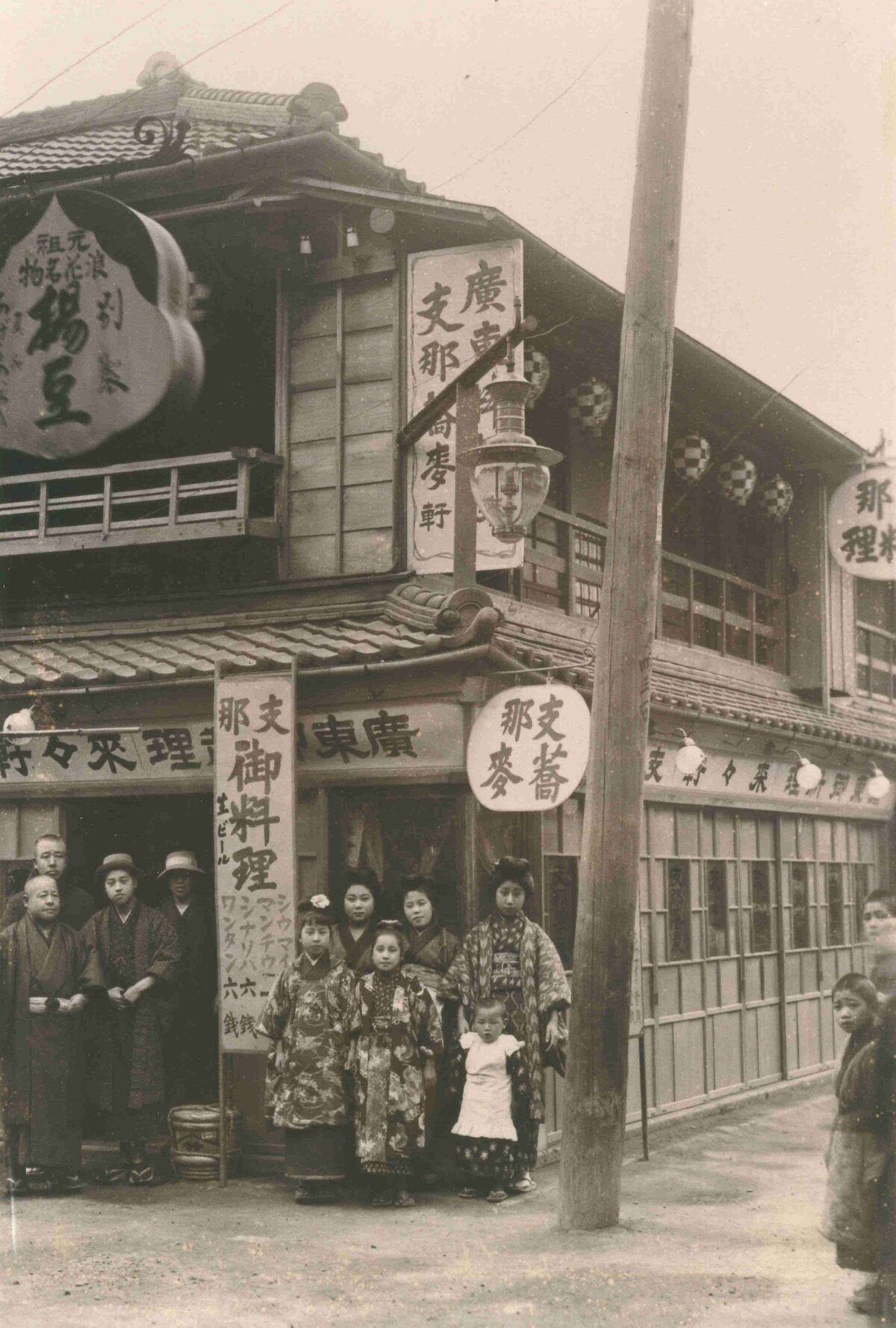
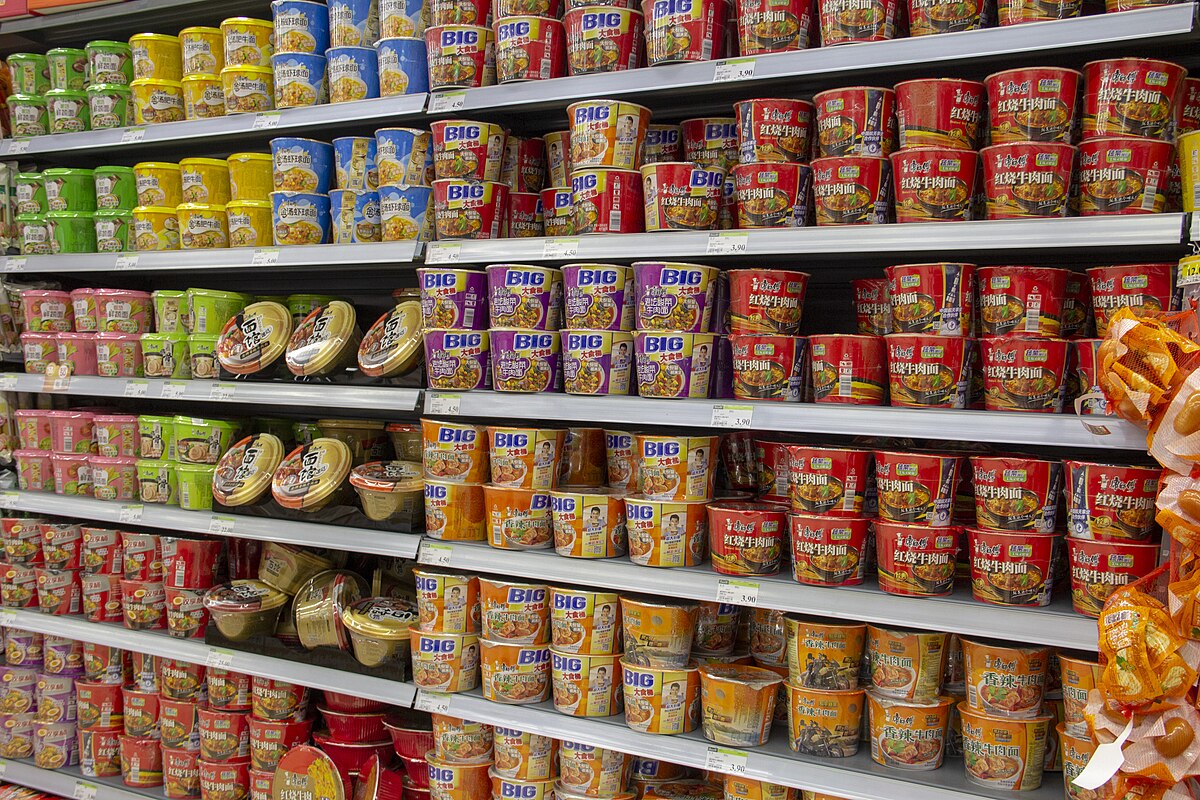
Initially, this creation was a luxury item, costing significantly more than fresh noodles. Today, they are a global commodity with over 100 billion servings eaten every year, from basic packs to spicy Buldak.
A vintage photograph of Rairaiken, the first ramen shop, founded in 1910 by Kan'ichi Ozaki in Asakusa, Tokyo. 新横浜ラーメン博物館, Public domain, via Wikimedia Commons
How are instant noodles made?
Instant noodles rely on a precise dough mix of flour, water, starch, and salt or kansui, an alkaline mineral water containing sodium carbonate and potassium carbonate. Manufacturers select wheat flours with 8.5% to 12.5% protein. This protein creates gluten, a flexible protein network that holds the noodle together during drying and reduces oil uptake when fried.
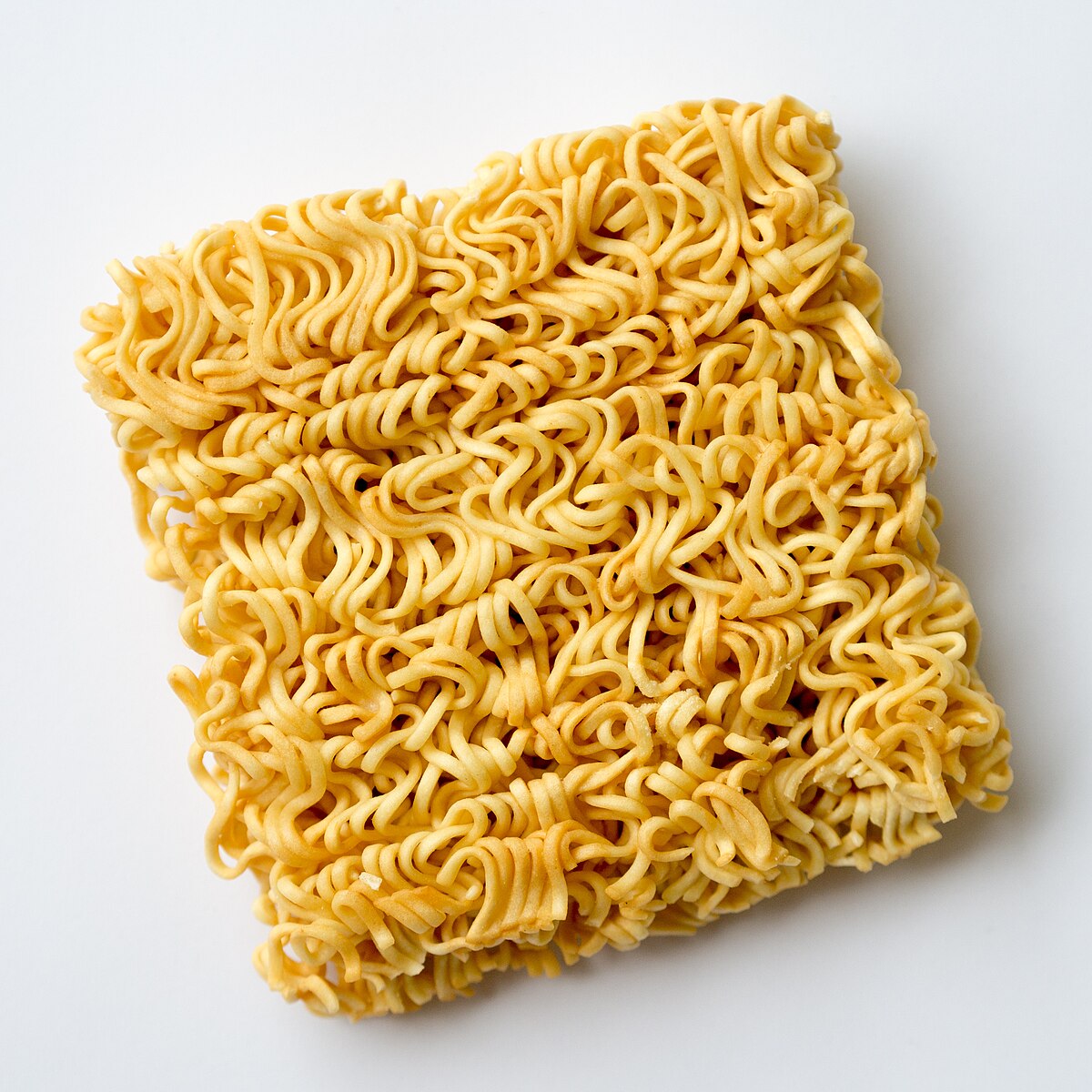
A dried noodle block reveals the wavy structure and porous strands created by flash-frying. Takeaway, CC BY-SA 3.0, via Wikimedia Commons
After steaming, producers dehydrate the noodle blocks. In Asian countries, flash-frying in hot oil remains the dominant method, while air-drying is favored in Western markets. Flash-frying rapidly drives out moisture, creating microscopic tunnels that allow boiling water to rehydrate the block in minutes while giving the food a shelf life longer than frozen noodles.
Why are instant noodles wavy?
In 1953, Yoshio Murata invented a mechanical process to curve noodles into waves dozens of times faster than before. This mechanical wave shape solved several major production and cooking challenges at once.
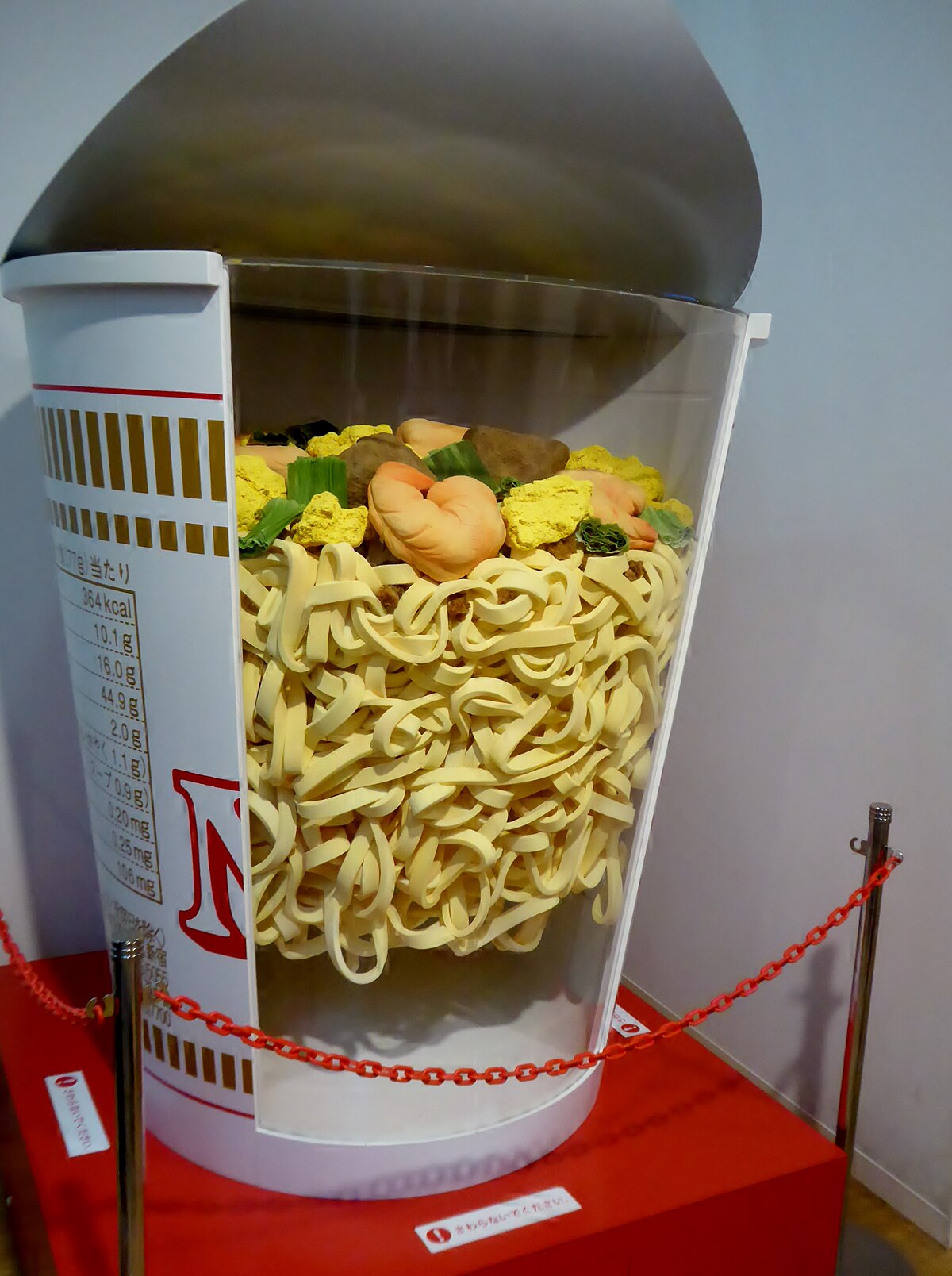
A cross-section shows how wavy noodles pack tightly inside a cup alongside dried ingredients. Tokumeigakarinoaoshima, CC BY-SA 4.0, via Wikimedia Commons
Wavy noodles fit more food into a compact package, resist breaking during transport, and cook more evenly without sticking together. The curves also provide elasticity and make the noodles easier to grip with chopsticks or forks.
From luxury item to global staple
Momofuku Ando released the first commercial instant noodles in Japan on August 25, 1958, under the brand name Chikin Ramen. At ¥35 per block, they were originally six times more expensive than fresh noodles in Japanese grocery stores. Their convenience soon turned them into a massive commercial success.
In 1971, Ando invented Cup Noodles after watching Americans break up noodle blocks in paper cups. Combining the packaging, cooking vessel, and bowl into one container with dried vegetables made the format even more portable. By 2018, worldwide consumption reached approximately 103 billion servings annually, led by China at 40 billion packages and South Korea at 74.6 servings per person.
Play the lesson in edgi and the card is yours. It lands on your Map next to the ideas it connects to, and turns from matte to foil to gold as you learn more around it.
Kansui is an alkaline mineral water containing sodium carbonate and potassium carbonate, sometimes with a small amount of phosphoric acid. It is added to noodle dough to affect its texture and structure.
What ingredients are in the flavoring packets?
Flavoring packets typically contain salt, monosodium glutamate, sugar, and various seasonings. Some instant noodles also come with separate seasoning oils or loose flavor powders in the container.
Which country eats the most instant noodles per person?
South Korea consumes the most instant noodles per capita at 74.6 servings per year. Vietnam ranks second with 53.9 servings, followed by Nepal with 53 servings.