Ultra-processed foodHow industrial formulations alter eating
Ultra-processed food is an industrially manufactured product made mostly from modified starches, fats, and additives rather than whole foods. These formulations combine sugars, fats, and salt at precise levels that stimulate eating past fullness. Because they break down quickly, they enter the bloodstream rapidly without requiring standard digestion.
By the edgi team We find the most surprising true thing about an idea and build a 60-second lesson around it.
In 1999, the CEOs of the world's largest food companies gathered at the Pillsbury headquarters. They were there to discuss the growing public concern over the obesity epidemic.
Instead of pivoting to health, they doubled down on the one thing that worked: engineering food to be chemically addictive.
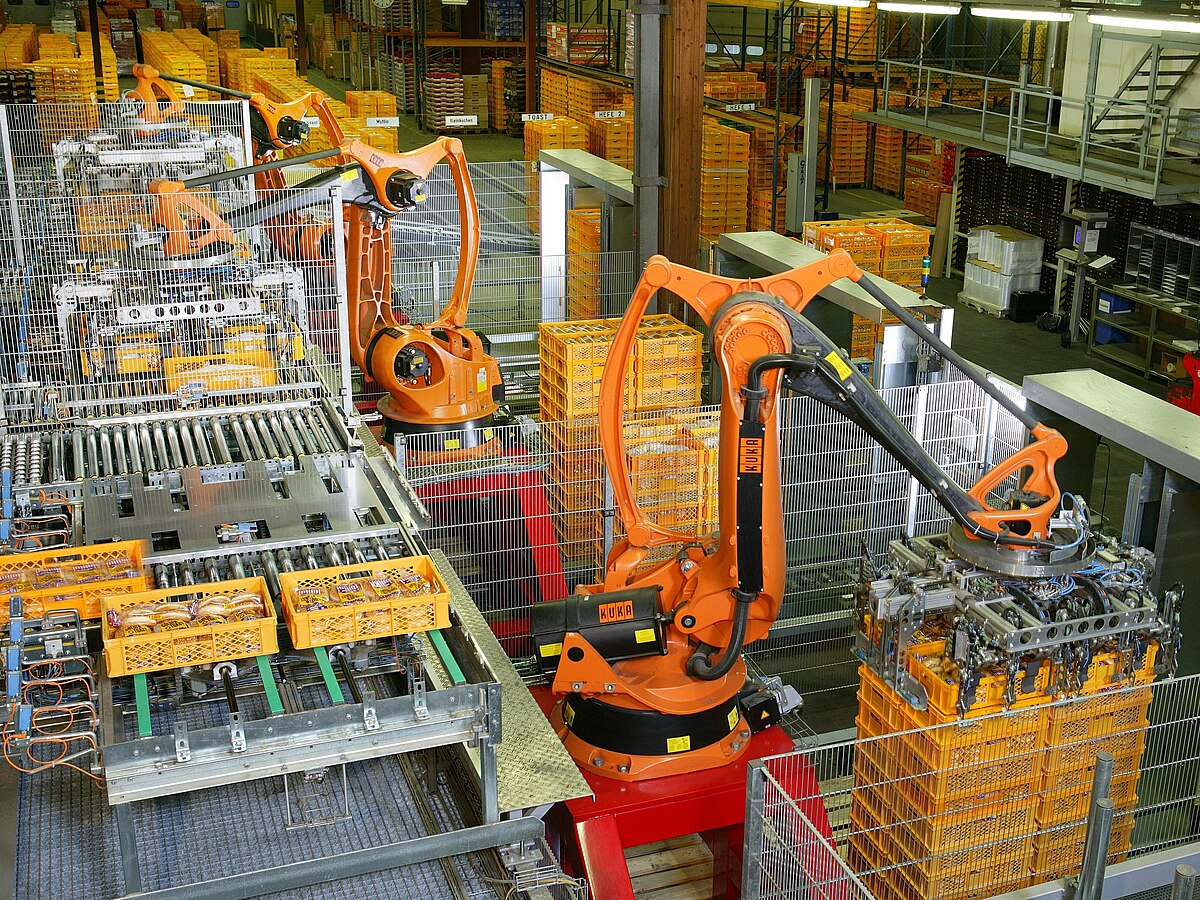
Factory automation scene showing robotic arms palettizing bread in a food processing facility. KUKA Roboter GmbH, Bachmann, Public domain, via Wikimedia Commons
The bliss point
Food scientists calculate the "bliss point", a precise ratio of sugar, fat, and salt that triggers maximum pleasure in the brain. It is a sensory profile that does not exist in nature.
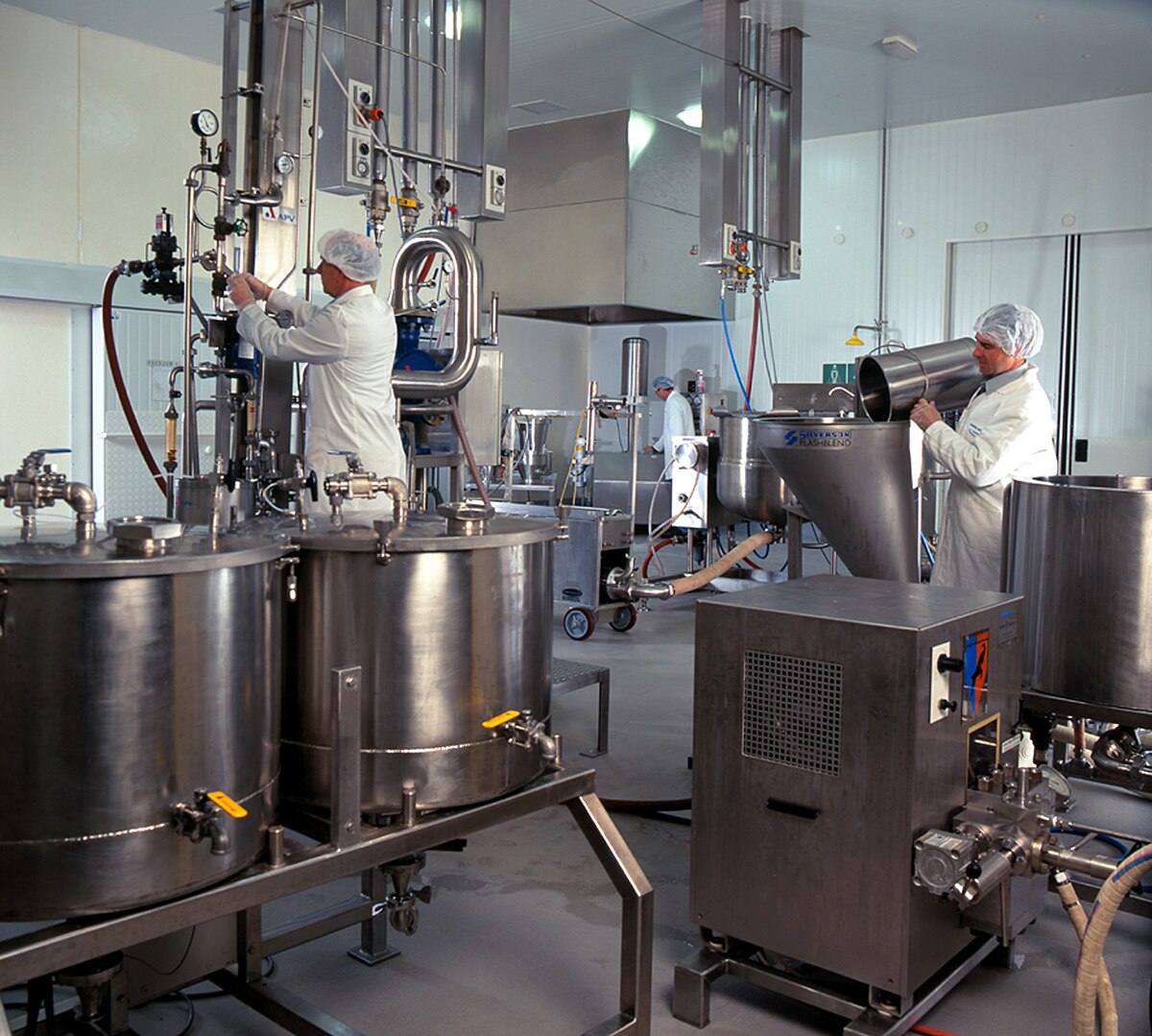
Two food scientists in white lab coats and hairnets work in a laboratory in Australia, surrounded by large stainless steel processing equipment. Food Science Australia, CSIRO, CC BY 3.0, via Wikimedia Commons
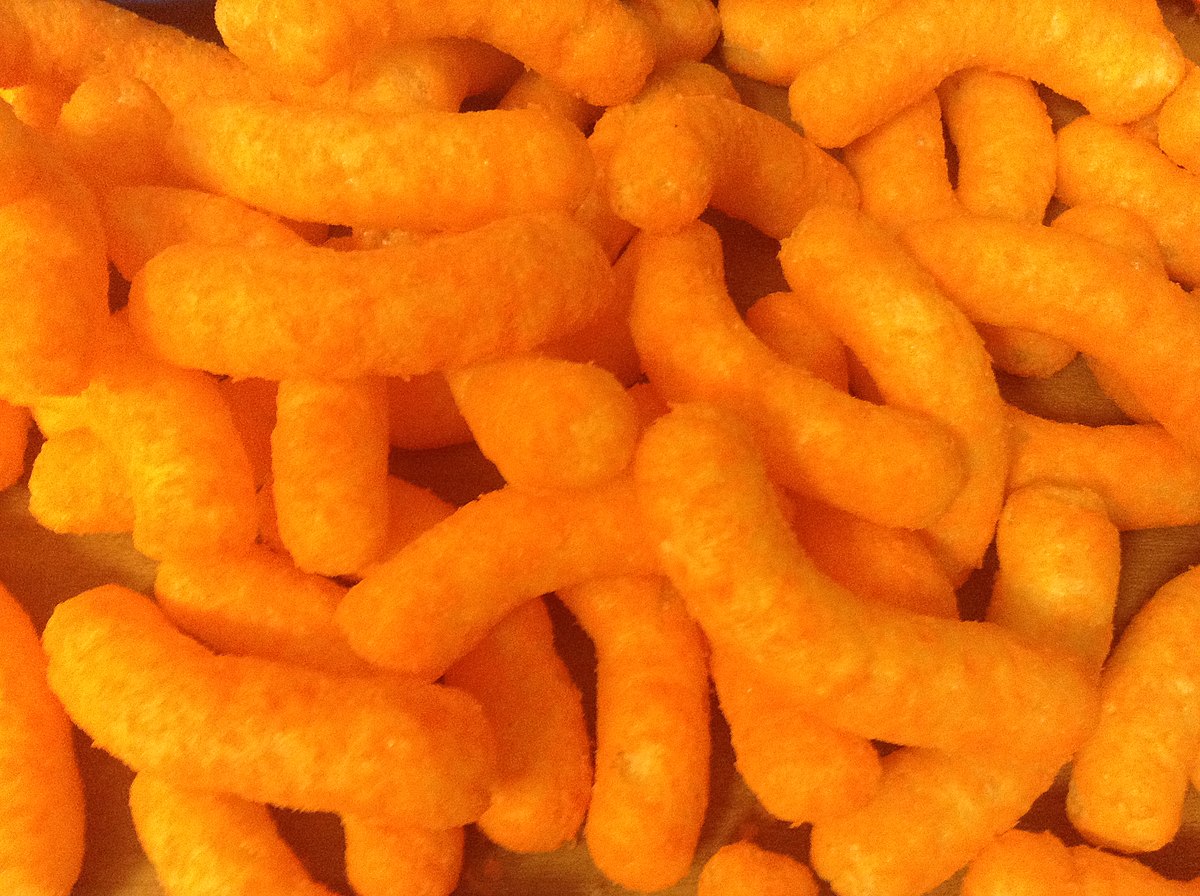
By manipulating texture with a food additive, they can make a snack feel "lighter," tricking you into eating the whole bag before your brain registers fullness.
The body's confusion
Ultra-processed food is built from isolated starches and fats that the body absorbs with unnerving speed. Unlike a whole food, which requires time to digest, these industrial creations hit your bloodstream like a sugar spike.
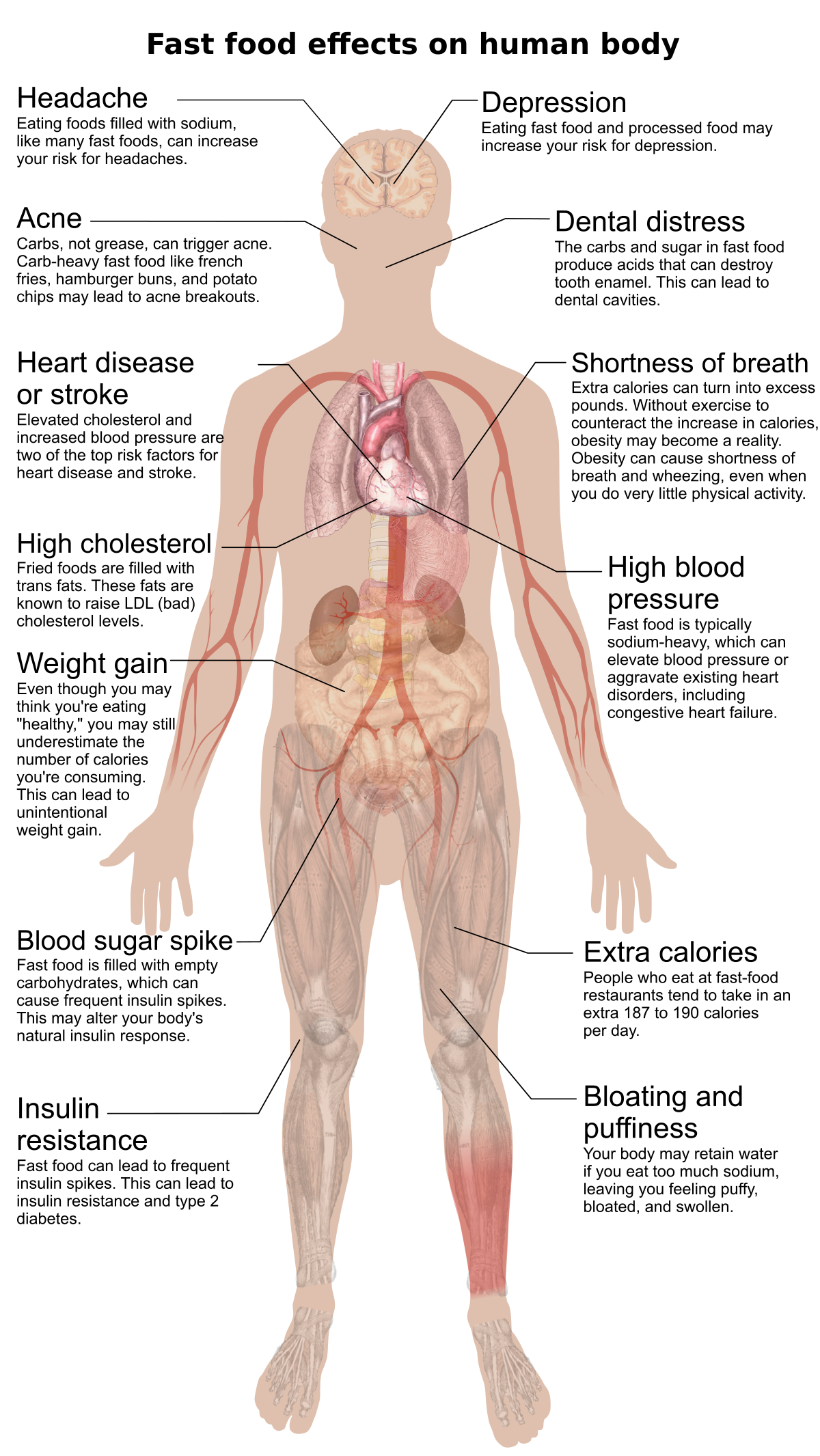
Diagram illustrating the effects of fast food, a common ultra-processed food, on the human body. Healthline (text captions) User:Adert (SVG human body diagram) User:Mess (text & diagram adaptation), CC BY-SA 4.0, via Wikimedia Commons
Your biology was not built for a world where most calories are laboratory-designed, not grown.
How the Nova system classifies ultra-processed food
The concept of ultra-processed food comes from the Nova classification system, introduced in 2009 by Brazilian researcher Carlos Augusto Monteiro. Nova ignores standard nutritional facts and sorts food entirely by how it is processed and manufactured.
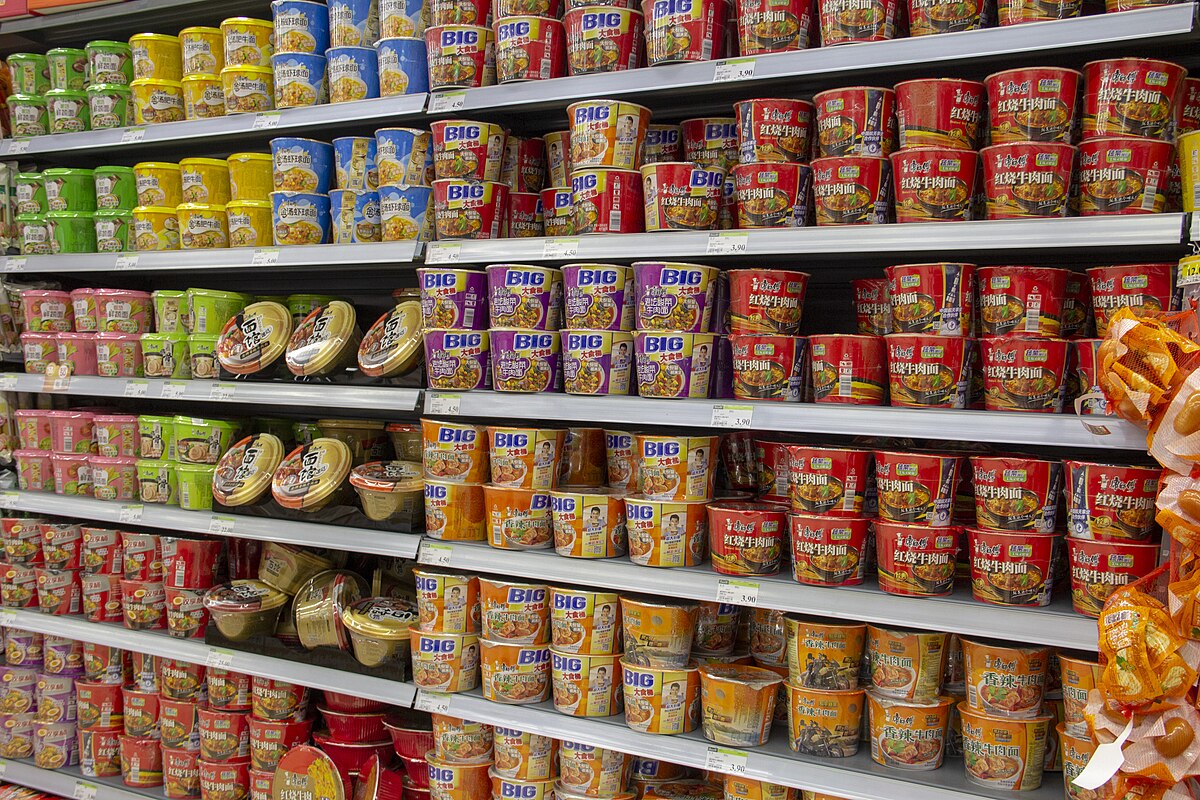
The Nova system places mass-manufactured formulations with cosmetic additives into Group 4. https://world.openfoodfacts.org, Public domain, via Wikimedia Commons
Under Nova, ultra-processed items belong to Group 4. These are industrial products containing substances never found in home kitchens, such as high-fructose corn syrup, modified starches, protein isolates, and hydrogenated oils. They also rely on cosmetic additives like emulsifiers, colourings, flavour enhancers, and thickeners.
Manufacturing these items involves industrial methods such as extrusion, moulding, and pre-frying. Familiar examples include mass-produced bread, flavored yogurt, infant formula, frozen pizza, instant noodles, and fruit drinks.
Global consumption and health impacts
As of 2023, the United States and the United Kingdom get 58% and 57% of their daily calories from ultra-processed foods. In contrast, countries such as Colombia, Italy, and Taiwan keep consumption at 20% or less.
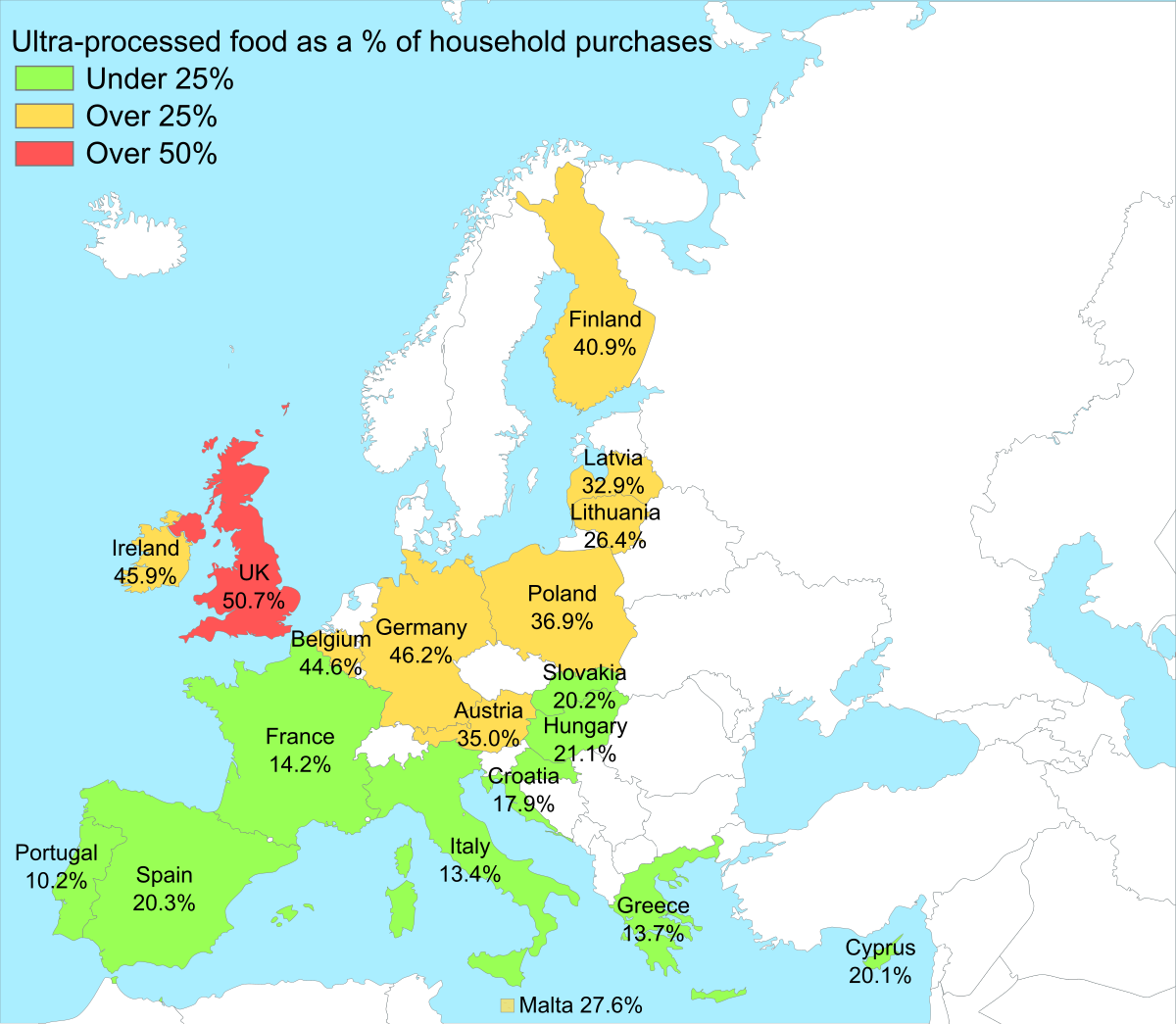
Household purchases of ultra-processed food vary significantly between different countries. The Guardian, Public Health Nutrition (original map and data) User:Historicair (SVG prototype map) User:Mess (SVG map co, CC BY-SA 4.0, via Wikimedia Commons
Epidemiological studies link heavy consumption of these foods to obesity and non-communicable diseases. A 2024 meta-analysis in The BMJ analyzed 32 studies and identified links between ultra-processed diets and negative health outcomes.
Despite these correlations, specific biological mechanisms remain under active research. Few clinical trials existed as of 2026, and international regulators such as the European Food Safety Authority do not share an official legal definition for the category.
Test yourself
What defines the bliss point in ultra-processed food design?
It maximizes pleasure using ratios absent in nature. The bliss point uses precise combinations of sugar, fat, and salt that do not occur naturally, triggering maximum pleasure and overriding natural satiety cues.
Ultra-processed food designs help consumers feel full faster by increasing density.
False. Ultra-processed foods are engineered to bypass fullness signals, often using textures that make snacks feel lighter to trick the brain into ignoring satiety.
Play the lesson in edgi and the card is yours. It lands on your Map next to the ideas it connects to, and turns from matte to foil to gold as you learn more around it.
Do regular food regulators define ultra-processed foods?
Regulators such as the European Food Safety Authority and the Codex Alimentarius do not have a standard definition for ultra-processed foods. The term comes primarily from academic frameworks like the Nova classification system.
What environmental effects come from ultra-processed food production?
Researchers link ultra-processed food production to broader environmental impacts beyond human health. These include increased use of synthetic packaging and higher volumes of food waste.