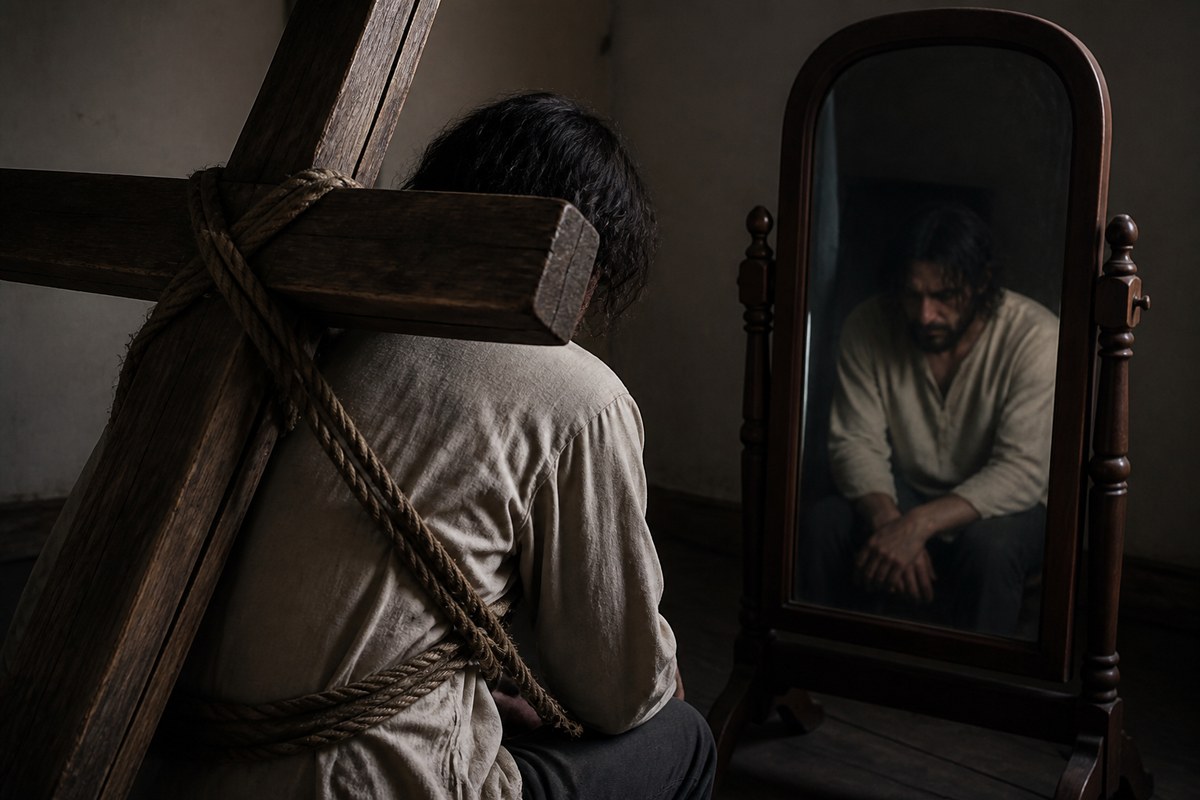
A martyr complex is a behavioral pattern where a person actively seeks out or holds onto suffering instead of solving it. While it looks like extreme self-sacrifice, the person uses their distress to fulfill psychological needs, shield themselves from blame, or influence others through guilt. It is a psychological description rather than a formal medical diagnosis.
By the edgi team We find the most surprising true thing about an idea and build a 60-second lesson around it.
Most people have met the pattern and have no name for it. Someone carries far more than their share, mentions it constantly, and turns down every specific offer to lift some of it. The usual name is a martyr complex, and it is a description rather than a diagnosis. You will not find it in any manual.
The test is narrow and easy to run. Offer something concrete: I will do the shopping on Saturday, send me the list. The offer is declined and the complaining continues unchanged. If the load were the problem, taking some of it away would help. The load is not the problem. The load is the equipment.
Guilt is the lever
Guilt is an odd emotion: it does most of its work between people rather than inside one. It turns up when somebody close to you is suffering and you are not. Which makes it a lever, and the only one available to someone with no authority. Researchers reviewing the evidence concluded that this is much of what guilt is for.
You cannot order your family to do the washing up. You can be visibly exhausted in the kitchen at eleven at night, and the washing up gets done, and nobody was asked for anything. Nothing there can be refused, because nothing was requested.
The shield
The refusal is what separates it from ordinary altruism. Someone genuinely trying to solve a problem accepts help, hands parts of it over, and is pleased when the job gets smaller. The suffering has to stay in circulation. Fix it and the lever is gone, so the fix gets declined and the complaint is renewed.
And it buys something quieter than compliance. Whoever is suffering most in a room is almost never the one asked to change. That is the second half of the arrangement and the more durable one. The complaining is what you notice. The exemption is what it is protecting.
Why someone seeks out suffering
A person with a martyr complex desires the feeling of martyrdom for its own sake. They often take on willful suffering in the name of love, duty, or the good of a collective. In some instances, they believe they have been singled out for persecution because of their exceptional integrity or ability.
Allan Berger categorized the martyr complex as one of several distinct patterns of pain-seeking and suffering-seeking behavior, alongside practices like penance and asceticism. While some treat the desire for martyrdom as a form of masochism, the behavior also functions as an escape hatch: enduring visible hardship allows a person to avoid personal responsibility.
How the pattern works in relationships
The pattern appears frequently in codependent partnerships, abusive relationships, and poor families. It is also an identified mental health concern among clergy, as theologian Paul Johnson observed.
The defining mechanic is the refusal of genuine relief. When offered direct help to reduce their burden, the person turns it down and continues to complain. Suffering generates interpersonal guilt, giving someone without formal authority a way to influence the people around them. Sustaining the pain ensures that the influence remains active, while also protecting the person from ever being asked to change.
Test yourself
A colleague works visibly late every night and never delegates. What does that buy?
Obligation, without having to ask. Watching someone suffer for a shared job creates a debt nobody agreed to. It is the one form of pressure available to a person who cannot simply tell everyone else what to do.
Which is worth more to someone using their suffering as leverage?
An audience. A solved problem is a spent lever. The complaint is not a request for help, which is why help offered concretely and privately tends to be turned down.
Play the lesson in edgi and the card is yours. It lands on your Map next to the ideas it connects to, and turns from matte to foil to gold as you learn more around it.
Is a martyr complex an official medical diagnosis?
No, it is not an official mental health disorder in diagnostic manuals. Psychologists and sociologists use the term as a descriptive label for a specific pattern of behavior.
How does a martyr complex differ from ordinary altruism?
A truly altruistic person welcomes solutions, shares tasks, and wants the overall burden to shrink. A person with a martyr complex rejects concrete help because solving the underlying problem removes the suffering they rely on.