Codependency is a psychological concept describing an unbalanced relationship where one person enables another person's self-destructive habits, such as addiction, irresponsibility, or poor mental health. The enabling partner sacrifices their own needs, suppresses emotions, and tries to control the other person's actions. Instead of solving the issue, this dynamic removes natural consequences and keeps the destructive behavior in place.
By the edgi team We find the most surprising true thing about an idea and build a 60-second lesson around it.
You ring their employer to say they are ill. You cover the bill. You smooth over what they said at dinner. Every one of those removes a consequence. The behavior keeps all of its benefits and somebody else absorbs the costs, which is the arrangement under which nothing changes.
This is what codependency names. It came out of addiction clinics in the late 1970s, coined for the partners rather than the patients, whose lives had quietly stopped being their own. Almost nobody doing it can see it. Being needed feels like love from the inside, and the relief when they need you again is genuine.
Why the problem has to stay
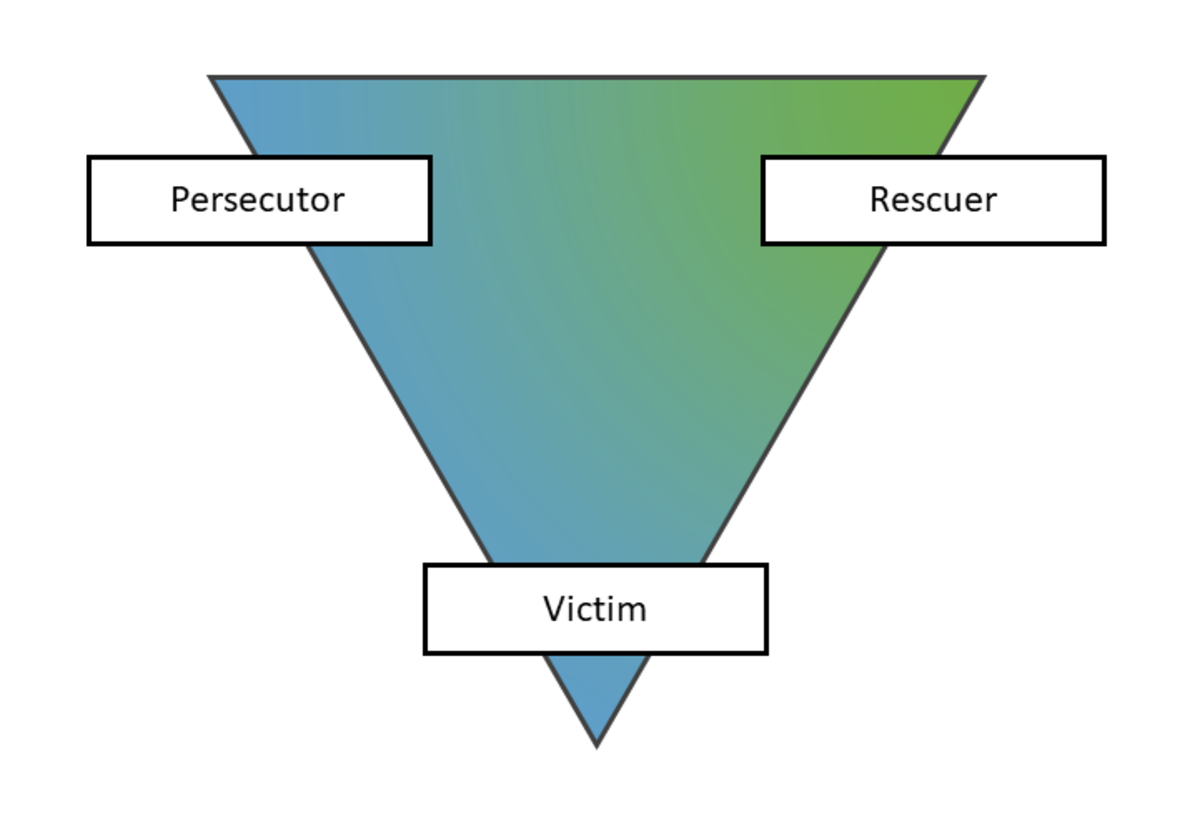
Therapists have a name for the arrangement, the Karpman drama triangle, and it has exactly three seats: the Victim, the Persecutor and the Rescuer. People in a stuck relationship rotate between the three, which is how one argument stays alive for years without ever being settled.
The Rescuer seat is the comfortable one. You are useful, you are obviously the good person, and you are never the one being examined. It has a single requirement. Somebody has to stay in the Victim seat, because a Rescuer with nobody to rescue is just a person with a free evening.
The only move that works
So the fix is not a conversation you have with them. Only your half of the arrangement is yours to change, and the arrangement runs on your half. "I am not calling your work again" is a boundary. You keep it yourself, and it holds whether or not they think it is fair.
"Please stop making me call your work" is a request. It sounds like the same sentence, it hands them the decision, and it leaves you in the seat. It never made it into the diagnostic manuals, and researchers still argue about what it covers. That fits: there is not much to diagnose in one person when the problem is between two people.
Origins in addiction clinics
The term developed in Minnesota in the late 1970s from the word co-alcoholic. In Alcoholics Anonymous and chemical dependency treatment, counselors realized that addiction did not exist in isolation. Family members and partners developed unhealthy coping mechanisms in response to a loved one's substance abuse, absorbing the costs of the addiction and inadvertently shielding them from consequences.
In 1986, Melody Beattie popularized the idea in her book Codependent No More, drawing on her time in recovery and interviews with members of Al-Anon, a support group for families of alcoholics. That same year, the twelve-step support group Co-Dependents Anonymous formed. The concept expanded beyond chemical dependency to describe relationships where someone enables immaturity, poor mental health, or general under-achievement.
Why it is not an official diagnosis
Codependency is not listed as a mental disorder in the Diagnostic and Statistical Manual of Mental Disorders (DSM) or the International Classification of Diseases (ICD). In 1986, psychiatrist Timmen Cermak argued that it should be classified as a distinct personality disorder, but researchers failed to reach a scientific consensus.
A 1994 review found that the concept lacked empirical validation and suffered from conflicting definitions. Literature reviews show that authors often describe the same core patterns: extreme self-sacrifice, focusing on the needs of others, suppressing personal feelings, and an urge to fix or control another person. Because the issue exists in the dynamic between two people rather than inside a single individual's pathology, it remains a descriptive relationship model rather than a medical condition.
Test yourself
You cover for someone's mistake again. What did that do to their situation?
Made the behavior cheaper to continue. The costs did not vanish, they moved to you. The behavior keeps its benefits and loses its price, which is the condition under which it stays exactly as it is.
Why might someone quietly resist a friend actually solving their problem?
Their role depends on the problem. Some positions only exist while the trouble does. A person whose worth in a relationship comes from managing a crisis has a reason, usually invisible to them, to keep one running.
Play the lesson in edgi and the card is yours. It lands on your Map next to the ideas it connects to, and turns from matte to foil to gold as you learn more around it.
It is a model used by therapists to explain dysfunctional relationship cycles. It consists of three shifting roles: the Victim, the Persecutor, and the Rescuer. People in codependent dynamics rotate through these seats, prolonging conflicts without ever resolving them.
What is the difference between a boundary and a request?
A boundary is a rule you enforce on your own behavior, such as refusing to lie for someone. A request asks the other person to change their behavior, which leaves control and decision-making in their hands.
Does low self-esteem cause codependency?
People who identify as codependent frequently report low self-esteem. Psychological studies show a strong link between the two, though researchers have not determined whether low self-esteem causes codependent traits or is an effect of living in such relationships.