HippocampusWhy your brain needs it to save memories
The hippocampus is a curved structure tucked inside each side of the brain that turns new experiences into long-term memories. Without it, you cannot store new facts or life events, leaving you trapped in an ongoing present. It also serves as an internal navigation system, using specialized cells to map where you are.
By the edgi team We find the most surprising true thing about an idea and build a 60-second lesson around it.
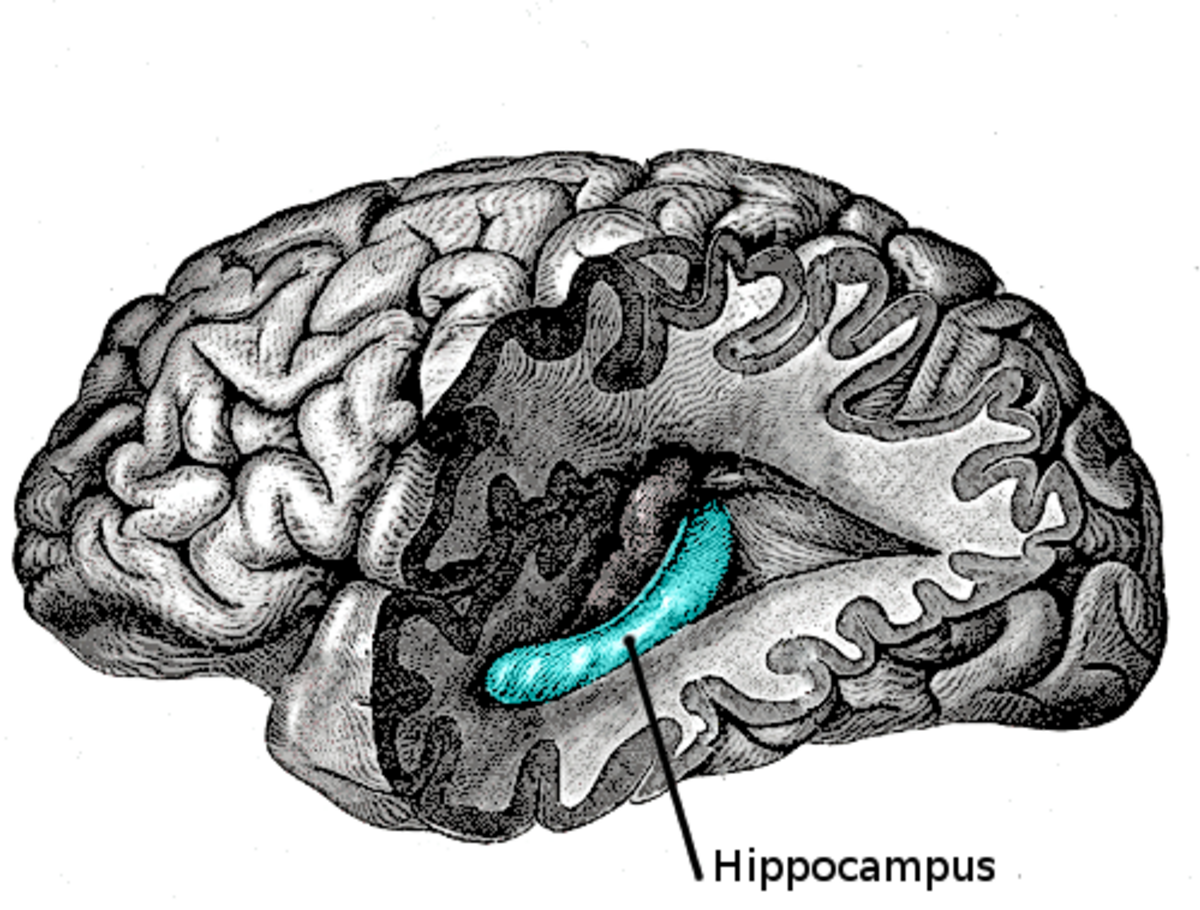
The hippocampus is a small, curved structure buried deep in your temporal lobe. It acts as a gateway for memory consolidation, taking raw information and weaving it into long-term episodic memory.
An illustration of the human brain's lateral view, with the hippocampus highlighted in blue and labeled. Henry Vandyke Carter, Public domain, via Wikimedia Commons
Without it, you would live in a permanent present, forgetting every conversation minutes after it ended.
The man who couldn't remember
In 1953, a patient named Henry Molaison had his hippocampi removed to treat severe epilepsy. He survived, but he lost the ability to form any new memories for the rest of his life.
He would meet the same doctor every day as if for the first time, yet memories from his childhood stayed with him.
Knowing how vs. knowing that
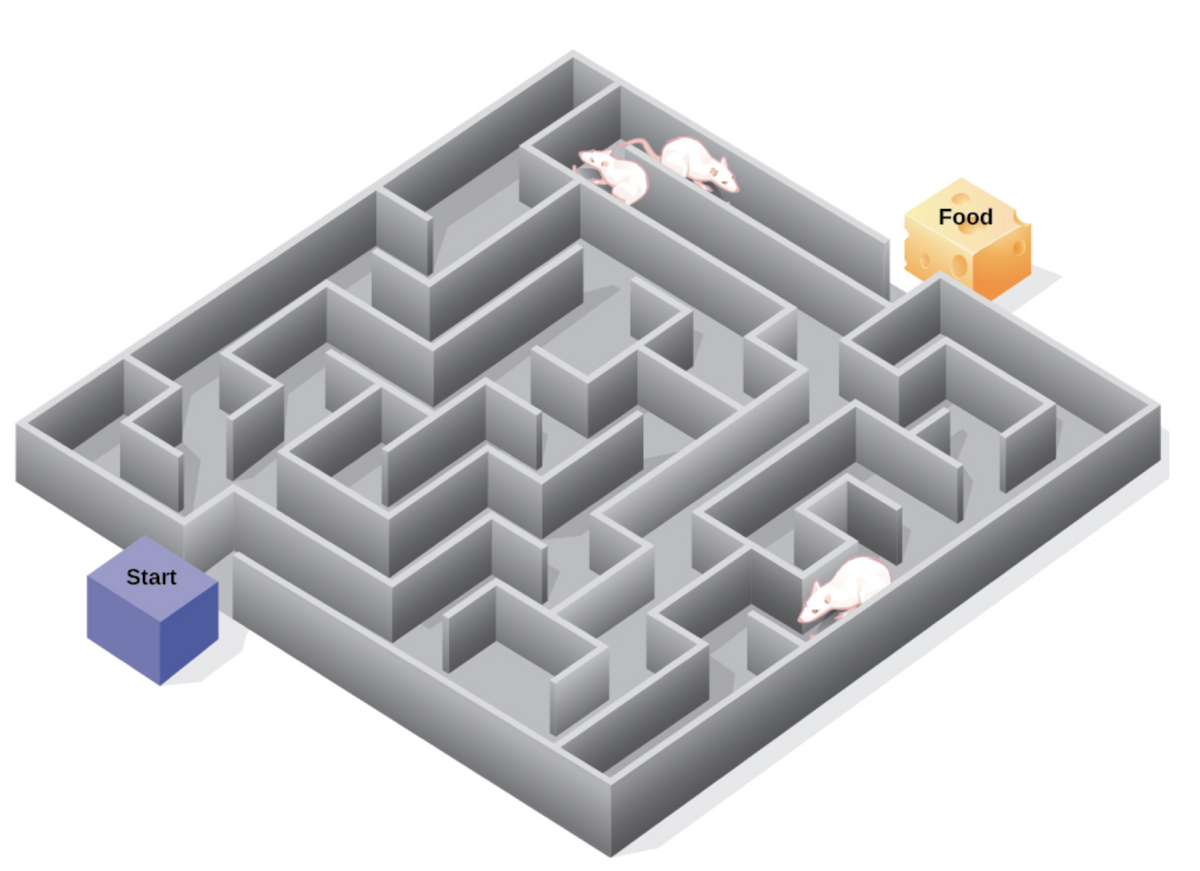
Remarkably, Henry could still learn new physical skills, like drawing a star while looking at his hand in a mirror. He didn't remember practicing, but his brain 'knew' how to do it.
An isometric illustration of a maze with a blue "Start" cube and an orange "Food" cube, showing two white rats navigating the pathways. Rose M. Spielman, PhD, CC BY 4.0, via Wikimedia Commons
This proved that the brain separates 'knowing how' to perform a skill from 'knowing that' an event actually happened.
Your internal gps
The hippocampus also contains place cells, which act as an internal GPS. These neurons fire only when you are in a specific location, helping you navigate your environment.
It is even one of the few places in the brain where neurogenesis continues into adulthood, literally growing new neurons as you learn your way around.
How the hippocampus builds memories and maps
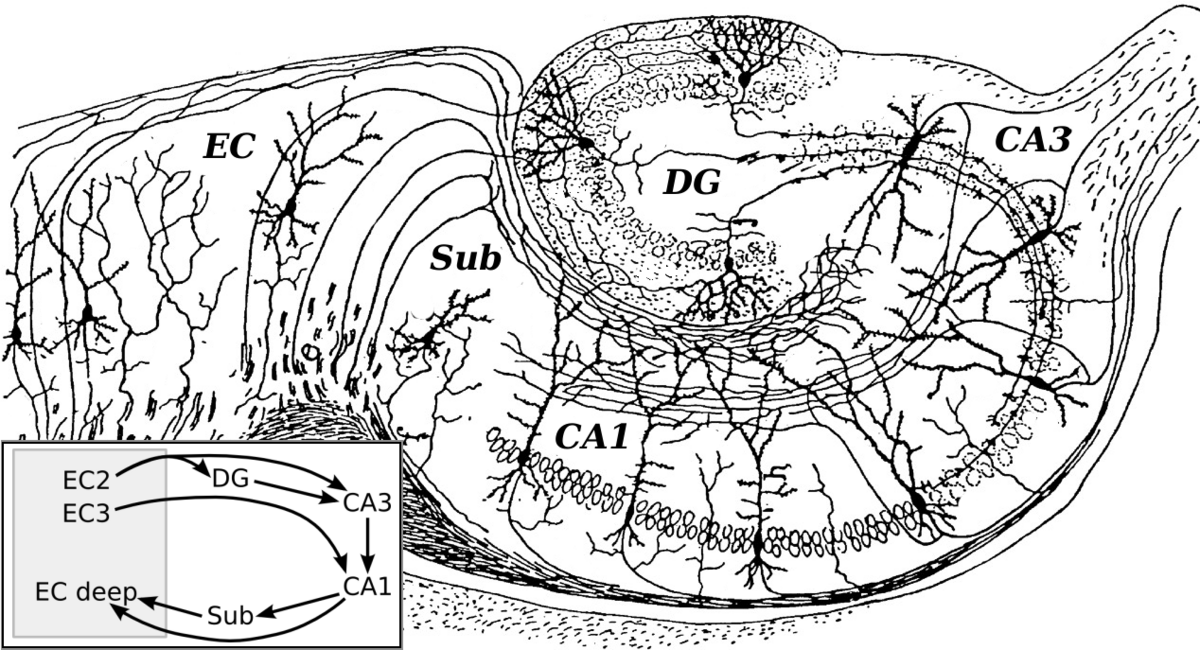
A cellular process called long-term potentiation was first discovered in the hippocampus and serves as the primary way brain circuits strengthen connections to record new information. Neurons organized into neat layers pass signals through regions like the dentate gyrus and subiculum, transforming short-term perceptions into permanent episodic memories stored across the neocortex.
This drawing by Ramón y Cajal shows the layered circuit connecting the dentate gyrus, subiculum, and entorhinal cortex. original: Santiago Ramón y Cajal (1852–1934) derivative = Looie496, Public domain, via Wikimedia Commons
Beyond storing events, the hippocampus maps physical space. Specialized neurons called place cells fire only when an animal passes through a specific spot in its environment. Place cells work alongside head direction cells, which act like an internal compass, and nearby grid cells to guide spatial navigation.
Where the hippocampus sits and what it looks like
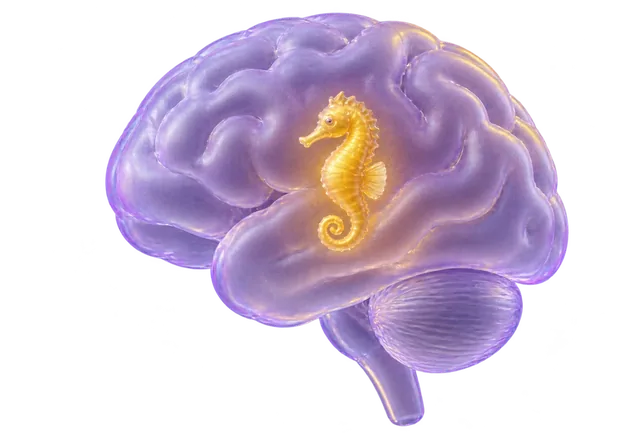
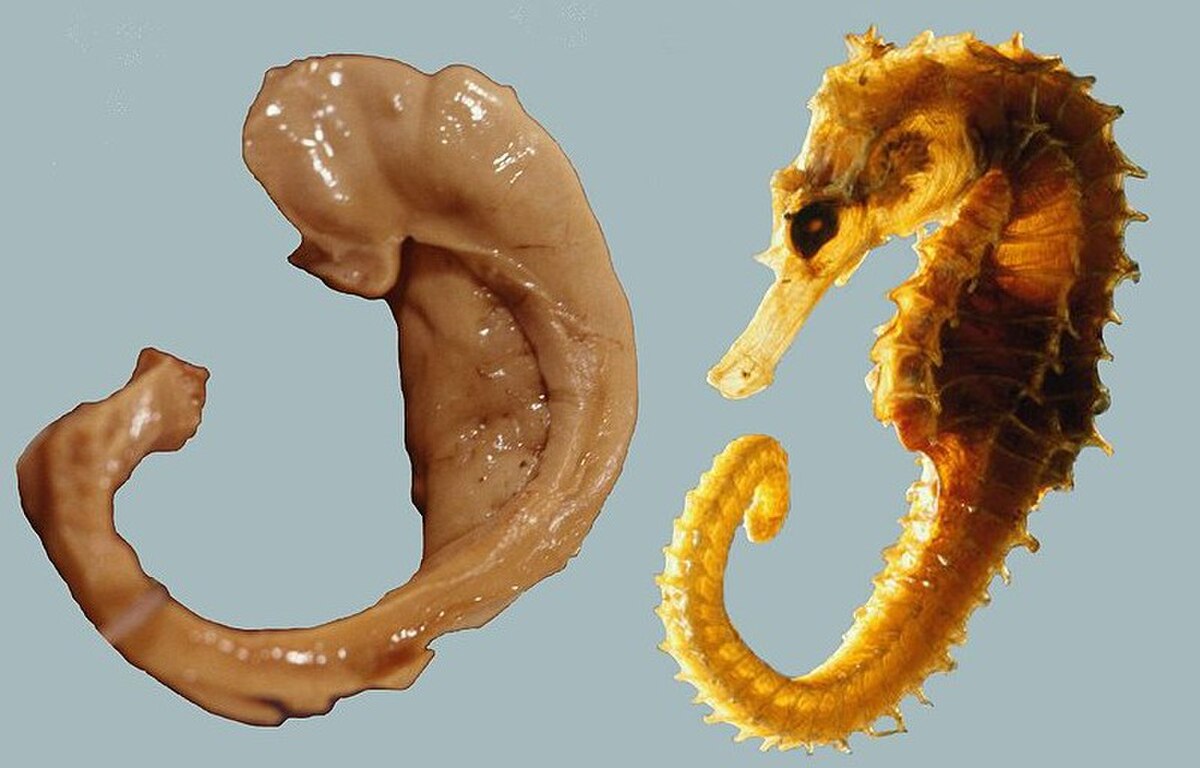
The hippocampus is a five-centimeter ridge of tissue tucked within the medial temporal lobe, stretching along an axis from the amygdala back to the splenium of the corpus callosum. In 1587, the Venetian anatomist Julius Caesar Aranzi noted its curved shape and named it after the seahorse, derived from the Greek words for horse and sea monster.
The dissected human hippocampus and fornix on the left share a curved shape with the seahorse on the right. Hippocampus_and_seahorse.JPG: Professor Laszlo Seress derivative work: Anthonyhcole (talk), CC BY-SA 3.0, via Wikimedia Commons
As part of the limbic system, the hippocampus connects directly to regions involved in emotional behavior, including the septal area, the mammillary bodies of the hypothalamus, and the thalamus. Its internal subfields retain the label cornu Ammonis, or CA, named after the ram-like horns of the ancient Egyptian god Amun.
What happens when the hippocampus is damaged
Damage to both hippocampi produces anterograde amnesia, leaving a person completely unable to retain new facts or events. Because long-term memories eventually move elsewhere in the cortex, memories formed years before the damage usually remain intact.
The hippocampus is one of the earliest brain structures damaged in Alzheimer's disease and other forms of dementia, leading to early symptoms of memory loss and disorientation. It is also vulnerable to oxygen starvation, medial temporal lobe epilepsy, and encephalitis.
Test yourself
What role does the hippocampus play in human memory?
It consolidates short-term experiences into long-term storage.. The hippocampus acts as a gateway for memory consolidation, meaning it transitions fleeting snapshots into long-term storage elsewhere rather than holding them permanently.
The hippocampus is required to learn new physical skills and muscle memory.
False. The hippocampus handles the formation of new episodic memories, but physical skills are stored in different brain regions, allowing patients like Henry Molaison to learn tasks despite memory loss.
The hippocampus is part of the brain's limbic system.
True. This seahorse-shaped structure is a core component of the limbic system, which manages emotions and long-term memory.
Play the lesson in edgi and the card is yours. It lands on your Map next to the ideas it connects to, and turns from matte to foil to gold as you learn more around it.
Does hippocampus damage stop a person from learning motor skills?
No, damage to the hippocampus preserves motor skill learning. Patients without functioning hippocampi can still master physical tasks, such as mirror drawing, even though they will have no conscious memory of ever practicing.
Can the hippocampus grow new brain cells?
Yes, the hippocampus is one of the few brain areas where neurogenesis continues into adulthood. It generates new neurons throughout life as you learn and navigate new environments.