CAR T cellProgramming the immune system against cancer
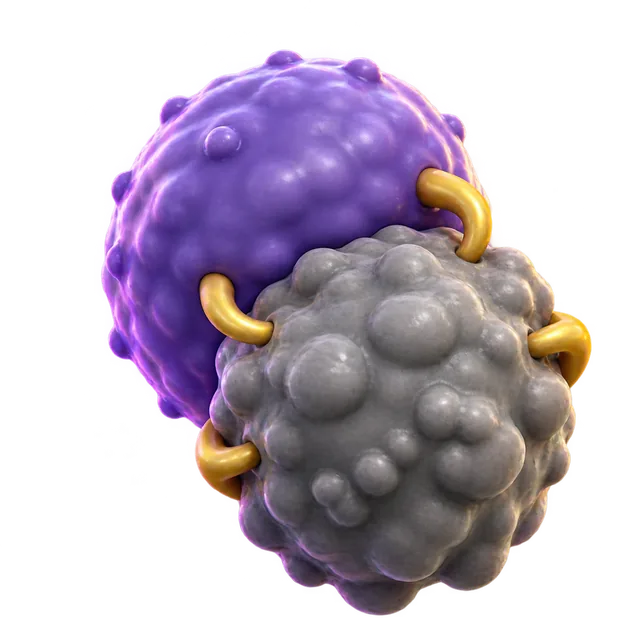
A CAR T cell is a patient's own white blood cell that has been genetically modified in a laboratory to hunt and destroy cancer cells. Scientists insert a synthetic receptor that helps the cell lock onto specific markers on tumors. Unlike traditional chemical drugs, these modified cells multiply inside the body and can persist for years to prevent cancer from returning.
By the edgi team We find the most surprising true thing about an idea and build a 60-second lesson around it.
Standard cancer treatments like chemotherapy act like carpet bombing, damaging healthy tissue along with the tumor. CAR T cell therapy is different. It treats your immune system as a programmable weapon.
A woman undergoing chemotherapy treatment, seated in a recliner with a headscarf and smiling, while using acral cooling on her hands and feet. Jenny Mealing, CC BY 2.0, via Wikimedia Commons
Scientists extract your T cells, the soldiers of your immune system, and use a virus to rewrite their DNA. They give these cells a new receptor, or GPS, that locks onto a specific protein found only on cancer cells.
The first patient
In 2012, seven-year-old Emily Whitehead was the first child to receive this experimental treatment for leukemia. Her body reacted so violently that she developed a massive fever known as cytokine release syndrome.
Two pediatric patients, a girl with a bald head and a boy, are shown in a hospital setting, both with intravenous catheters in their arms, suggesting they are receiving chemotherapy. Bill Branson (Photographer), Public domain, via Wikimedia Commons
Doctors realized the fever wasn't a sign of failure, it was the sound of her immune system winning the war. Emily has been cancer-free for over a decade, proving these engineered cells can persist and patrol the body long after treatment.
The long game
Unlike a drug that washes out of your system, these engineered cells can multiply and stay in your body for years. They act like a permanent security guard, ready to recognize and destroy returning cancer cells on sight.
It is a fundamental shift in immunotherapy: moving away from toxic chemicals and toward biological engineering.
How do CAR T cells work?
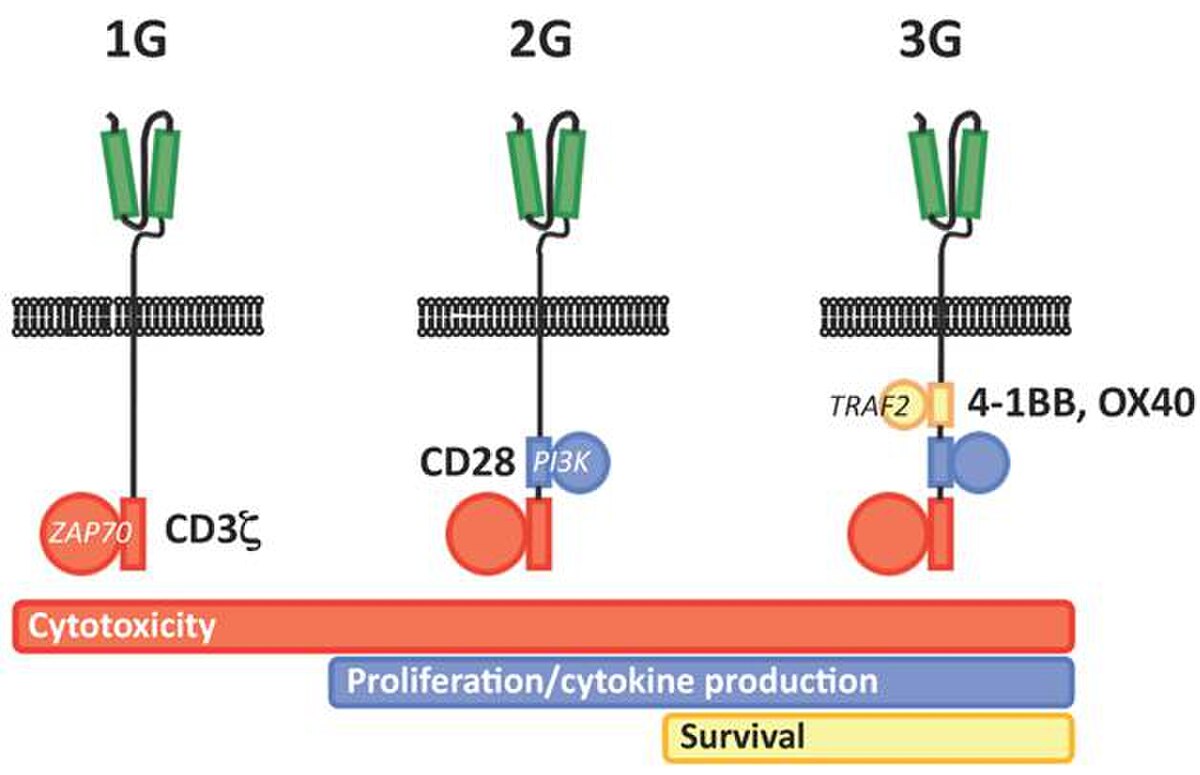
Chimeric antigen receptors combine targeting and activation parts into a single artificial receptor. Once the engineered cells enter the bloodstream, they patrol for a specific antigen present on cancer cells. Ideally, this surface marker is absent on healthy tissue so normal cells remain unharmed.
Notice how each generation adds new intracellular signaling domains beneath the cell membrane to boost activation and long-term cell survival. Monica Casucci and Attilio Bondanza, Public domain, via Wikimedia Commons
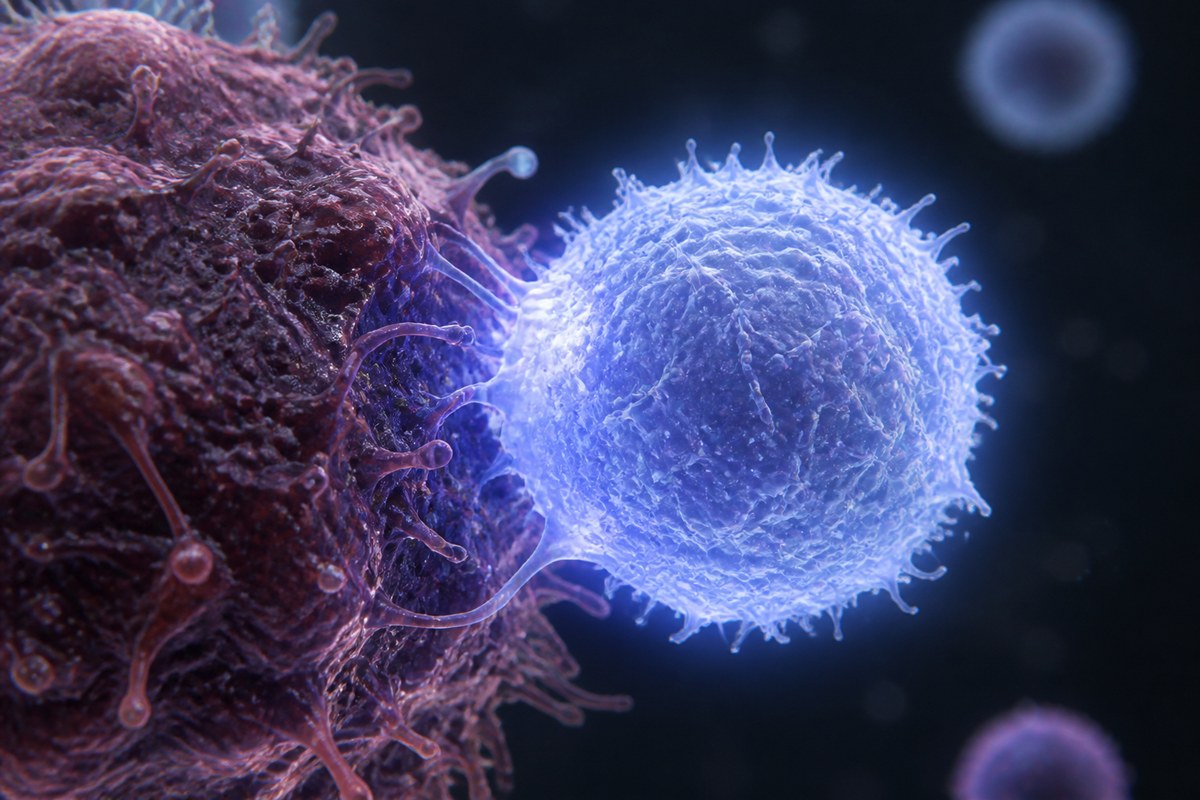
When a CAR T cell binds its target antigen, it activates and multiplies rapidly. It turns cytotoxic, releasing chemical factors such as cytokines, interleukins, and growth factors that destroy the tumor cells. Therapies that combine CD4+ and CD8+ T cells in a one-to-one ratio create interacting cytotoxic effects that attack tumors more effectively.
How are CAR T cells manufactured?
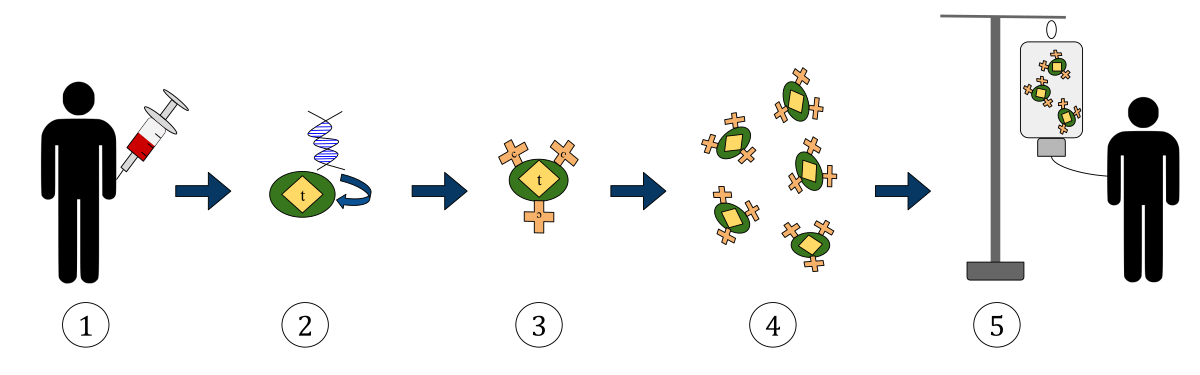
Manufacturing begins by isolating white blood cells from blood through leukocyte apheresis. These cells can come from the patient (autologous) or from a healthy donor (allogeneic). In a processing center, technicians stimulate the extracted T cells using anti-CD3 antibodies and the cytokine interleukin 2 to force rapid multiplication.
This workflow shows the full loop from harvesting a patient's white blood cells to reprogramming them in a lab and infusing them back into the body. Reyasingh56, CC BY-SA 4.0, via Wikimedia Commons
Scientists then insert the CAR gene into the purified T cells using an engineered viral vector, such as a modified lentivirus or gammaretrovirus, or through CRISPR/Cas9 gene editing. Before receiving the resulting CAR T infusion, the patient undergoes lymphodepletion chemotherapy to clear out existing white blood cells, creating space and cytokine support for the new cells.
Test yourself
A healthy liver cell shares Marker A with a tumor. How does a NOT gate protect the liver?
It halts when it senses a liver marker. A NOT gate carries an inhibitory receptor that overrides the attack signal whenever it detects a healthy tissue marker.
What must happen for an AND-gated CAR T cell to activate?
It must bind two target markers. An AND gate requires both target markers to be present simultaneously before the T cell releases its killing signals.
What is the primary difference between chemotherapy and CAR T cell therapy?
Engineered cells multiply and persist. Chemo washes out of the body, while CAR T cells replicate and stay as a permanent security guard.
Play the lesson in edgi and the card is yours. It lands on your Map next to the ideas it connects to, and turns from matte to foil to gold as you learn more around it.
What is the difference between autologous and allogeneic CAR T cells?
Autologous CAR T cells are manufactured using a patient's own harvested blood cells. Allogeneic treatments use cells collected from a healthy donor instead. The laboratory engineering process remains the same for both methods.
When did the FDA approve the first CAR T cell therapies?
The FDA approved the first two CAR T therapies in 2017: tisagenlecleucel (Kymriah) for acute lymphoblastic leukemia and axicabtagene ciloleucel (Yescarta) for large B-cell lymphoma. Both treatments target the CD19 protein found on B-cell cancers.