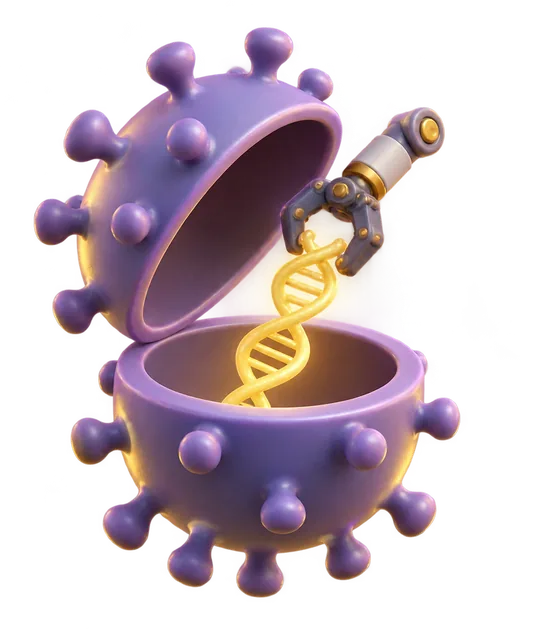
A viral vector is a modified virus stripped of its disease-causing parts and used to deliver genetic material into living cells. By hijacking the natural entry machinery of viruses, scientists turn dangerous pathogens into microscopic delivery vehicles. This process, called transduction, allows doctors to fix faulty genes or trigger targeted immune responses.
By the edgi team We find the most surprising true thing about an idea and build a 60-second lesson around it.
Viruses are nature's ultimate hackers. They have evolved specialized molecular machinery to drill into cells and force them to copy foreign genetic material. Scientists realized they could use that same entry code for good. If you remove the harmful parts, the virus becomes a delivery vehicle.
The modification
To make a viral vector, researchers hollow out the virus, deleting the genes responsible for replication and disease. In their place, they pack the recombinant DNA payload: a specific, beneficial gene intended to treat a patient or create an immune response.
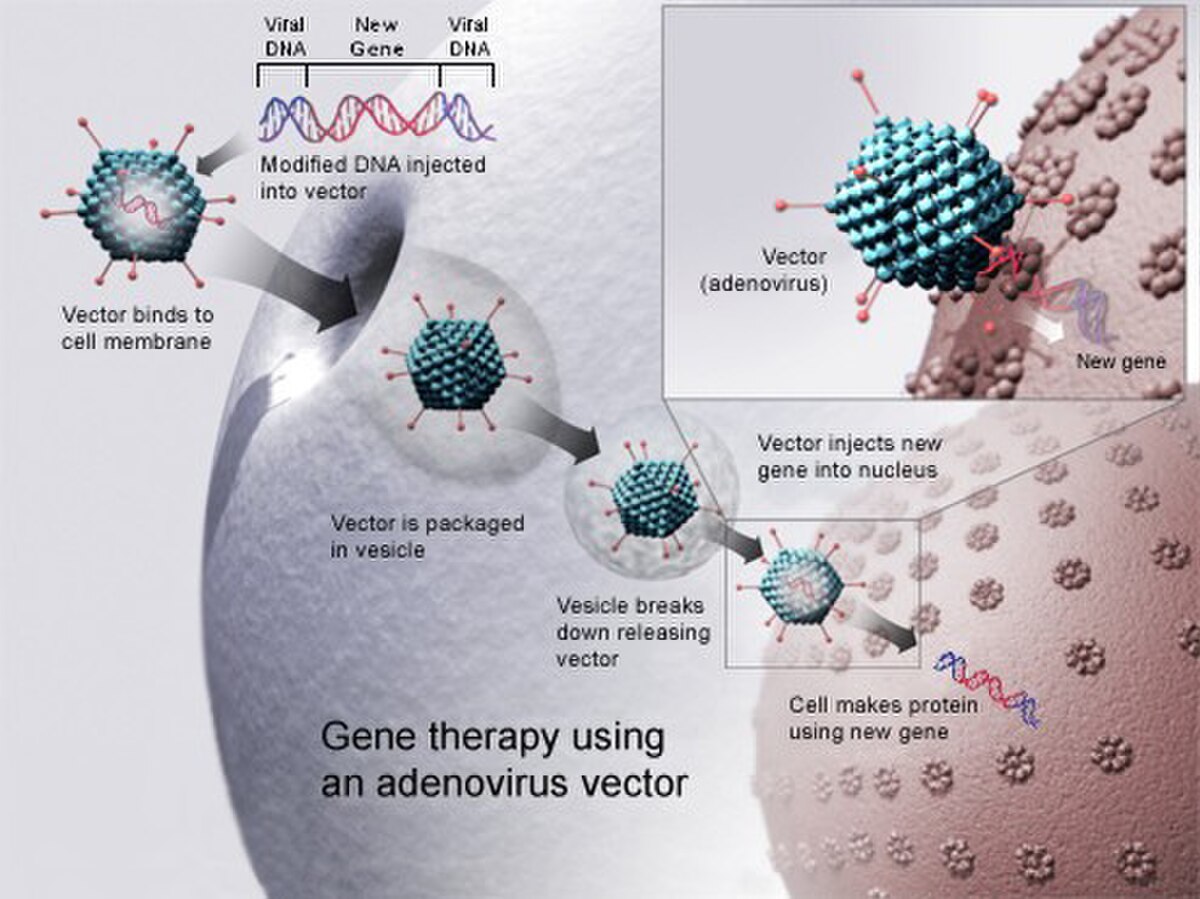
Diagram illustrating gene therapy using an adenovirus vector to introduce a new gene into a cell. Public domain, via Wikimedia Commons
The virus still latches onto the target cell, but instead of causing infection, it performs transduction, delivering its new, helpful instructions.
The breakthrough
In 1983, MIT researcher Richard Mulligan proved this was possible by engineering a retrovirus to carry a foreign gene into a mammalian cell. It was the moment biology turned a predator into a tool.
Today, this technology is the backbone of modern medicine, used in everything from advanced gene therapy to the COVID-19 vaccine.
A woman in a hard hat and safety vest stands next to rows of large white boxes labeled "Sputnik V" in a warehouse. Gobierno de Guatemala from Guatemala, Guatemala, Public domain, via Wikimedia Commons
How do viral vectors work?
A viral vector consists of three main elements: an outer protein shell called a capsid, the genetic payload or transgene, and a regulatory cassette that controls how the new gene gets turned on inside the target cell. The protein capsid dictates tropism, which is the specific range of cell types the vector can enter.
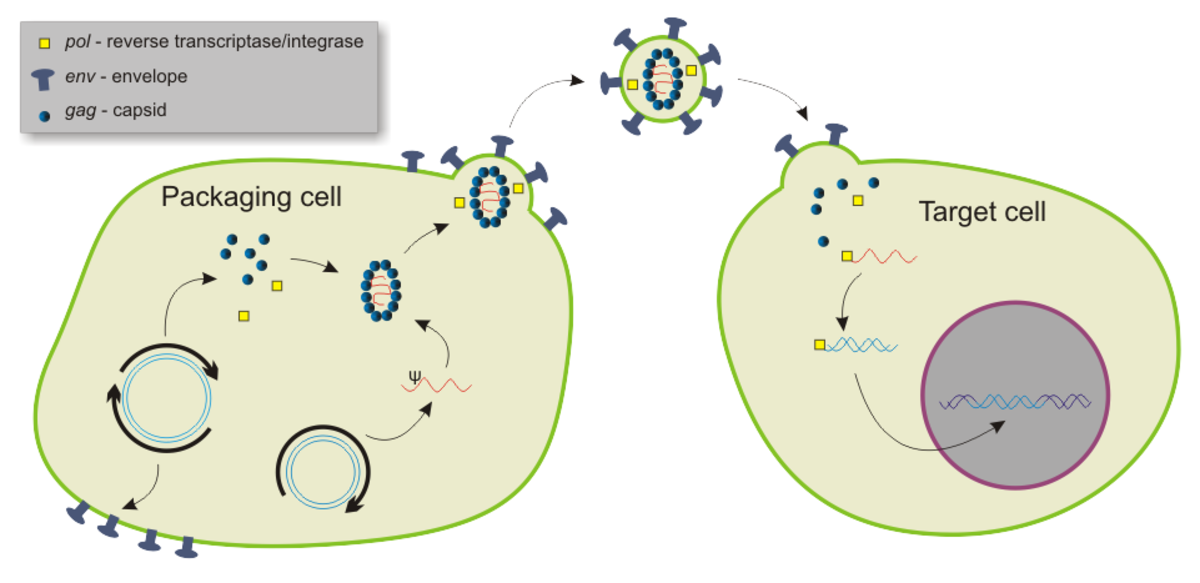
Lentiviral vector packaging and transduction show how modified viral shells deliver a specific genetic payload into target cells. Peter Znamenskiy, Public domain, via Wikimedia Commons
Paul Berg built the first viral vector in 1972, proving that viral machinery could transport custom genetic cargo. Today, vectors deliver complementary DNA, short hairpin RNA, or CRISPR/Cas9 systems for precise gene editing. Once the vector attaches to a cell, it deposits its payload either directly into the host genome as an integrated provirus or alongside it as an episome.
Viral vectors in gene therapy and vaccines
As of 2022, every single approved gene therapy relied on viral vectors. Therapies work either in vivo, where vectors are injected directly into a patient, or ex vivo, where a patient's cells are removed, transduced in a laboratory, and then transplanted back. These treatments can replace missing genes, silence harmful ones, or add entirely new genetic instructions that persist for years.
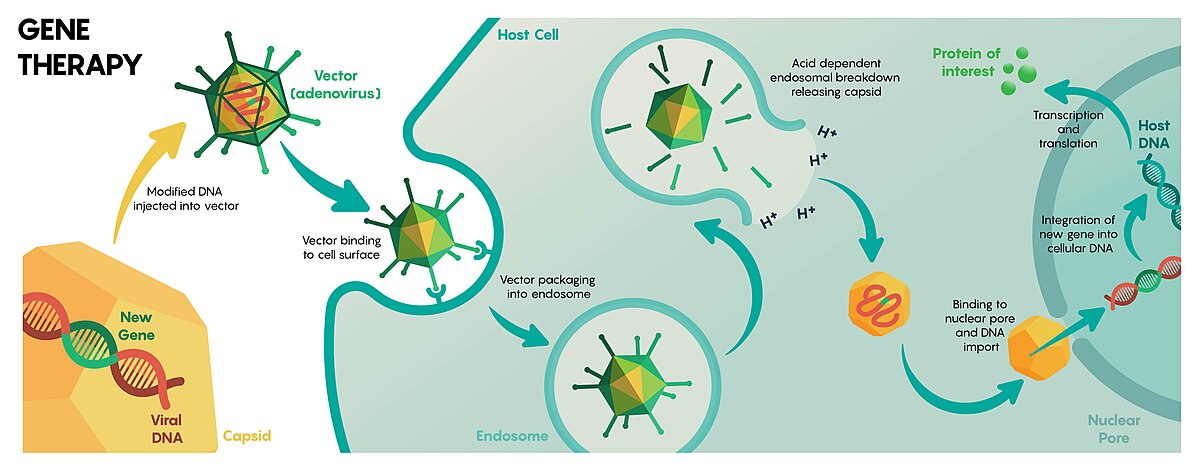
Viral vector gene therapy delivers therapeutic transgenes to repair or replace faulty genetic sequences inside human tissue. University of Toronto, CC BY 4.0, via Wikimedia Commons
Viral vectors also act as vaccine platforms by delivering instructions for specific infectious disease antigens or tumor antigens. Unlike traditional subunit vaccines, viral vectors express antigens inside host cells, prompting a strong adaptive immune response without needing extra adjuvants. Before 2020, viral vector vaccines were mostly limited to veterinary medicine, but the COVID-19 pandemic led to their administration to billions of people worldwide.
Test yourself
An engineered biological delivery system enters a target cell. Why does it not cause an infection?
The replication genes were removed. The delivery vehicle lacks the genes needed to replicate, meaning it can enter and drop off cargo without starting an infection.
Viral vectors function by infecting a cell to trigger a helpful immune response.
False. Viral vectors do not infect cells in the traditional sense; they are hollowed-out delivery vehicles that deliver a specific gene payload without causing an infection or replicating.
The process by which a viral vector introduces foreign DNA into a target cell is known as ___.
Transduction. Transduction is the specialized term for this viral-mediated DNA transfer, distinct from chemical or electrical methods.
Play the lesson in edgi and the card is yours. It lands on your Map next to the ideas it connects to, and turns from matte to foil to gold as you learn more around it.
Transduction is the process where a virus or viral vector transports foreign genetic material into a host cell. In biotechnology, it refers to the vector inserting its therapeutic cargo without causing a viral infection.
What is the difference between gamma retroviral and lentiviral vectors?
Gamma retroviral vectors can only infect dividing cells, whereas lentiviral vectors can infect both dividing and non-dividing cells. Lentiviruses are also relatively non-immunogenic and integrate their payload into the host genome for long-term expression.
Can pre-existing immunity interfere with viral vector treatments?
Yes, if a patient's immune system has encountered the original virus before, it may neutralize the viral vector before it can enter target cells and deliver its genetic payload. This pre-existing immunity remains a major consideration when choosing vector platforms.