The rulebook
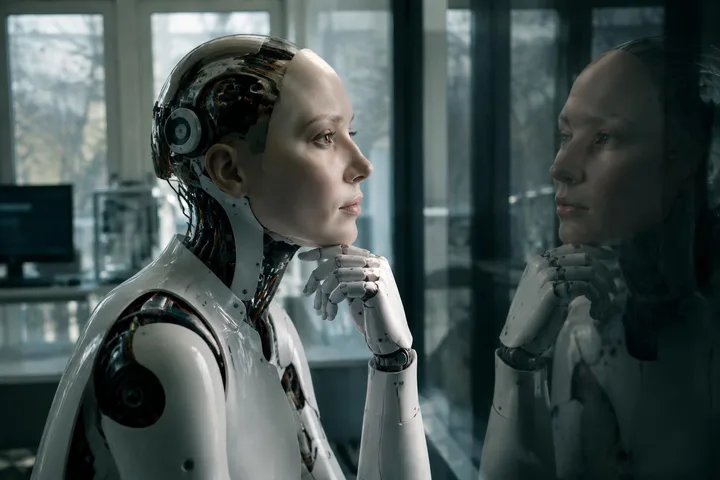
Imagine you are locked in a room. You do not speak a word of Chinese. You have a massive book of instructions. It tells you exactly how to manipulate Chinese characters based on their shape.
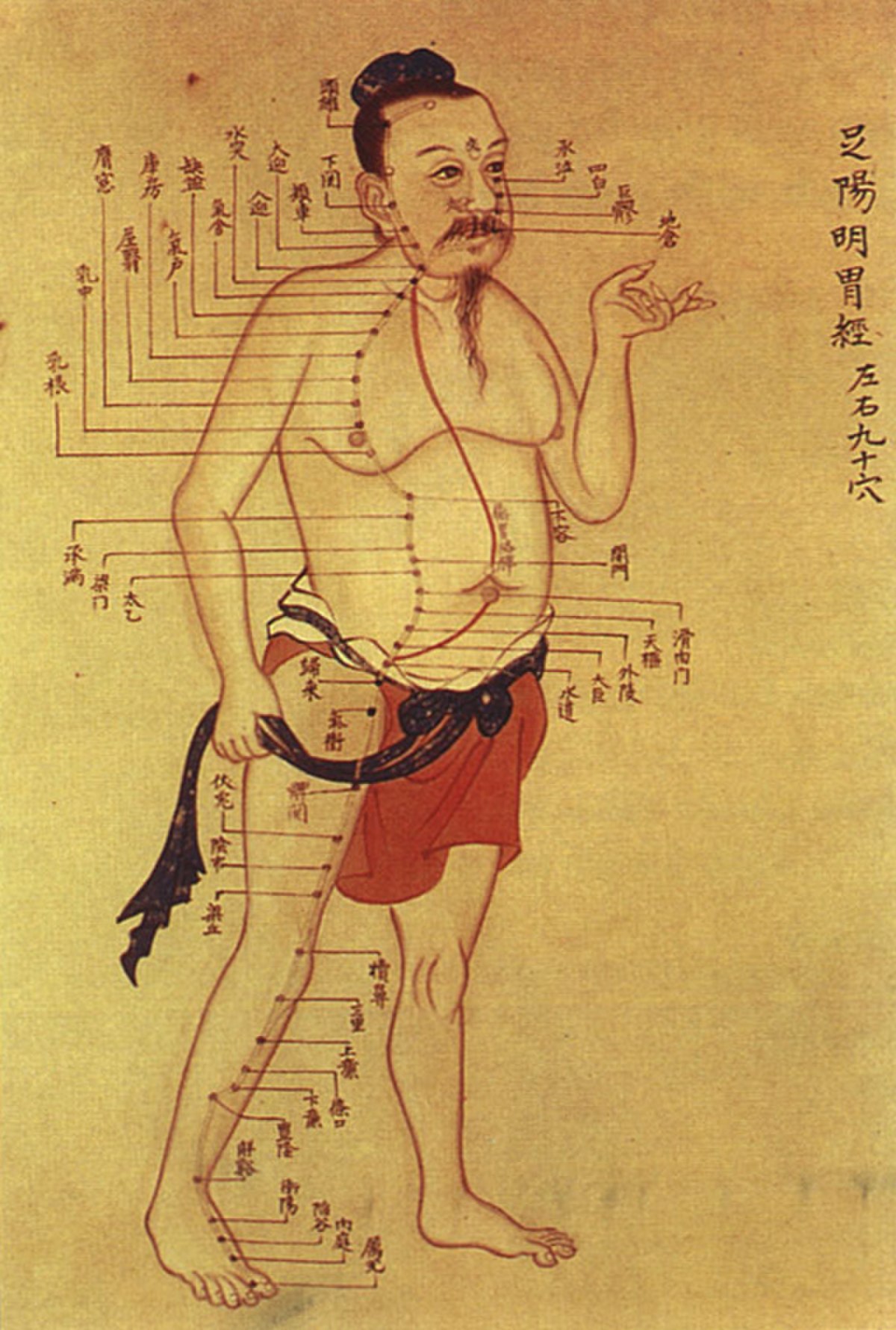
The Chinese Room is a philosophical thought experiment showing that a computer executing a program cannot possess real understanding or a mind, no matter how human its behavior appears. It argues that matching symbols using rules is only a simulation of thought. Because the system manipulates shapes without knowing their meaning, passing a language test does not prove genuine intelligence.

By the edgi team We find the most surprising true thing about an idea and build a 60-second lesson around it.

Imagine you are locked in a room. You do not speak a word of Chinese. You have a massive book of instructions. It tells you exactly how to manipulate Chinese characters based on their shape.
Someone slides a note under the door with Chinese characters on it. You look up the matching response in your book, copy the symbols, and slide back a reply.

To the person outside, you are fluent. Inside, you are just a glorified calculator.
This thought experiment, called the Chinese Room, was a direct attack on the Turing Test. It argues that computers process symbols based on rules, not meaning.
John Searle proposed this to show the limit of machines. They can mimic intelligence perfectly, but they lack the genuine consciousness required for true understanding.
The Chinese Room directly targets a claim called the strong AI hypothesis: the idea that an appropriately programmed computer with the right inputs and outputs genuinely has a mind in the exact same sense human beings do. It also challenges the philosophical views of functionalism and computationalism, which state that mental states are simply information processing over formal symbols.
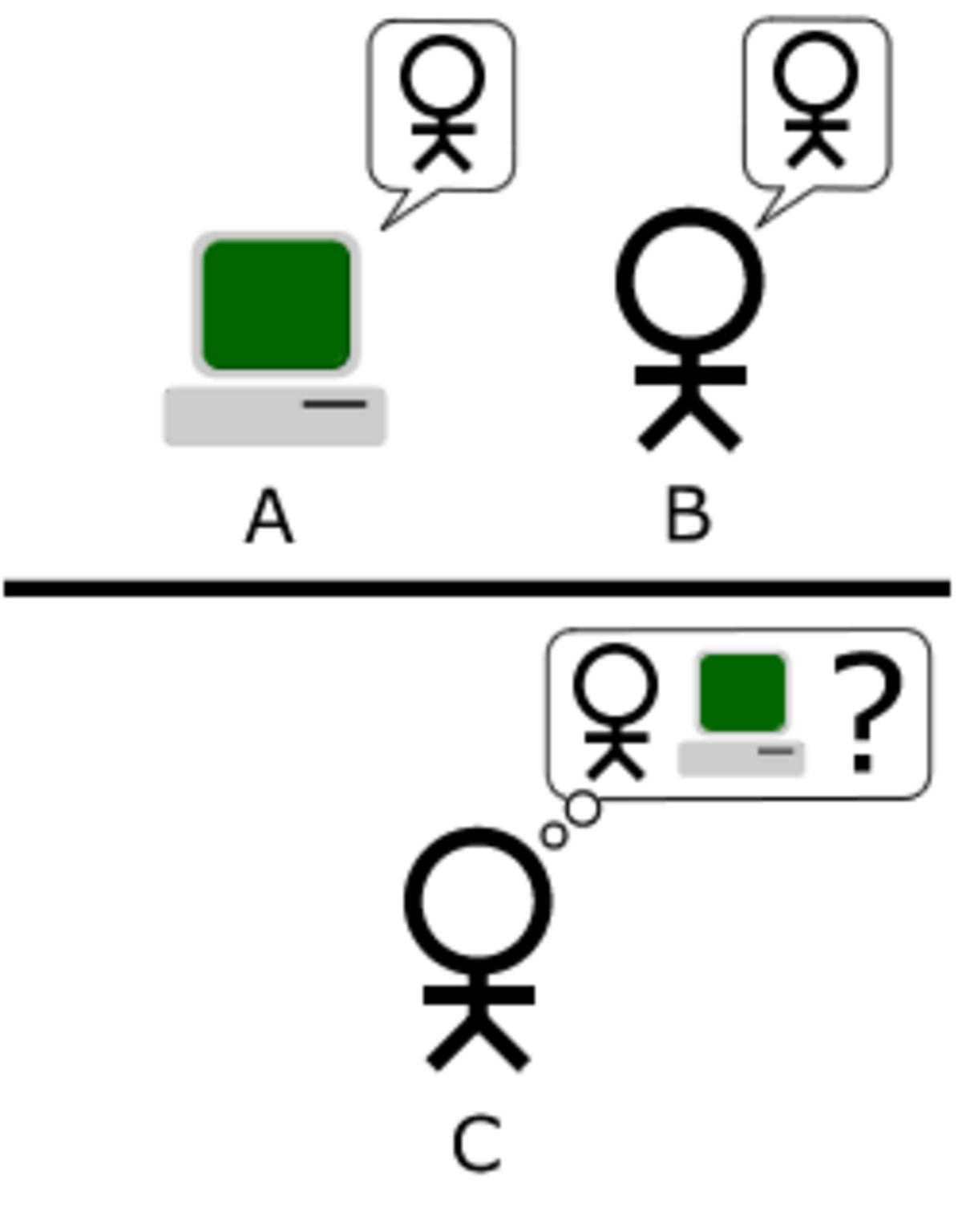
Under the standard Turing Test, a machine passes if an outside observer cannot distinguish its replies from those of a human. Searle shows that a person inside a room with paper, pencils, filing cabinets, and an English rulebook could pass the test in Chinese without understanding a single word. Because there is no difference between what the person does and what a computer does, matching inputs to outputs through programmed instructions fails to create understanding.
Searle was not the first to argue that mechanical symbol crunching cannot create a mind. In 1713, Gottfried Wilhelm Leibniz proposed expanding a brain to the size of a mill to show that purely mechanical parts could never produce perception. In 1958, Peter Winch pointed out that understanding Chinese is not the same as mastering the statistical probabilities of its words.
In 1961, Soviet cyberneticist Anatoly Dneprov published a story where a stadium full of people acted as switches and memory cells to translate Portuguese without understanding the language. Similar ideas appeared throughout the 1970s, including Lawrence H. Davis using offices connected by telephone lines and Ned Block proposing the entire population of China as a brain simulation. Searle synthesized these ideas in his 1980 paper, Minds, Brains, and Programs.
Does the Chinese Room argument claim that syntactic rule-following produces genuine semantic understanding?
No, it produces simulation without meaning.. The Chinese Room proves that manipulating symbols according to syntax creates the illusion of understanding, but internal meaning is entirely absent.
In the context of the Chinese Room argument, what is the core limitation of artificial intelligence?
It processes syntax without grasping semantics.. John Searle designed the thought experiment to show that computers execute rules blindly, distinguishing mere behavior mimicking from actual conscious comprehension.
Does the Chinese Room argument prove that computers have genuine consciousness?
No, they simulate understanding only. The Chinese Room shows that following rules to manipulate symbols is not the same as conscious understanding, meaning computers only simulate intelligence.
Collectible card
Play the lesson in edgi and the card is yours. It lands on your Map next to the ideas it connects to, and turns from matte to foil to gold as you learn more around it.
No. The argument applies specifically to digital computers running formal programs, not to all possible machines. It also does not place any limit on the amount of intelligent behavior a computer can display.
Searle argues that genuine thinking requires understanding and intentionality. A computer program processes symbols purely according to their shape and rules, meaning it simulates the appearance of thought without attaching real meaning to the symbols.
Part of the Set · 7 cards
Philosophers wrote the tests for thinking machines decades before the machines existed. Now the machines pass.
Learn the whole SetLesson complete
You finished the lesson. In edgi, the card goes on your Map next to everything else you learn.