The Turing Test is an evaluation where a human judge reads text conversations with two hidden partners, one machine and one person, to see if the machine can fool the judge into thinking it is human. Alan Turing created it in 1950 to replace the vague question of whether machines can think with a clear, measurable challenge. Success does not require accurate answers, only responses that sound genuinely human.
By the edgi team We find the most surprising true thing about an idea and build a 60-second lesson around it.
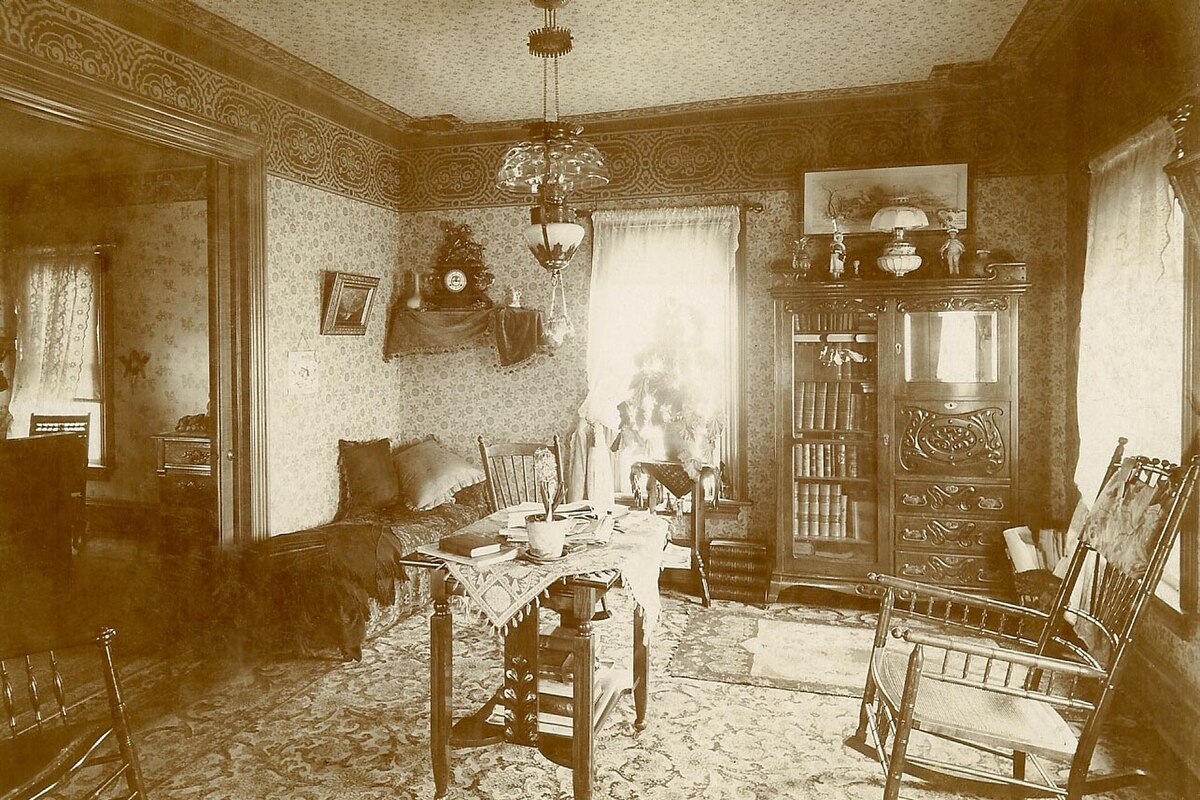
Before it was an AI benchmark, the Imitation Game was a Victorian party activity. A man and a woman would send notes to a judge, both trying to convince the judge they were the other gender.
A sepia-toned photograph from the early 1900s shows a Victorian-style room, possibly a living room or parlor. Family member of JGKlein. Author died more than 70 years ago., Public domain, via Wikimedia Commons
Alan Turing, the man who cracked the Enigma code, borrowed this structure to solve a philosophical headache.
The impossible question
In 1950, Turing grew tired of people arguing over whether machines could think or had consciousness. He argued that thinking was too vague to define.
Instead, he proposed a simple test: if a machine can chat with a human and fool them into thinking it is a person, we should treat it as intelligent.
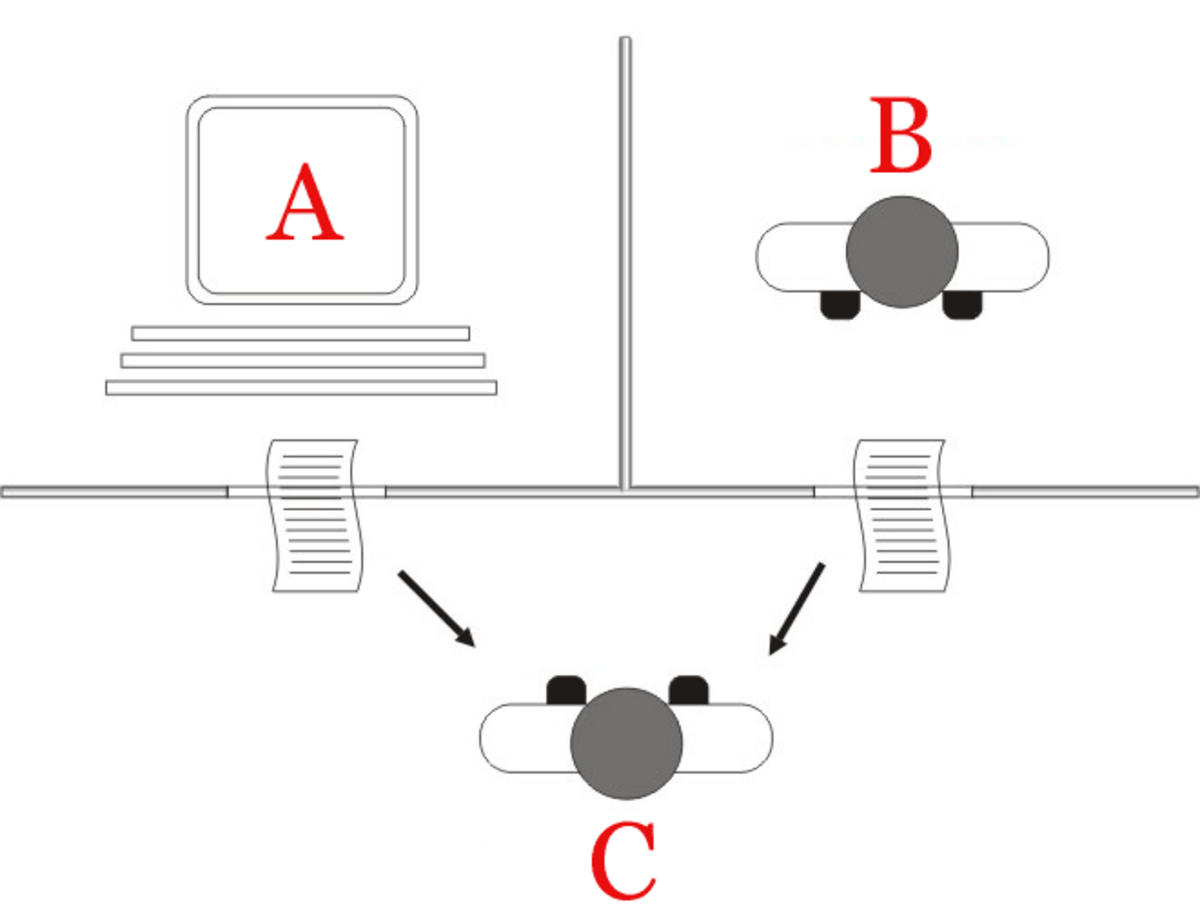
Diagram illustrating the "standard interpretation" of the Turing test, showing three participants: A (a computer), B (a human), and C (the interrogator). Juan Alberto Sánchez Margallo, CC BY 2.5, via Wikimedia Commons
The chinese room
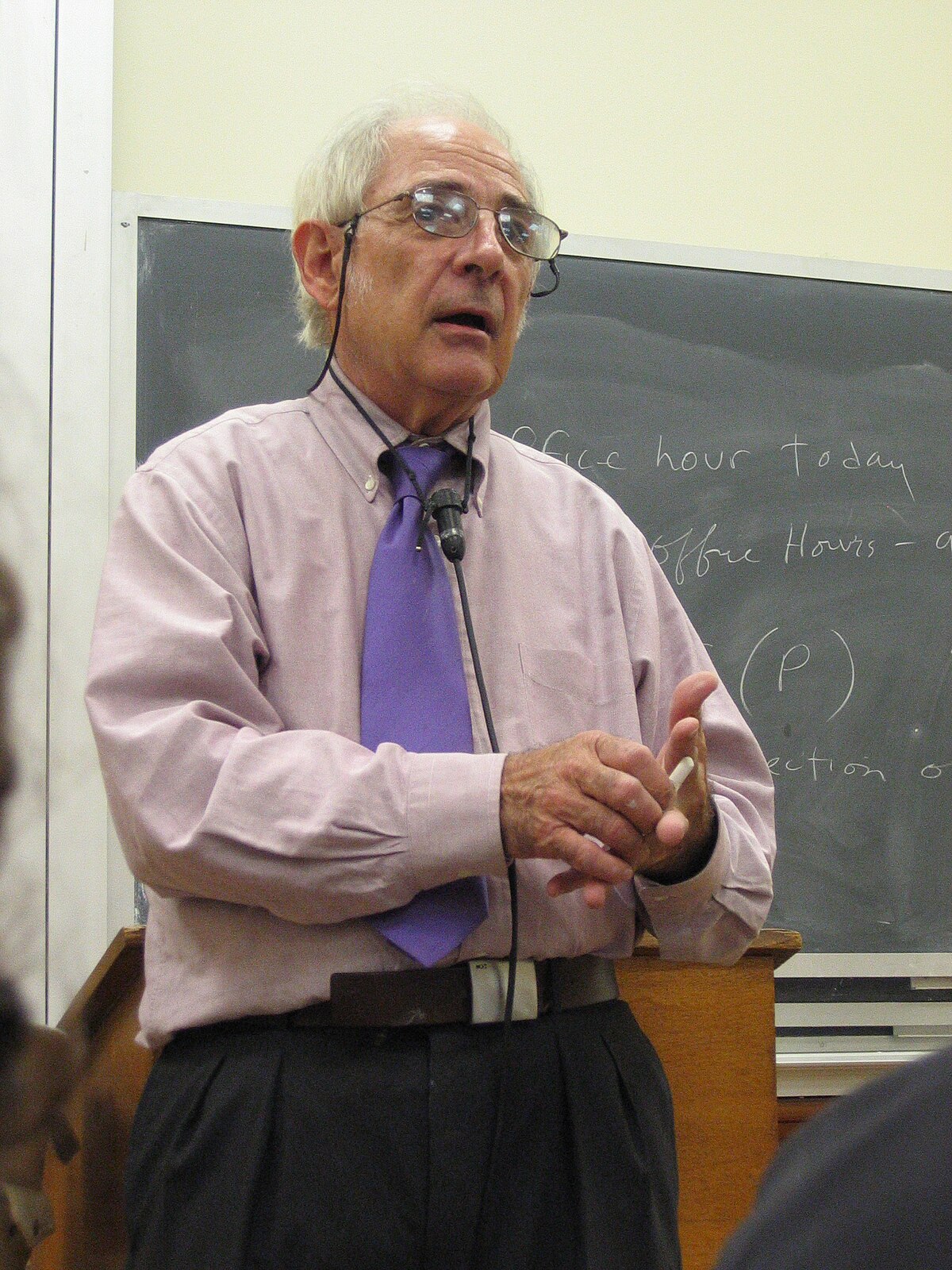
Not everyone agreed. Philosopher John Searle proposed the Chinese Room thought experiment to critique the test. Imagine a person in a room with a rulebook, translating Chinese characters perfectly without knowing a word of the language.
Portrait of philosopher John Searle speaking in December 2005, wearing a light purple shirt, a dark purple tie, and glasses. Matthew Breindel uploader Matro at en.wikipedia, CC BY-SA 3.0, via Wikimedia Commons
Searle argued that the machine is just following rules, not understanding the conversation. It is a simulation of intelligence, not the real thing.
The daily reality
Today, CAPTCHA tests are the inverse of the Turing Test. While Turing tried to prove a machine could act human, modern websites use CAPTCHA to prove you are not a machine.
The goalposts have shifted from can it fool us to how do we prove we are not the bots?
How does the imitation game work?
The test comes from a party game where an interrogator asks written questions to a man and a woman in separate rooms to guess their sexes. Turing replaced one player with a digital computer. If the evaluator cannot reliably tell the computer from the human based on transcripts of their dialogue, the computer passes.
The test measures indistinguishability rather than correctness. A computer that answers complex calculations instantly or perfectly might fail by giving away its mechanical nature. Because it evaluates performance capacity through natural language, the standard text test can also generalize to nonverbal or robotic tasks.
Why did philosophers debate machine conversation?
Centuries before Turing, thinkers used language to divide living minds from automata. In 1637, René Descartes argued that moving machines might utter words or react to physical contact, but they could never arrange speech to reply appropriately to everything said in their presence as a human does.
In 1746, Denis Diderot noted that materialists would consider a parrot intelligent if it could answer any question. Materialism holds that minds are physical systems, meaning artificial minds are physically possible. Dualism claims the mind has non-physical properties, ruling out purely mechanical thought.
Test yourself
What was the original goal of the game Alan Turing borrowed?
To deceive about gender. Turing borrowed a Victorian party game where people tried to convince a judge they were the opposite gender, adapting it to bypass debates about machine souls.
An automated system successfully impersonates a human in chat support. What has it definitively proven?
It can mimic human output. Passing an imitation threshold proves successful simulation, but as critics of rule-based systems argue, outputting correct answers is not the same as internal understanding.
Did Turing create his test to prove machines possess inner consciousness?
No. Turing specifically wanted to avoid the unanswerable philosophical debate over consciousness by focusing strictly on observable behavior and deception.
Play the lesson in edgi and the card is yours. It lands on your Map next to the ideas it connects to, and turns from matte to foil to gold as you learn more around it.
In Jonathan Swift's 1726 book Gulliver's Travels, the king of Brobdingnag suspects Gulliver is a clockwork automaton taught set phrases. The king only accepts Gulliver as a natural being after asking several questions and receiving rational answers.
Did Alan Ayer propose a similar test before Turing?
In his 1936 book Language, Truth and Logic, philosopher Alfred Ayer argued that we distinguish a conscious person from a machine using empirical tests. Ayer stated that an object is not conscious if it fails an observable test for consciousness.