Copernican PrincipleWhy humans hold no special view
The Copernican principle is the working assumption that Earth does not occupy a special location in space and that observations made from our planet represent what an observer would see from an average position in the universe. It goes beyond saying we are not at the center by asserting that our vantage point is completely ordinary. This simple idea forms the bedrock of modern cosmology, allowing scientists to infer that the laws and structures seen from Earth apply across the cosmos.
By the edgi team We find the most surprising true thing about an idea and build a 60-second lesson around it.
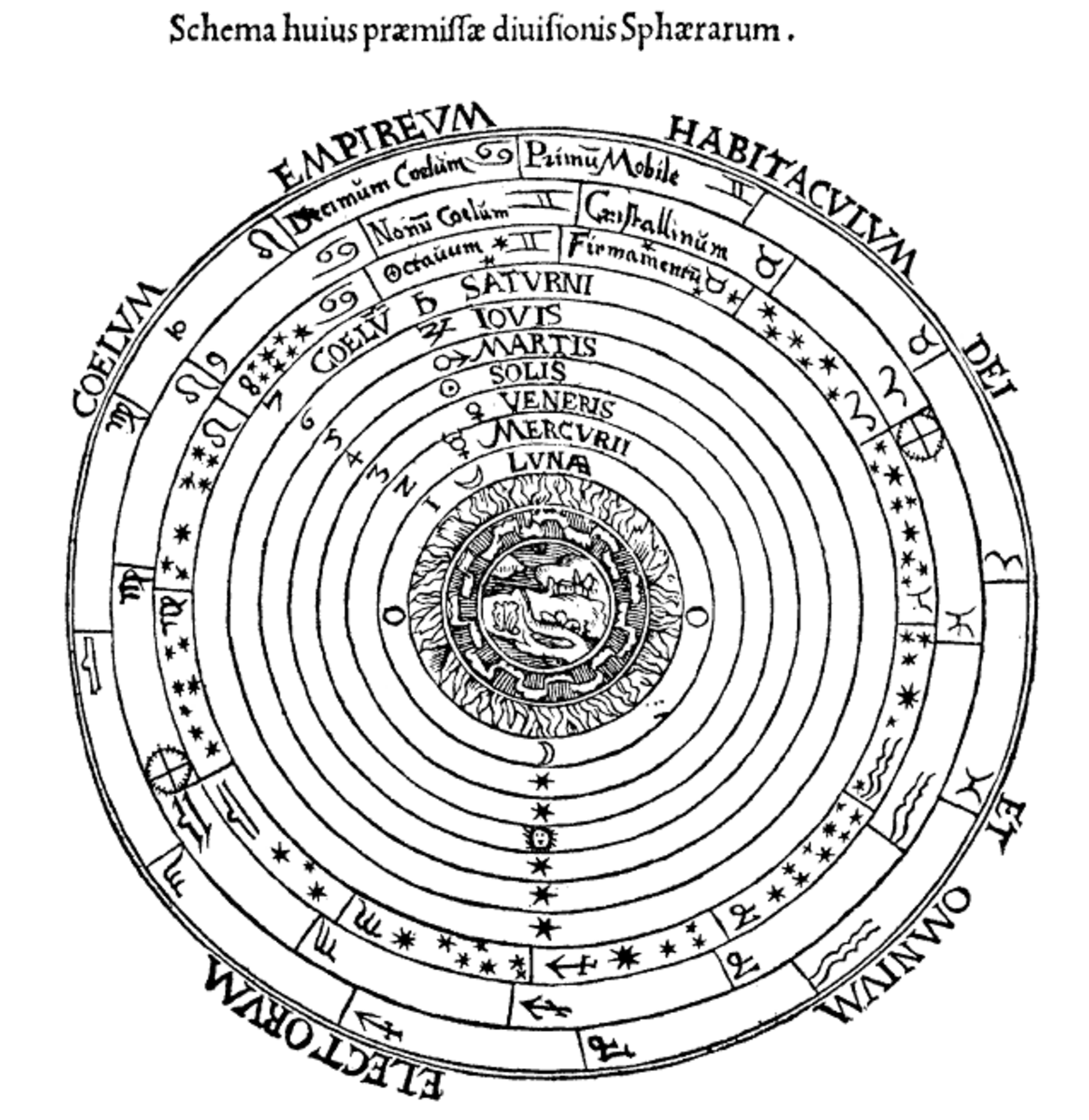
For centuries, humanity assumed we were the literal center of everything. Everything in the sky seemed to wheel around us. In 1543, Nicolaus Copernicus mathematically shifted the stage, proving Earth was just another planet orbiting the Sun.
Diagram of the Ptolemaic geocentric model of the universe, titled "Schema huius præmiffæ diuifionis Sphærarum." It shows Earth at the center, surrounded by concentric spheres representing the Moon,… Fastfission, Public domain, via Wikimedia Commons
This was the first crack in our sense of cosmic importance. It wasn't just a change in geometry; it was the start of a massive demotion.
The cosmic average
The Copernican principle takes that demotion further: it assumes that no matter where you go in the universe, the view is roughly the same. If you were teleported a billion light-years away, you wouldn't find a 'better' or 'more special' view. The cosmos is statistically uniform.
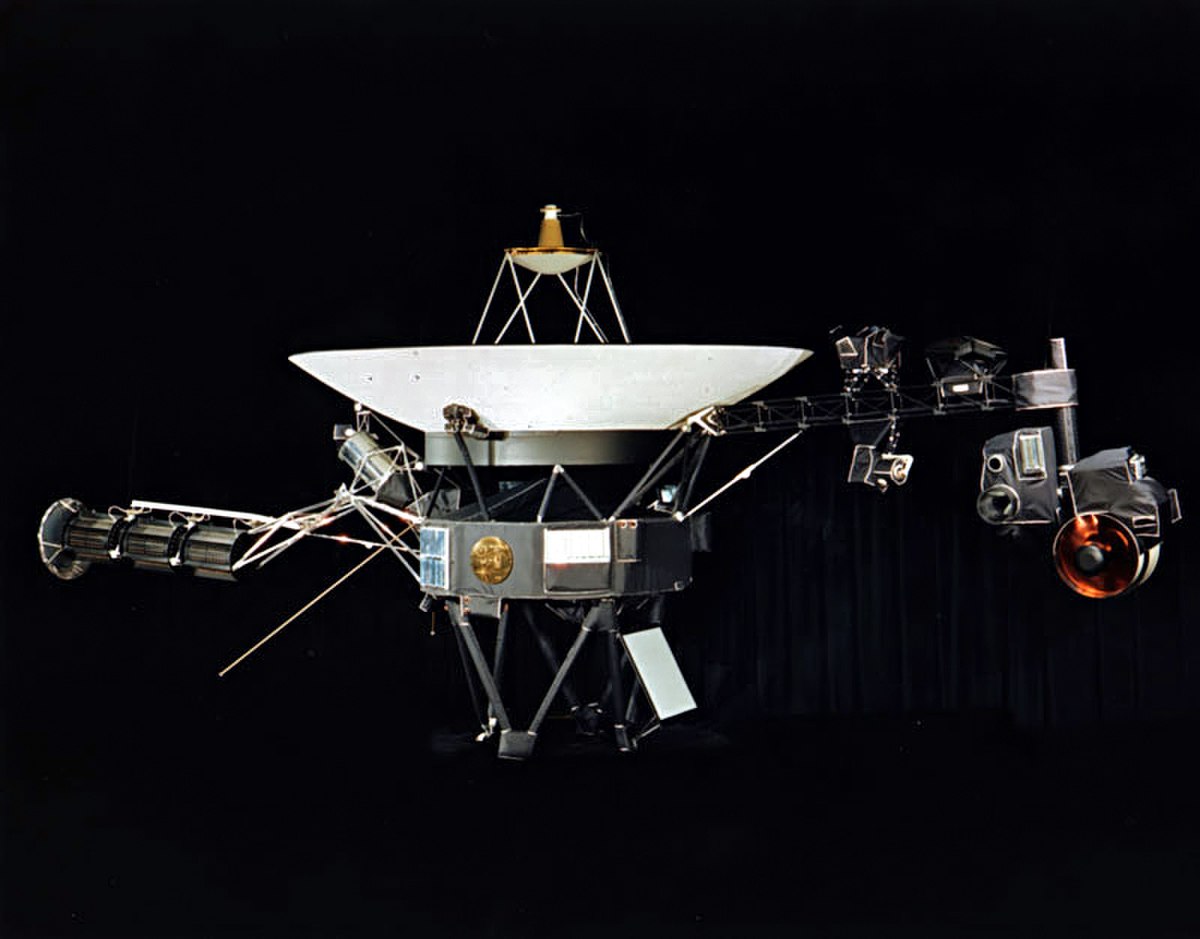
The Voyager 1 spacecraft, a complex assembly of scientific instruments, antennas, and power sources, set against a black background. NASA/JPL-Caltech, Public domain, via Wikimedia Commons
We are not at the center, nor are we at the edge. We are simply a representative sample of an average cosmic neighborhood.
The pale blue dot
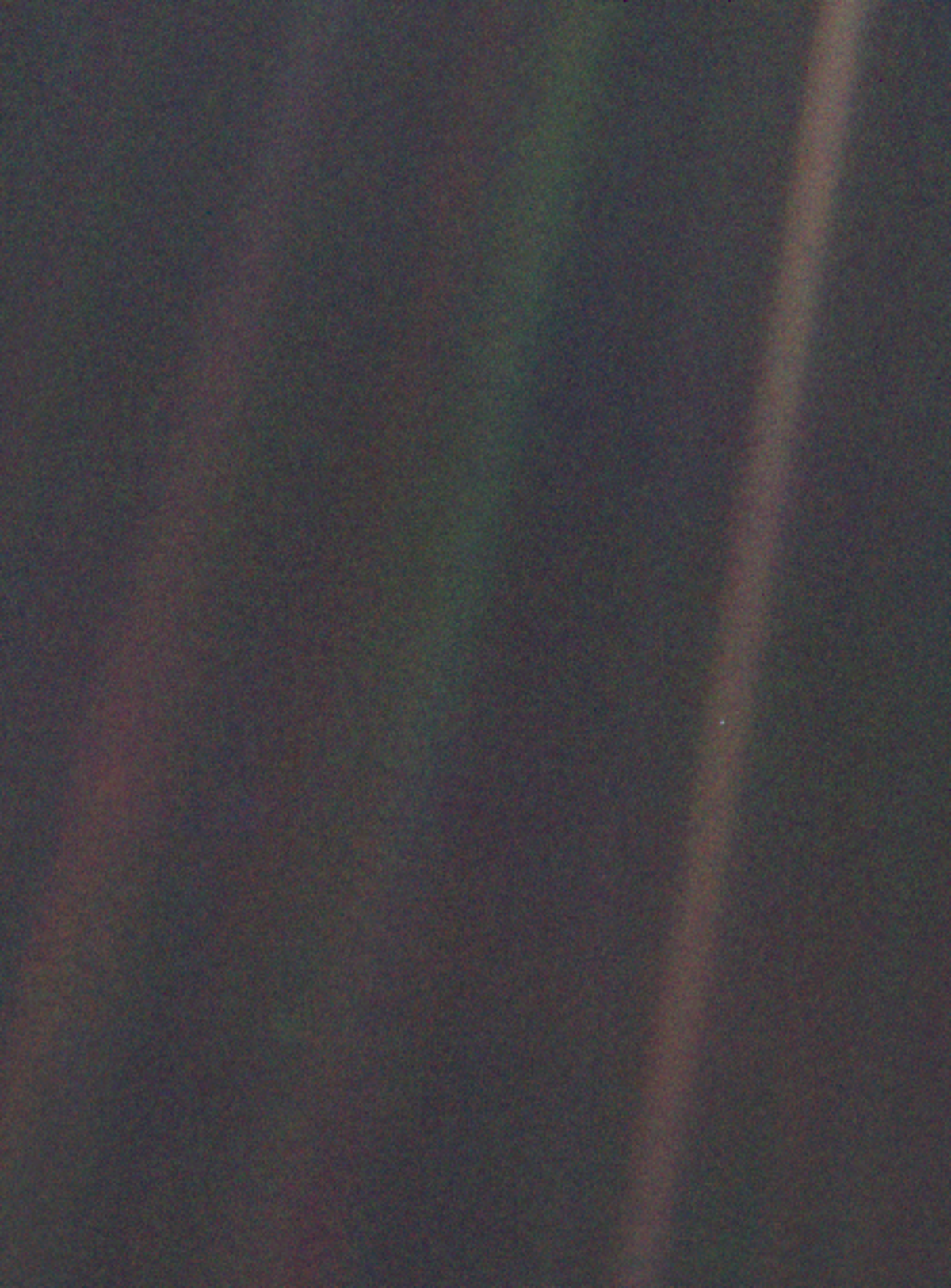
In 1990, Voyager 1 turned its camera back from 3.7 billion miles away to capture a photo of Earth. The image, known as the Pale Blue Dot, shows our home as a single, fragile pixel suspended in a sunbeam.
The iconic "Pale Blue Dot" image, showing Earth as a tiny, distant speck of light within a ray of sunlight, captured by Voyager 1. Voyager 1, Public domain, via Wikimedia Commons
It is the ultimate visual proof of our non-privileged status, proving we are a tiny speck in a vast, indifferent dark.
The counterpoint
If we aren't special, why is the universe so perfectly tuned for life? This is the Anthropic principle. It argues that the universe must have specific, precise conditions for us to exist to observe it at all.
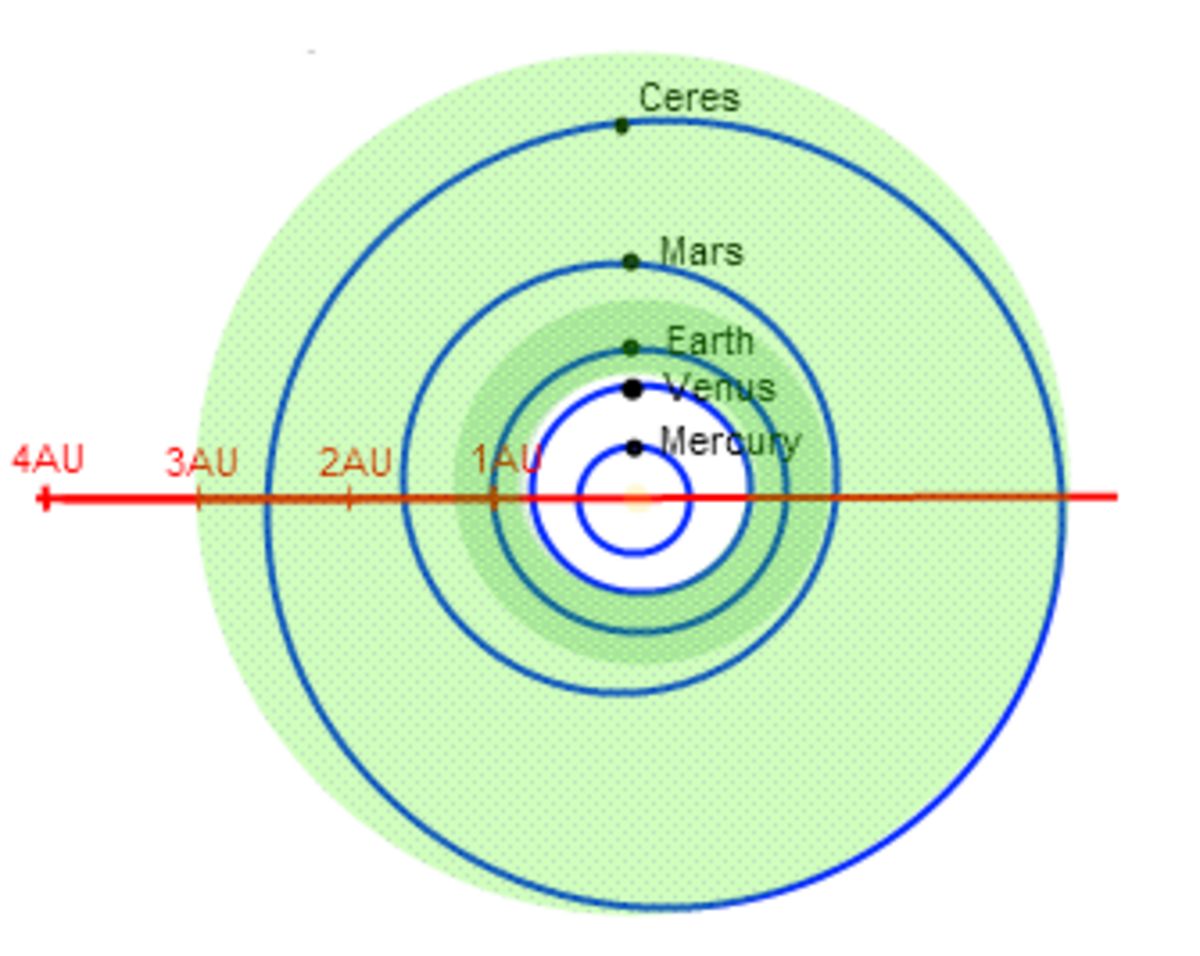
A diagram illustrates the estimated extent of the Solar System's habitable zone, with the Sun at the center and planetary orbits. EvenGreenerFish at English Wikipedia, CC BY-SA 3.0, via Wikimedia Commons
It creates a tension: are we truly random, or are we here because the universe requires an observer to witness it?
How does the principle shape modern cosmology?
Modern cosmology relies on the cosmological principle, which states that the universe is both isotropic (the same in all directions) and homogeneous (the same everywhere). The Copernican principle provides the essential philosophical bridge to make this claim.
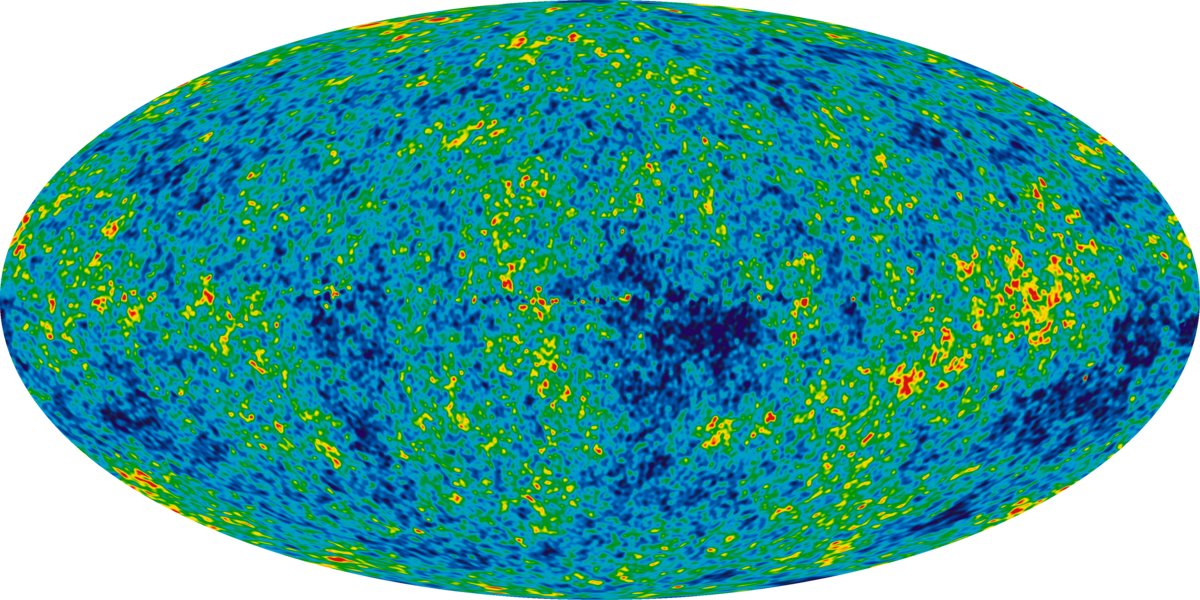
A false-color map of the cosmic microwave background radiation shows temperature fluctuations that are isotropic across the sky to at least one part in a thousand. NASA / WMAP Science Team, Public domain, via Wikimedia Commons
When astronomers look out from Earth, the universe appears isotropic. If humans occupied a unique central point, this uniformity could just be a local illusion. By assuming our location is average, cosmologists can infer that the universe must look isotropic from any other point as well, making the entire cosmos homogeneous on its largest scales.
Historical origins and the shift from central Earth
Hermann Bondi coined the name in the mid-20th century, though the concept builds on the mathematical work Nicolaus Copernicus published in 1543. Copernicus showed that the apparent backward loops of planets in the sky were an optical illusion caused by Earth moving around the Sun.
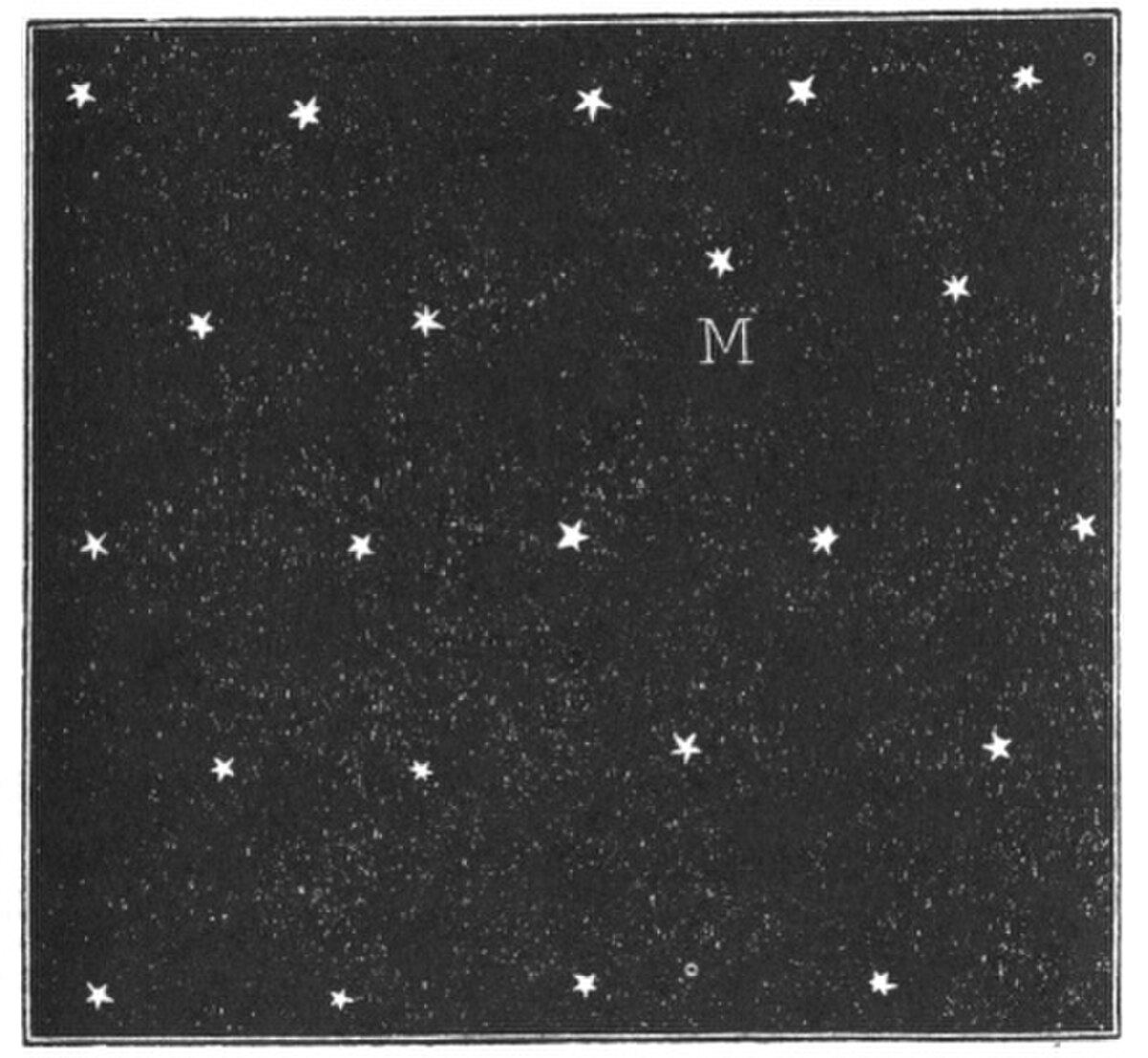
Johannes Kepler's diagram from his Epitome Astronomiae Copernicanae depicts the Earth as belonging to one system among many similar stars. Iohannes Kepler, Public domain, via Wikimedia Commons
Copernicus was driven by technical problems with older models rather than a philosophy of human mediocrity. Later thinkers, including Giordano Bruno and Galileo Galilei, adopted the wider philosophical view, replacing ancient ideas that Earth was the stationary center of reality with the realization that our world belongs to the broader motion of the stars.
Challenges and large-scale structures
The standard cosmological model predicts that matter smooths out into a uniform distribution on scales larger than roughly 260 million parsecs. At these distances, local clumping into stars and galaxies should blend into a smooth cosmic background.
Recent astronomical surveys have challenged this assumption by discovering massive structures, including the Sloan Great Wall, the Giant Arc, and the Hercules–Corona Borealis Great Wall. These huge features, alongside anomalous data from quasars and type Ia supernovae, suggest that large-scale uniformity might be violated in parts of the observable universe.
Test yourself
What does the Copernican principle assume about our location in the universe?
Earth occupies no privileged spot.. The Copernican principle states that we are not in a central or special position, meaning our cosmic neighborhood is statistically representative of the universe.
The Copernican principle implies that Earth is located at a unique, central point.
False. The Copernican principle rejects the idea of a special or central location, positing instead that Earth is a typical, non-privileged point in the universe.
Play the lesson in edgi and the card is yours. It lands on your Map next to the ideas it connects to, and turns from matte to foil to gold as you learn more around it.
No, the principle has never been proven and cannot be strictly proven in the most general sense. It remains an underlying working assumption that justifies our interpretations of cosmological models and astronomical data.
What is the difference between acentrism and the Copernican principle?
Acentrism merely states that humans and the Earth are not at the center of the universe. The Copernican principle goes further by stating that human observations from Earth are representative of an average cosmic position.
What is the perfect cosmological principle?
Proposed by Hermann Bondi and Thomas Gold, it extended the Copernican principle to suggest the universe is homogeneous in both space and time. This idea supported steady-state cosmology but was ultimately contradicted by evidence showing the universe changes over time.