Cue-dependent forgettingWhy memories hide in plain sight
Cue-dependent forgetting is the failure to recall information because the right memory cues are missing, even though the memory itself remains stored. Human memory does not work like a file search; it retrieves details by association. Forgetting often means a memory is present but temporarily out of reach.
By the edgi team We find the most surprising true thing about an idea and build a 60-second lesson around it.
In 1966 Endel Tulving and Zena Pearlstone gave people a list of 48 words to learn. The words arrived in groups, twelve categories of four, with the category name printed above each group. Then they asked for the words back. Some people got a blank sheet. Others got the same blank sheet with the twelve category names already written on it.
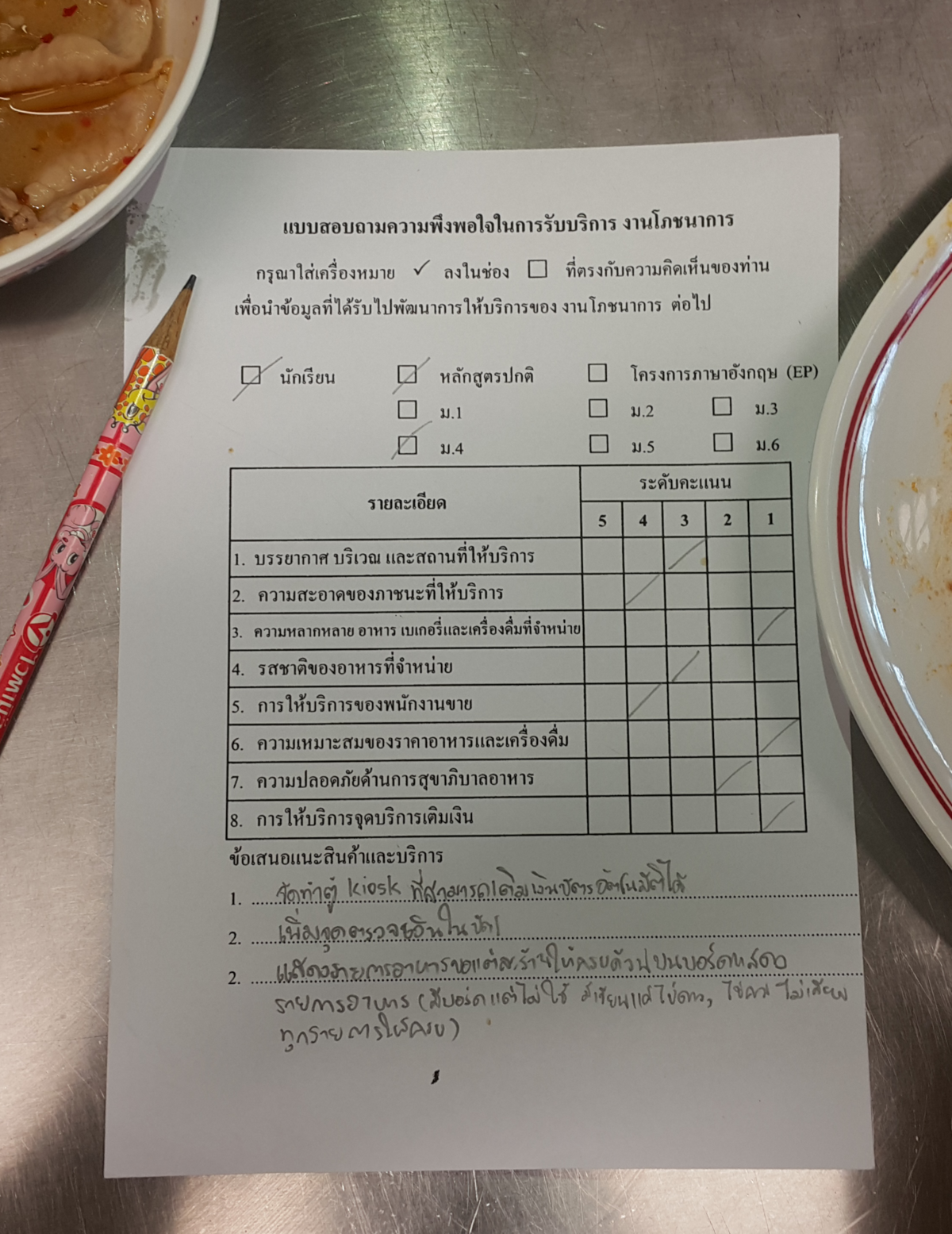
A basic questionnaire in the Thai language, partially filled out with pencil, resting on a table next to a bowl. Chainwit., CC BY-SA 4.0, via Wikimedia Commons
The people holding the category names produced far more of the list. Nothing had been studied in between, and the two groups had seen exactly the same words for exactly as long.
Available is not the same as reachable
Tulving and Pearlstone drew a line that has held ever since. A memory can be available, meaning it is still stored, and at the same time not accessible, meaning nothing in the room gets you to it. Cue-dependent forgetting is that second case. The material is intact and the failure is at the door: there is no cue present that connects to it.
So the distance between what you can produce cold and what you can produce with a hint is not a measure of what you know. It is a measure of what you can currently reach.
Practise with the cues you will have
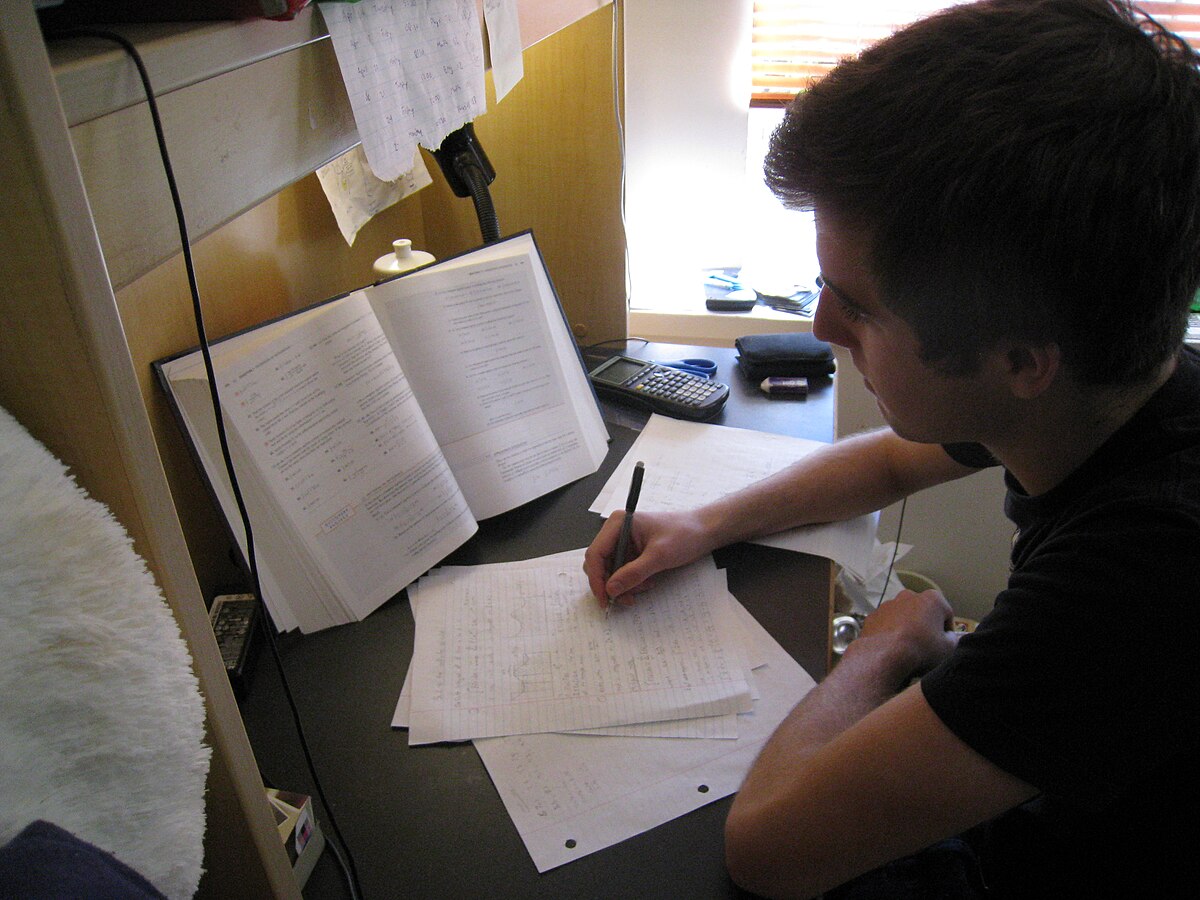
Whatever is around when something goes in tends to become a route back to it. Tulving later called that the encoding specificity principle, and it cuts both ways. The cues you revise with quietly become the cues you need. Work through the material with the headings in front of you and the headings are part of how you are getting to it.
A student studying at a desk, writing on papers with an open textbook and a calculator nearby. Gnarlycraig, Public domain, via Wikimedia Commons
So practise from the cues that will actually be there. If the exam hands you a question and nothing else, then at some point beforehand you have to find the material from a question and nothing else. And when something will not come, hunting for a cue beats deciding it is gone. What was it an example of, what came just before it, where were you when you first met it.
How cues trigger human recall
A computer finds files by scanning its storage directly for text strings. Human memory operates through associations. Some memories cannot be accessed simply by trying to think about them directly.
Instead, thinking about an associated detail pulls the rest of the memory forward. Mentioning that someone rented a classic car during a vacation can suddenly trigger recall of what they ate, where they went, and what books they read on the trip. Meaning-based triggers, known as semantic cues, help people remember grouped items by their category or phonetic quality.
Context and state-dependent cues
Recall also relies heavily on external surroundings and internal physical states. Context-dependent cues involve your physical environment: weather, location, smells, sounds, or tastes present during learning. State-dependent cues involve internal conditions: being anxious, happy, upset, inebriated, or drugged.
In a 1975 experiment, divers learned a list of 36 words either on land or 15 feet underwater. Divers who learned on land recalled 38 percent of the words on land, but only 21 percent underwater. Those who learned underwater recalled 32 percent underwater, but dropped to 21 percent on the beach. Memory retrieval works best when the conditions during recall match the conditions present during encoding.
Test yourself
In cue-dependent forgetting, does a failed recall attempt mean the memory has been permanently lost?
No, it is stored but currently unreachable. Memories often remain stored in the brain even when retrieval fails. The breakdown is an inability to reach the stored data rather than its deletion.
How does cue-dependent forgetting explain why studying with answer keys open feels easier than it is?
The key supplies cues you will lack later. Studying with answers present relies on external cues that will be absent during an unassisted test. When those cues disappear, accessibility drops.
You revise with your notes' headings in view. Why might the exam still go badly?
The headings were doing the retrieving. Whatever is present while you retrieve becomes part of how you get there. With the headings always in view, you never practise finding the material without them.
Play the lesson in edgi and the card is yours. It lands on your Map next to the ideas it connects to, and turns from matte to foil to gold as you learn more around it.
What is the difference between state-dependent and context-dependent cues?
Context-dependent cues come from the external environment, such as room location, sounds, and odors. State-dependent cues come from the internal mental or physical condition of the person, such as their mood, anxiety levels, or chemical state.
Who researched context-dependent memory?
Psychologist Abernethy researched context-dependent recall in 1940. Later research in 1975 demonstrated the effect using deep-sea divers tested on land and underwater.