Memory ConsolidationWhy sleep finishes your studying
Memory consolidation is the brain process that stabilizes newly learned information so it can be stored as a long-term memory. It transforms fragile biological changes in neural circuits into lasting connections. This means learning does not end when study time stops, because the physical stabilization of that information continues long after.
By the edgi team We find the most surprising true thing about an idea and build a 60-second lesson around it.
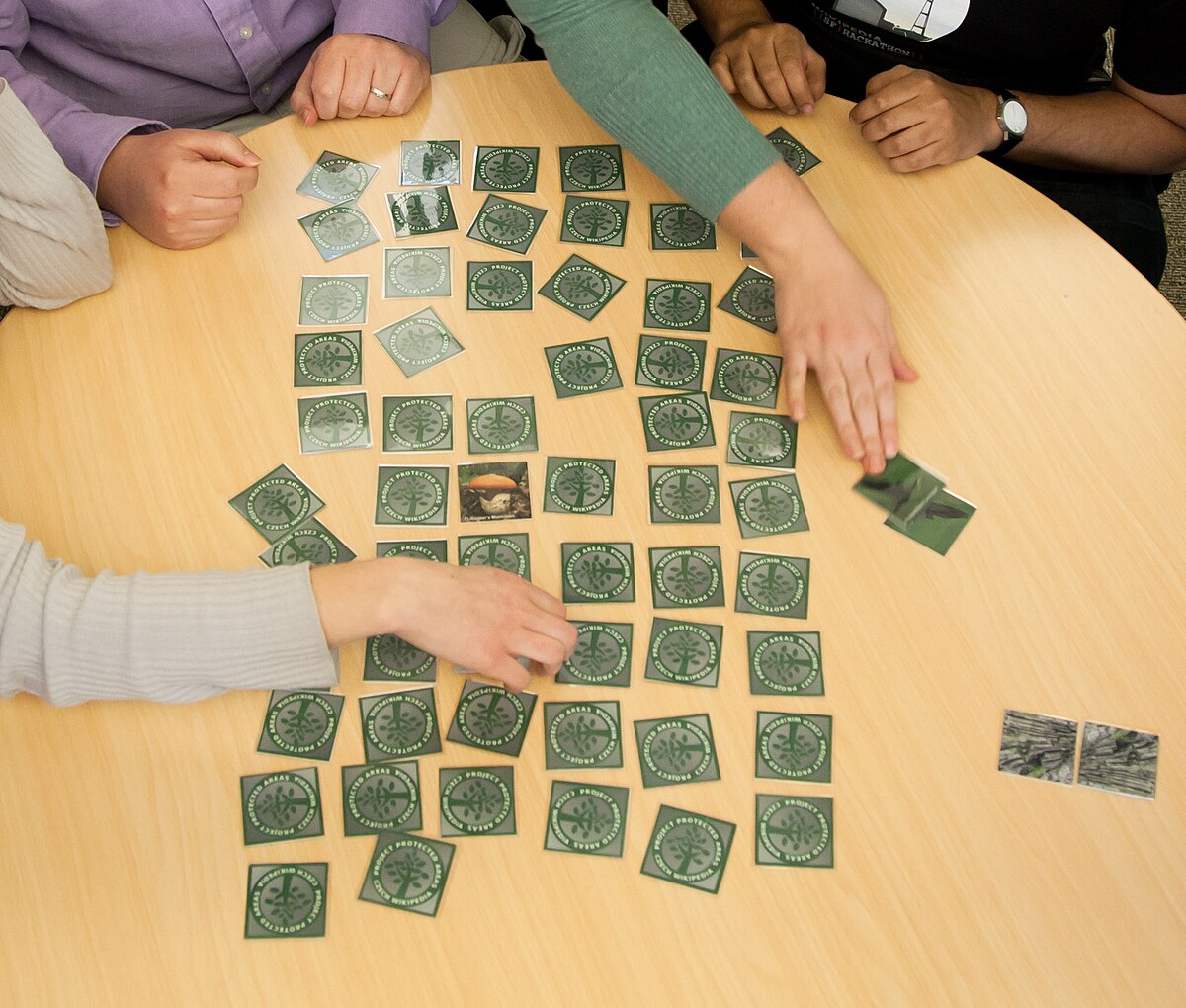
In 2007 a German team led by Bjorn Rasch and Jan Born had volunteers learn where the pairs sat in a card-matching game, the one where you turn two over and hope they match. The room smelled of roses the whole time. The volunteers then slept in the lab with electrodes on. When each of them reached slow-wave sleep, the deep stage that comes early in the night, the researchers released the rose smell again.
Several people play a card game of Concentration, with numerous green square cards spread across a round wooden table. Matthew (WMF), CC BY-SA 3.0, via Wikimedia Commons
In the morning everyone was tested on the card positions. The people who had smelled roses during deep sleep placed about 97 percent of them. The comparison group managed about 85.
It only worked in one place
The controls are the interesting half. Released during dreaming sleep, the smell changed nothing. Released while people were lying awake, it changed nothing. And if the room had not smelled of roses during the learning, the smell in the night did nothing either. It was working as a reminder of something particular, not as a sleep aid.
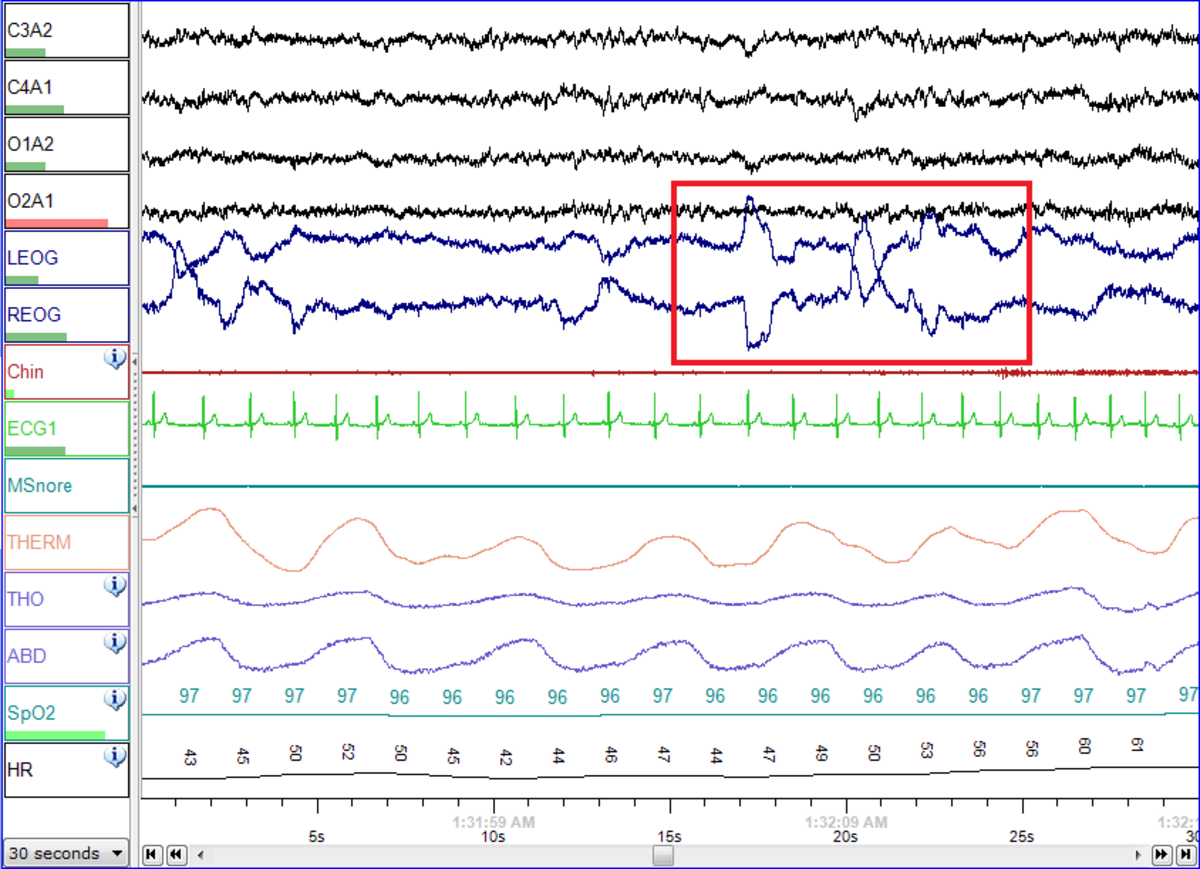
A polysomnography (PSG) recording displaying multiple physiological signals during REM sleep, including EEG (C3A2, C4A1, O1A2, O2A1), EOG (LEOG, REOG), EMG (Chin), ECG (EOG1), and respiratory… NascarEd, CC BY-SA 3.0, via Wikimedia Commons
It also did nothing for a finger-tapping sequence the same volunteers had learned that evening. That is procedural memory, the kind that lives in your hands, and it was untouched.
What happens while you do nothing
Memory consolidation is the name for what a memory goes through after the learning stops, the change that makes it more durable with no further study. The rose result is a handle on that. If a smell arriving at the right hour of the night can move what someone has by breakfast, then that memory was still being worked on long after the session ended.
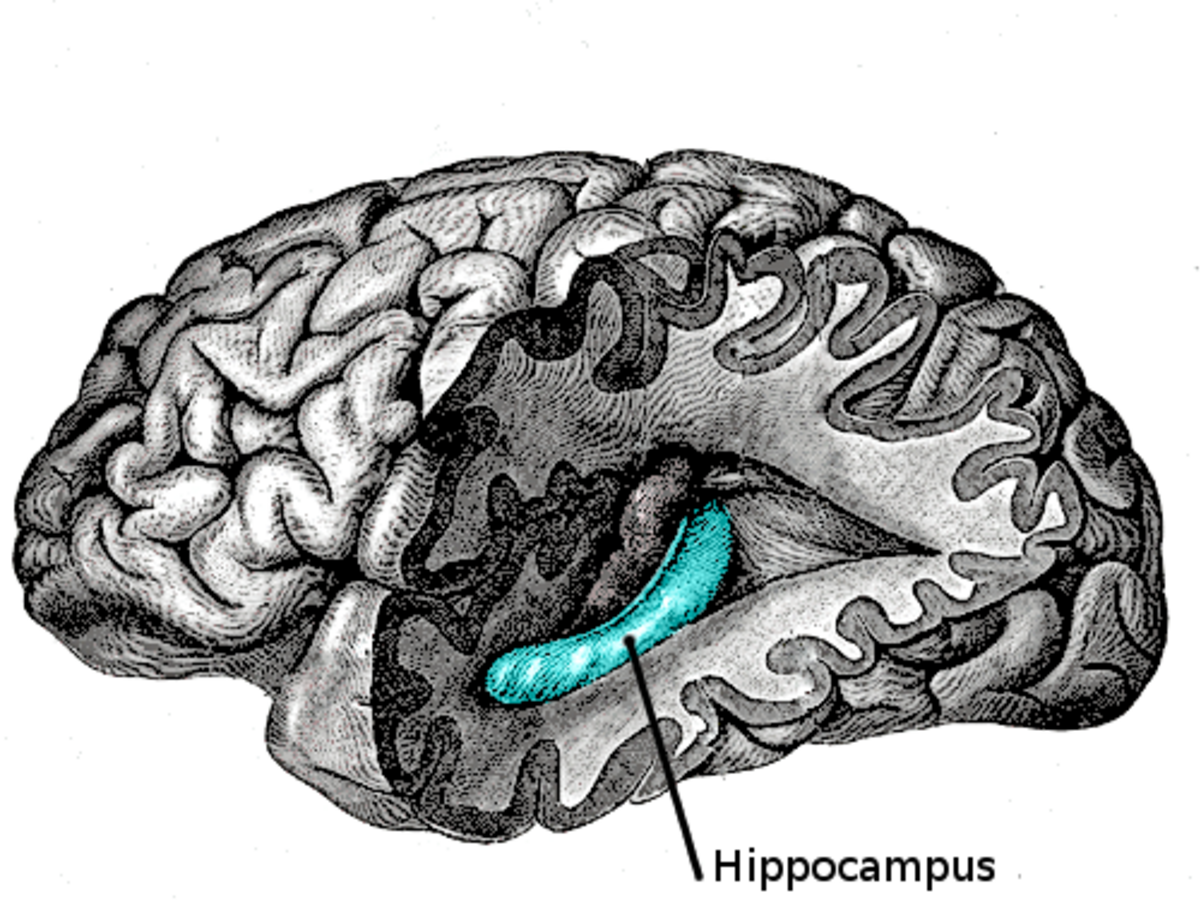
A lateral view diagram of the human brain highlights the hippocampus in blue, located within the medial temporal lobe. Henry Vandyke Carter, Public domain, via Wikimedia Commons
The place it failed is the useful part. Awake, the same cue did nothing, so whatever those deep hours were doing was not available to somebody who stayed up and went over the material again. Which makes the night after studying part of the studying. Trading it for one more hour with the notes trades away the piece of the job you cannot do on purpose.
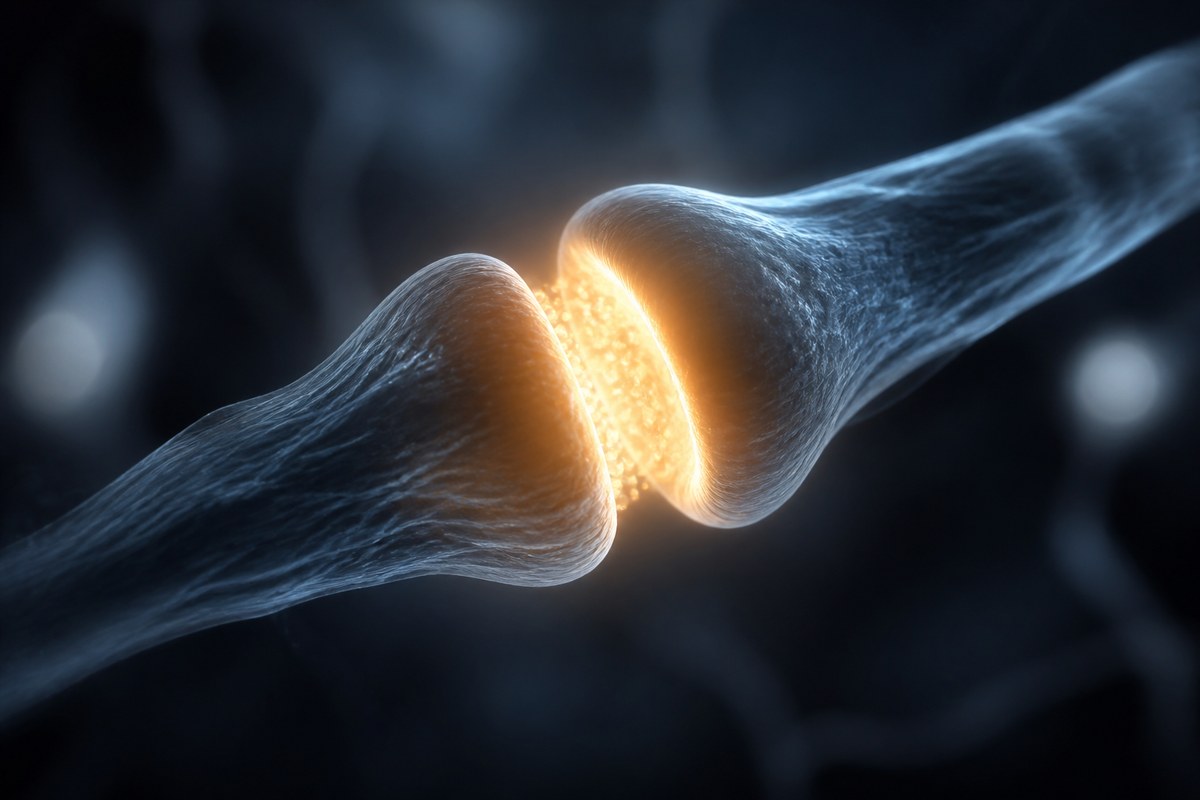
How do synapses lock in new memories?
Synaptic consolidation happens at individual connection points between neurons within the first few hours after learning. Repeated stimulation triggers long-term potentiation, a lasting increase in the signaling strength between nerve cells. Signaling pathways inside the neurons alter gene expression and build new proteins, remodeling the physical structure of the synapse.
Immediately after learning, this machinery remains vulnerable. Disruptions from specific drugs, antibodies, or physical head trauma can halt the synthesis of these proteins and erase the fragile memory trace before it sets.
Why does systems consolidation take years?
While synaptic changes take hours, systems consolidation reorganizes brain networks over weeks, months, or years. Newly formed memories rely heavily on the hippocampus, located in the medial temporal lobe. Over time, the memory trace shifts away from the hippocampus toward broader cortical networks.
This shift was famously demonstrated by patient Henry Molaison (H.M.), who developed severe amnesia after the surgical removal of his hippocampal zone. The loss revealed that the hippocampus acts as a temporary anchor, coordinating structural updates such as changes in myelination and dendritic spine shape across the cortex until the memory can stand on its own.
Test yourself
Does memory consolidation make a memory trace more durable after initial acquisition?
Yes. Memory consolidation is the biological process that stabilizes and strengthens newly acquired memories over time without requiring further study.
How does targeted reactivation during slow-wave sleep influence memory consolidation?
It selectively stabilizes related traces. Presenting learned cues during slow-wave sleep reactivates specific neural traces, helping integrate them into long-term storage without aiding awake performance.
What chemical drop stops the sleeping brain from storing dreams?
A sharp drop in norepinephrine. During REM sleep, norepinephrine drops near zero, preventing the brain from transferring short-term dream traces into long-term storage.
Play the lesson in edgi and the card is yours. It lands on your Map next to the ideas it connects to, and turns from matte to foil to gold as you learn more around it.
Reconsolidation is the process where an already stabilized memory becomes temporarily unstable again when retrieved. Once recalled, the memory trace must undergo protein synthesis and restabilization, which allows the brain to update existing knowledge.
Who first discovered memory consolidation?
The Roman rhetoric teacher Quintilian first wrote that memory improves over time without extra study. In the late 19th century, German researchers Georg Elias Müller and Alfons Pilzecker formally proposed that memories take time to fixate and stabilize.
How does structural plasticity support consolidation?
Structural plasticity alters the physical architecture of brain circuits over long timeframes. This includes growing new neurons through neurogenesis, reshaping dendritic spines, creating new synapses, and adjusting axon myelination to improve signaling speed.