The mania
In the late 1990s, investors threw money at any company simply for having a dot-com in its name. This frenzy was a classic stock market bubble, where excitement over the internet detached valuations from financial reality.

The dot-com bubble was a massive rise and sudden crash in the stock prices of internet companies during the late 1990s. Investors poured money into online businesses simply because they used the internet, ignoring the fact that many of them had no profits. When the market peaked in March 2000, reality caught up, and stock values plummeted, taking many startups down with them.

By the edgi team We find the most surprising true thing about an idea and build a 60-second lesson around it.
In the late 1990s, investors threw money at any company simply for having a dot-com in its name. This frenzy was a classic stock market bubble, where excitement over the internet detached valuations from financial reality.
Take Pets.com, which became a household name by spending millions on a Super Bowl puppet. The company shipped heavy bags of pet food at a steep discount, losing money on every single sale.

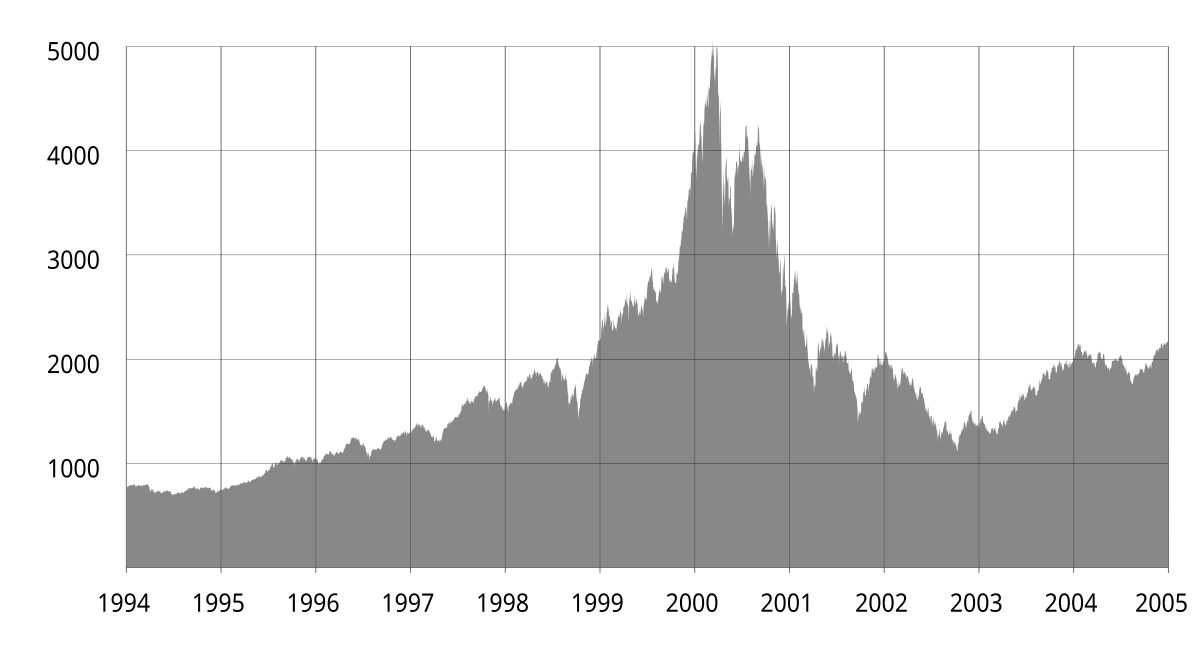
The bubble burst on March 10, 2000, when the Nasdaq Composite index hit its peak before beginning a brutal slide. Trillions in paper wealth evaporated overnight, leaving Silicon Valley littered with bankrupt startups.
Even giants like Yahoo! watched their market values crater by nearly ninety-four percent.

In late 1999, the Nasdaq Composite index reached a price-to-earnings ratio of over 200, more than double the peak of the Japanese asset price bubble in 1991. Investors ignored traditional financial metrics, betting that technological change alone would guarantee future profits.
A mix of new technology and cheap money drove this behavior. The release of web browsers like Mosaic in 1993 and the first secure online credit card transactions in 1994 brought over 40 million people online by 1995. Between 1990 and 1997, United States household computer ownership jumped from 15% to 35%. Lower interest rates and the Taxpayer Relief Act of 1997, which reduced the capital gains tax, made speculative bets even more attractive.
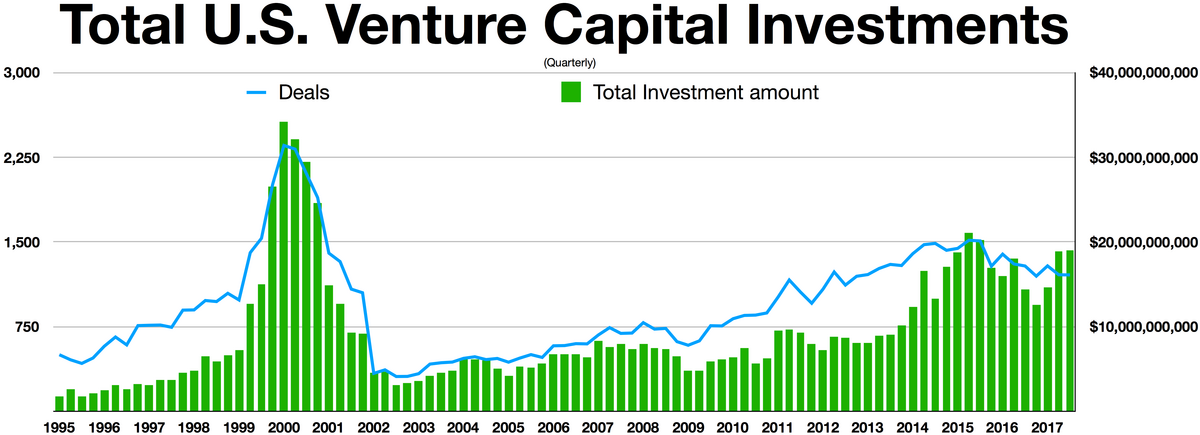
In 1999 alone, shares of Qualcomm soared by 2,619%, while twelve other large-cap stocks each rose over 1,000%. Stories of people quitting their jobs to trade stocks were common, and investment banks actively fueled the frenzy to profit from initial public offerings.
The market peaked on March 10, 2000, before entering a brutal downturn. Between 1995 and its peak, the Nasdaq index gained hundreds of percent, only to fall 78% by October 2002 and erase all its gains from the boom.
Online shopping businesses with broken unit economics shut down rapidly. Companies like Webvan, Boo.com, and Pets.com failed entirely, while telecommunications firms such as NorthPoint Communications and Global Crossing collapsed. Even surviving tech giants absorbed massive losses, with Cisco Systems losing 80% of its market value and Amazon losing a large portion of its market capitalization.
In the dot-com bubble, what made Pets.com’s sales model financially fragile?
It lost money on each discounted shipment. Selling heavy pet food at a steep discount meant each order increased the company’s losses, regardless of its popularity.
What primarily defined the dot-com bubble's valuation logic?
Future potential over current profits. Investors ignored immediate losses, betting that rapid growth would eventually justify high prices. Actual profitability was sacrificed for market share.
Collectible card
Play the lesson in edgi and the card is yours. It lands on your Map next to the ideas it connects to, and turns from matte to foil to gold as you learn more around it.
A dot-com is a business that operates primarily over the internet using the commercial top-level domain suffix .com. Created in 1985, .com became the standard web address ending for for-profit entities.
No, many introduced real e-commerce innovations and grew massive revenues. Amazon, launched in 1995, was reporting revenue up 900% on the previous year at its 1997 initial public offering, although it still made no profit at a valuation of over $14 billion in 1998.
Yes, similar investment booms occurred with railroads in the 1840s, automobiles in the 1900s, radio in the 1920s, television in the 1940s, and biotechnology in the 1980s.
Part of the Set · 7 cards
Tulips, dot-coms, 1929. Every bubble swears it isn't one. It always is.
Lesson complete
You finished the lesson. In edgi, the card goes on your Map next to everything else you learn.