An economic bubble is a period when the market price of an asset climbs far higher than its intrinsic valuation, which is the actual worth justified by underlying financial fundamentals. Investors buy in because they expect prices to keep rising or believe baseline values no longer matter. Because early buyers assume the price gains are justified, bubbles are often conclusively recognized only after they pop and prices crash.
By the edgi team We find the most surprising true thing about an idea and build a 60-second lesson around it.
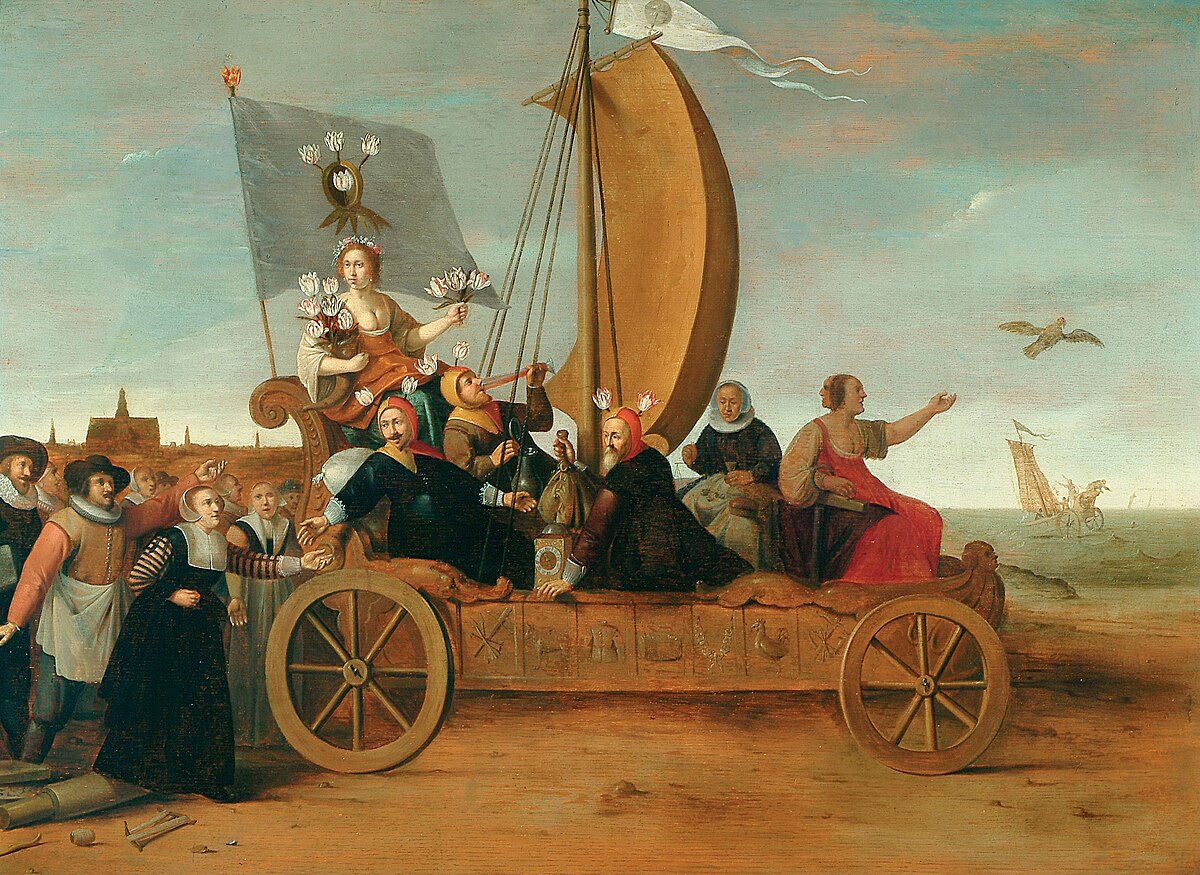
In the 1630s, the Netherlands went mad for tulips. Prices for rare bulbs skyrocketed, with some selling for the price of a grand canal house.
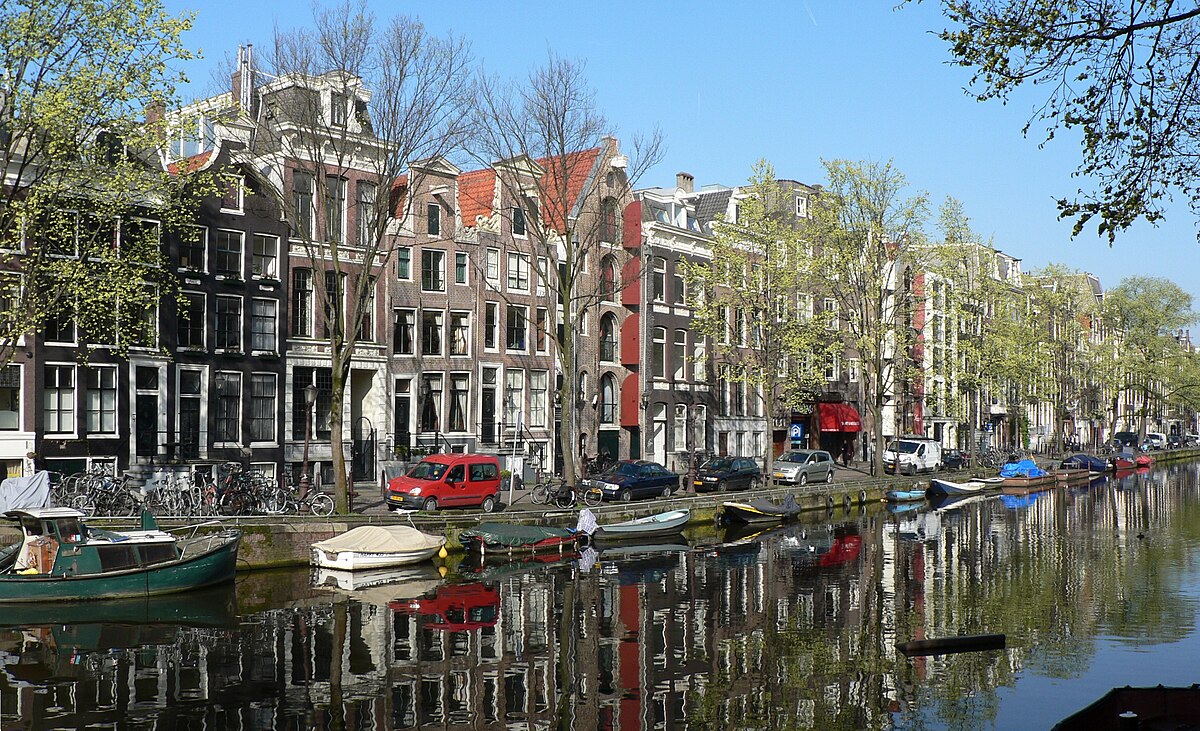
A canal in Amsterdam with traditional Dutch houses lining its banks and boats moored along the water's edge. Patrick Clenet, CC BY-SA 3.0, via Wikimedia Commons
People traded land, cattle, and life savings for flowers that hadn't even bloomed yet. It was the world's first recorded speculative bubble.
The greater fool
The mania wasn't about the beauty of the flowers. It was about the Greater Fool Theory. Investors didn't care about the true value of the bulb. They only cared that someone else would pay more for it tomorrow.
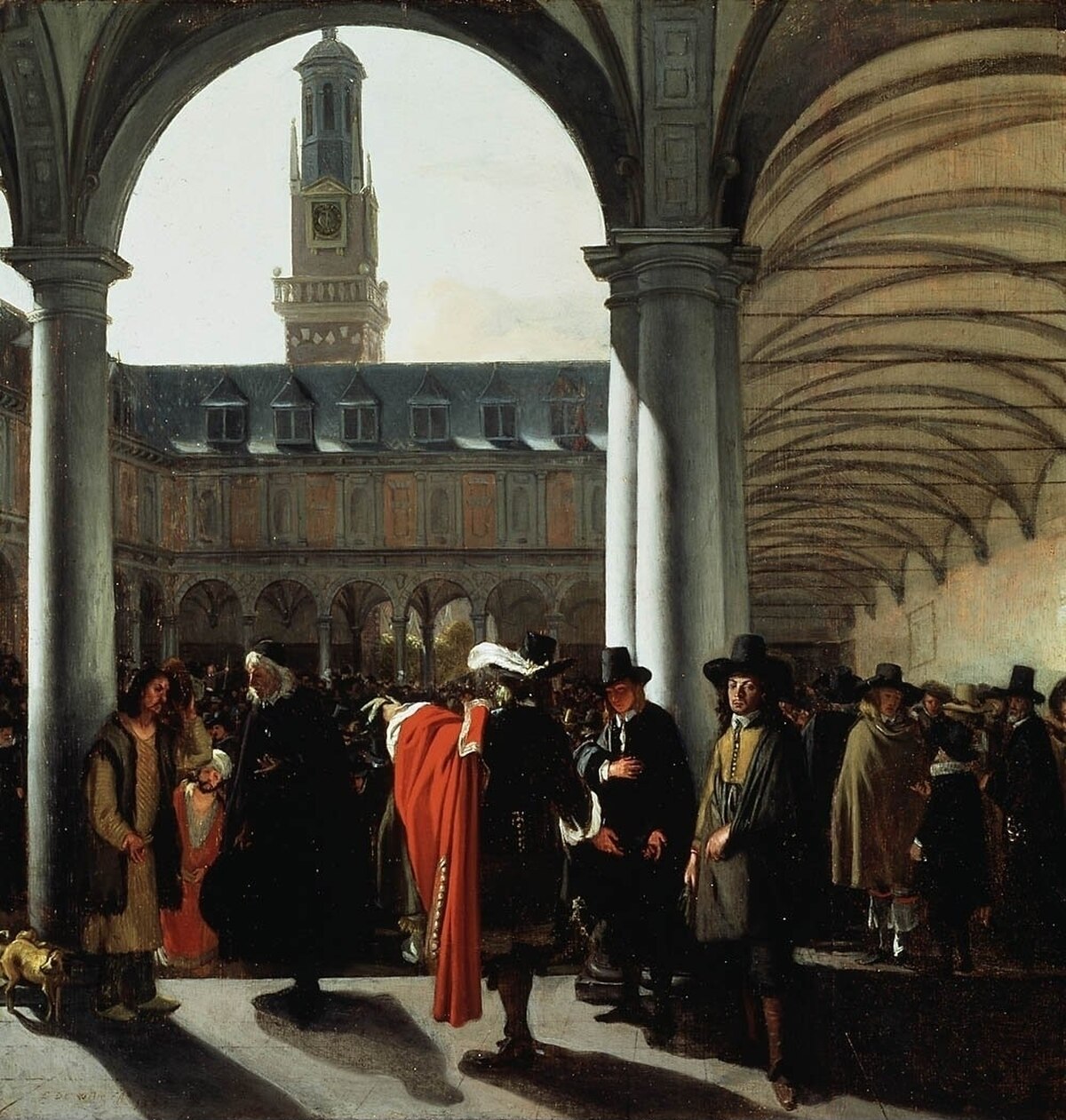
Emanuel de Witte's 1653 painting of the courtyard of the Amsterdam Stock Exchange, known as the Beurs van Hendrick de Keyser. Emanuel de Witte, Public domain, via Wikimedia Commons
The bubble grows as long as there is a steady stream of new buyers. But once the supply of fools runs out, the music stops.
The inevitable burst
In February 1637, a routine auction in Haarlem failed to attract bids. Confidence evaporated instantly. Prices collapsed, and the market vanished in days.
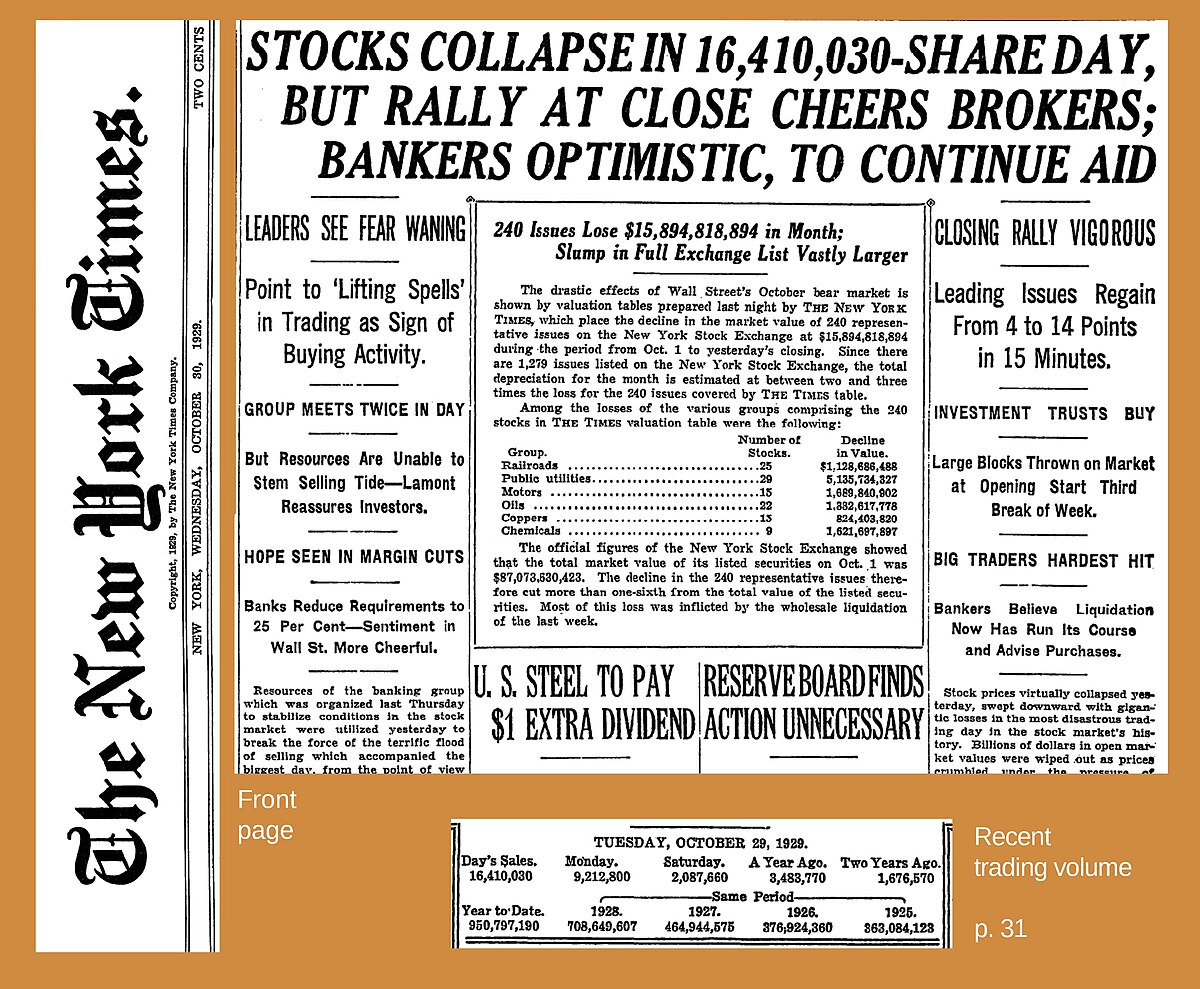
A scanned image of the front page of The New York Times from October 30, 1929, with the headline "STOCKS COLLAPSE IN 16,410,030-SHARE DAY, BUT RALLY AT CLOSE CHEERS BROKERS; BANKERS OPTIMISTIC, TO… Work for hire of The New York Times, Public domain, via Wikimedia Commons
Every bubble, from 17th-century flowers to the Dot-com bubble, follows this same path. As the saying goes: the only thing more expensive than a bubble is the belief that this time is different.
How do economic bubbles form and burst?
Bubbles usually form because of excess market liquidity, shifts in investor psychology, or overly optimistic growth projections. The metaphor itself came from the 1711–1720 British South Sea Bubble, originally describing fragile companies whose stocks inflated on nothing but air.
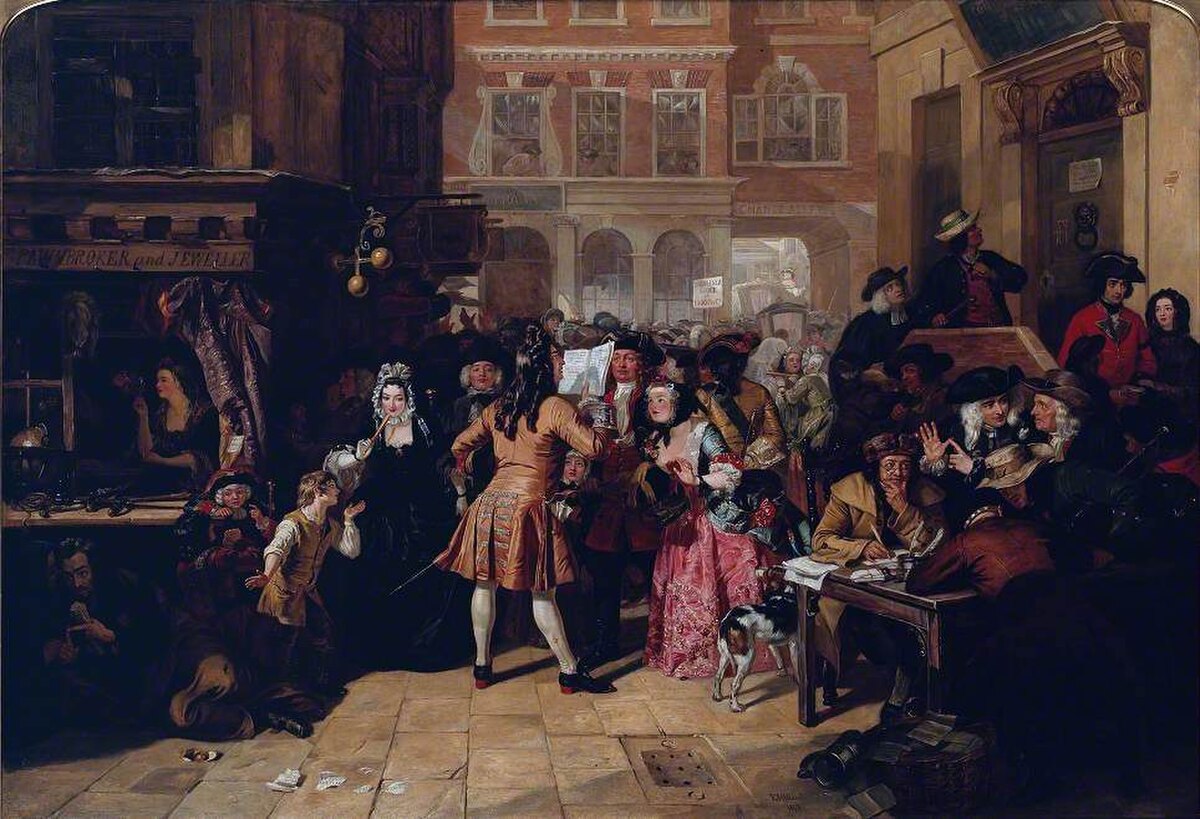
Edward Matthew Ward's 1847 painting depicts the chaos of the 1720 South Sea Bubble, the crisis that gave financial bubbles their name. Edward Matthew Ward, Public domain, via Wikimedia Commons
While popular views suggest bubbles pop all at once, theories like debt deflation and the Financial Instability Hypothesis suggest that collapses happen progressively. Highly leveraged assets fail first, and the resulting financial stress spreads outward into the broader economy.
What is the difference between equity and debt bubbles?
Economists divide speculative spikes into two primary categories: equity bubbles and debt bubbles. An equity bubble involves tangible investments, genuine innovations, and easy liquidity feeding into high demand. The influx of money into the business cycle can speed up innovation and boost productivity growth. Examples include tulip mania, the dot-com bubble, the Roaring Twenties and cryptocurrency bubbles.
Debt bubbles involve intangible or credit-based investments chasing non-existent markets with no real assets backing them. Frivolous lending fuels these surges, which typically end in debt deflation, bank runs, or currency crises. The United States housing bubble that triggered the Great Recession is a classic debt bubble.
How do bubbles alter everyday spending?
Rising asset prices trigger the wealth effect, leading investors who hold overvalued assets to feel richer and spend more money. Observers point to housing markets in the United Kingdom, Australia, New Zealand, Spain and parts of the United States as examples.
When the crash arrives, that perceived wealth vanishes. Households cut back on discretionary spending, which slows the economy or worsens an ongoing downturn. To curb these speculative waves before they peak, central banks sometimes raise interest rates to make borrowing money more expensive.
Test yourself
In an economic bubble, what keeps prices rising despite weak intrinsic value?
Buyers expect someone else to pay more. Bubble buyers focus on resale to a higher bidder, not the asset’s underlying worth. That expectation depends on new buyers continuing to arrive.
In an economic bubble, why might buyers pay far above an asset’s intrinsic value?
They expect the asset’s value to match its price.. Bubble buyers may focus on reselling at a higher price rather than the asset’s underlying worth.
Play the lesson in edgi and the card is yours. It lands on your Map next to the ideas it connects to, and turns from matte to foil to gold as you learn more around it.
Can central banks or economists predict a bubble before it pops?
Mainstream economists generally believe bubbles cannot be identified in advance or safely prevented, arguing that policy should focus on handling the aftermath. However, some political economists, like Robert E. Wright, argue that bubbles can be spotted beforehand with high confidence.
What is an example of an asset class that experienced a bubble?
Bubbles have appeared in stocks during the Roaring Twenties, real estate during the 2000s United States housing boom, commodities like the 2007 uranium market, and esoteric assets such as cryptocurrencies.
What happens to the wider economy when a debt bubble deflates?
The collapse destroys substantial wealth and can trigger bank runs, debt deflation, and prolonged economic downturns. Extended periods of low risk premiums can prolong asset price deflation for years, as occurred during the Great Depression in the 1930s and in Japan during the 1990s.