A Ponzi scheme is an investment fraud where an operator pays fake profits to early investors using money taken from newer investors rather than actual business earnings. The enterprise produces no real economic growth. It survives entirely on the illusion of success until new deposits dry up or too many victims ask for their money back at the same time.
By the edgi team We find the most surprising true thing about an idea and build a 60-second lesson around it.
A Ponzi scheme generates zero profit. There is no business, no product, and no market growth. The operator pays dividends to early investors using nothing but the deposits of the next wave of victims.
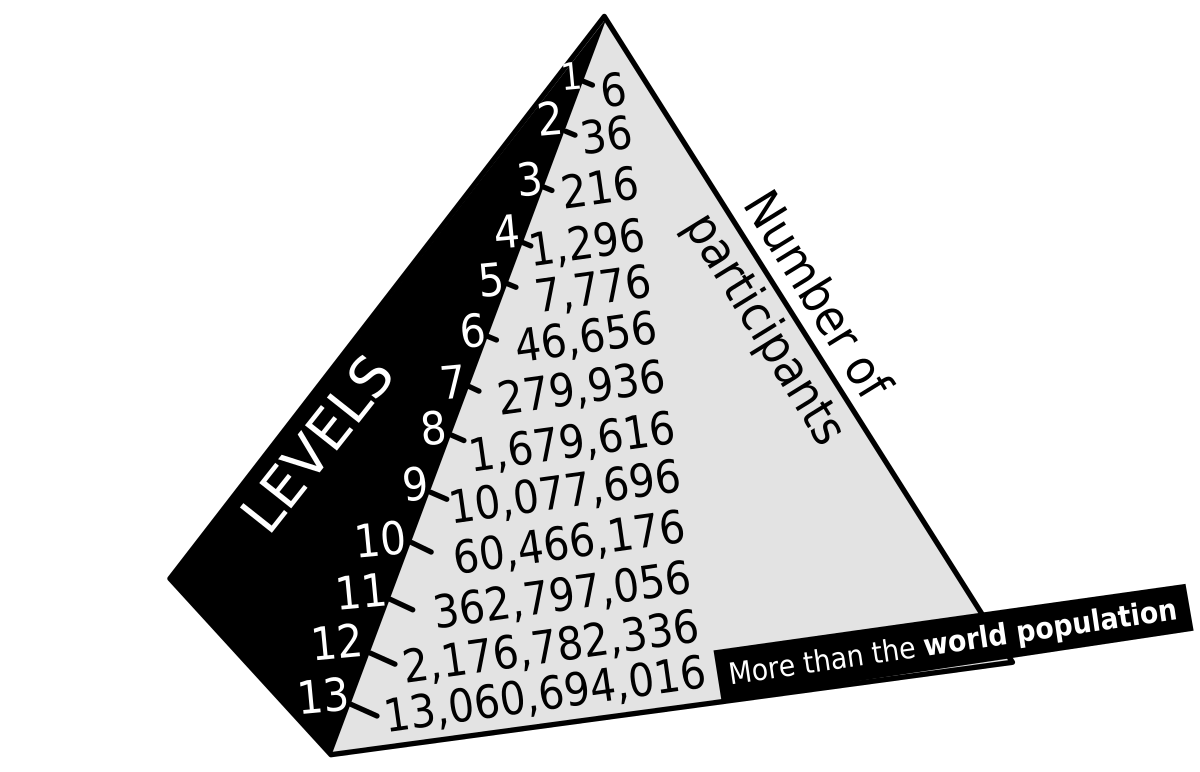
Diagram illustrating the exponential progression of a pyramid scheme, with "LEVELS" on the left and "Number of participants" on the right. Security and Exchange commission, U.S. Federal Govt.This vector version by Mysid, Public domain, via Wikimedia Commons
It is a financial illusion that only functions as long as you keep finding more people to buy in.
The origin
In 1919, Charles Ponzi promised Bostonians a 50% return in 45 days by supposedly trading international postal coupons. He became a millionaire in months while buying almost no stamps. He was simply moving money from his newest account to his oldest.
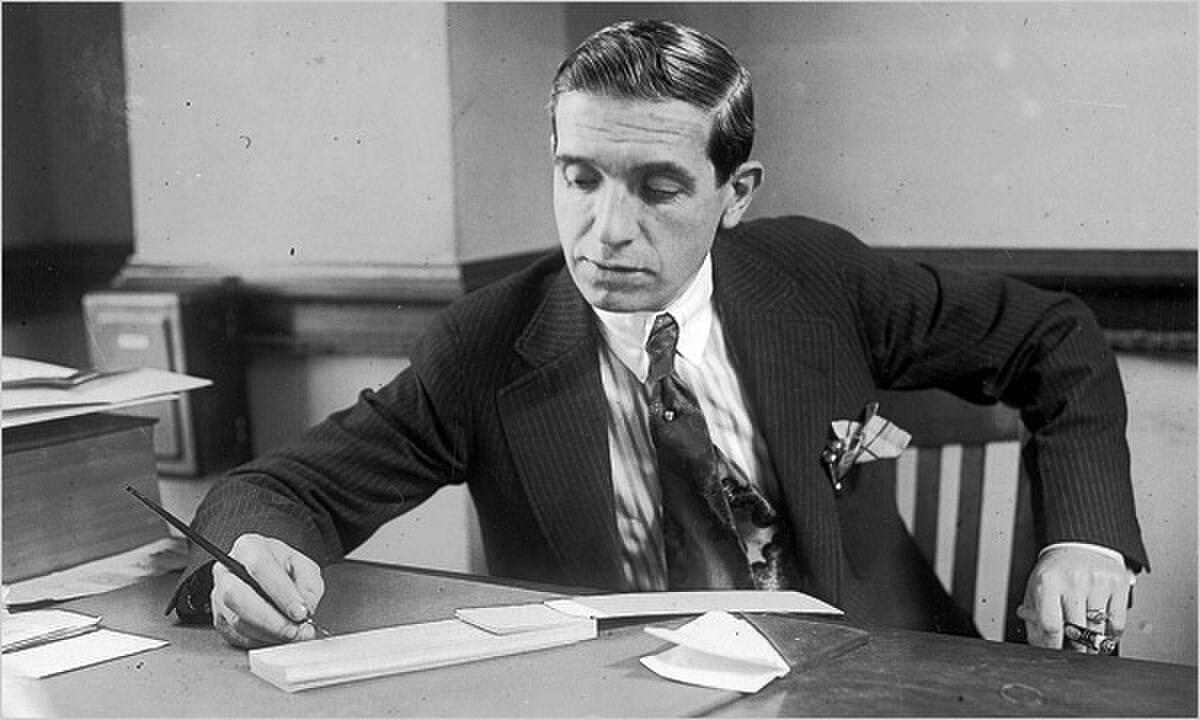
Black and white photograph of Charles Ponzi, taken in 1920. Boston Library (NYT); en.wikipedia.org, Public domain, via Wikimedia Commons
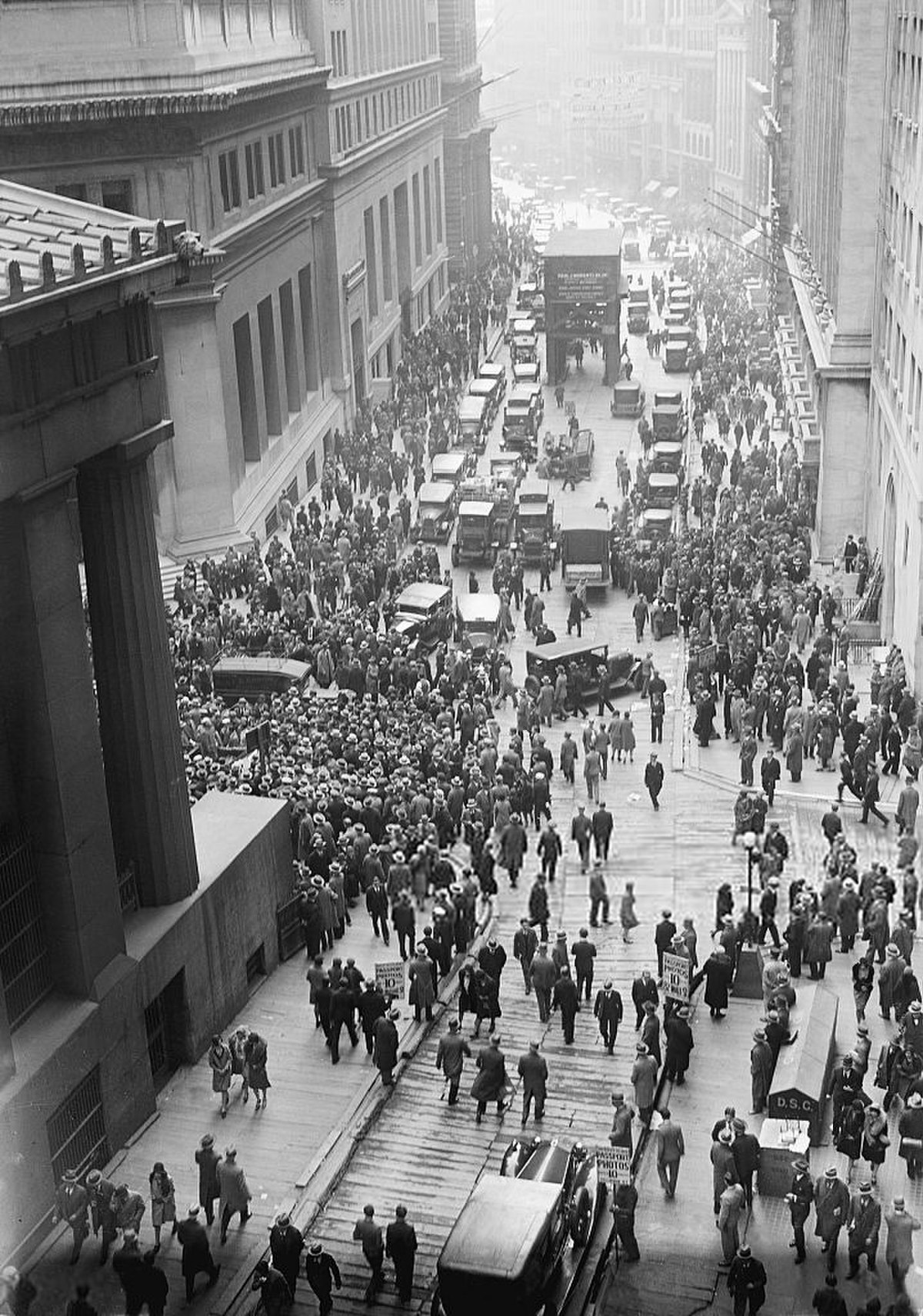
When the scheme imploded in 1920, five banks collapsed.
The longevity
Bernard Madoff ran the largest scheme in history for decades. He relied on the fact that steady, fake returns act as their own marketing. Unlike a pyramid scheme, where victims are forced to recruit friends, Ponzi victims often stay silent to protect their exclusive deal.
A 2009 mug shot of Bernie Madoff shows him with graying hair and a striped shirt, looking directly at the camera. U.S. Department of Justice, Public domain, via Wikimedia Commons
The house of cards only falls when a market dip triggers a mass withdrawal, and the operator no longer has enough cash to pay everyone back.
How does a Ponzi scheme work?
A Ponzi scheme promises high, consistent returns with little to no risk. The promoter claims profits come from a proprietary trading strategy, offshore investments, or an exclusive commercial idea. In reality, the underlying business either does not exist or fails to produce the promised gains.
Instead of investing the funds, the organizer diverts money to personal accounts and uses incoming capital from new victims to send dividend checks to older participants. These early payouts build credibility. Satisfied investors often leave their principal in the system and encourage others to join.
Because no real wealth is generated, the structure requires a continuous influx of cash. The scheme collapses when new recruitment slows down or a sudden wave of investors attempts to cash out their balances.
Who ran the earliest Ponzi schemes?
Long before Charles Ponzi, European and American operators ran similar scams. Between 1869 and 1872, Adele Spitzeder operated a fraudulent bank in Germany. In the 1880s, Sarah Howe ran the Ladies' Deposit in the United States, promising female clients an 8% monthly interest rate before stealing their funds and serving three years in prison.
Charles Dickens described similar operations in his novels Martin Chuzzlewit in 1844 and Little Dorrit in 1857. Charles Ponzi gave his name to the fraud in 1920, when his Boston postal coupon scheme took in millions of dollars and its collapse brought down the Hanover Trust Company and five other banks.
What are the common red flags of a scheme?
Financial regulators identify several warning signs common to these frauds. Guaranteed high returns with zero market risk and unusually steady gains regardless of market dips are prime indicators. Legitimate investments fluctuate over time.
Other warning signs include unregistered investments, unlicensed sellers, and secretive or overly complex strategies. Errors on account statements are another sign, as are promoters who pressure clients to roll over their profits instead of taking payouts, or make it extremely difficult for investors to withdraw their cash.
Test yourself
An operation pays 20% yearly gains with zero volatility. How is this usually achieved?
New deposits fund earlier payouts. Markets always have volatility. A perfectly smooth, high return is the classic footprint of redistributing new cash rather than generating actual profit.
What generates the profit in a Ponzi scheme?
New investor deposits. A Ponzi scheme produces no actual value or investment returns. All payments are simply recycled cash taken from later participants to keep the illusion of profit alive.
Play the lesson in edgi and the card is yours. It lands on your Map next to the ideas it connects to, and turns from matte to foil to gold as you learn more around it.
How does a Ponzi scheme differ from a pyramid scheme?
In a pyramid scheme, victims are required to actively recruit new members to earn income. In a Ponzi scheme, participants believe they are making a passive investment with an operator who manages all the money.
What triggers the final collapse of a Ponzi scheme?
A collapse happens when incoming money cannot cover withdrawal requests. A broader economic downturn or panic often causes many investors to demand their cash at once, exposing the lack of actual funds.