Great DepressionWhy bank runs wiped out life savings
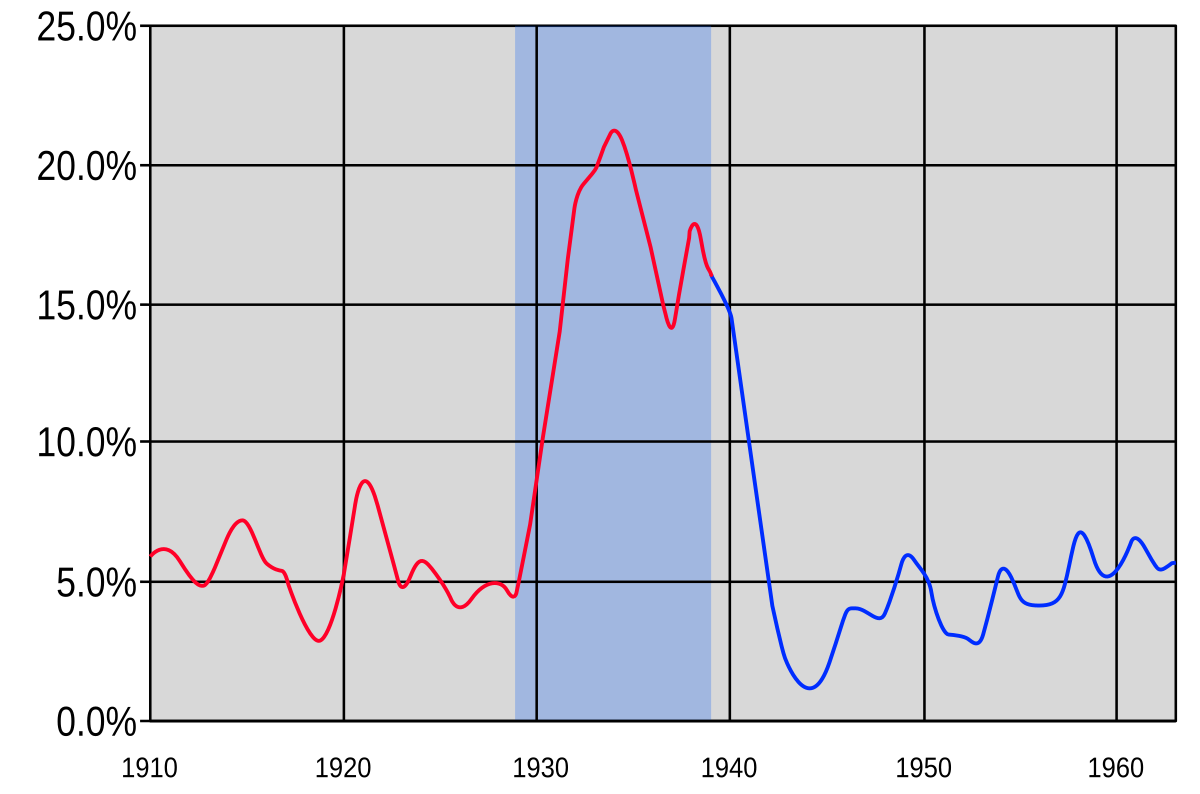
The Great Depression was a severe global economic downturn lasting from 1929 to 1939. It started after the 1929 Wall Street crash, causing massive bank failures, poverty, and unemployment that reached 25% in the United States. Rather than ending through simple policy fixes, the worldwide crisis lasted until the industrial production demands of World War II restarted the global economy.
By the edgi team We find the most surprising true thing about an idea and build a 60-second lesson around it.
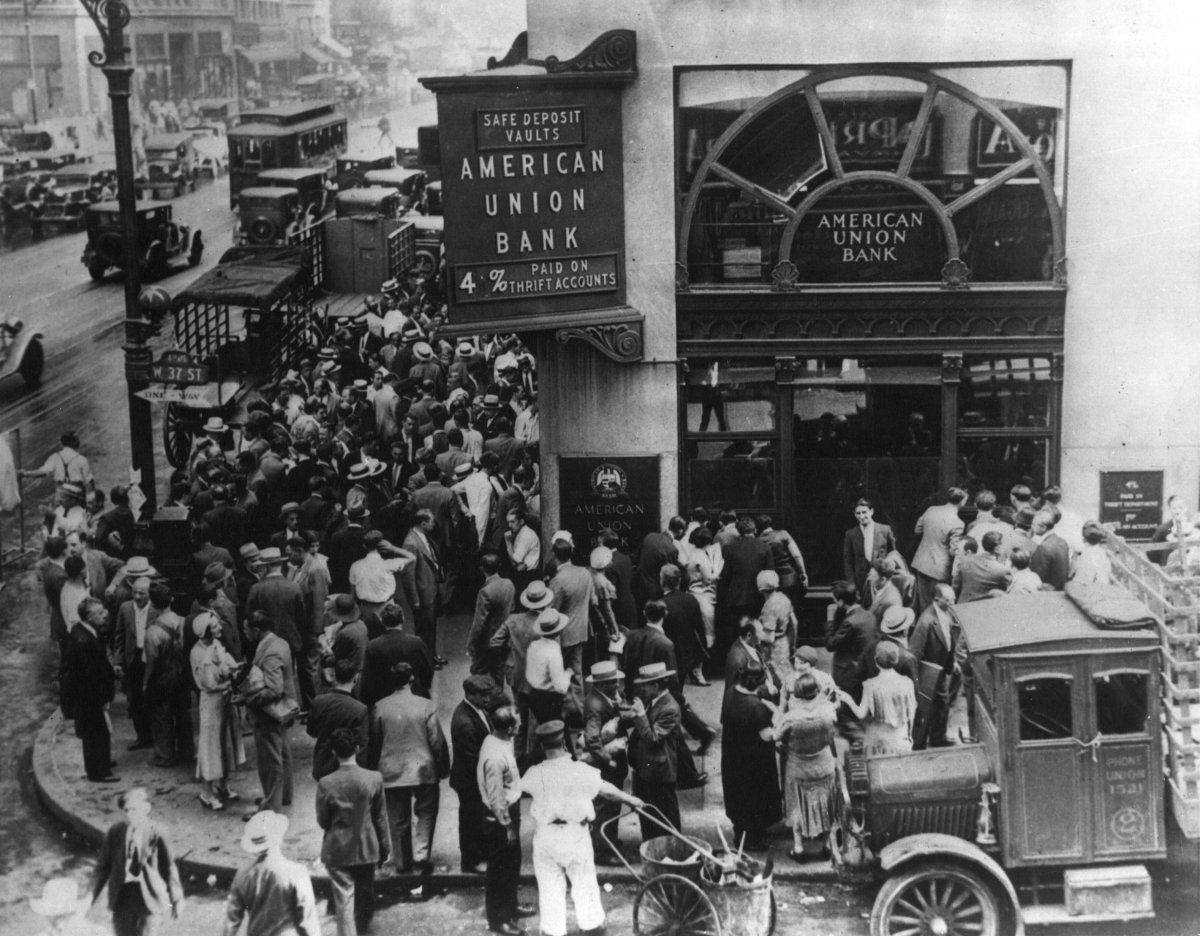
The 1929 crash wasn't just about wealthy people losing money. It triggered a panic, and everyone rushed to withdraw their cash at once. Banks didn't have the physical cash on hand to cover the deposits, so they collapsed. Suddenly, your life savings simply evaporated.
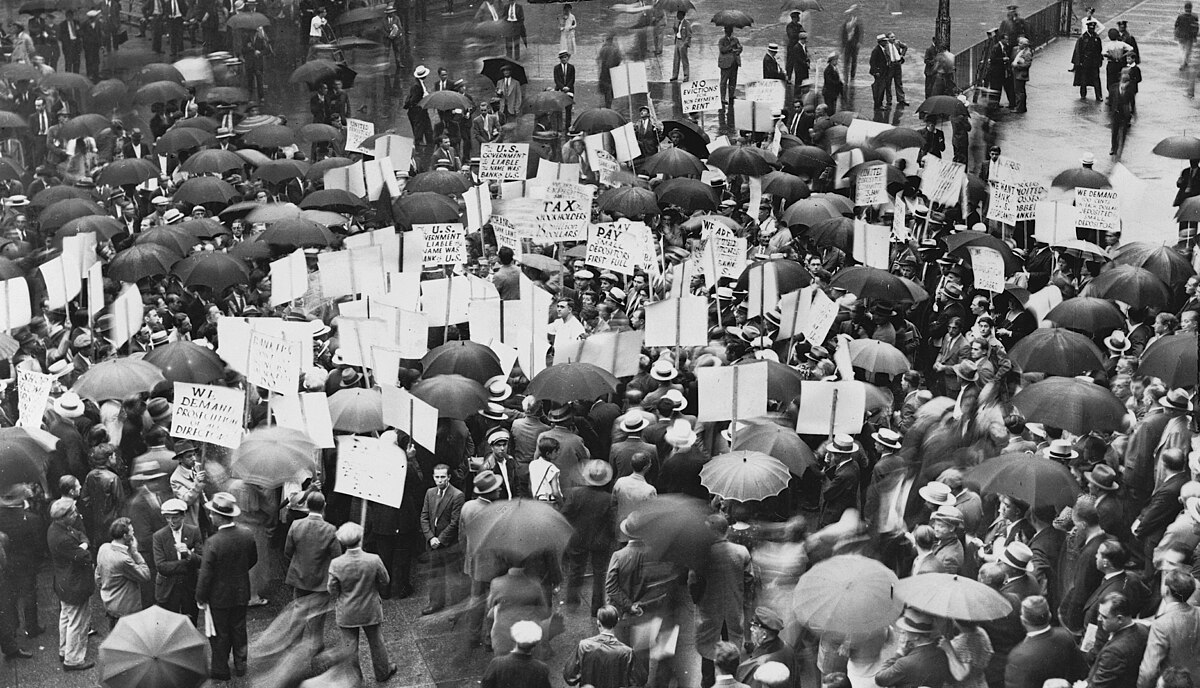
A large crowd of people gathered outside the American Union Bank in New York during a bank run early in the Great Depression. National Archives Photo, Public domain, via Wikimedia Commons
The water pie
When you can't afford eggs, butter, or milk, you get creative. "Water pie" used flour, sugar, and water to mimic a custard filling. It gave struggling families a small, sweet sense of normalcy in a starving time.
A homemade water pie is shown in a foil pie pan, featuring a light-colored, slightly browned top crust with some darker spots. Meals Under Pressure, CC BY 3.0, via Wikimedia Commons
The new normal
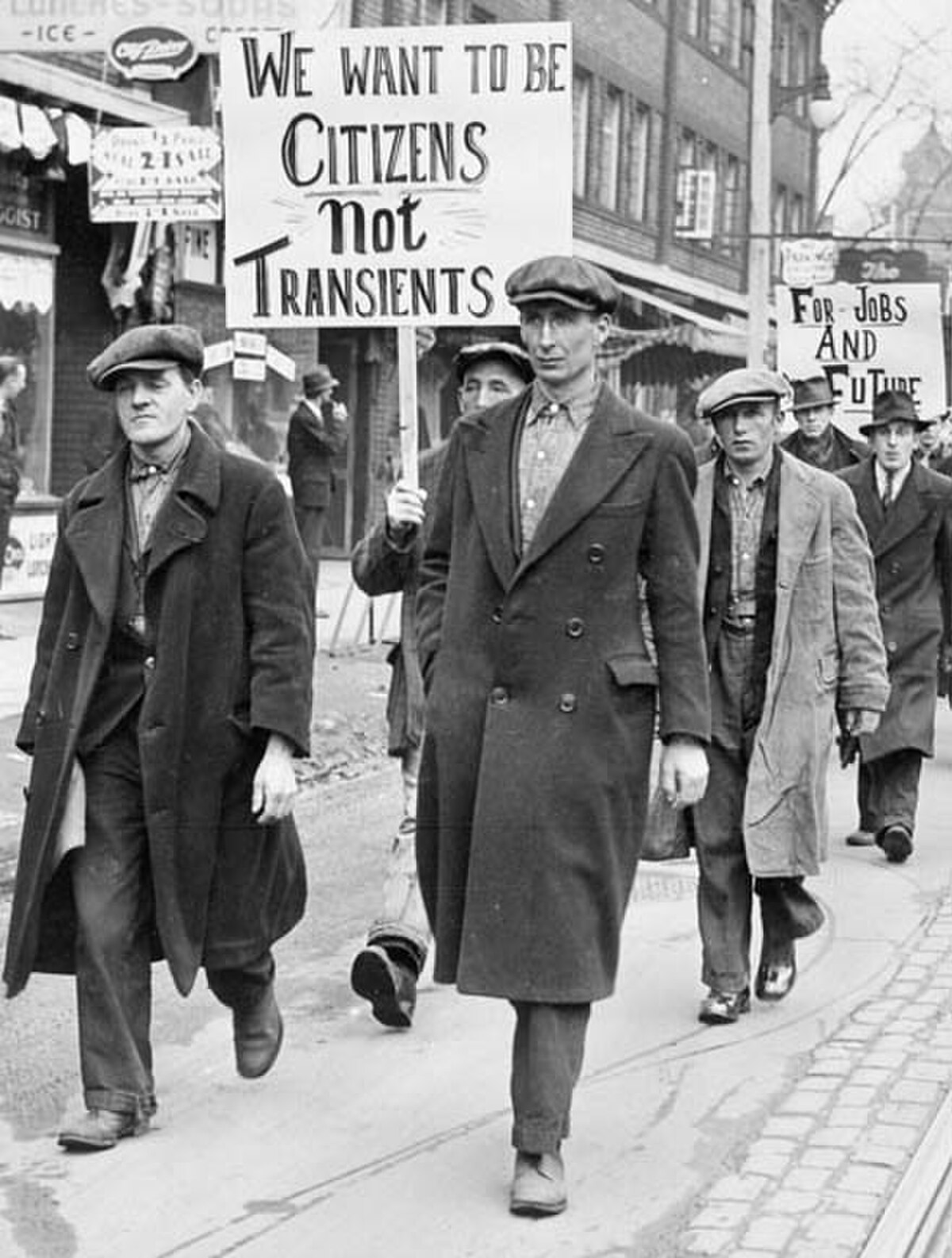
The sheer scale of the misery forced the government to act. This era gave us the Federal Deposit Insurance Corporation to ensure that a bank failure would never again mean a total loss of your savings.
Black and white photograph of unemployed men marching in Toronto, Ontario, Canada, during the Great Depression. Unknown authorUnknown author, Public domain, via Wikimedia Commons
The hard exit
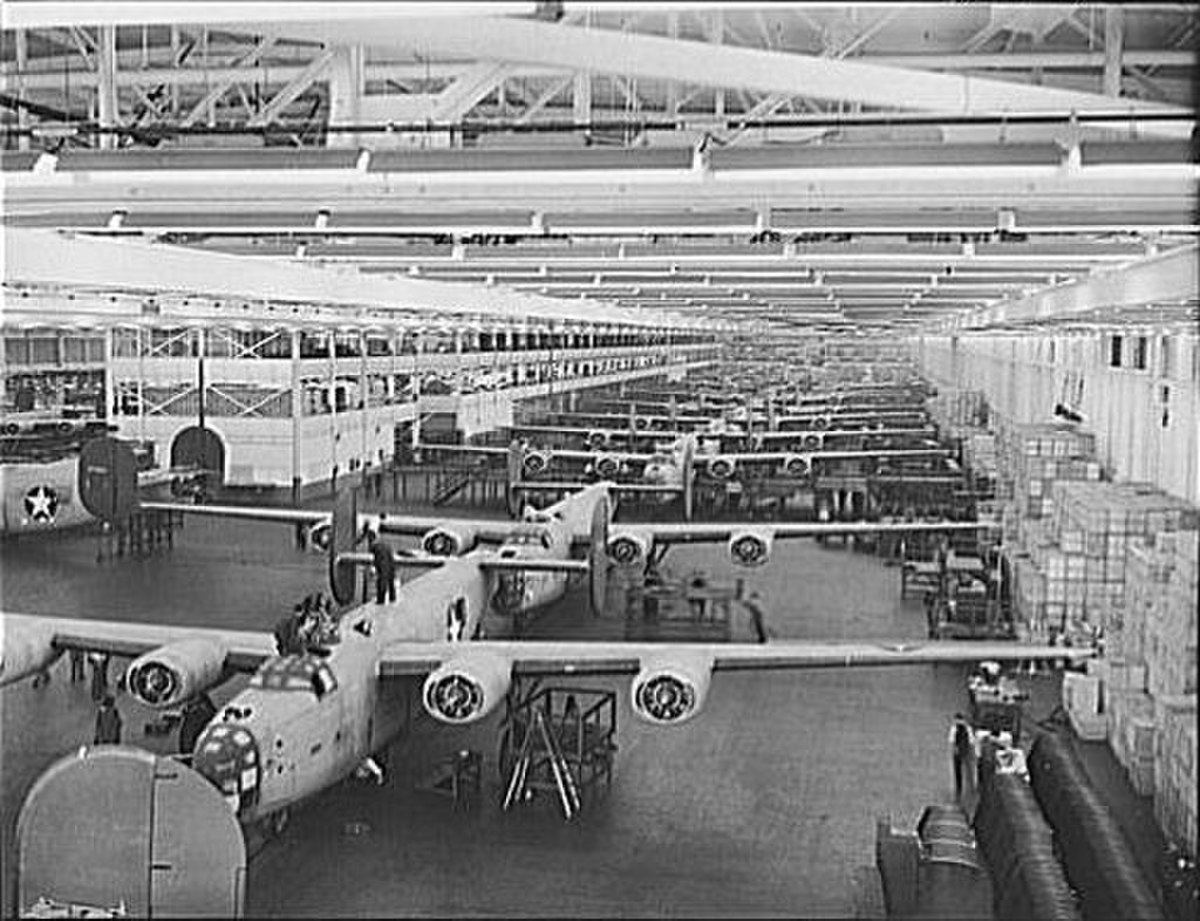
The crisis didn't end with a magic policy fix. It ended when the world went to war. The massive industrial demands of World War II finally forced the global economy back into high gear.
A wide shot of the Ford Motor Company's Willow Run factory during World War II, showing numerous B-24 Liberator military aircraft in various stages of assembly on a vast production floor. Howard R. Hollem, Public domain, via Wikimedia Commons
How a stock crash became a banking collapse
In the United States, 9,000 out of 25,000 banks went out of business by 1933. During the 1920s boom, minimal bank regulation led to loose lending, debt, and heavy stock market speculation. When the market crashed in October 1929, consumer spending dropped and panicked depositors rushed to pull their cash out of banks.
Depositors mass outside the Bank of United States in New York after it failed in 1931, illustrating the bank runs that wiped out savings across the country. World Telegram staff photographer, Public domain, via Wikimedia Commons
Banks kept only a fraction of their deposits as physical cash, meaning they could not survive sudden panics. When a bank failed, account holders lost their entire savings. This collapse in the financial system led to the creation of the Federal Deposit Insurance Corporation, ensuring future bank failures would not wipe out personal deposits.
The global impact on jobs and industry
Between 1929 and 1932, worldwide gross domestic product shrank by an estimated 15%, while international trade plummeted by more than 50%. Construction halted, and crop prices dropped by up to 60%, causing about one-third of American farmers to lose their land.
This chart shows United States unemployment surging to a historic peak of 25% during the 1930s. Pharexia, CC BY-SA 4.0, via Wikimedia Commons
The damage spread quickly across borders. Germany depended on loans from the United States, and the sudden withdrawal of capital pushed German unemployment to nearly 30%. That economic disaster fueled political extremism and helped Adolf Hitler's Nazi Party take power in 1933.
Test yourself
What triggered the widespread loss of personal savings during the Great Depression?
Simultaneous bank withdrawals. Mass panic caused everyone to withdraw cash at once, collapsing banks that kept only a fraction of deposits on hand.
What caused the Great Depression's bank collapses?
Simultaneous mass withdrawals of cash. While the stock crash sparked panic, the actual bank failures resulted from a 'run' on the banks where depositors demanded physical cash that the banks did not physically hold.
Hoover Dam workers helped Las Vegas thrive during the Great Depression.
True. The massive federal project brought thousands of workers to the area, providing a steady customer base for local businesses.
Play the lesson in edgi and the card is yours. It lands on your Map next to the ideas it connects to, and turns from matte to foil to gold as you learn more around it.
It was a law signed by President Herbert Hoover in 1930 designed to protect domestic industry. Instead of helping, it inadvertently worsened the Depression as international trade collapsed by over half.
How did the Great Depression finally end?
It ended with the outbreak of World War II in 1939. Massive military mobilization absorbed millions of unemployed men, while war factories hired women and restored industrial production.