Dream interpretationHow ancient omens became wordplay
Dream interpretation is the process of assigning meaning to the images and stories experienced during sleep. Ancient societies viewed dreams as divine messages, omens, or out of body journeys. In modern psychology, interpretation shifted from universal prophetic symbols to personal associations uncovering hidden thoughts and conflicts.
By the edgi team We find the most surprising true thing about an idea and build a 60-second lesson around it.
Dream interpretation begins with the story a person remembers in the morning. Freud called that visible story the manifest content. Freud thought the manifest dream could disguise another layer, the latent content: a wish or conflict that could not appear directly.
A crowded train, a missed exam, or a house that turns into another house was not yet the interpretation. It was the material an analyst would work with.
How freud followed a dream
Freud did not rely only on a universal symbol chart. He asked the dreamer to use free association, saying whatever each detail brought to mind. A missed train might lead one dreamer to a recent argument, another to a parent who always hurried them, and another to a fear of being left behind.
The analyst used those connections to propose a latent wish or conflict. The method depends on the dreamer's associations, not only on the picture inside the dream.
A way of making meaning
Freud's dream method turns a private image into a conversation about the dreamer's life. It asks what a detail connects to for this person, rather than treating a fixed symbol meaning as enough by itself.
That is why a dream can matter in psychoanalysis without being a message that arrives already decoded.
How ancient civilizations read dreams
Sumerians recorded dream interpretations as early as 3100 BC. Mesopotamian kings used dreams for divination and royal decisions. King Gudea of Lagash rebuilt a temple after a dream showed a giant figure commanding him to do so. Babylonian and Assyrian texts like the Ishkar Zaqiqu recorded specific scenarios, ranging from everyday work to encounters with animals, alongside their predicted outcomes.
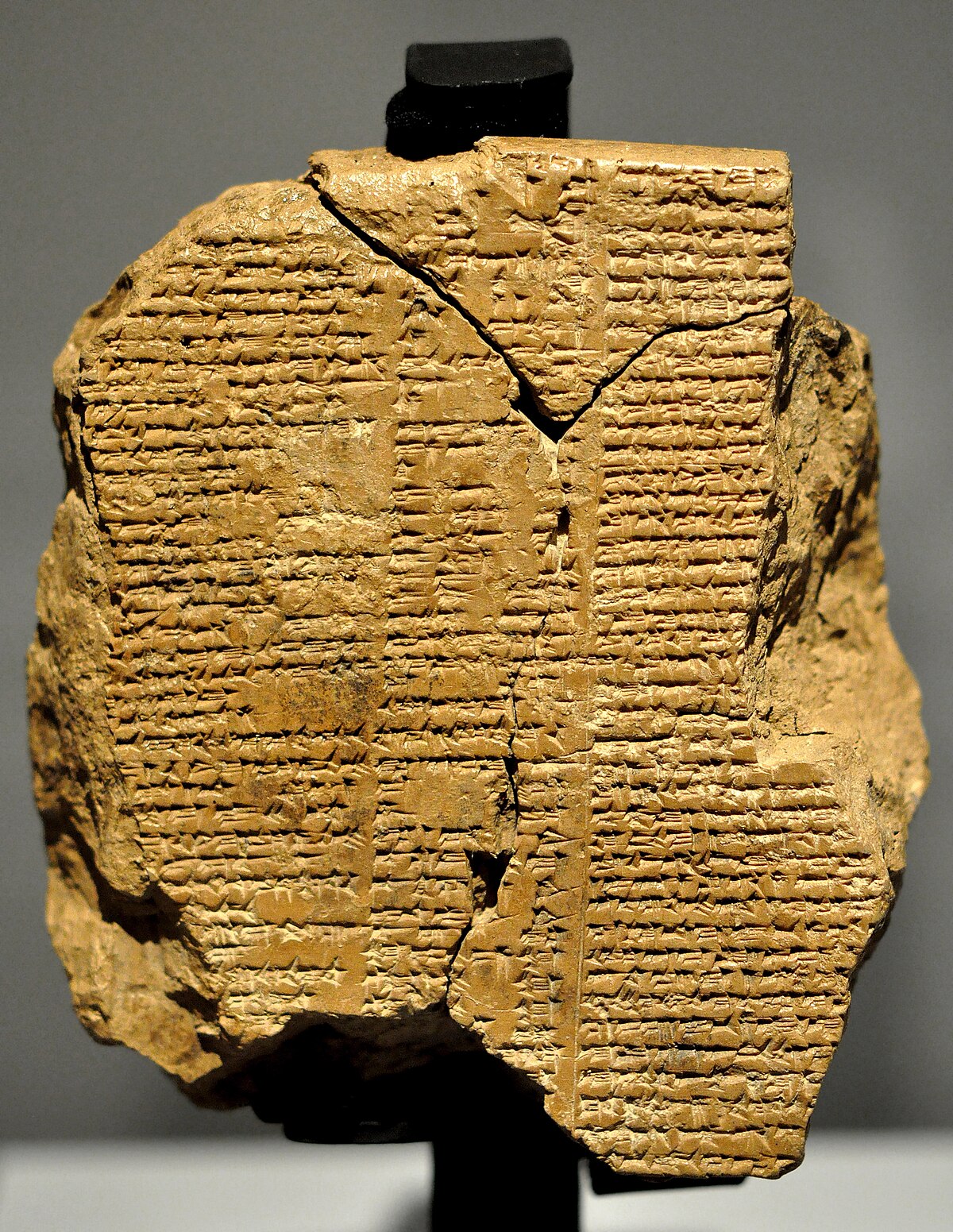
Tablet fragments of the Epic of Gilgamesh document some of history's oldest recorded dream interpretations. Osama Shukir Muhammed Amin FRCP(Glasg), CC BY-SA 4.0, via Wikimedia Commons
The Epic of Gilgamesh presents dreams as prophecies and spiritual journeys. Gilgamesh dreamed of an axe falling from the sky that he embraced like a wife, which his mother interpreted as the imminent arrival of a loyal companion. The epic also reflects the belief that a sleeping person's soul could leave the body to visit other worlds, such as the Underworld.
Ancient Greek incubation and wordplay
The ancient Greeks sent sick people to temples called Asclepieions to receive healing through dreams incubated inside the sacred grounds. Dreams were treated as direct divine interventions capable of curing illness.
In the second century AD, Artemidorus of Daldis wrote the Oneirocritica, analyzing dream symbolism through wordplay and puns. When Alexander the Great dreamed of a satyr dancing on his shield while attacking Tyre, interpreters split the Greek word for satyr into sa Tyros, meaning Tyre will be thine. Sigmund Freud later cited Artemidorus when arguing that dreams could be read like visual rebuses.
Medieval Islamic classifications of dreams
Medieval Islamic scholars divided dreams into three distinct categories: false dreams, pathogenic dreams, and true dreams. Scholars like Ibn Sirin wrote detailed guides on interpreting dreams in proper cultural context, advising people to consult learned scholars.
Philosophers also began separating the psychological causes of dreams from their prophetic meanings. Al-Farabi wrote about the nature of dreams in the ninth century, and Ibn Khaldun later explained confused dreams as stored sensory images that the imagination reshapes after a person falls asleep.
Test yourself
Freud treated dreams as meaningful formations, not random noise.
True. Freud argued that dream content could express disguised wishes and unconscious conflict, though not transparently.
Two people dream of missing a train. Why might the analyst arrive at different meanings for each?
Each person connects the detail to different memories. The method relies entirely on the dreamer's unique free associations rather than a single universal meaning for the object.
What is the primary role of a remembered dream image in analysis?
A starting point for personal associations. The image is raw material to prompt personal connections, not a ready-made message or fixed code.
Play the lesson in edgi and the card is yours. It lands on your Map next to the ideas it connects to, and turns from matte to foil to gold as you learn more around it.
What is the difference between manifest and latent dream content?
Manifest content is the literal storyline and imagery remembered upon waking, such as a missed train or a crowded room. Latent content is the hidden psychological wish, conflict, or meaning disguised beneath those surface images.
Did Freud use a universal symbol dictionary to interpret dreams?
No, Freud did not rely strictly on fixed symbol charts. He used free association, asking the dreamer to say whatever came to mind about each specific detail to uncover their individual connections.
What was the Ishkar Zaqiqu?
The Ishkar Zaqiqu was an ancient Babylonian and Assyrian collection of dream omens. It cataloged various dream scenarios alongside predicted outcomes based on previous case records.