Id, ego, and superego: Freud's three mental pressures
The id, ego, and superego are three interacting parts of the mind that Sigmund Freud proposed to explain internal conflict. Rather than physical brain areas, they represent functions: the id seeks instant gratification, the ego manages practical reality, and the superego imposes moral standards. The model shows that a single choice involves balancing raw desire, real-world consequences, and self-judgment.
By the edgi team We find the most surprising true thing about an idea and build a 60-second lesson around it.
Freud's structural model divides personality into the id, ego, and superego. He introduced the model in 1923 to describe conflict inside a person. The id represents instinctual drives, the pull toward what feels urgent or pleasurable. The ego deals with reality, including consequences and limits.
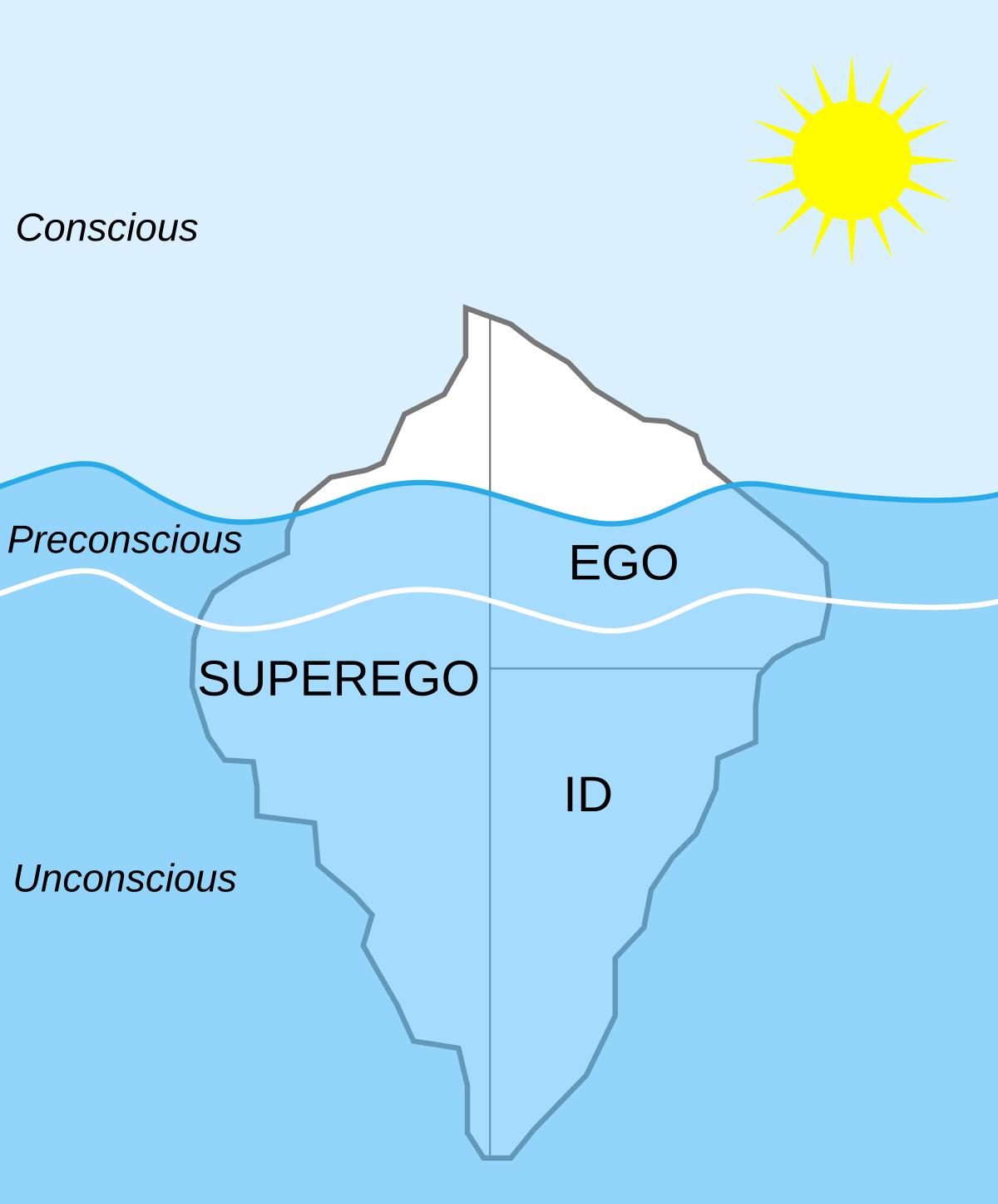
The superego holds moral rules and ideals, the standards a person measures themselves against. Freud did not mean that the id is bad, the ego sensible, and the superego good. Freud also thought the ego and superego could work outside awareness. The model is not a simple fight between conscious reasoning and blind impulse.
One message, three pressures
A person is about to send an angry message. Part of them wants the instant release. The ego asks what the message will do tomorrow, when the other person has read it and the relationship has to continue.
The superego adds another pressure: what kind of person should send this, and what will I think of myself afterward? Freud used the model to make that crowded feeling intelligible.
A model, not a brain map
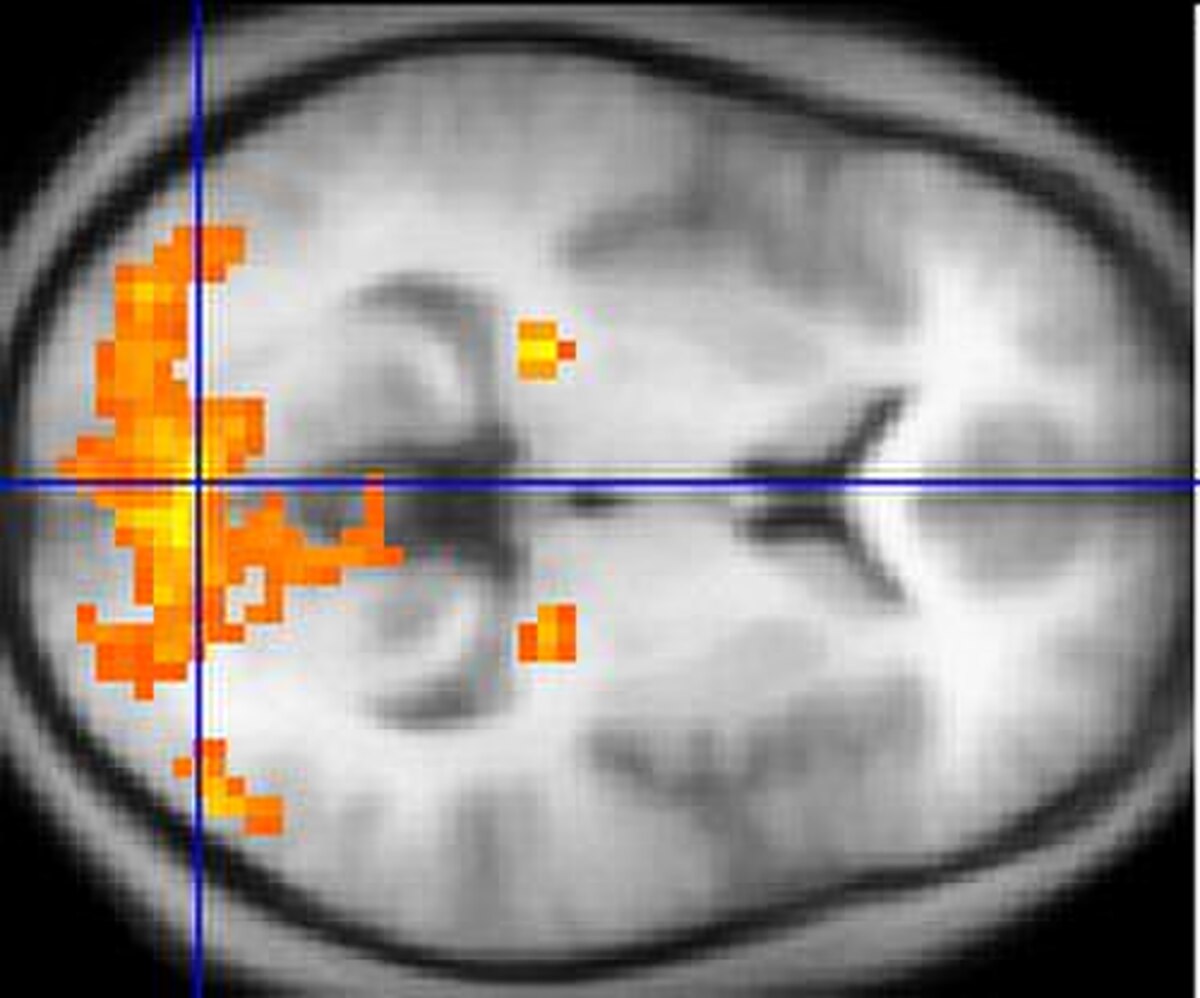
Freud's model describes functions, not three little people taking turns at the controls. A brain scan can show activity during self-control, but it cannot point to an ego region. The ego is Freud's name for a role in a theory.
A transverse segment fMRI scan of a human brain shows activated regions highlighted in orange. Washington irving at English Wikipedia, Public domain, via Wikimedia Commons
The useful part is the distinction. Wanting something, living with reality, and judging yourself can all be present in the same choice.
How do the three parts interact?
Freud introduced the structural model in 1920 in Beyond the Pleasure Principle and refined it in 1923. The id is present at birth as a reservoir of basic drives, including sexual energy and aggressive impulses. It runs entirely on the pleasure principle, which demands immediate satisfaction without any grasp of logic, time, or moral judgment.
The iceberg diagram illustrates how the id, ego, and superego operate across conscious and unconscious levels of the mind. historicair, Public domain, via Wikimedia Commons
The ego develops out of the id as contact with the external world forces a person to adapt. Operating on the reality principle, the ego handles planning, perception, memory, and voluntary movement. Freud compared the ego to a rider on horseback: the rider must guide and restrain a beast with superior strength, often turning the horse's impulses into action as if they were the rider's own.
The superego develops in childhood as a person internalizes parental rules and social standards. It acts as a critical moral force. Caught in the middle, the ego must serve three severe masters at once: the demanding id, the critical superego, and external reality.
What did Freud originally call them?
The Latin words id, ego, and superego were not written by Freud. In his German texts, Freud used ordinary pronouns: das Es (the It), das Ich (the I), and das Über-Ich (the Over-I). Das Es was borrowed from physician Georg Groddeck.
Translator James Strachey substituted Latin terms when rendering Freud's work into English. Critics such as Bruno Bettelheim argued that replacing everyday German terms with formal Latin created technical distance, obscuring the direct, personal meaning of Freud's original vocabulary.
Test yourself
In Freud’s id, ego, and superego model, what does the ego do?
It deals with reality and consequences.. The ego deals with reality and consequences. The superego supplies moral standards, while the id represents instinctual drives.
In Freud’s model, what pressure does the superego add when someone considers sending an angry message?
Whether it fits moral ideals and self-judgment. The superego brings moral rules and ideals into the choice; immediate release reflects the id, while considering consequences reflects the ego.
In Freud’s model, the ego follows only the pleasure principle.
False. The id follows the pleasure principle; the ego negotiates between instinct, reality, and moral demands.
Play the lesson in edgi and the card is yours. It lands on your Map next to the ideas it connects to, and turns from matte to foil to gold as you learn more around it.
No. The id, ego, and superego are theoretical constructs that describe mental functions rather than physical brain regions. Brain imaging can detect activity during self-control, but it cannot isolate a physical ego.
Why did Freud create the structural model?
Freud developed the model because his earlier system, which divided the mind strictly into conscious and unconscious domains, proved too ambiguous. He recognized that both the ego and the superego carry out operations outside of conscious awareness.