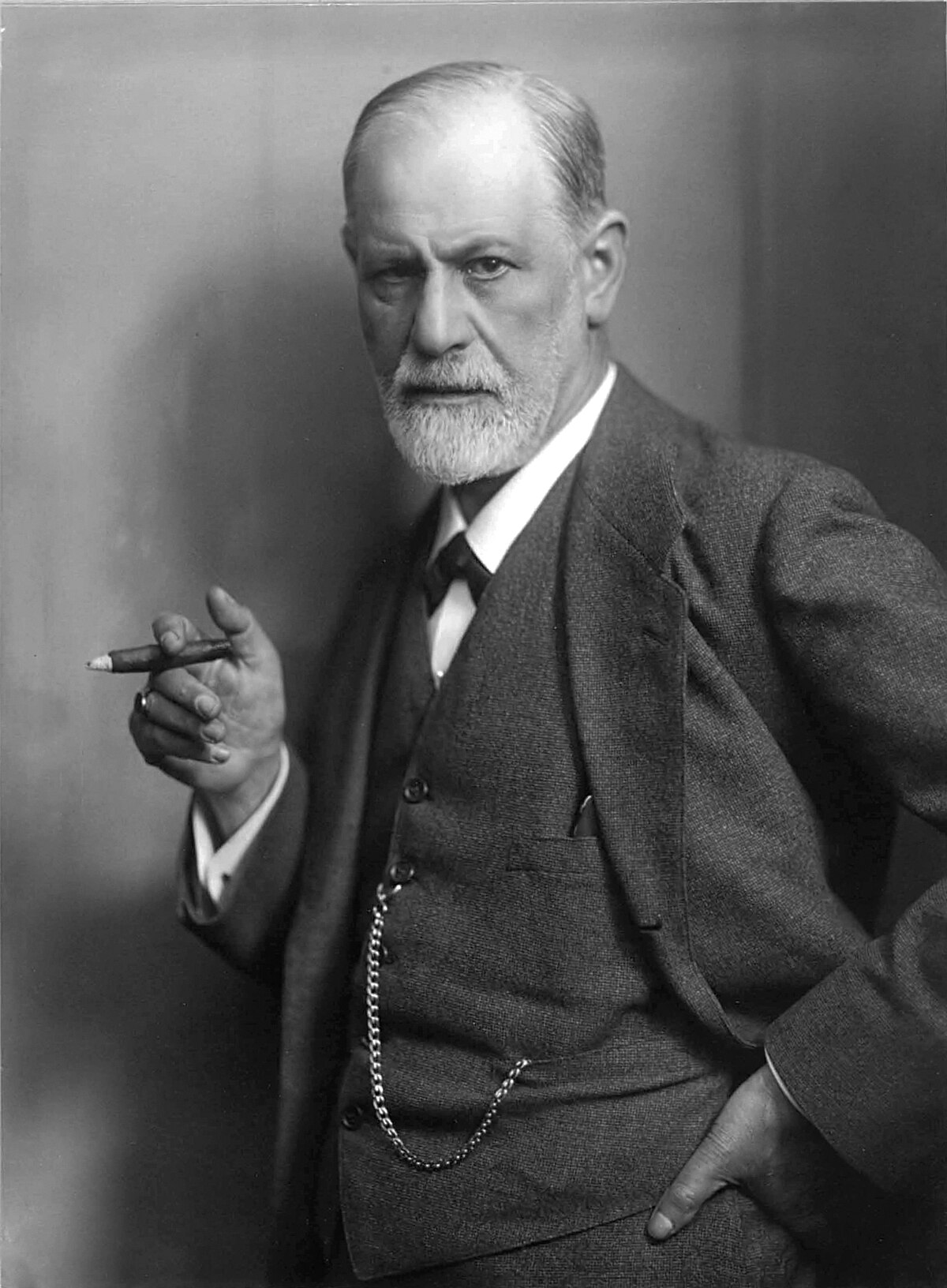
Sigmund Freud was an Austrian neurologist who founded psychoanalysis, a method for treating psychological problems through dialogue between a patient and a doctor. He argued that human thoughts and actions are shaped by unconscious desires and hidden conflicts outside everyday awareness. His work reframed everyday dreams, mistakes, and slips of the tongue as clues to these deeper mental struggles.
By the edgi team We find the most surprising true thing about an idea and build a 60-second lesson around it.
Sigmund Freud was an Austrian neurologist working in Vienna at the end of the nineteenth century. He became interested in patients whose symptoms did not seem to have a simple physical explanation. Freud first used hypnosis, then moved toward a different method. He asked patients to say whatever came to mind, even if the thought seemed irrelevant, embarrassing, or disconnected.
Black and white portrait of Sigmund Freud, a man with a beard and mustache, wearing a suit and bow tie, holding a cigar. Max Halberstadt, Public domain, via Wikimedia Commons
Free association became a central method of psychoanalysis. Freud's main idea was that people are not fully transparent to themselves: wishes, conflicts, and memories outside awareness can still shape what they say and do.
The slip as a starting point
Imagine calling a new manager by your parent's name. Most of us would call it a verbal mix-up and move on. Freud called such mistakes parapraxes. A slip of the tongue is often called a Freudian slip. He did not treat the wrong word as a finished answer; he treated it as a place to begin asking what the name brought to the speaker's mind.
In Freud's account, a slip could indirectly express something a person had partly pushed out of awareness. Free association was his way of following the connections without deciding the meaning from the slip alone.
Why the frame traveled
Freud used the same interpretive move on dreams, jokes, symptoms, and accidental actions. Everyday life became full of moments that might carry more meaning than their surface story. That gave people a way to talk about inner conflict. A dream could become a question, a repeated mistake could become a pattern, and an uncomfortable reaction could become something to examine.
The word “Freudian” still carries that habit of attention: look at what breaks, repeats, or appears indirectly, then ask what connection it might reveal.
How did Freud model the human mind?
Before developing psychoanalysis, Freud spent years dissecting vertebrate brains, researching nervous tissue biology, and treating nervous disorders at Vienna General Hospital. When physical explanations failed to explain certain symptoms, he developed a psychological model based on the unconscious.
Freud structured the psyche into three interacting parts: the id, the ego, and the superego. He argued that mental processes are powered by libido, a form of sexualized psychic energy, alongside a death drive that produces aggression, hate, compulsive repetition, and neurotic guilt. In his model, the mind actively represses disturbing memories and desires, pushing them out of awareness while they continue to trigger psychological symptoms.
What methods define psychoanalysis?
Rather than relying on hypnosis, Freud developed clinical techniques centered on direct conversation. He used free association, asking patients to speak any thought that surfaced, no matter how disconnected or embarrassing it seemed.
Freud's psychoanalytic couch, where patients rested while speaking freely during psychoanalytic sessions. ROBERT HUFFSTUTTER, CC BY 2.0, via Wikimedia Commons
Freud treated dreams as wish fulfillments that revealed the mechanisms of symptom formation. In the consulting room, he analyzed transference, where patients redirected feelings and expectations from past relationships onto the psychoanalyst. These dialogue-based methods turned slips of the tongue, jokes, and accidental actions into starting points for examining hidden inner conflicts.
Test yourself
In psychoanalysis, does a Freudian slip reveal hidden meaning all by itself?
No, it is only a starting point. Freud treated a slip not as a finished answer, but as a clue to follow through free association to find deeper connections.
How does free association operate as a method in psychoanalysis?
Following whatever comes to mind without editing. Free association asks patients to report unfiltered thoughts, even embarrassing ones, to trace hidden mental patterns.
Someone calls a new manager by a parent's name. What is the Freudian move?
Ask what links the names in the speaker's mind. Freud would use the slip as a starting point for association, not as a quick verdict about the manager or the speaker.
Play the lesson in edgi and the card is yours. It lands on your Map next to the ideas it connects to, and turns from matte to foil to gold as you learn more around it.
Freud called verbal errors parapraxes. In his view, a slip of the tongue is an indirect expression of a thought, conflict, or memory that a person has pushed out of conscious awareness.
What was the Oedipus complex?
The Oedipus complex was a central tenet of Freud's theory that emerged from his redefinition of sexuality to include infantile stages. It describes psychological conflicts rooted in childhood attachments and desires within the family.
Is psychoanalysis still used today?
While less prevalent in modern clinical and diagnostic practice, psychoanalysis continues to influence psychiatry, psychology, psychotherapy, and the humanities. It remains a subject of debate regarding its scientific status and therapeutic efficacy.