The Oedipus complex is a psychoanalytic theory stating that a young child feels sexual desire for one parent and hostility toward the other during early development. Sigmund Freud argued that resolving this conflict by identifying with the rival parent allows a child to internalize rules and form a conscience. When a child fails to move past this rivalry, the unresolved conflict can persist into adulthood as a source of neurosis.
By the edgi team We find the most surprising true thing about an idea and build a 60-second lesson around it.
Oedipus is the Greek king who killed his father and married his mother without knowing who they were. Freud borrowed the name for a very different kind of story about childhood. In Freud's original account, a boy feels desire for his mother and rivalry with his father. He placed this conflict in the phallic stage of development.
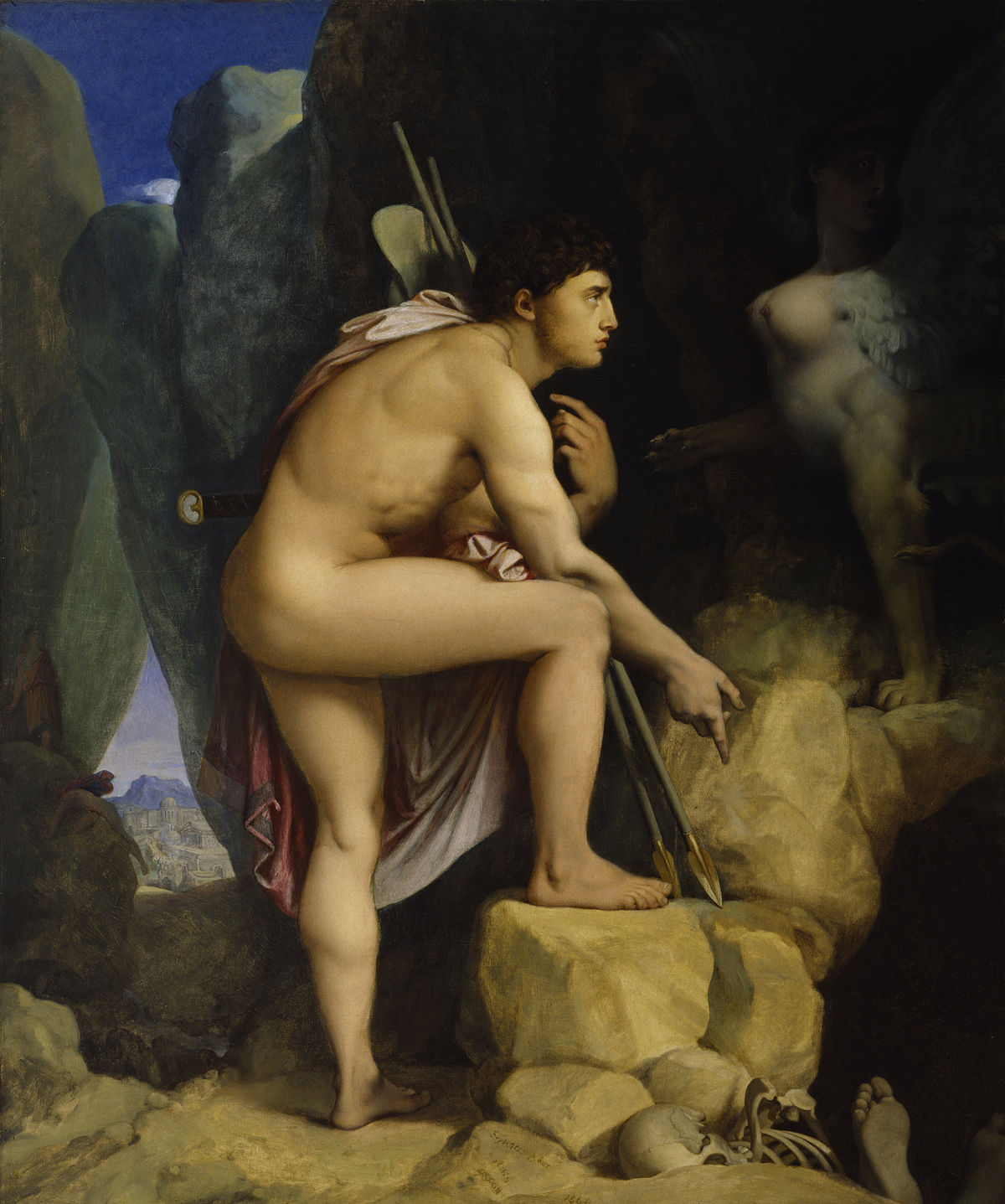
Painting by Jean-Auguste-Dominique Ingres titled "Oedipus and the Sphinx," depicting Oedipus after solving the Sphinx's riddle. Jean-Auguste-Dominique Ingres, Public domain, via Wikimedia Commons
Freud did not use Oedipus complex as a general word for loving a parent too much. He meant a chain of desire, rivalry, and what happens next.
Rivalry becomes identification
Freud thought the child eventually identifies with the rival parent instead of only competing with them. Through that identification, the parent’s rules and prohibitions become part of the child's inner life. Freud connected this process with the development of the superego.
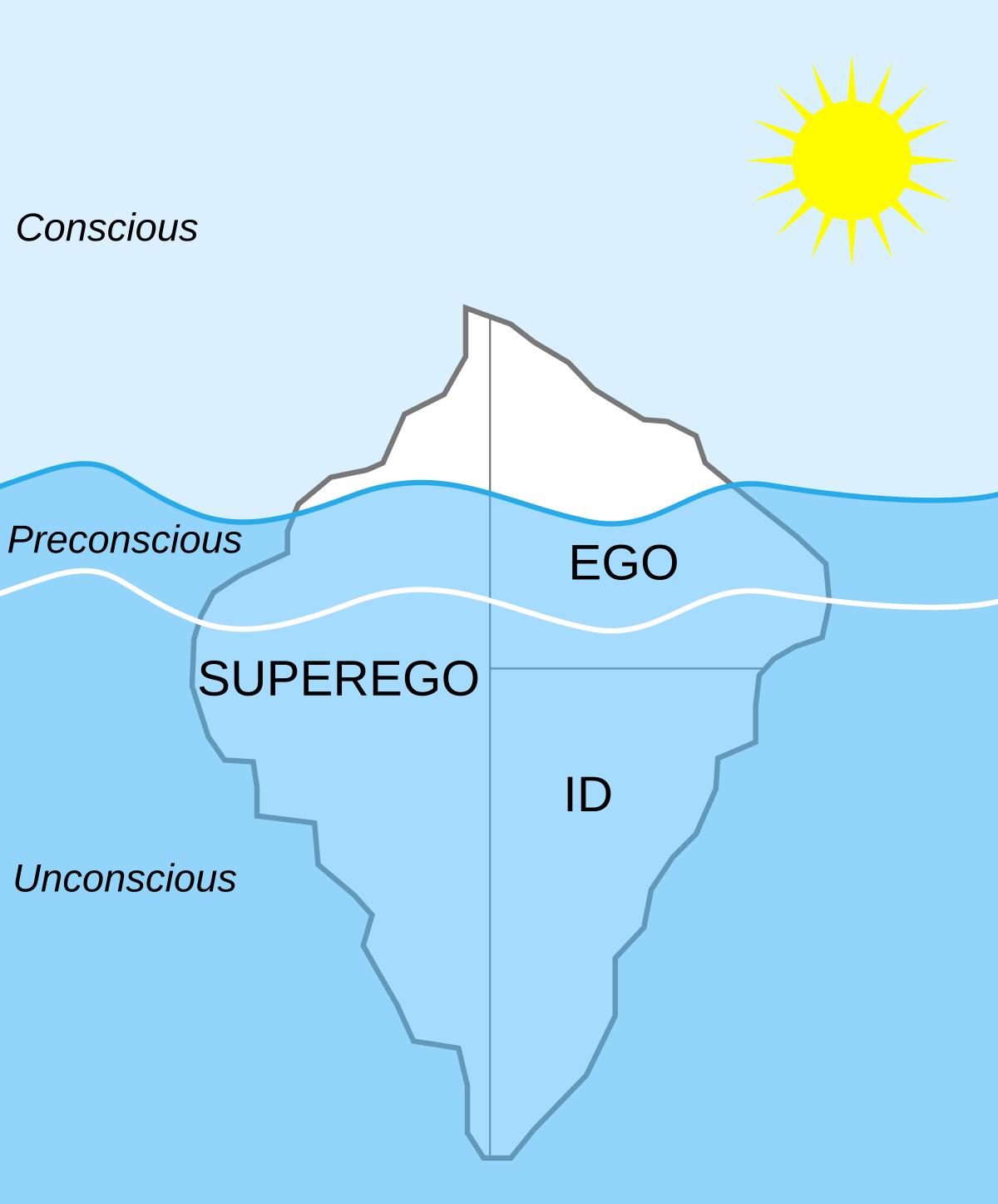
Iceberg metaphor illustrating Freud's structural model of the psyche, with the Conscious mind above the water, Preconscious at the waterline, and Unconscious below the surface. historicair, Public domain, via Wikimedia Commons
The theory therefore tries to explain more than family jealousy. It is one of Freud's accounts of how outside rules become self-judgment.
The technical meaning matters
In everyday speech, people sometimes call any intense attachment to a parent Oedipal. That shortcut drops most of Freud's idea: childhood desire, rivalry, identification, and the proposed formation of conscience all belong together.
Using the full meaning does not make the word more dramatic. It makes it more precise.
How the Oedipus complex works
Freud introduced the term in his 1910 paper after first discussing the concept in The Interpretation of Dreams in 1899. During what he called the phallic stage of psychosexual development, a young boy experiences sexual desire for his mother and hostility toward his father. In a positive Oedipus complex, the child desires the opposite-sex parent and resents the same-sex parent, whereas a negative Oedipus complex involves desire for the same-sex parent and aversion to the opposite-sex parent.
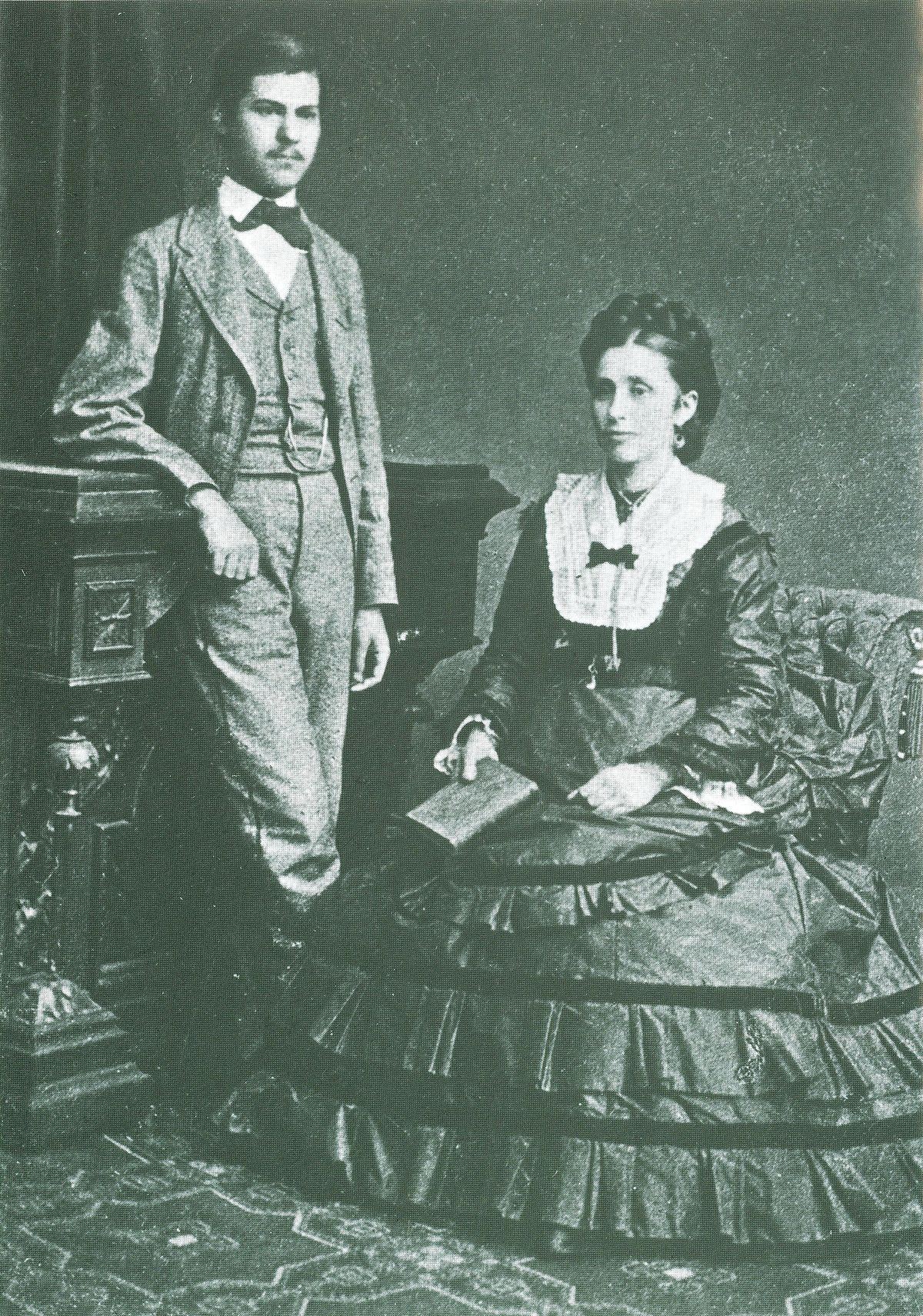
Sigmund Freud standing with his mother Amalia in 1872, decades before he theorized that early maternal attachment forms a universal stage of childhood. Unknown authorUnknown author, Public domain, via Wikimedia Commons
The socially acceptable outcome occurs when the child reconciles with the rival parent. Instead of maintaining competition, the child identifies with the same-sex parent. This identification brings the parent's rules and moral prohibitions into the child's inner life, establishing the structure of the superego.
Origins and historical criticisms
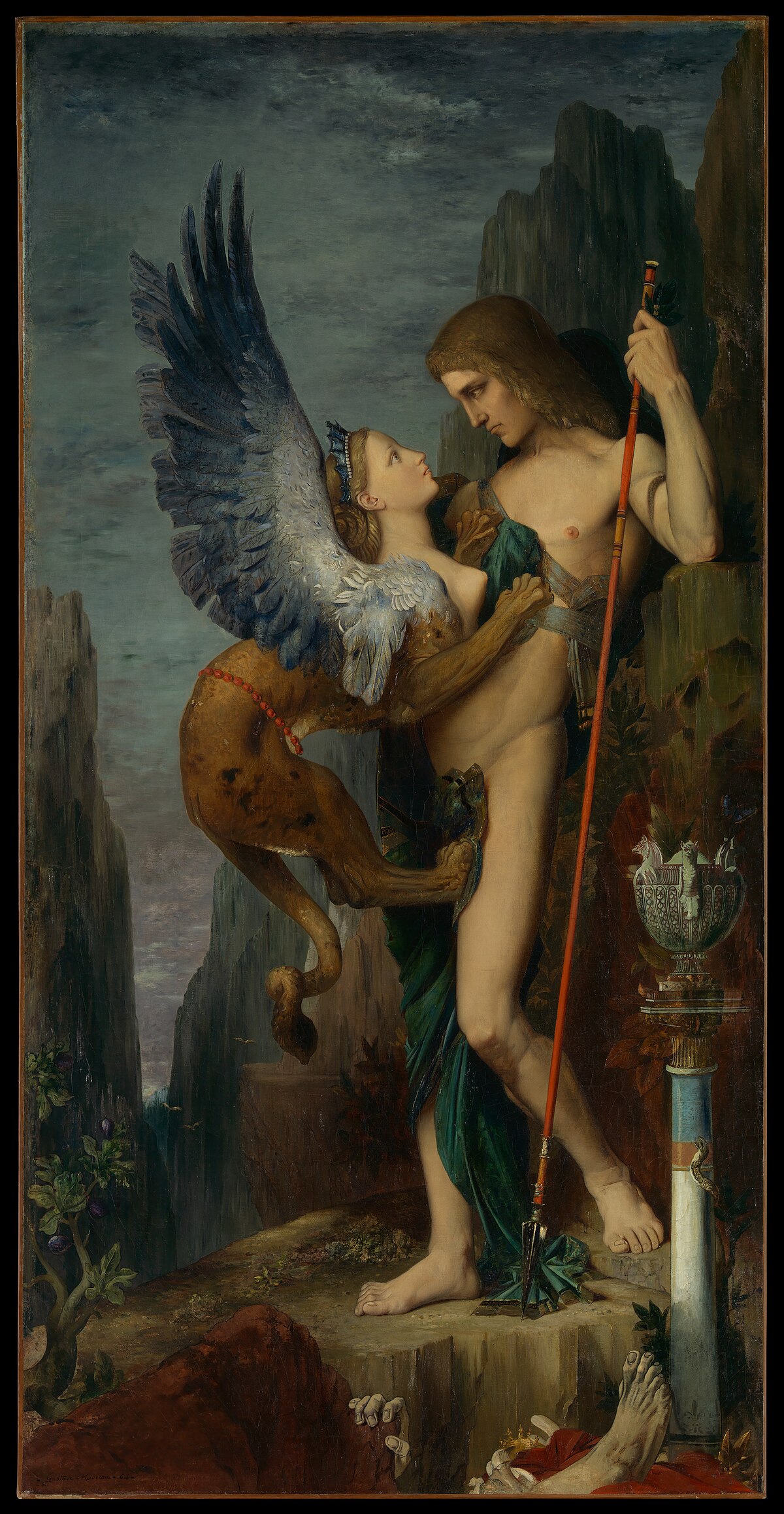
Freud based his theory on clinical observations, his own childhood jealousy following his father's death, and popular 19th-century productions of Sophocles' tragedy Oedipus Rex. In the ancient myth, Oedipus unknowingly kills his father Laius and marries his mother Jocasta. Freud believed the story resonated with modern audiences because it staged universal urges that humans inherited across evolutionary history.
The concept replaced Freud's earlier seduction theory, which had attributed psychological disorders to real childhood sexual abuse. Critics later argued that shifting the explanation from real trauma to internal childhood fantasies served as a cover-up for actual abuse. Other psychologists and scholars have criticized the framework for failing to apply to households with same-sex parents and for conflicting with widespread natural aversions to incest.
Test yourself
For Freud, the Oedipus complex centers on childhood family attachments and rivalry.
True. Freud used the Oedipus complex to describe a child’s unconscious desires and rivalries involving parental figures.
Which sequence belongs to Freud's Oedipus theory?
Desire, rivalry, identification with rules. Freud's account linked a childhood desire and rivalry to identification with the rival parent's standards.
Is adult jealousy of a parent enough to show an Oedipus complex?
No, Freud meant a specific childhood conflict. Freud's theory joined childhood desire, rivalry, and later identification. Adult jealousy alone is not the whole concept.
Play the lesson in edgi and the card is yours. It lands on your Map next to the ideas it connects to, and turns from matte to foil to gold as you learn more around it.
Freud described the feminine Oedipus complex as a daughter's desire for her father and hostility toward her mother. Carl Jung proposed the term Electra complex for this dynamic in 1913, though Freud rejected Jung's term.
How does Freud relate the complex to Hamlet?
Freud argued that William Shakespeare's play Hamlet shares the same psychological root as Oedipus Rex. Unlike the Greek myth where the wish is openly realized, Hamlet keeps the underlying desire repressed, revealing it only through hesitation and psychological inhibition.
What happens if the complex is not resolved?
If a child fails to reconcile with the rival parent and let go of the primary attachment, the complex remains as an unconscious structure. Freud believed this failure to adapt becomes a primary cause of adult neurosis.