Psychosexual development is Sigmund Freud's theory that personality forms through childhood stages where sexual drive, which he called libido, focuses on different sensitive parts of the body. Successful passage through each stage produces a healthy personality, while unresolved conflicts create lasting anxiety. This framework argued that adult habits, neuroses, and character traits trace back directly to specific childhood frustrations.
By the edgi team We find the most surprising true thing about an idea and build a 60-second lesson around it.
Freud called his sequence psychosexual development. The stages were oral, anal, phallic, latency, and genital. He used libido for the sexual drive he thought moved through childhood. At each stage, he thought a different part of the body and a different kind of conflict became especially important.
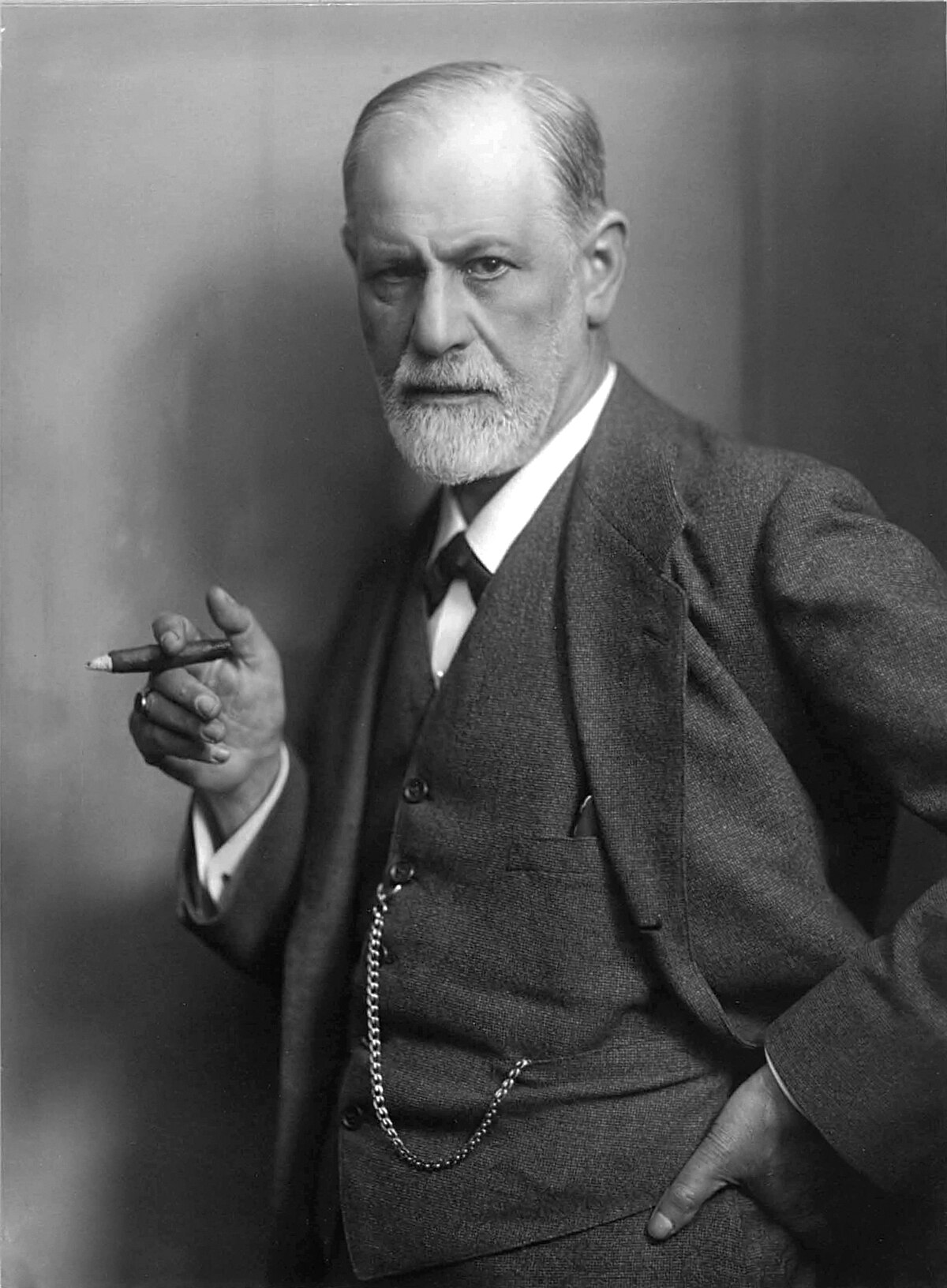
A black and white portrait of Sigmund Freud, taken around 1921 by Max Halberstadt, shows him holding a cigar. Max Halberstadt, Public domain, via Wikimedia Commons
For Freud, childhood was not only preparation for adulthood. It was where the patterns of adult personality were being made. The Oedipus complex belongs to the phallic stage, but Freud's five-stage story begins before that conflict and continues after it.
What a fixation meant
A conflict at one stage could, in Freud's account, leave a person fixated there. Fixation did not mean simply remembering a difficult event. It meant the earlier stage kept organizing a later trait, habit, or symptom.
Fixation is what makes the stages an explanation. Without it, the five stages are only a sequence; with it, Freud could connect a childhood conflict to adult character.
Why the jokes still land
In popular shorthand, “oral fixation” gets applied to mouth-related habits. The joke keeps one part of Freud's theory and drops the rest: a childhood stage, a conflict there, and a lasting pattern in adulthood.
A close-up photograph shows a baby sleeping peacefully, sucking on its fingers. Florence Devouard (anthere), CC BY 2.5, via Wikimedia Commons
That is the useful distinction to remember. Saying childhood matters is broad; saying a particular adult habit comes from a fixed stage is a specific Freudian explanation.
How bodily stages shape adult character
Freud proposed in his 1905 work Three Essays on the Theory of Sexuality that infants are born polymorphous perverse, capable of deriving pleasure from any body part. Over time, socialization channels this drive through five predictable psychosexual stages: oral, anal, phallic, latency, and genital.
At each stage, pleasure centers on a specific erogenous zone, a bodily area sensitive to stimulation. If a child faces failure, parental disapproval, or frustration at any point, they associate anxiety with that zone. To avoid this anxiety, the person becomes fixated, leaving them preoccupied with the psychological themes of that stage long into adulthood.
The oral and anal stages
The oral stage spans from birth to one year, centering pleasure on the mouth through feeding, nursing, and placing objects in the mouth. Weaning serves as the key conflict and the infant's first experience of loss. Too much gratification here can leave an individual unable to understand that satisfaction is not immediate, while too little gratification can foster passivity.
From roughly eighteen months to three years, the anal stage focuses libido on the anus and bowel control. Toilet training creates a conflict between the immediate gratification of the id and the delayed gratification demanded by parents. Depending on how this conflict resolves, a fixation can yield an anal expulsive character who is messy and defiant, or an anal retentive character marked by neatness, precision, and passive-aggression.
Test yourself
Which claim is specific to psychosexual development?
A fixed stage can shape an adult trait. Freud's distinctive claim was not merely that childhood matters. It was that conflict at particular stages could become a lasting fixation.
In Freud's theory, what is a fixation?
A stage conflict shaping later character. Freud used fixation for a stage conflict that was proposed to keep shaping later traits, habits, or symptoms.
The Latency period is characterized by intense sexual desire for the parent of the opposite sex.
False. During the Latency stage, sexual energy is actually dormant as children focus on social skills, hobbies, and peer relationships.
Play the lesson in edgi and the card is yours. It lands on your Map next to the ideas it connects to, and turns from matte to foil to gold as you learn more around it.
What happens when a child successfully passes through a stage?
When a child receives balanced satisfaction without severe thwarting, they resolve the stage's core conflict. This healthy resolution avoids fixation and builds self-control, trust, and a stable adult personality.
What role does the ego play in the oral stage?
The ego begins to emerge in the oral stage while the id is fully present and the superego remains undeveloped. Experiencing delayed gratification teaches the infantile ego to recognize boundaries between the body and the outside world.