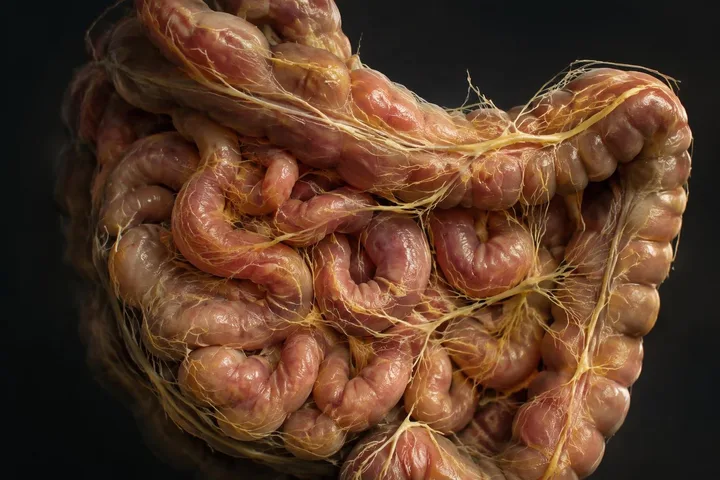
The enteric nervous system is a mesh of 500 million neurons lining your digestive tract that runs your digestion. It controls gut movement and enzyme release entirely on its own, even if severed from the brain and spinal cord. It also produces over 90 percent of the body's serotonin and half of its dopamine.
By the edgi team We find the most surprising true thing about an idea and build a 60-second lesson around it.
Your gut is lined with 500 million neurons, five times more than a rat has in its entire brain. This mesh-like system is called the enteric nervous system, and it is entirely capable of running your digestion without a single command from your skull.
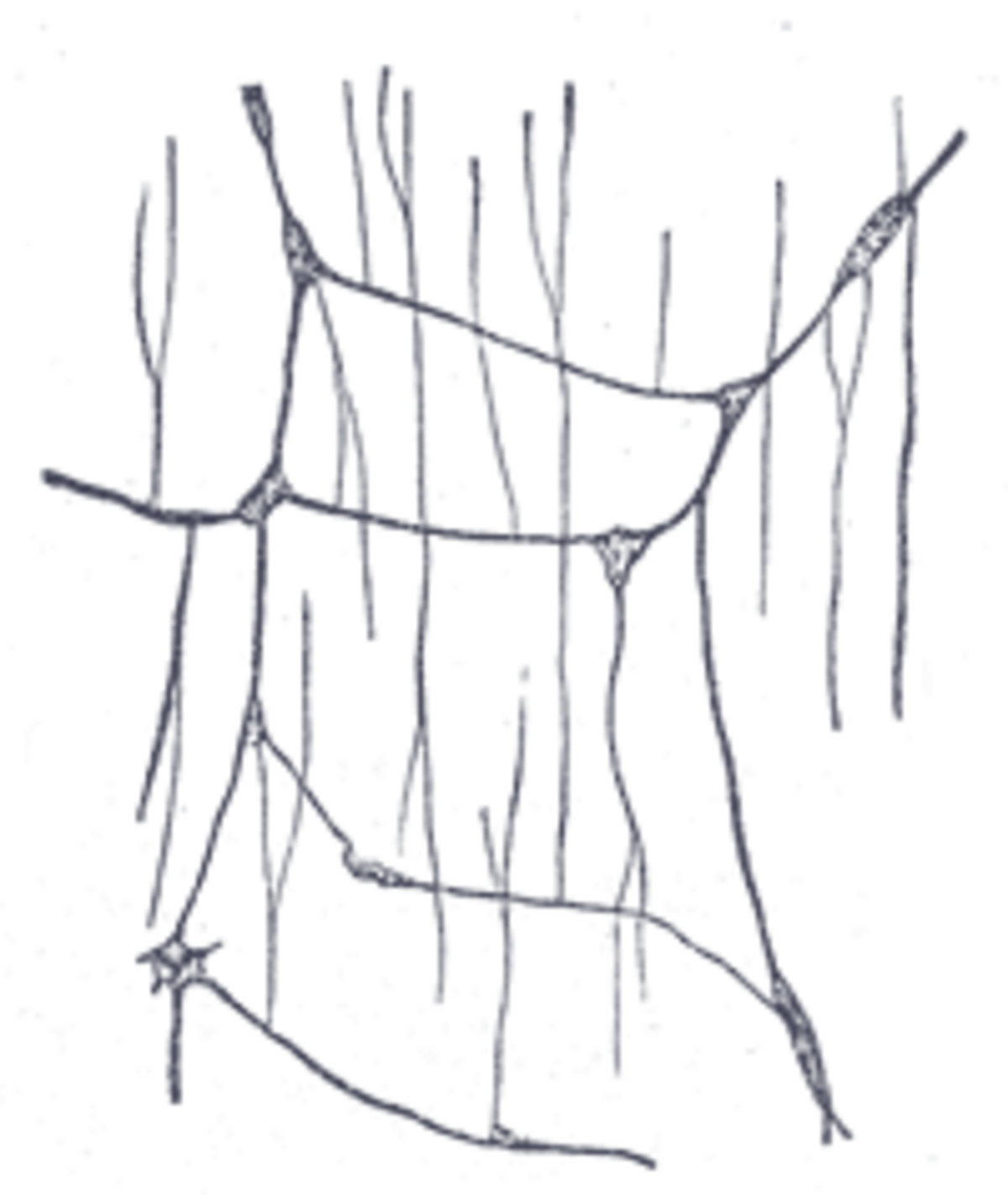
A black and white diagram, labeled Gray1072, illustrates a network of nerve cells and fibers, characteristic of a neural plexus. Henry Vandyke Carter, Public domain, via Wikimedia Commons
If you severed the connection to your brain, your stomach would continue to process food and move muscles perfectly on its own.
The mood factory
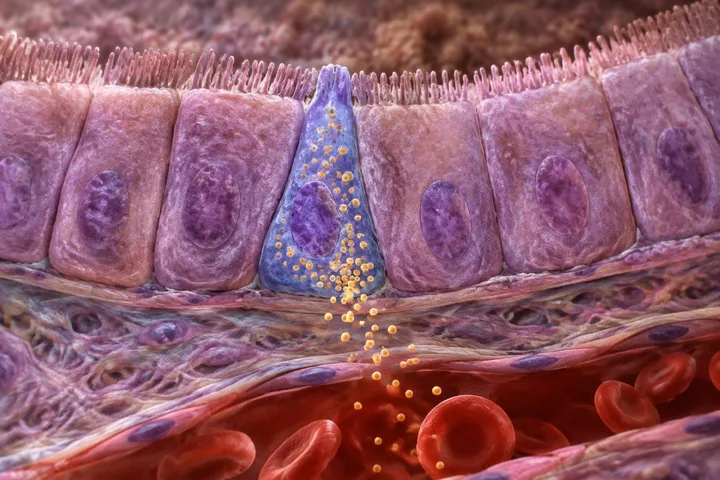
The gut doesn't just process lunch; it is a chemical powerhouse. It produces about 95% of your body's serotonin, the neurotransmitter most famous for regulating your mood and happiness.
Chemical structure of serotonin, a monoamine neurotransmitter. CYL, Public domain, via Wikimedia Commons
This explains why gut feelings are literal. When you feel butterflies before a speech, your second brain is reacting to stress and sending those signals up to your primary brain.
The highway
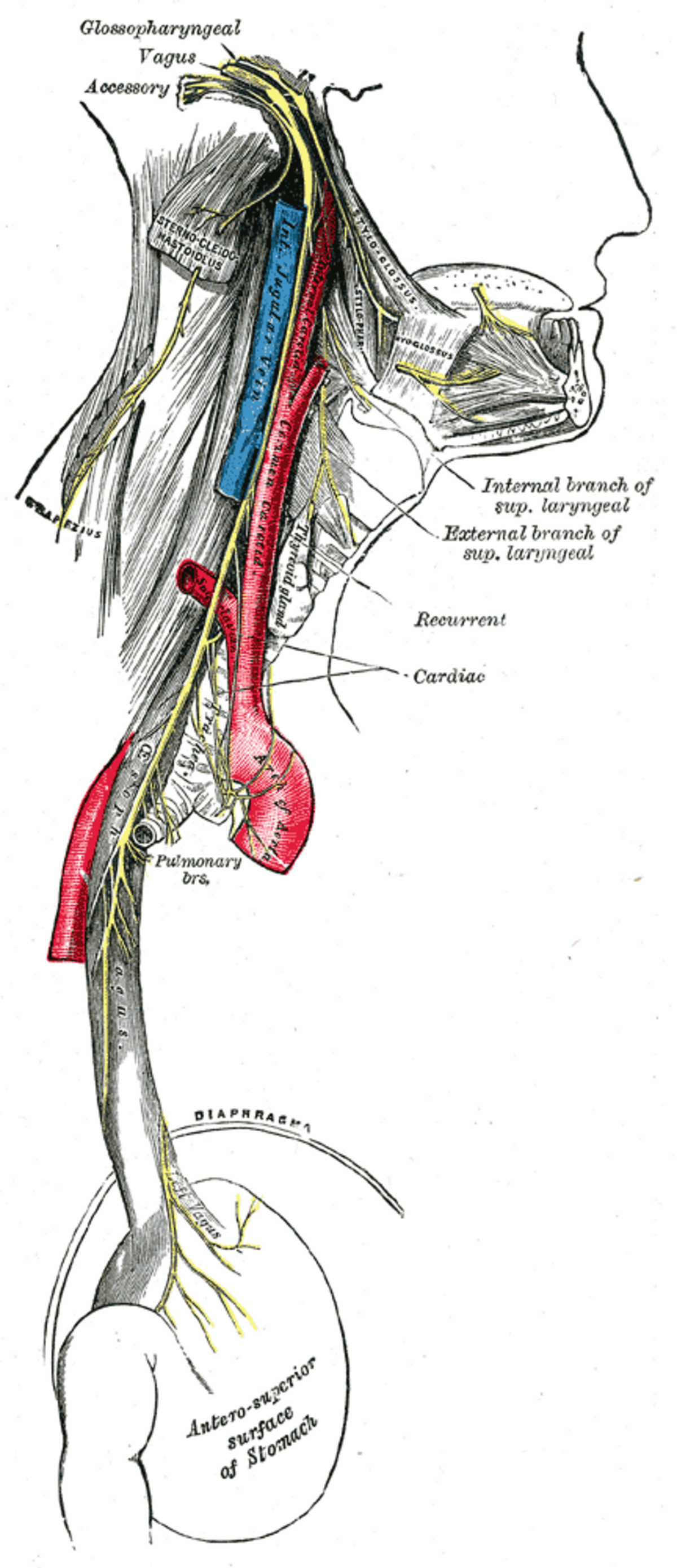
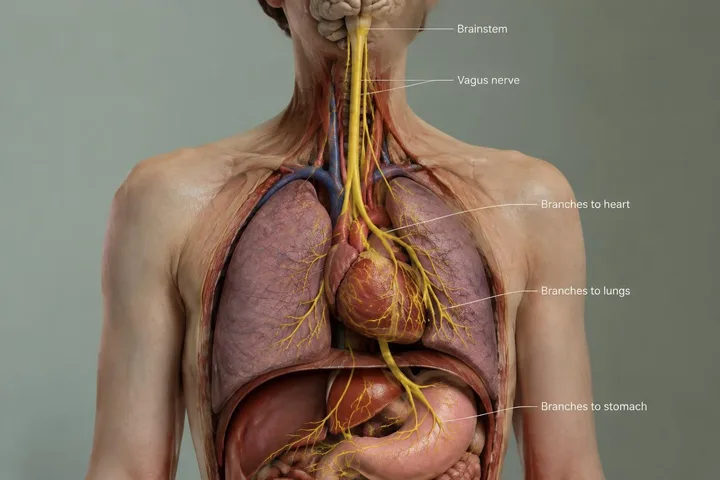
The gut and brain are in constant conversation via the vagus nerve. Scientists have found that this highway carries more signals from the gut up to the brain than it carries down to the gut.
A lateral view anatomical diagram illustrating the course of the vagus nerve from the head down to the stomach, showing its branches and relations to other organs and vessels. Henry Vandyke Carter, Public domain, via Wikimedia Commons
You aren't just thinking about what to eat; your stomach is actively shaping your thoughts.
How the gut nervous system is built
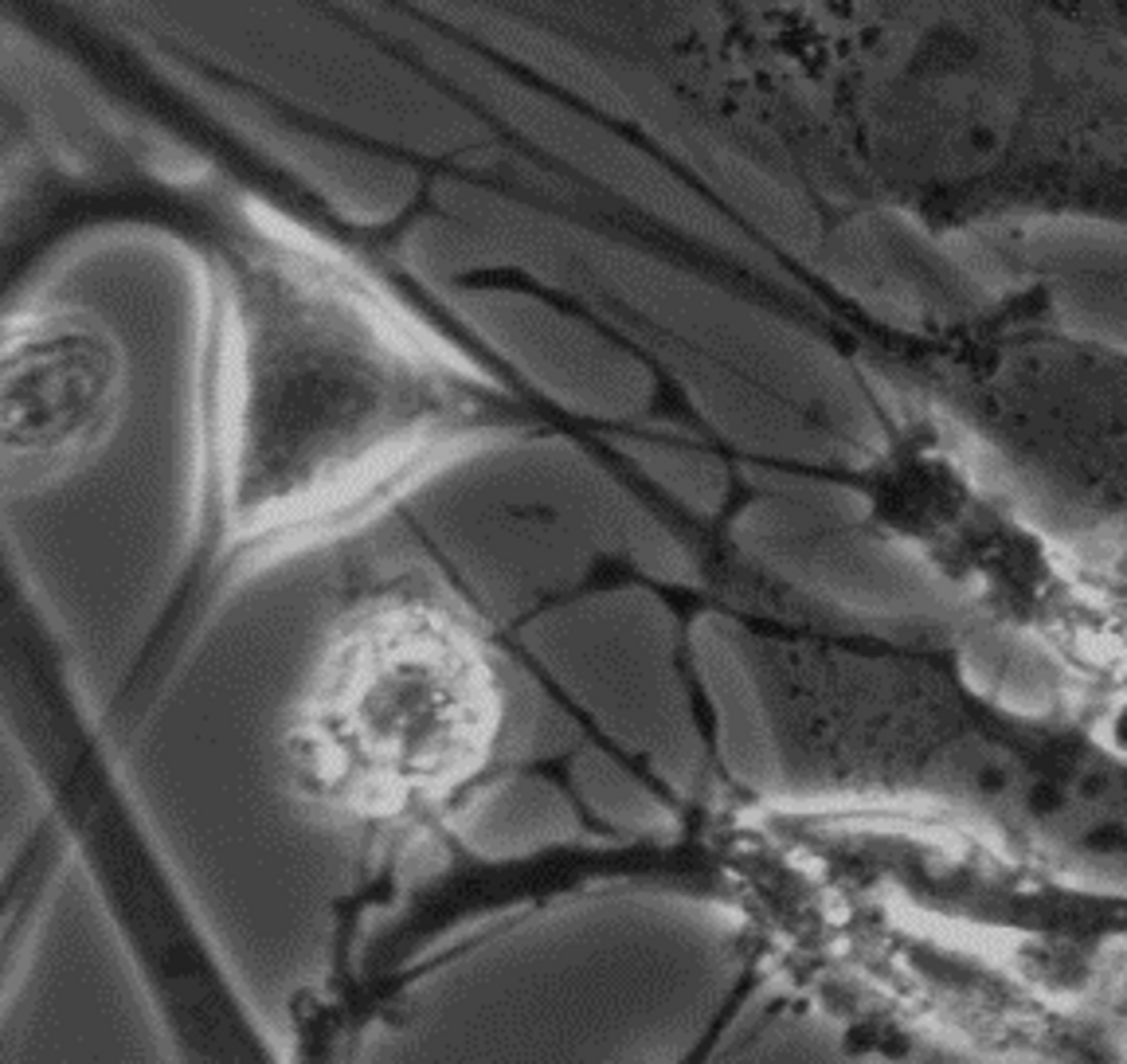
The enteric nervous system runs from the esophagus down to the anus. Its 500 million neurons, which include Dogiel cells, give it five times as many nerve cells as the human spinal cord.
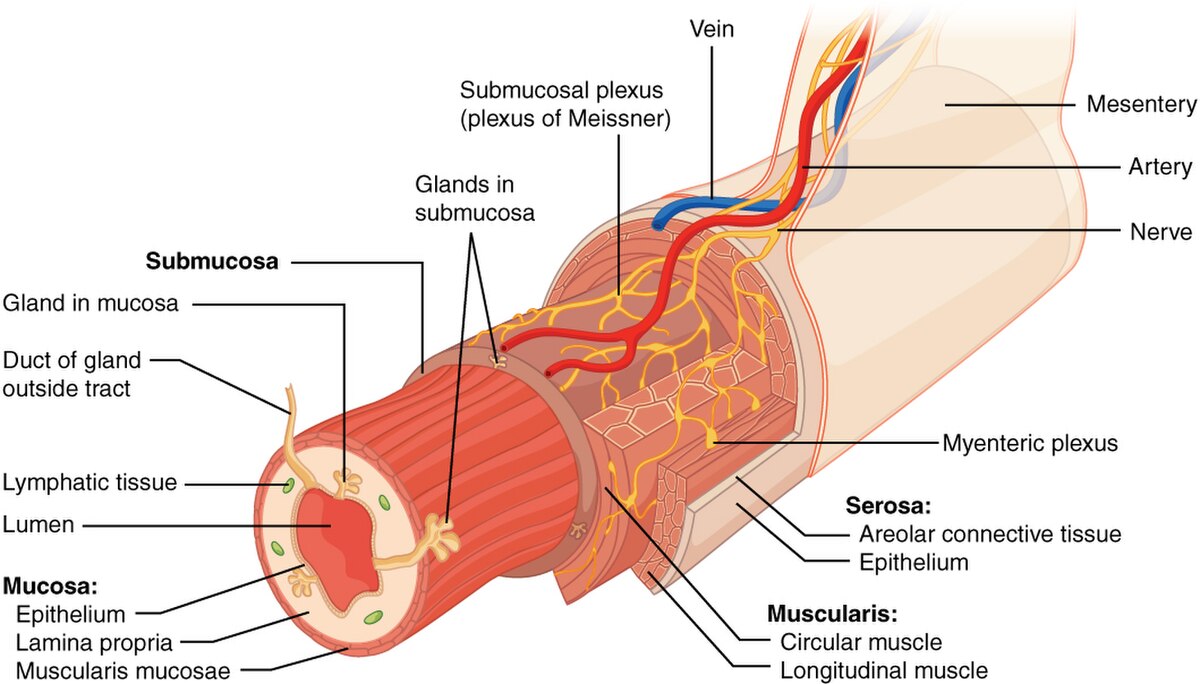
Cross section of the gastrointestinal tract showing the tissue layers where the myenteric and submucosal nerve plexuses reside. OpenStax College, CC BY 3.0, via Wikimedia Commons
These neurons organize into two distinct networks called plexuses. The myenteric plexus (Auerbach's plexus) sits between the circular and longitudinal muscle layers of the gut wall to direct physical movement. Deeper inside, the submucosal plexus (Meissner's plexus) lies in the submucosa layer and manages blood flow and the inner lining.
This network contains its own sensory receptors, motor neurons, and interneurons. It even features glial support cells that resemble brain astroglia, as well as a protective diffusion barrier around its capillaries that mirrors the blood-brain barrier.
How the enteric nervous system works
The gut can process food without any instructions from the central nervous system. Sensory neurons detect chemical conditions and physical stretch, allowing local circuits to trigger digestive reflexes autonomously.
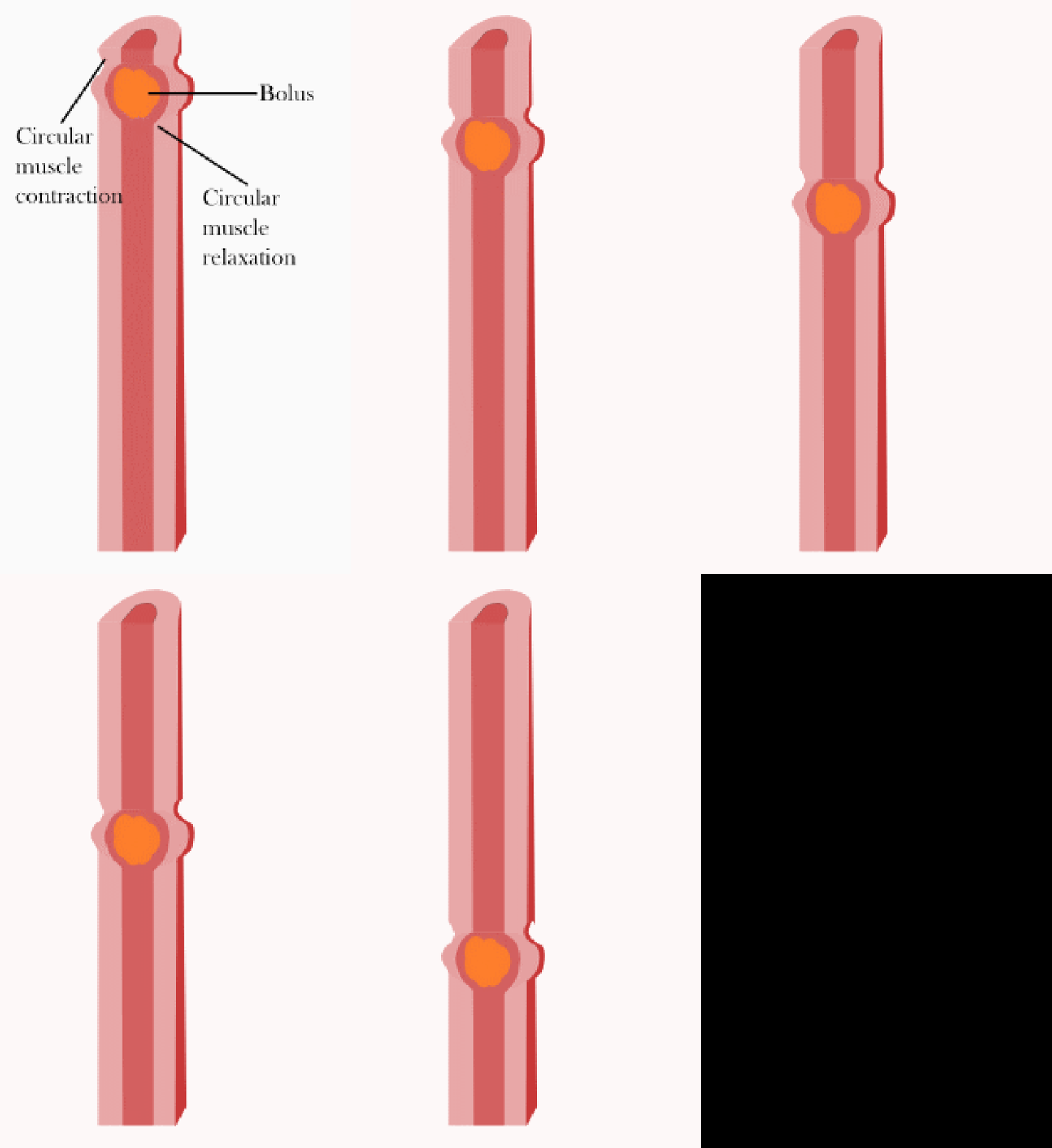
Diagram showing the coordinated muscular contraction and relaxation that drives peristalsis through the digestive tract. Auawise, CC BY-SA 4.0, via Wikimedia Commons
To push food through, the myenteric plexus orchestrates peristalsis, a sequence where muscles contract above a food bolus and relax below it. Discovered in 1899 by William Bayliss and Ernest Starling, this reflex propels meals downstream. The system also coordinates segmentation, alternating muscle contractions in both directions to churn food into chyme for nutrient absorption.
Communication relies on more than 30 neurotransmitters, including acetylcholine, dopamine, and serotonin. Cholinergic neurons regulate the release of digestive hormones like gastrin and secretin, adjusting secretions based on food bulk and nutrient makeup.
Brain and gut communication
While the gut can operate alone, it regularly communicates with the central nervous system through sympathetic pathways and the vagus nerve. The study of these interactions is called neurogastroenterology.
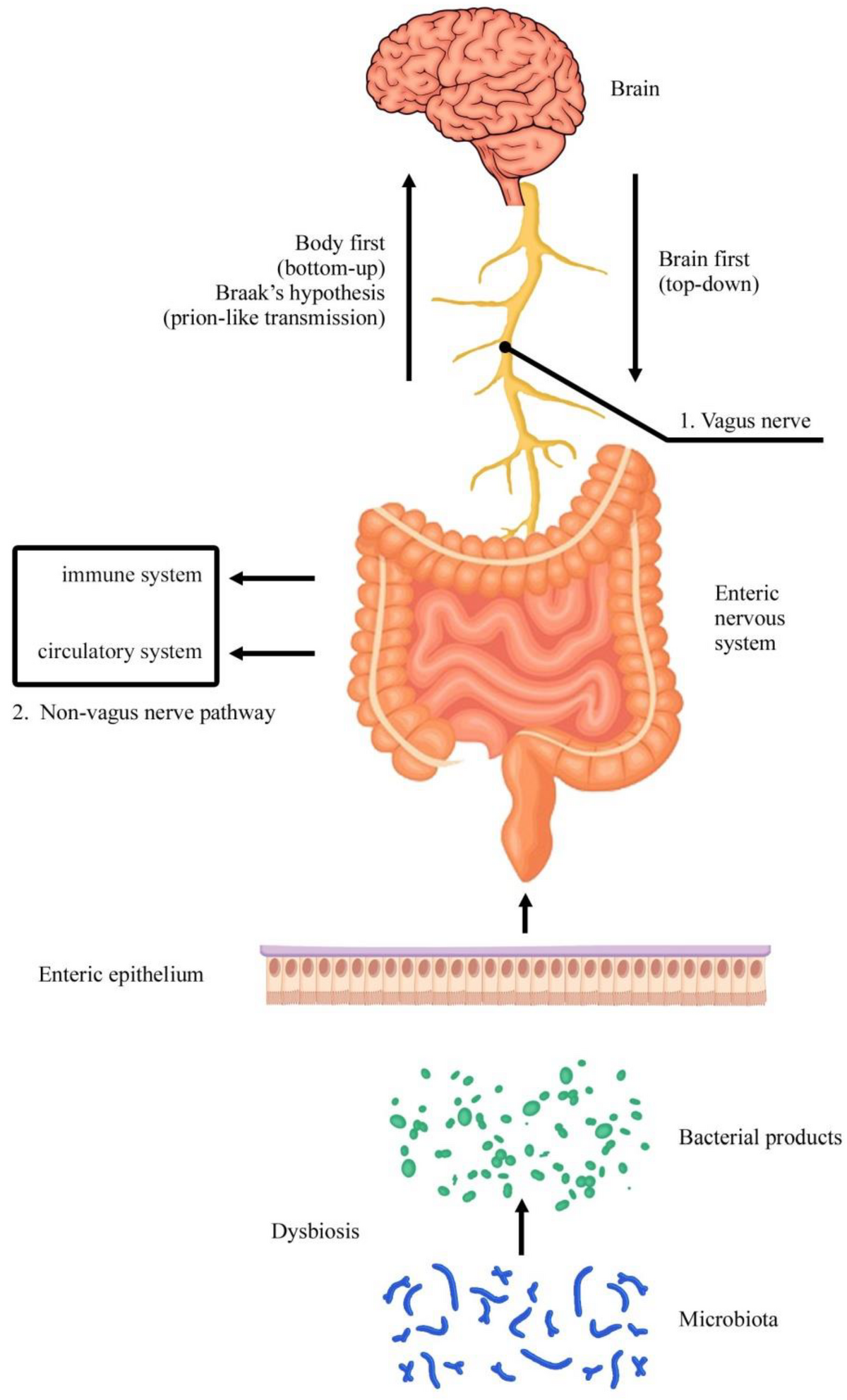
Diagram showing the two-way signaling loop connecting the central nervous system and the enteric nervous system via the vagus nerve. Natale, Gianfranco, Larisa Ryskalin, Gabriele Morucci, Gloria Lazzeri, Alessandro Frati, and Francesco Fornai, CC BY 4.0, via Wikimedia Commons
This connection is heavily weighted toward the gut. The vagus nerve carries far more signals upward from the digestive tract to the brain than it transmits downward. Because the gut holds more than 90 percent of the body's serotonin and 50 percent of its dopamine, its signals actively influence central brain function and physical sensations.
Test yourself
If the main nerve connecting the brain and stomach is cut, what happens to digestion?
It continues to function normally. The gut houses an independent nervous system capable of running digestion entirely on its own without skull commands.
A communication highway links two organs, but sends most signals upward. What does this suggest?
The lower organ heavily shapes the upper. With more signals traveling upward than downward, the lower organ is actively influencing the thoughts of the upper one.
Can your stomach digest food if disconnected from your skull?
Yes, it runs completely on its own. Your gut has 500 million neurons forming the enteric nervous system, allowing it to manage digestion entirely without commands from your skull.
Play the lesson in edgi and the card is yours. It lands on your Map next to the ideas it connects to, and turns from matte to foil to gold as you learn more around it.
The enteric nervous system continues to operate. Because it contains complete sensory, motor, and interneuron reflex circuits, the gut still moves food and secretes enzymes without input from the brain.
Where did the enteric nervous system originate during development?
The enteric nervous system is derived embryonically from neural crest cells. These cells migrate into the digestive tract to form its extensive neural mesh.
What is the difference between peristalsis and segmentation?
Peristalsis involves one-directional waves of contraction and relaxation that push food along the tract. Segmentation contracts circular muscles simultaneously in both directions to mix contents and aid absorption.