Enteroendocrine cells: your gut as an endocrine organ
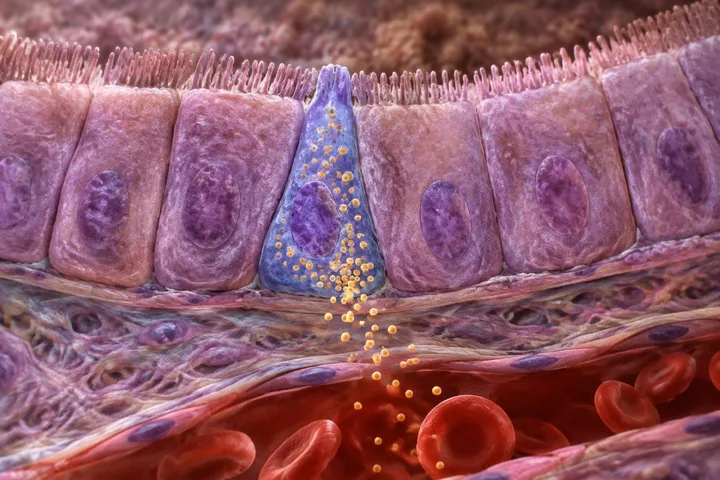
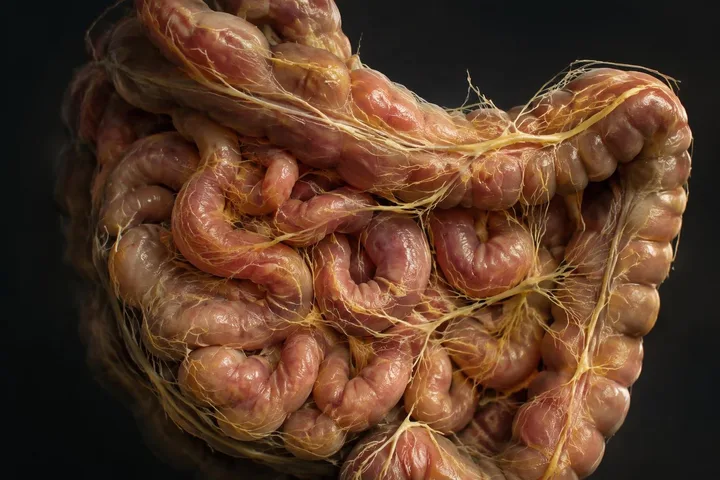
Enteroendocrine cells are hormone-producing cells scattered throughout the lining of the stomach, intestines, and pancreas. They act as chemical sensors that taste the contents of your digestive tract, releasing hormones directly into the bloodstream or the nervous system. Together, they make the gut the largest endocrine organ in the human body.
By the edgi team We find the most surprising true thing about an idea and build a 60-second lesson around it.
Your gut is not just a food tube; it is the largest endocrine organ in the human body. Specialized cells called enteroendocrine cells line the digestive tract and pancreas, churning out dozens of vital hormones.
In the late 19th century, scientists discovered the pancreas still secreted juices even when its nerve connections to the brain were completely severed.
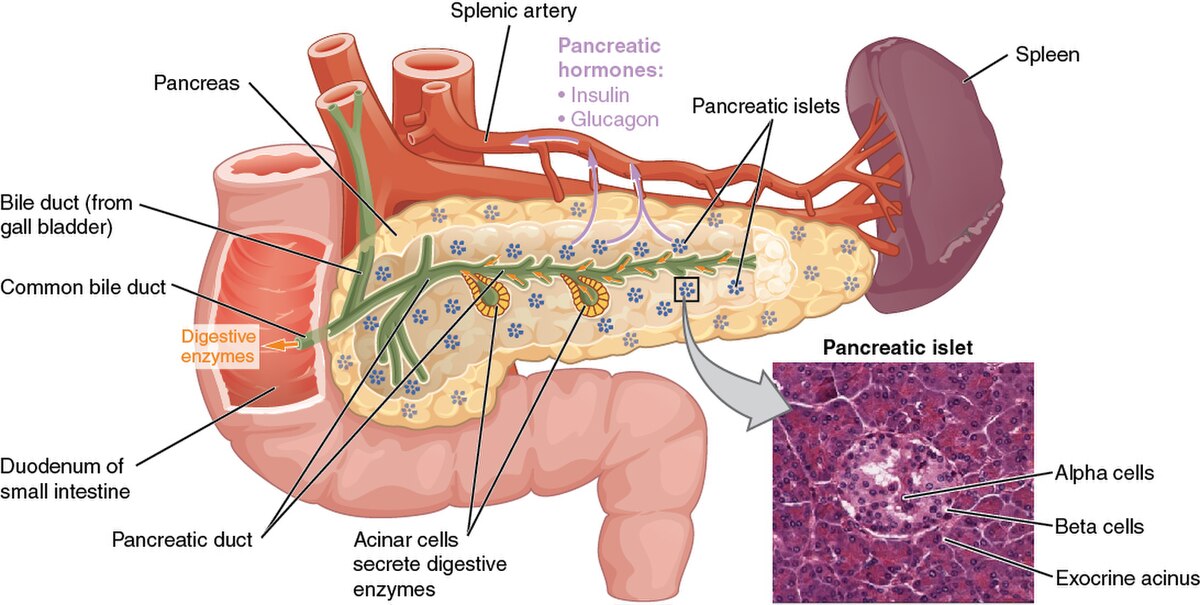
Diagram illustrating the anatomy of the pancreas and its role in digestion and hormone secretion, showing its connection to the duodenum, spleen, and major blood vessels. OpenStax College, CC BY 3.0, via Wikimedia Commons
Tasting the meal
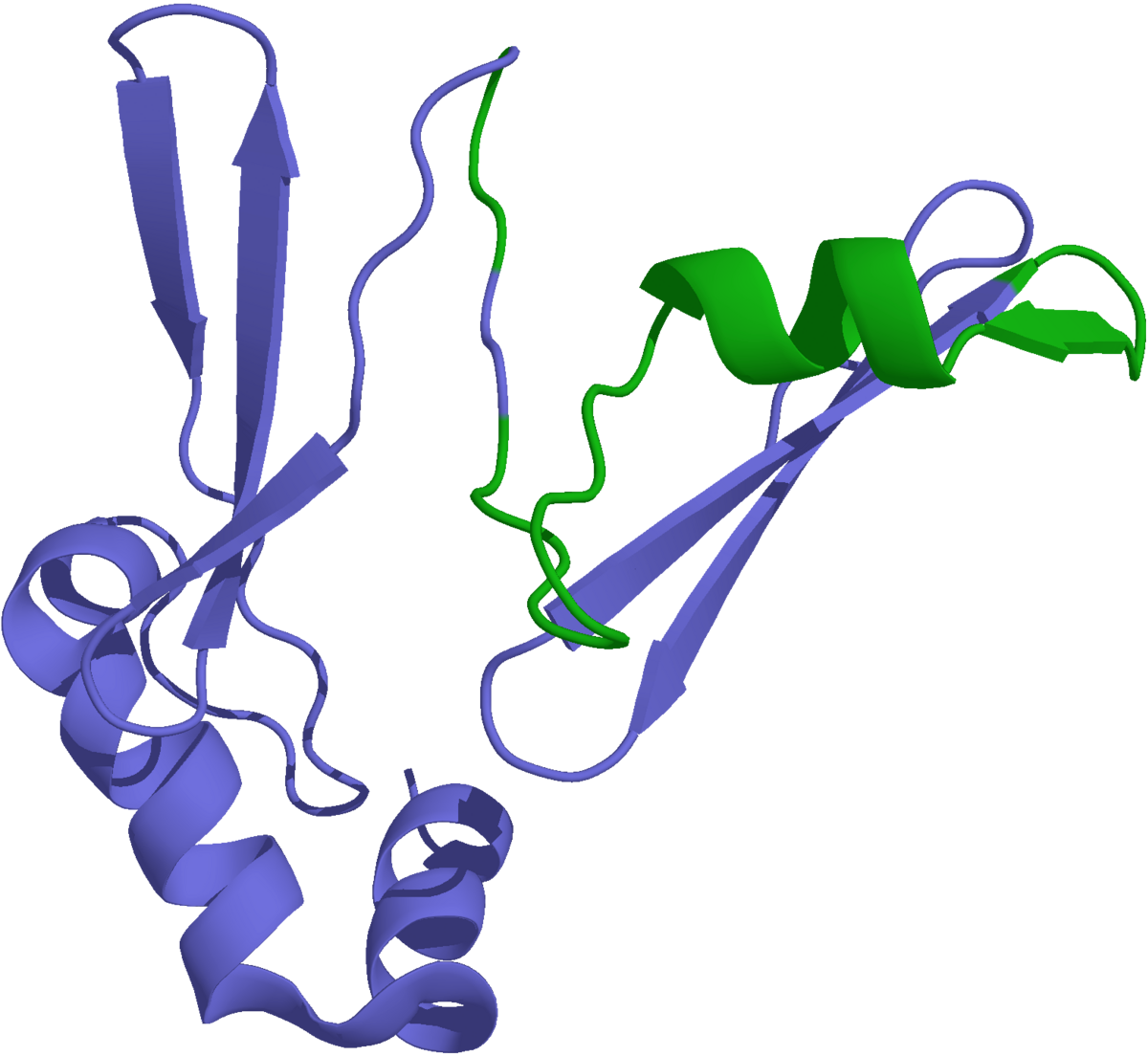
These cells act as chemical sensors that constantly taste the contents of your stomach and intestines. One specific type, the P/D1 cell, produces ghrelin, the hunger hormone that spikes before meals to make snacks irresistible.
Molecular diagram of Preproghrelin, with the ghrelin component highlighted in green and the rest of the protein in purple. own work, Public domain, via Wikimedia Commons
They are so sensitive they can detect incoming nutrients and trigger systemic metabolic shifts in seconds.
The gut feeling
By releasing neurotransmitters directly into the enteric nervous system, your gut can bypass conscious thought. Even the microscopic bacteria living in your gut microbiome can influence these cells to alter your cravings and mood.
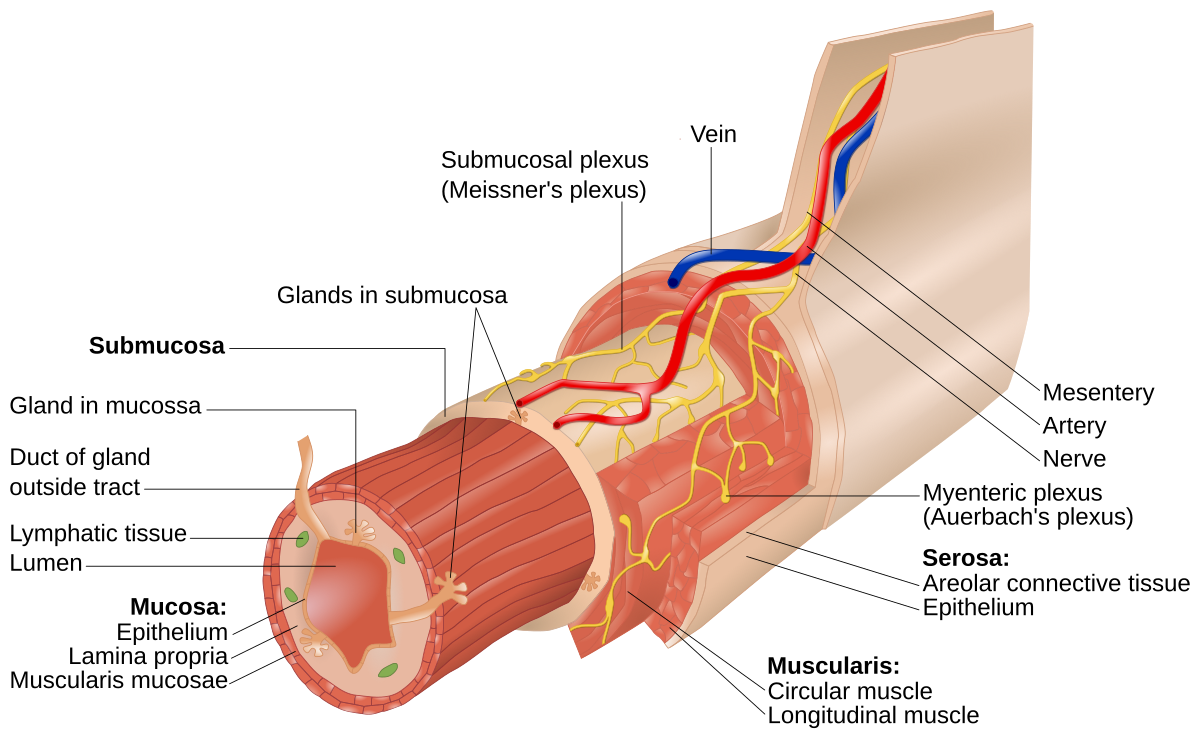
Diagram illustrating the layers of the gastrointestinal tract wall, including the mucosa, submucosa, muscularis, and serosa. Goran tek-en, CC BY-SA 4.0, via Wikimedia Commons
When you talk about a gut feeling, you are describing a literal biological broadcast from your digestive tract.
How enteroendocrine cells sense and signal
Unlike endocrine cells in traditional glands, intestinal enteroendocrine cells are not grouped into a single cluster. They are spread as individual cells throughout the entire lining of the gut. These cells act as chemoreceptors, detecting incoming nutrients, harmful chemicals, and fermentation products like acetate made by gut bacteria.
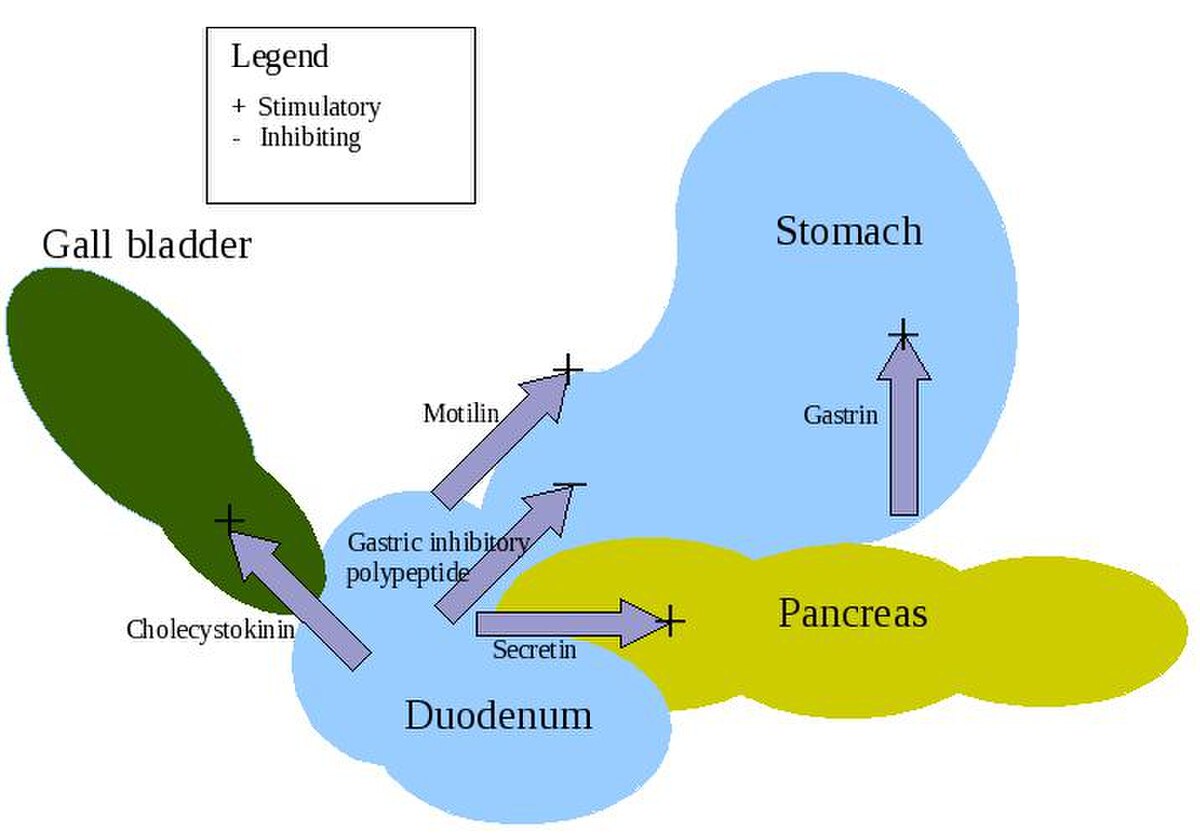
Notice how various gut hormones stimulate or inhibit digestive organs like the stomach and pancreas during digestion. Tekks (talk), CC BY-SA 3.0, via Wikimedia Commons
Once stimulated, they transmit signals in three distinct ways. They release hormones into the bloodstream for body-wide effects, diffuse local chemical messengers to neighboring tissue, or send neurotransmitters straight to the enteric nervous system to prompt rapid nerve reflexes.
Types of enteroendocrine cells
Different types of enteroendocrine cells handle specific stages of digestion. In the stomach, G cells release gastrin to stimulate acid production, while nearby enterochromaffin-like cells release histamine to encourage more gastrin release.
In the small and large intestines, other specialized types take over. I cells secrete cholecystokinin to trigger bile and pancreatic secretions while signaling satiety. L cells (also called neuropod cells) produce glucagon-like peptide-1 (GLP-1) and peptide YY3-36, and K cells release gastric inhibitory peptide (GIP) to promote triglyceride storage. In the pancreas, enteroendocrine cells in the islets of Langerhans produce insulin and glucagon, heavily regulated by the autonomic nervous system.
Test yourself
An automated chemical detector triggers a valve without a computer chip. How?
Direct reaction to the fluid. Like cells in the digestive tract, physical sensors can trigger immediate local responses purely through direct chemical contact.
Where are most of the body's hormone-producing cells located?
Inside the digestive tract. The gut is actually the largest endocrine organ in the human body, far surpassing traditional glands in sheer hormone production.
A chemical sensor reacts instantly to a substance inside a sealed tube. How?
Direct contact triggers local cells. Sensory cells don't wait for central nervous system approval; they taste and react directly to their immediate chemical environment.
Play the lesson in edgi and the card is yours. It lands on your Map next to the ideas it connects to, and turns from matte to foil to gold as you learn more around it.
What happens if enteroendocrine cells form tumors?
Rare and slow-growing carcinoid and non-carcinoid tumors can develop from these cells. When these tumors arise, they have the capacity to secrete large volumes of hormones into the body.
Which enteroendocrine cells produce serotonin?
Enterochromaffin cells produce serotonin. These cells share similarities with adrenomedullary chromaffin cells and act as both enteroendocrine and neuroendocrine signaling cells.