FingerprintWhy ridges formed in the womb last a lifetime
A fingerprint is an impression left by the raised friction ridges on the skin of a human finger. The pattern is set where the outer skin meets the dermis beneath it, so minor surface damage heals back into the same loops and whorls. Because each pattern is unique and durable throughout life, fingerprints serve as long-term biological identifiers.
By the edgi team We find the most surprising true thing about an idea and build a 60-second lesson around it.
Every time you touch a surface, you leave a unique map of oils and sweat shaped by the ridges on your skin. These ridges are not just surface-level; they are anchored deep in the dermis.
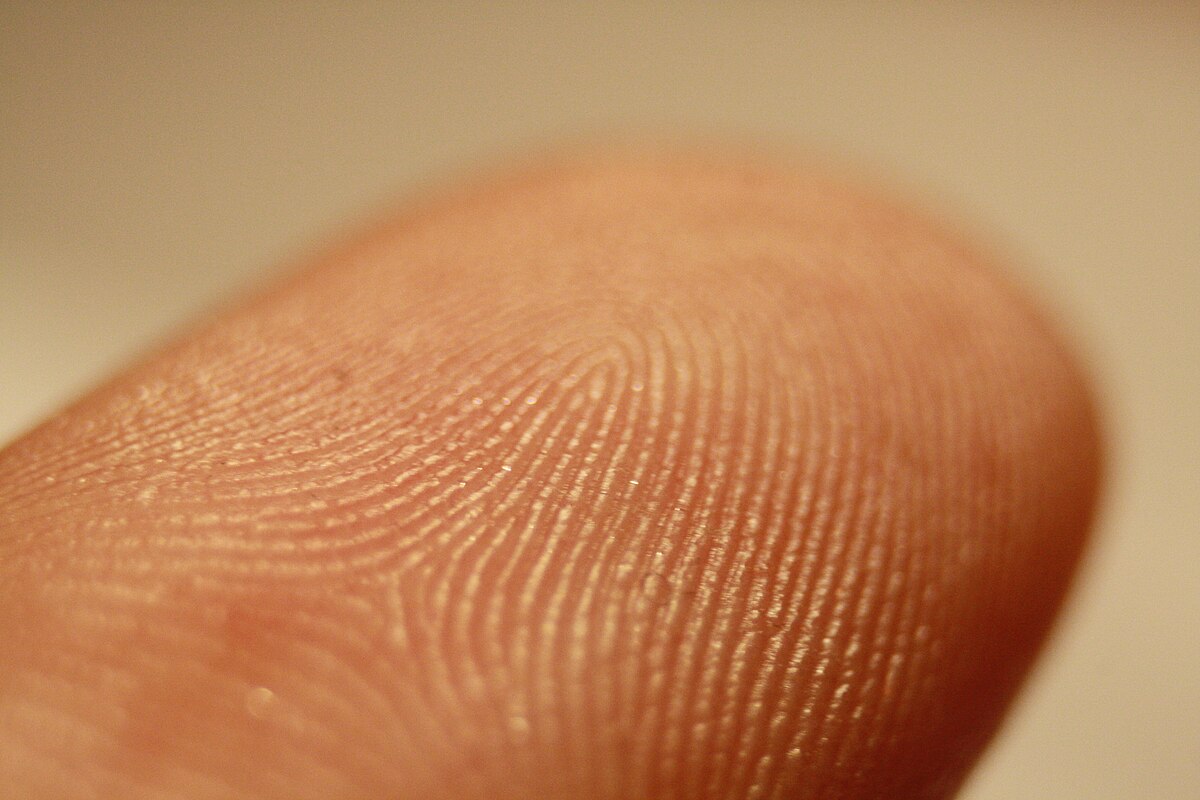
Macro photograph showing the friction ridges on a male finger in Třebíč, Třebíč District. Frettie, CC BY 3.0, via Wikimedia Commons
If you burn or sand your fingertips, the skin will heal and the exact same loops and whorls will grow back. They are permanent.
The end of measurement
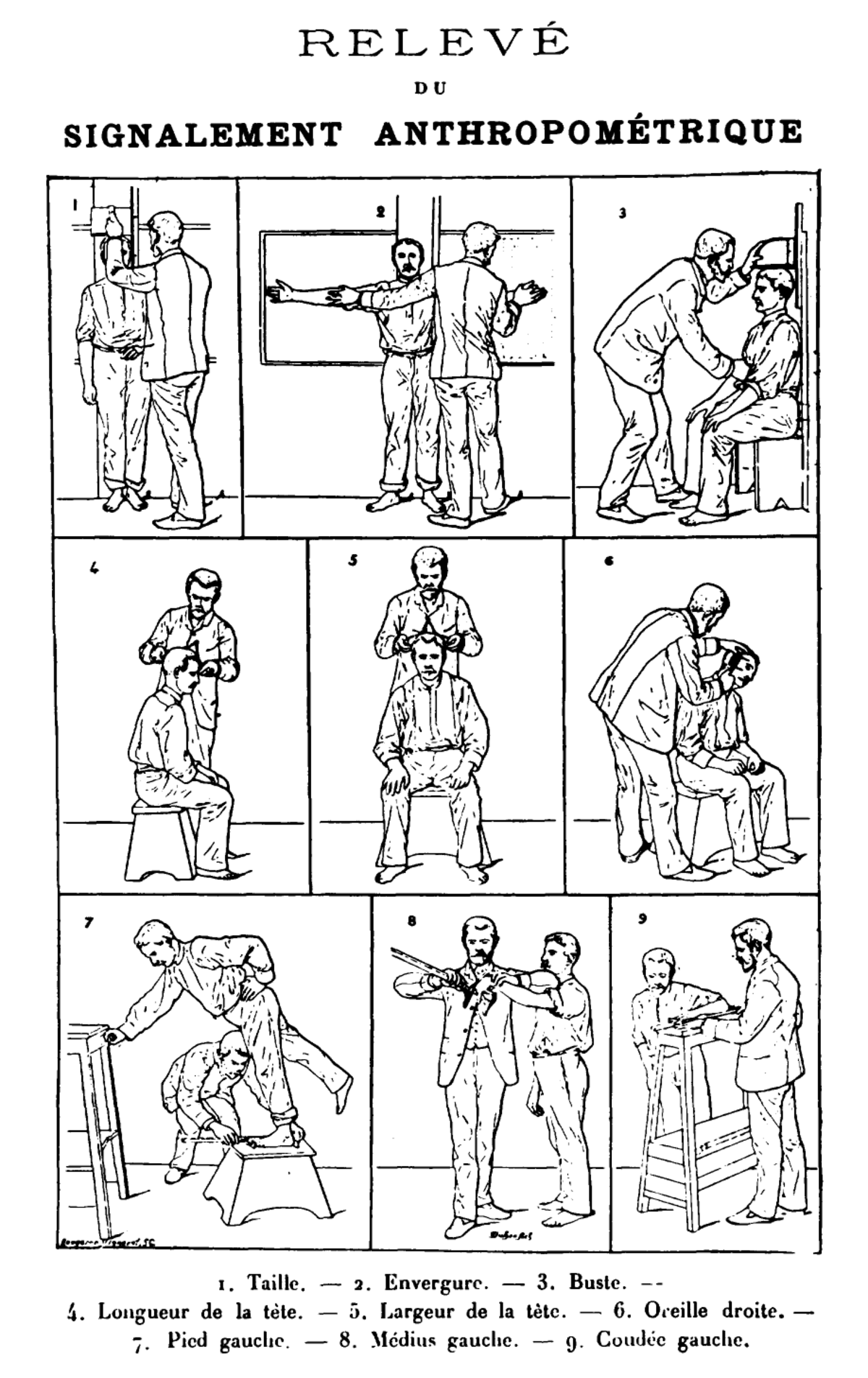
Before fingerprints, police used Bertillonage, a system of measuring body parts like arm span and head width. It was cumbersome and easily fooled by people with similar builds.
A frontispiece from Bertillon's "Identification anthropométrique" (1893) displays nine illustrations demonstrating the measurements required for his anthropometric identification system. Public domain, via Wikimedia Commons
In 1892, Argentine police official Juan Vucetich changed everything by securing the first criminal conviction using a bloody fingerprint found on a doorframe.
The limits of proof
Fingerprints are the cornerstone of Locard's exchange principle, which states that every contact leaves a trace. But the system isn't flawless. In 2004, Brandon Mayfield was wrongfully arrested after the FBI misidentified a print from the Madrid train bombings.
An FBI Evidence Response Team member dusts a doorknob for fingerprints, while another FBI agent in a blue jacket holds a folder and observes. not stated, Public domain, via Wikimedia Commons
And some people have adermatoglyphia, a rare condition that leaves them with completely smooth fingertips, making them invisible to standard biometrics.
How do friction ridges form?
Friction ridges start developing around the 13th week of pregnancy. Cells along the boundary between the inner dermis and outer epidermis divide rapidly, forming primary and secondary ridges. By the 15th week of fetal development, these structures establish the permanent ridges on the skin surface, remaining unchanged until decomposition begins after death.
Genes set the general pattern, and conditions in the womb add fine variations. Proposed explanations include differences in the amniotic fluid around each finger and the arrangement of blood vessels and nerves. That is why identical twins have very similar fingerprints that are still not identical.
What are fingerprints made of?
A natural fingerprint residue is 95 to 99 percent water mixed with organic and inorganic chemicals from sweat and skin oils. The organic component includes amino acids, proteins, glucose, urea, fatty acids, and sterols. It also contains inorganic ions such as sodium, chloride, potassium, and iron.
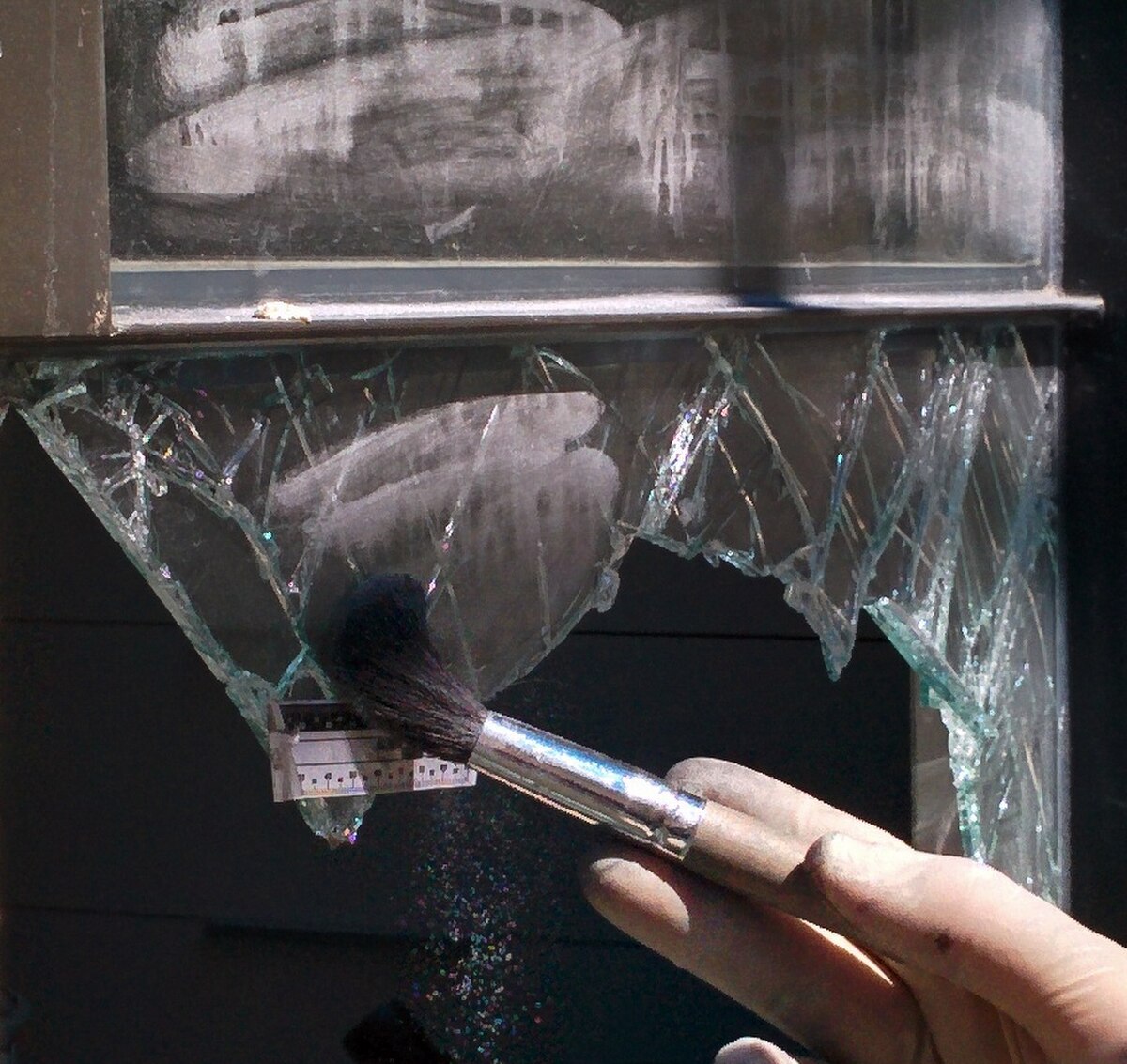
Natural oils and moisture transfer from the peaks of friction ridges to smooth surfaces, leaving faint latent impressions. Alchemica, CC BY-SA 3.0, via Wikimedia Commons
When fingers touch glass or metal, these moisture and grease deposits remain behind as latent prints. Foreign substances like cosmetics, drug residues, and food particles also mix into the residue, transferring directly from the ridge peaks to the surface.
Limits of fingerprint identification
Fingerprints replaced Bertillonage, a 19th-century method that relied on measuring body parts like head width and arm span. A landmark came in Argentina in 1892, when police using Juan Vucetich's fingerprint system solved a murder with a bloody print left on a doorframe.
Despite their widespread use, fingerprint comparisons have faced criticism from judges and academics. There are no uniform standards for point-counting methods, and academics argue that error rates have not been adequately studied. Researchers have also asked whether outside context sways examiners. Mistakes happen: an FBI misidentification led to the wrongful 2004 arrest of Brandon Mayfield following the Madrid train bombings.
Test yourself
What makes fingerprints a reliable method for suspect identification?
Unique ridge patterns that never change. Fingerprints possess unique ridge patterns that remain unchanged throughout a person's life, serving as a reliable individual identifier.
Are latent fingerprints immediately visible on most surfaces without chemical enhancement?
No. Latent fingerprints are invisible to the naked eye and require chemical or powder treatments to be visualized and lifted.
Play the lesson in edgi and the card is yours. It lands on your Map next to the ideas it connects to, and turns from matte to foil to gold as you learn more around it.
Epidermal ridges amplify vibrations when fingertips move across uneven surfaces, which improves the transmission of signals to sensory nerves involved in texture perception. They may also help grip rough surfaces and improve contact in wet conditions.
Can someone naturally lack fingerprints?
Yes. A rare genetic condition called adermatoglyphia causes individuals to develop completely smooth skin on their fingertips. People with this condition leave no ridge impressions and cannot be identified by standard biometric fingerprint scanners.
Where else on the body do friction ridges appear?
Friction ridges exist across the entire palm of the hand, the lower joints of the fingers, and the soles and digits of the feet. All of these areas feature raised epidermal ridges capable of leaving detailed impressions.