Forensic entomology is the study of insects and other arthropods to gather legal evidence for civil and criminal cases. By reading the growth stages and arrival order of bugs on a body or property, scientists can estimate when a death occurred, where it happened, or how food became contaminated. Because insects follow predictable biological cycles, their development gives investigators an independent clock.
By the edgi team We find the most surprising true thing about an idea and build a 60-second lesson around it.
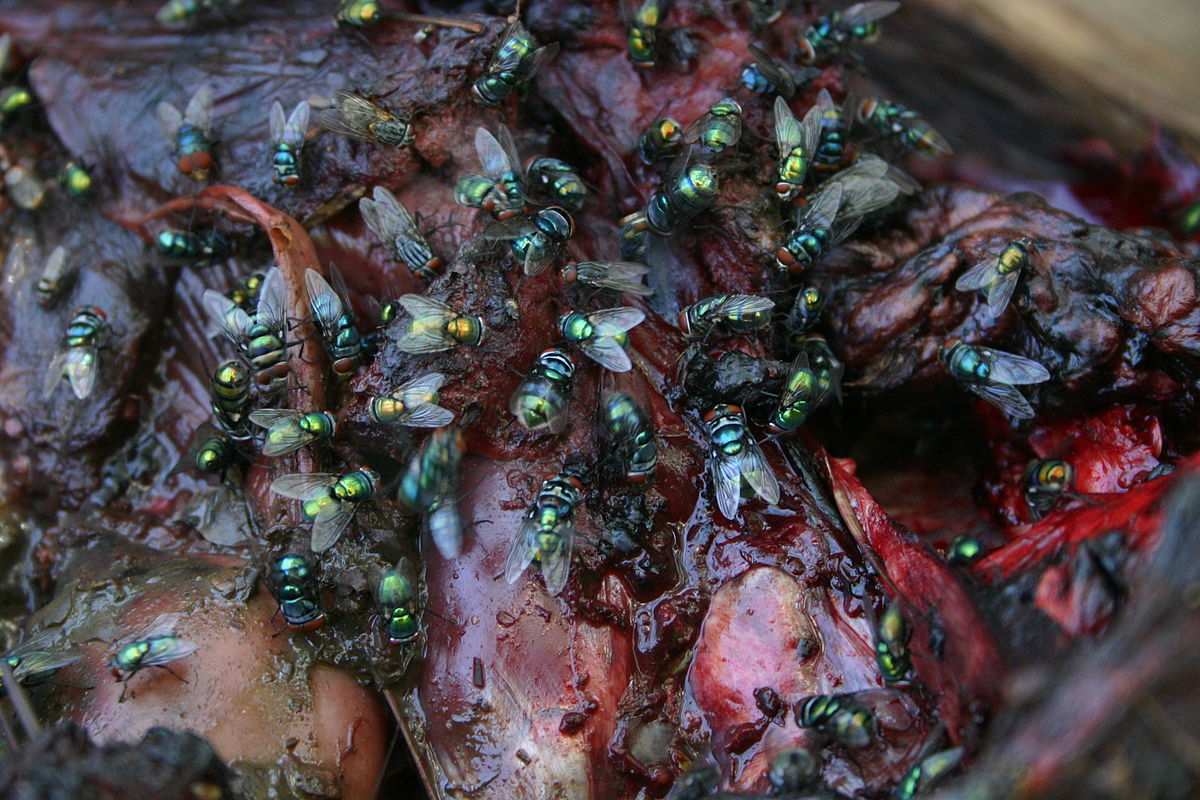
Insects are often the very first responders at a crime scene, arriving within minutes to lay eggs in a predictable biological sequence. By identifying the specific life stage of a maggot, investigators can work backward to determine the exact post-mortem interval.
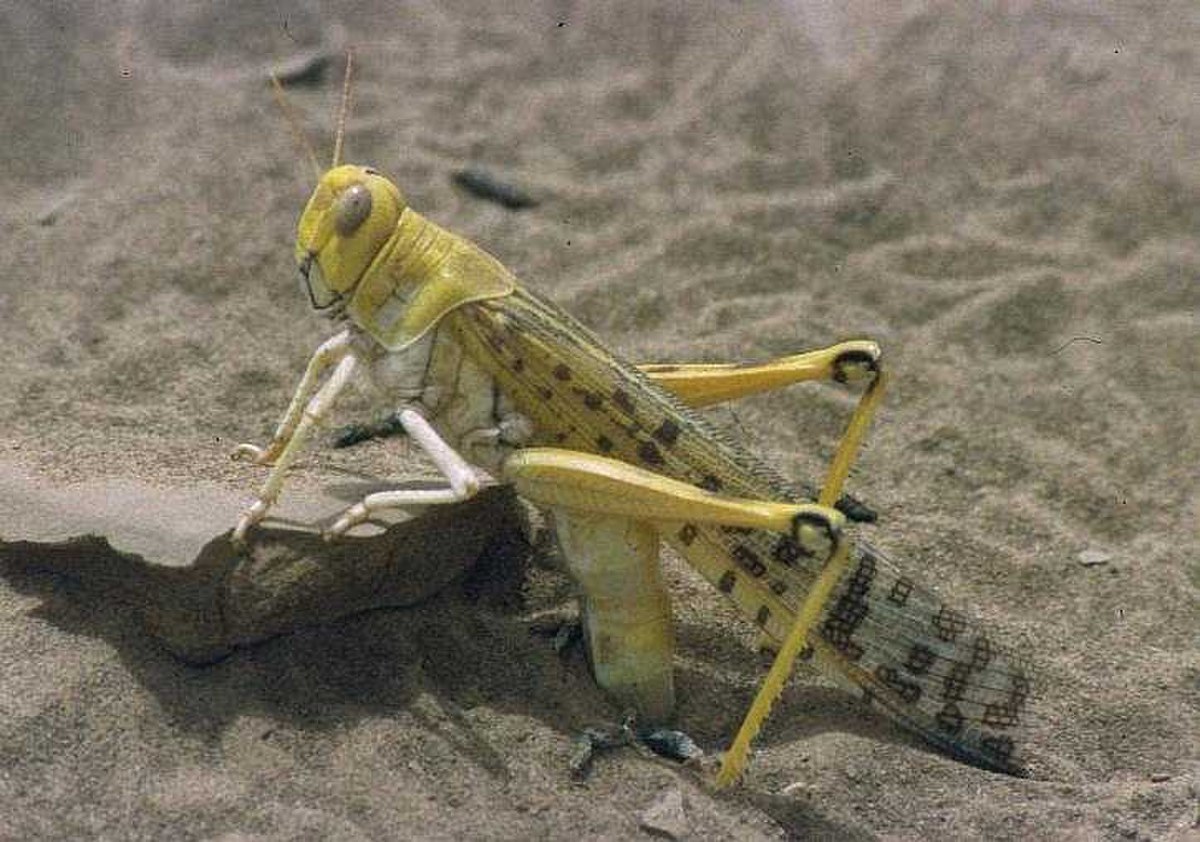
A desert locust, primarily yellow and brown, is shown in the process of laying eggs in the sand. Christiaan Kooyman, Public domain, via Wikimedia Commons
The bugs act as a biological clock that cannot be tampered with or wound back by a suspect.
The first case
The first recorded use of forensic entomology dates back to 13th-century China, recorded by an investigator named Sung Tz'u. After a farmer was slashed to death with a sickle, the investigator ordered everyone in the village to lay their sickles on the ground.
Red hammer and sickle emblem, a symbol of communism. odder, Public domain, via Wikimedia Commons
Though all the tools looked spotless to the naked eye, a swarm of blowflies settled on only one, drawn to invisible traces of blood.
Modern forensics
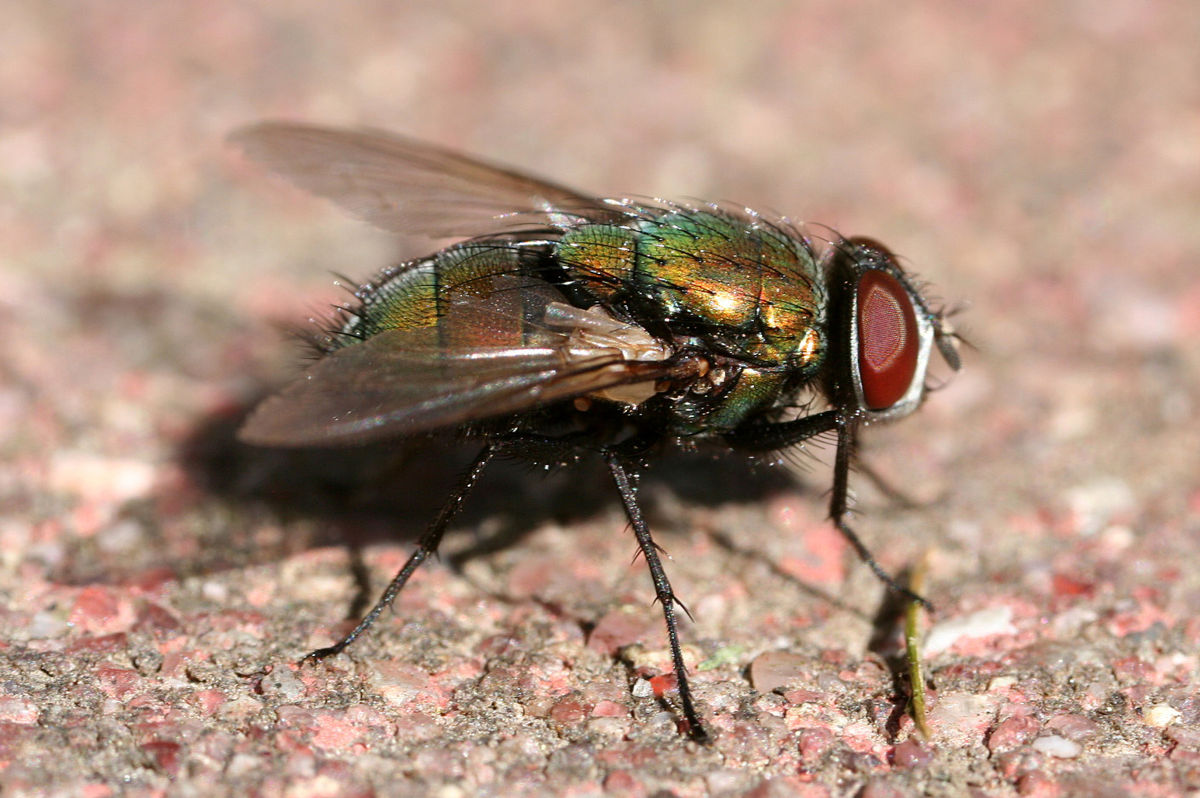
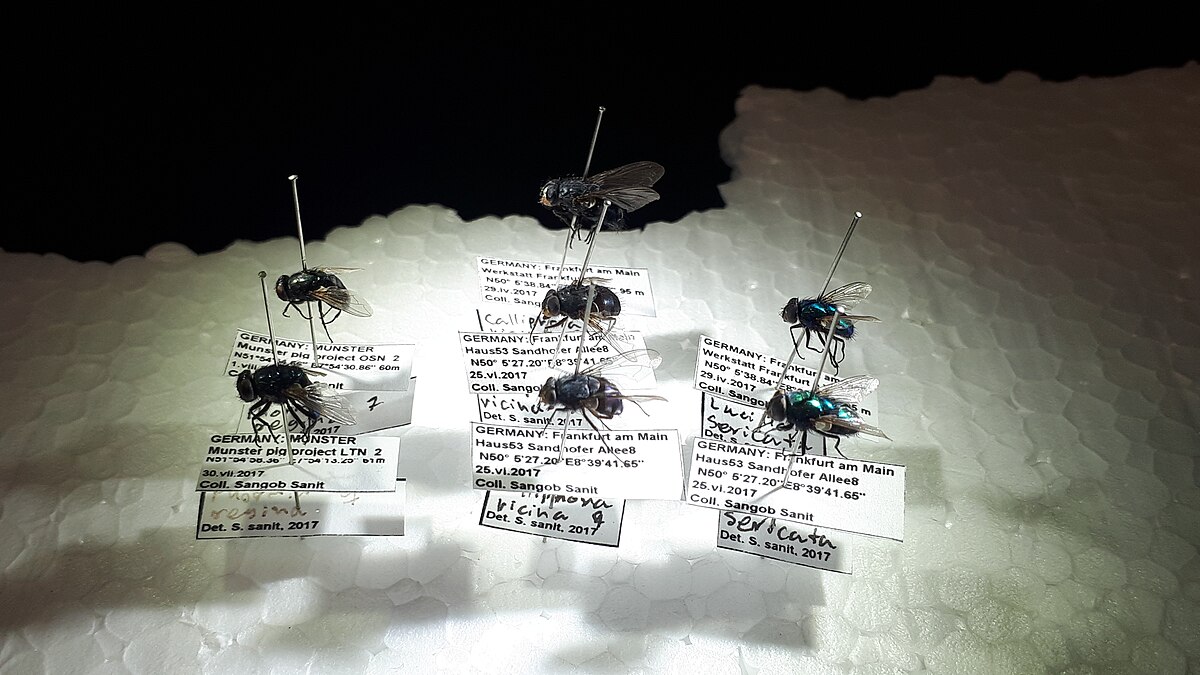
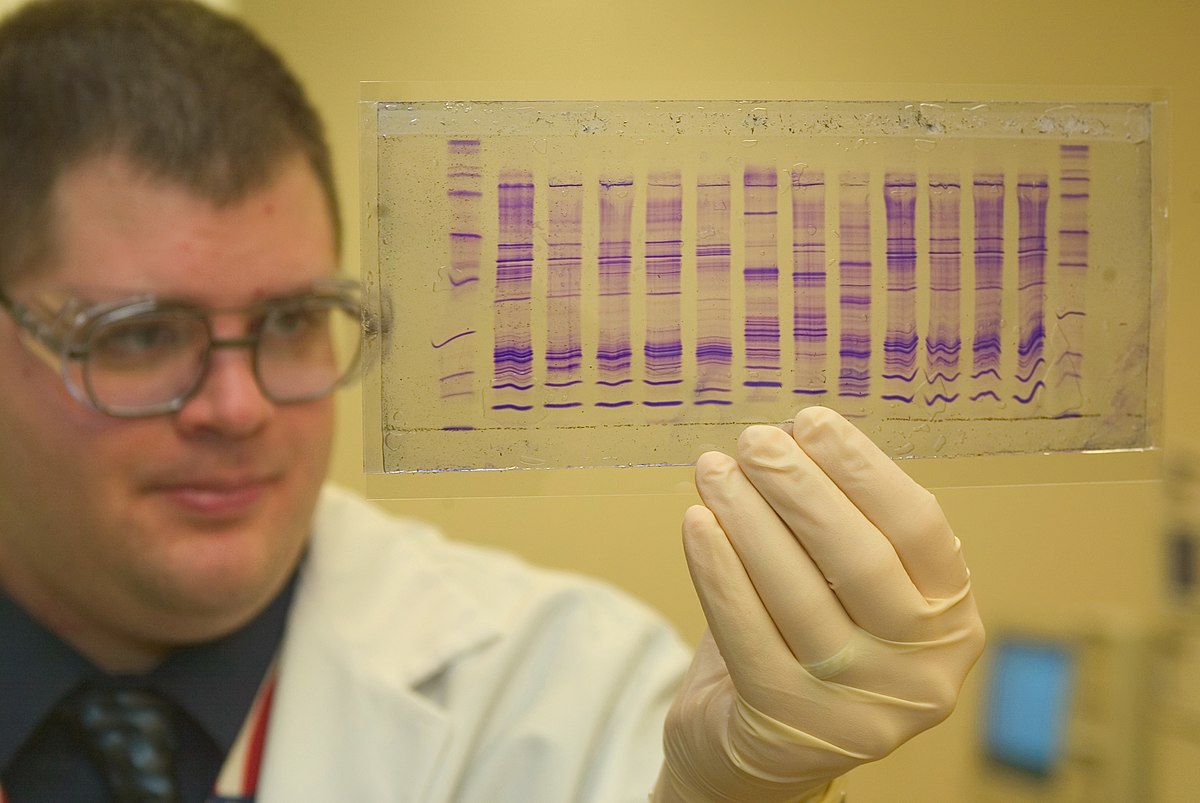
Modern practitioners use species like Lucilia sericata to establish strict timelines that hold up in a court of law. Investigators can even extract human DNA from the gut of a fly to identify victims when no body remains.
Close-up photograph of a green bottle fly, identified as Lucilia sericata, resting on a textured surface. Calibas, CC BY-SA 4.0, via Wikimedia Commons
Beyond murder, this science tracks decomposition to solve cases of food contamination and severe elder neglect.
How insects calculate the time of death
Insects often arrive at a body within minutes of death to feed and lay eggs. Flying species like blowflies are attracted shortly after death, but because their newly hatched larvae cannot break through intact human skin, females target natural orifices or pre-existing wounds to provide their brood with liquid protein.
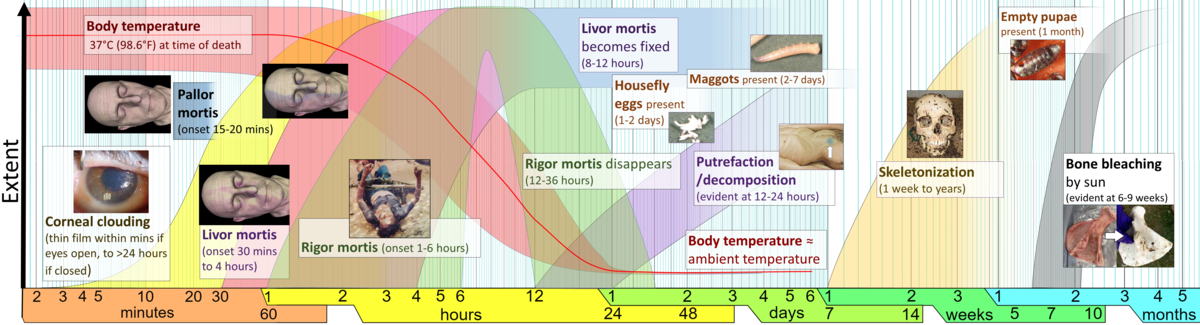
This timeline shows how fly eggs, larvae, and pupae develop predictably through the successive stages of decomposition. Mikael Häggström, M.D. Author info - Reusing images- Conflicts of interest: None Mikael Häggström, M.D., CC BY 4.0, via Wikimedia Commons
Forensic investigators determine the postmortem interval, the time passed since death, by identifying the species present and the life stage of their larvae. Scientists combine the insect development timeline with local weather records, including temperature, humidity, and vapor density, to estimate how many hours or days the insects have been growing on the remains.
The three branches of forensic entomology
Forensic entomology is divided into three distinct legal subfields: medico-legal, urban, and stored-product.
Blowflies are primary specimens in medico-legal investigations because they are among the first insects to colonize remains. Walnussbäumchen, CC BY-SA 4.0, via Wikimedia Commons
Medico-legal entomology covers criminal scenes involving murder, suicide, physical abuse, rape, and contraband smuggling. Because certain insect species live only in specific geographic zones or emerge during particular seasons, their presence can reveal whether a body was moved after death. Investigators can also test insects for drugs through entomotoxicology, extract human DNA from a fly's gut, or document myiasis, the infestation of living tissue by maggots in cases of neglect.
Urban and stored-product entomology mostly serve civil disputes. Urban cases address pest infestations in rental properties, garden disputes, and extermination effectiveness. Stored-product cases focus on commercial food contamination, identifying where along the chain of custody pests entered grains, flour, or packaged meals.
Play the lesson in edgi and the card is yours. It lands on your Map next to the ideas it connects to, and turns from matte to foil to gold as you learn more around it.
Insect succession is the predictable sequence of different insect species arriving and replacing one another as a body decomposes. Analyzing which insect community is currently present helps investigators estimate how long remains have been exposed to the elements.
How can drugs in a body affect insect evidence?
When maggots feed on tissue containing drugs or toxins, the substances alter their normal growth rate and body shape. Entomotoxicologists test the insects for these substances so abnormal growth patterns do not cause an incorrect estimate of the postmortem interval.