Locard's exchange principleEvery contact leaves a trace
Locard's exchange principle is the rule that whenever two objects make physical contact, they transfer material between them. A person who enters a crime scene inevitably leaves something behind and takes something away. This makes physical trace evidence a factual record of presence that does not rely on human memory.
By the edgi team We find the most surprising true thing about an idea and build a 60-second lesson around it.
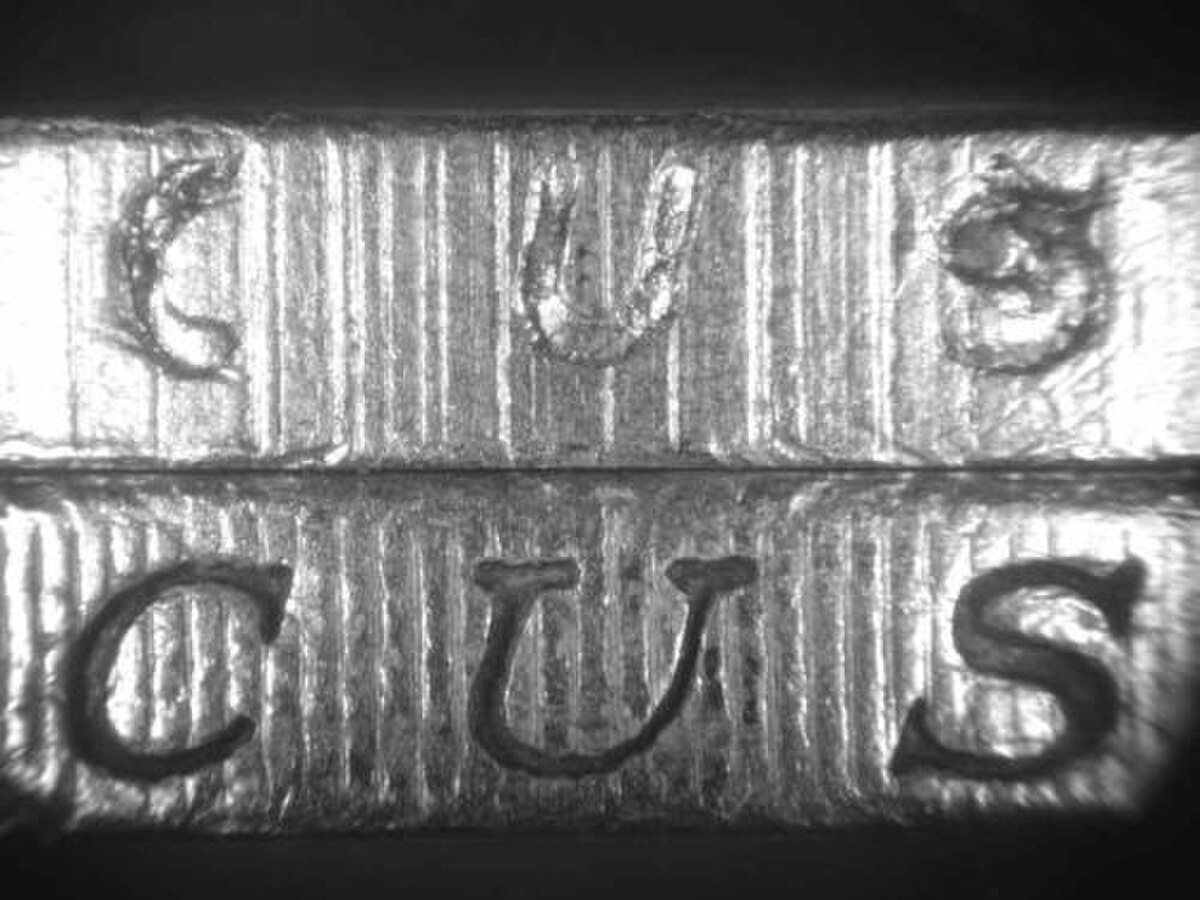
In 1912, criminologist Edmond Locard was handed a batch of counterfeit coins and zero suspects. Known as the Sherlock Holmes of Lyon, he brushed the dust from the pockets of local suspects into small paper envelopes.
A magnified view of the edge of two coins, illustrating defective milling and letters on a counterfeit coin (top) compared to a genuine coin (bottom). Peterlewis at English Wikipedia, Public domain, via Wikimedia Commons
Under a microscope, he found microscopic metallic shards on one man's coat that matched the alloy of the fake coins.
The invisible trade
Locard formulated a foundational rule: every contact leaves a trace. A perpetrator always brings something into a crime scene and takes something away.
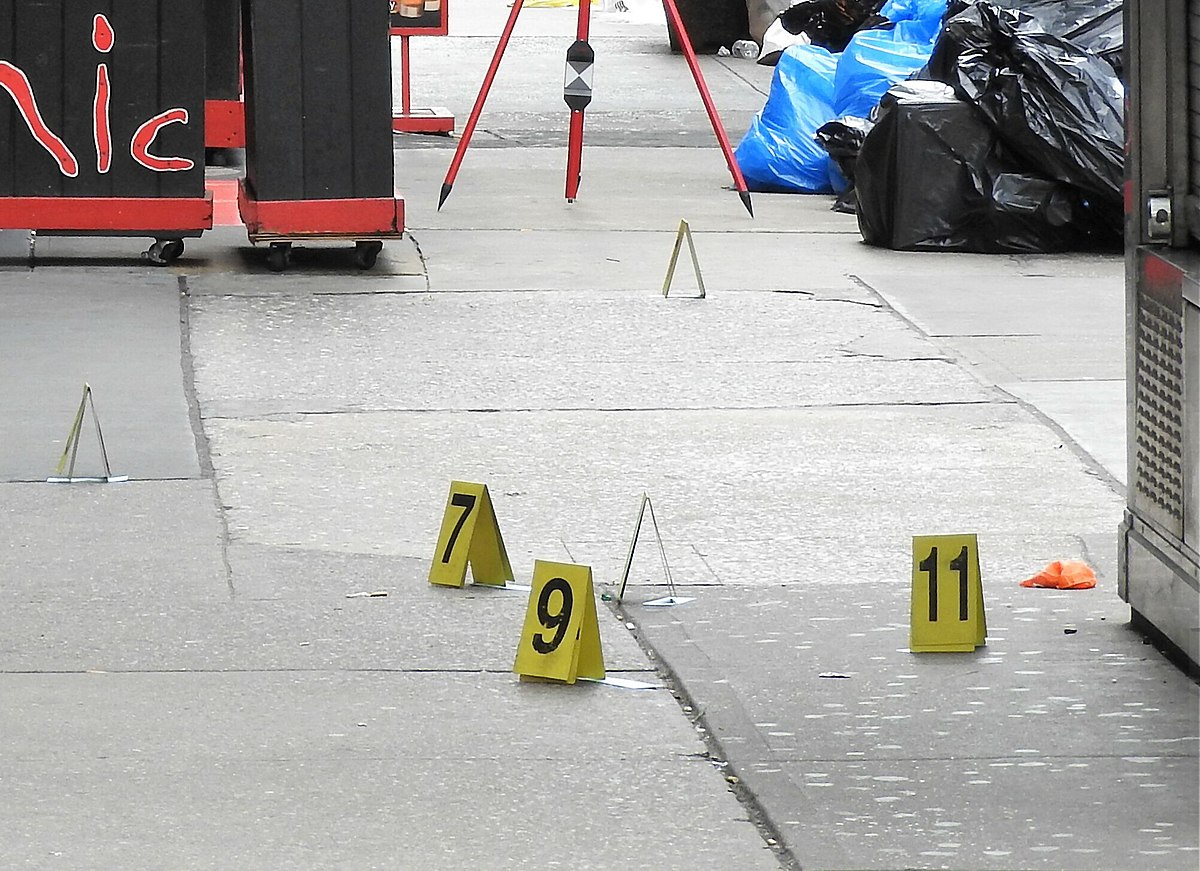
Crime scene with numbered evidence markers on a sidewalk in Manhattan, New York City in December 2017. Jim.henderson, CC BY-SA 4.0, via Wikimedia Commons
Whether it is pollen on a shoe or a stray fiber on a rug, this silent trade creates an invisible bridge.
Modern forensics
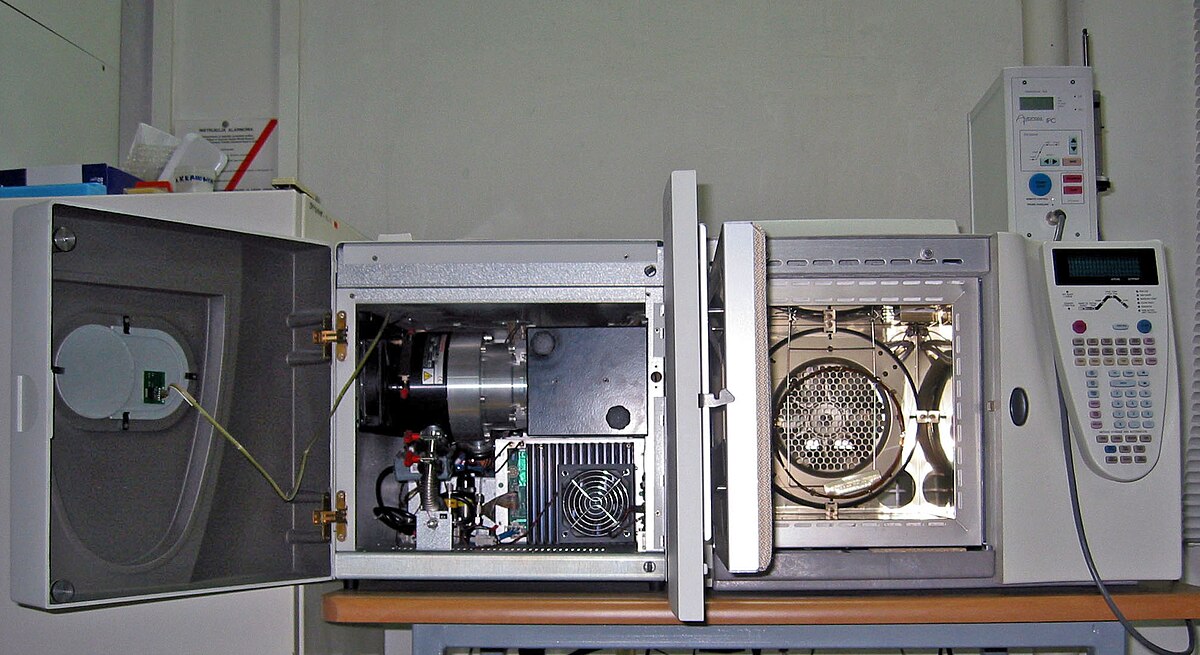
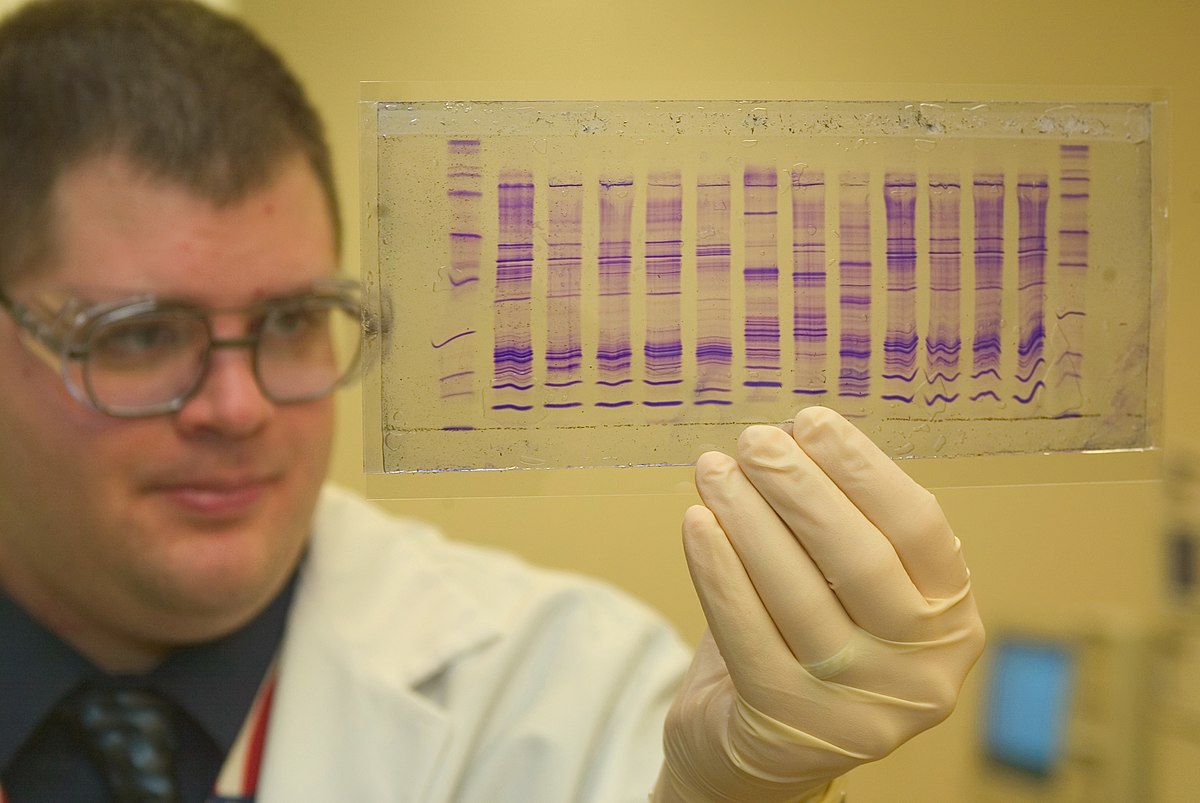
Today, trace evidence has scaled down from visible dust to the molecular level. A single skin cell or a unique fingerprint can betray a presence that no amount of scrubbing can fully erase.
A GC-MS (Gas Chromatography-Mass Spectrometry) unit with its doors open, revealing the internal components. Polimerek, CC BY-SA 4.0, via Wikimedia Commons
How the exchange principle works
When two surfaces meet, microscopic and macroscopic materials transfer in both directions. A person walking across a room deposits soil or fibers and picks up dust or floor particles on their shoes.
Forensic science classifies these exchanged materials as fragmentary or trace evidence. Examples include hair, clothing fibers, broken glass shards, paint transfers, tool marks, footprints, blood, and fingerprints. As forensic scientist Paul L. Kirk put it, physical evidence does not forget and is never wholly absent; only human failure to find, study, and understand it diminishes its value.
How investigators collect trace evidence
Specialized police technicians secure a crime scene immediately by sealing it off to prevent contamination. They record video and take photographs of the scene, any victims, and individual pieces of evidence before disturbing them.
Technicians inspect surfaces for whole or partial fingerprints, hair strands, and shoe, foot, or tire impressions. They inspect vehicles and conduct ballistics tests when firearms are involved. The same exchange logic also applies to digital environments in computer forensics, where committing a cybercrime leaves behind a digital trace.
Play the lesson in edgi and the card is yours. It lands on your Map next to the ideas it connects to, and turns from matte to foil to gold as you learn more around it.
Edmond Locard, a French pioneer in forensic science who lived from 1877 to 1966, formulated the principle. His investigative work earned him the nickname the Sherlock Holmes of Lyon.
Does Locard's principle apply to digital crimes?
Yes. Computer forensics uses Locard's principle under the rule that any digital action leaves behind technical traces on networks and devices.