Mental accountingWhy money loses its value in parts
Mental accounting is the tendency for people to separate their money into distinct subjective categories rather than treating it as a single pool of wealth. In standard economics, every dollar is interchangeable, but human minds attach specific rules and emotional weight to where money came from or what it is meant to purchase. This mental separation leads to irrational spending habits, such as overspending a work bonus while strictly rationing an everyday grocery budget.
By the edgi team We find the most surprising true thing about an idea and build a 60-second lesson around it.
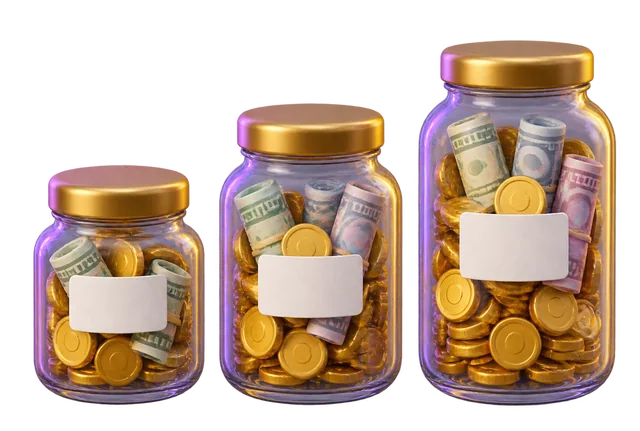
Ask an economist and a dollar is a dollar; it makes no difference which one you spend. Ask anyone who runs a household and there is rent money, grocery money and holiday money. Mental accounting is the name Richard Thaler gave those invented accounts, and the idea that won him a Nobel in economics.
The cleanest demonstration is a theatre problem. You reach the box office to buy a $10 ticket and find you lost a $10 note on the way. Buy the ticket anyway? 88 percent said yes. Same theatre, different loss. You bought the ticket in advance and cannot find it. Buy another? Only 46 percent would. Ten dollars is gone either way. Only one came out of the theatre account.
Where the money came from
Which account a dollar lands in depends on where it came from, and a single word is enough to move it. Researchers handed people a $50 cheque. Half were told it was a bonus, half that it was a rebate. Same fifty dollars, same week, same people otherwise.
A week later the bonus group had spent about $22 of it. The rebate group had spent about $10. A bonus is new money, so it goes somewhere loose. A rebate is your own money coming back, so it returns to the account it left and sits there.
House money
The loosest account of all is money you have just won. Thaler called this the house-money effect, after the gambler's phrase for winnings that feel like the casino's rather than yours. The winnings sit in an account of their own, separate from the money you walked in with, so losing them registers as giving something back rather than losing something.
That account empties fast, and it is not only about gambling. A bonus, an inheritance or a refund all leave faster than the identical sum earned across a month. The accounts are invented, which is the useful half. A windfall moved in beside your salary on the day it lands gets spent like salary, because by then that is what it is.
Why money stops being interchangeable
People create mental accounts as a self-control tool to manage their budgets across different categories, such as gas, utilities, groceries, and large goals like college tuition or a home. In theory, all income represents fungible resources that draw from the same total wealth. In practice, individual expenses are evaluated only against their specific category and current budgetary period, such as a single month.
This separation means a person might stop eating out at restaurants because their monthly dining budget ran out, yet continue to buy expensive groceries without hesitation. The money comes from the identical paycheck, but the mind treats each category as a completely isolated balance sheet.
How prospect theory shapes mental accounts
Mental accounting relies on prospect theory to explain how people code economic outcomes as separate gains or losses. Because the human value function experiences diminishing happiness with each additional gain, people prefer to segregate multiple gains into separate events to maximize overall subjective utility.
Conversely, because losses feel progressively less painful the larger they grow, people prefer to integrate multiple losses into a single combined sum. Framing transactions separately or together changes the perceived utility of the purchase, driving systematic departures from traditional economic rationality.
Test yourself
Does mental accounting mean money is treated as completely fungible?
No. Mental accounting shows that people treat identical dollars differently based on their origin and label, violating pure economic fungibility.
Why are windfalls or casino winnings typically spent much faster than earned salary?
They are placed in a separate loose account. Wind winnings feel like house money and go into a separate mental category, making people much more willing to part with them.
Somebody splits their pay into labelled pots. Keep the habit, or drop it?
Keep it, because a pot you placed beats one a label placed for you. Invented is not the same as harmful. Thaler's own point is that a household budget is a self-control device, and it works precisely because the pots are made up and you get to place them. The costly pot is the one you did not know you had.
Play the lesson in edgi and the card is yours. It lands on your Map next to the ideas it connects to, and turns from matte to foil to gold as you learn more around it.
It is an application of mental accounting showing that people mentally divide their assets into current income, current wealth, and future income. Because these three accounts are treated as non-fungible, a person's willingness to spend money out of each category is significantly different.
Who developed the concept of mental accounting?
The behavioral economist Richard Thaler developed the model to describe how households and organizations categorize and evaluate financial outcomes. His work on mental accounting and economic decision-making won him the Nobel Memorial Prize in Economic Sciences.