Loss aversion is a cognitive bias where losing something hurts more than gaining the exact same thing feels good. Daniel Kahneman and Amos Tversky introduced the concept in 1979 to show that human decisions depend on a reference point rather than absolute wealth. This asymmetry leads people to avoid risks and overvalue items they already own.
By the edgi team We find the most surprising true thing about an idea and build a 60-second lesson around it.
Find $100 on the pavement and you feel good for an hour. Lose $100 out of your pocket and it follows you around all day. Same amount of money, same day. Loss aversion is that gap: a loss lands heavier than a gain of exactly the same size.
Everybody quotes a number for it. Tversky and Kahneman measured losses at about 2.25 times gains in 1992, and "losses hurt twice as much" has been repeated ever since. A 2024 meta-analysis pooled 19 risky-choice studies and put the gap nearer 1.3 times. So the effect is real and the famous number is too big. Losses weigh more, by less than you were told.
The mug
Kahneman, Knetsch and Thaler handed half a Cornell class a university coffee mug off the campus shelf, worth about $6. The other half got nothing. Then they opened a market. Owners named a price they would sell at. Everyone else named a price they would pay.
Owners wanted a median $5.25. Buyers offered a median $2.25. Almost nobody traded. The mugs had been dealt out at random a few minutes earlier. Nothing about any mug had changed. What changed was that giving one up was now a loss, and getting one was still only a gain.
That is the endowment effect. You price what you own by what it costs to lose it, and you price everything else by what it is worth to get.
Why the two prices never meet
Once you know the shape you can see it anywhere. A seller is pricing a loss and a buyer is pricing a gain, so the two of them are answering different questions about one object. It is why used-car listings sit unsold for months, and why splitting up a household is so miserable. Every object in the flat already has an owner attached to it.
Neither side is bluffing, which is what makes the gap so stubborn. Both numbers are honest, and there is no argument that turns one of them into the other. The one price nobody's ownership distorts is what a stranger will actually hand over. In the mug room that number was $2.25, and almost no owner took it.
How does loss aversion work?
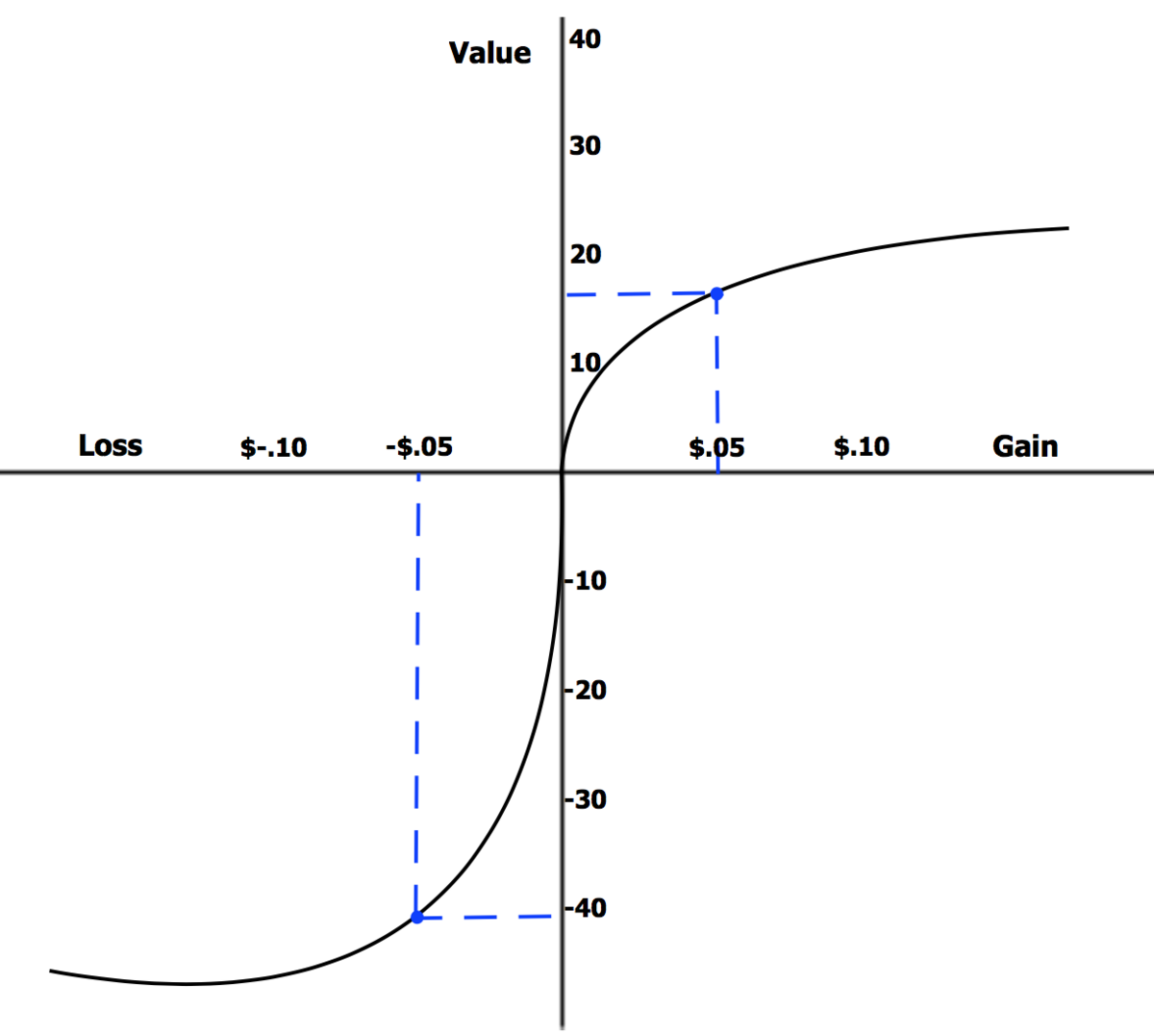
In cumulative prospect theory, the mathematical curve representing perceived value rises much more steeply for losses than it does for gains. This means an individual treats a financial loss as significantly more painful than the positive utility of an equal cash reward.
Notice how the left side of the value curve drops much more steeply for losses than it rises on the right side for gains. Laurenrosenberger, CC BY-SA 4.0, via Wikimedia Commons
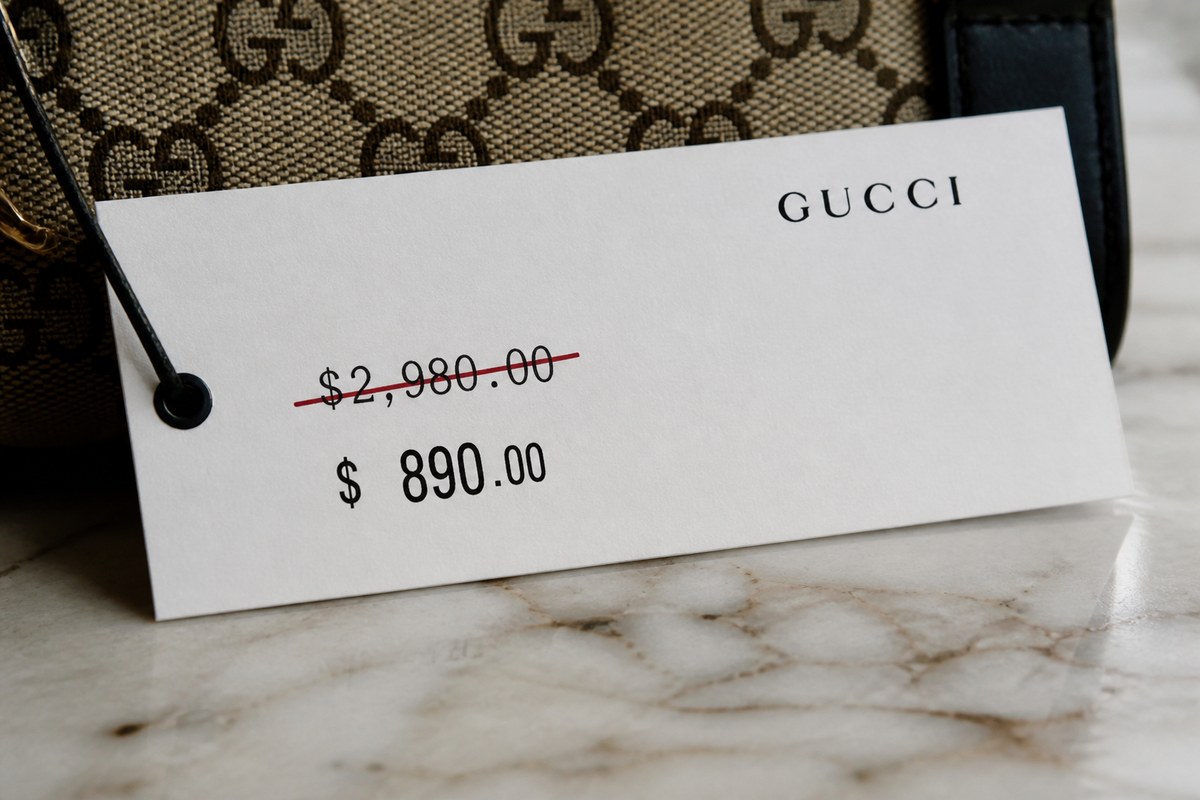
People measure choices against a reference point, such as their current state of ownership or wealth, rather than looking at total final outcomes. Framing the exact same price shift as an avoided $5 surcharge instead of a $5 discount produces noticeable differences in consumer behavior.
Where does loss aversion appear in business?
Companies utilize loss aversion through trial periods and rebates, knowing that once a customer incorporates a product into their daily status quo, giving it up registers as a loss. Research by Botond Kőszegi and Matthew Rabin showed that an individual's expectations alone can trigger loss aversion even without a physical change of possession.
Loss aversion also explains several broader financial and social patterns, such as the equity premium puzzle in asset markets and widespread public resistance to inheritance taxes.
Test yourself
Does loss aversion imply that sellers and buyers evaluate an item using the same mental scale?
No. Loss aversion means sellers price an item as a loss while buyers price it as a gain, causing their valuations to diverge fundamentally.
How does loss aversion explain why used items often sit unsold for months at high prices?
Owners price items based on the pain of losing them.. Because giving up an item is felt as a loss, owners demand a price reflecting that pain, which exceeds what buyers are willing to pay for a mere gain.
A dealer buys and sells the same stock all day. How does she price her own?
Like a buyer, because the stock was always going to leave her hands. Ownership only lifts a price when giving the thing up counts as a loss, and a dealer's stock was never going to stay. The effect shrinks the more trading somebody has done, and in traders with real market experience it is gone.
Play the lesson in edgi and the card is yours. It lands on your Map next to the ideas it connects to, and turns from matte to foil to gold as you learn more around it.
Risk aversion describes the rational preference for a certain outcome over an uncertain bet with an equal or higher expected value. Loss aversion is a cognitive bias where identical outcomes feel worse simply because they are framed as losses rather than gains.
What is the status quo bias?
Status quo bias is the tendency to prefer that current conditions remain unchanged. Because any departure from the current baseline is evaluated as a potential loss, loss aversion acts as a key theoretical driver behind keeping things as they are.