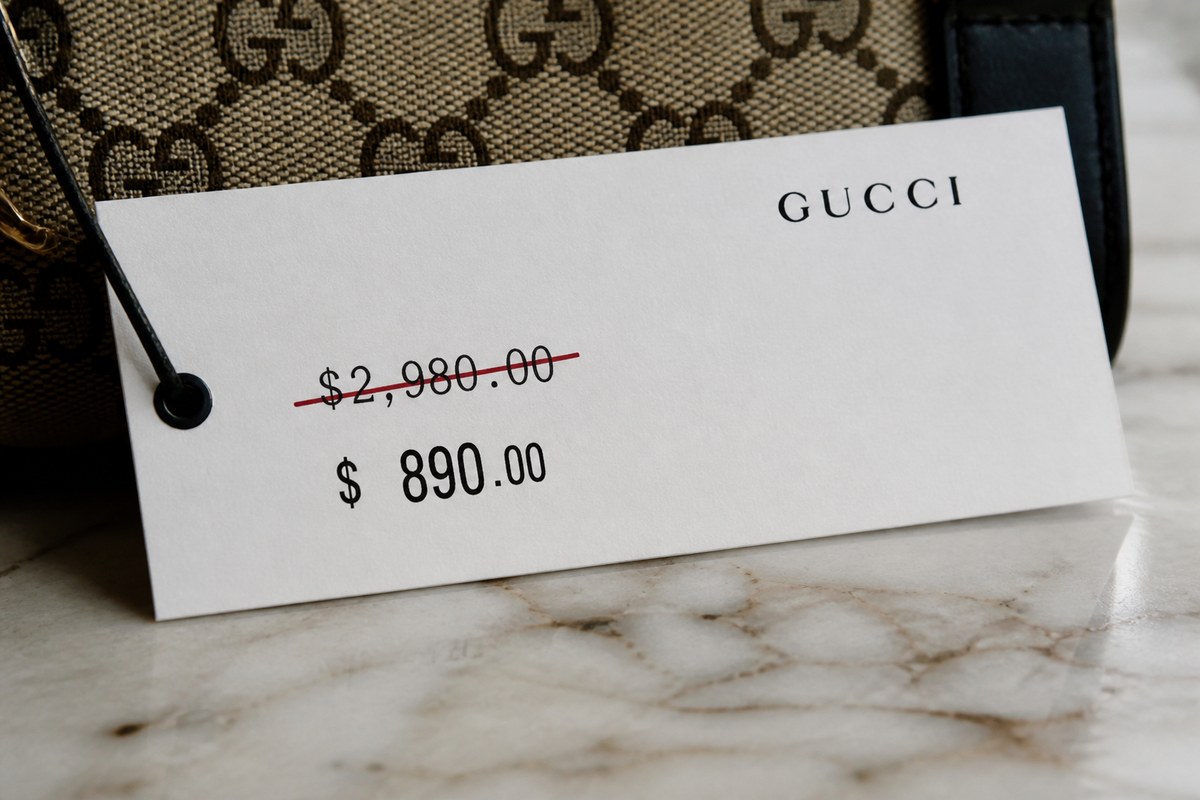
The anchoring effect is a mental bias where a person's estimates or decisions are pulled toward an initial reference number, called an anchor, even when that number is completely irrelevant. Amos Tversky and Daniel Kahneman formalized it as a mental shortcut used to guess under uncertainty. Once an anchor is introduced, people adjust away from it but usually stop too early, leaving their final answer skewed.
By the edgi team We find the most surprising true thing about an idea and build a 60-second lesson around it.
A wheel of fortune was set up in a lab and spun in front of people. It was rigged to stop on 10 or on 65, and on nothing else. Researchers asked whether the share of African countries in the United Nations was higher or lower than that number. Everyone had just watched the wheel land on it.
Researchers then asked for the actual figure. The group that saw 10 said 25. The group that saw 65 said 45. A fairground wheel moved the answers twenty points apart. That is the anchoring effect: the last number in your head becomes the place your estimate starts from.
You do adjust, you just stop early
An anchor does not have to convince anyone. It gives people somewhere to start. They move away from it, then stop while they are still near it. It works even when the anchor is absurd. Half a group was asked whether Gandhi died before or after the age of 9, and half whether he died before or after 140.
The 9 group put his death at 50. The 140 group put it at 67. He was 78, so both groups were low, and the group that started higher finished higher. Even that implausible number pulled estimates upward. Knowing about anchors is poor protection against them.
Whoever says a number first
Real estate agents were driven to a real house worth $74,900, given a full information packet and asked to value it. Every packet was identical except the asking price printed in it. Agents who saw $65,900 and agents who saw $83,900 gave valuations that followed their asking prices. Asked afterwards what they had based their figure on, they named everything except the asking price.
In a negotiation, the first figure can set the range for every argument after it. A salary band, an asking price, a "was $400, now $180" tag: each gives you a starting point before you have one of your own.
How the anchoring heuristic works
In 1974, researchers Amos Tversky and Daniel Kahneman asked people to estimate the product of the numbers one through eight in five seconds. One group saw 1 × 2 × 3 × 4 × 5 × 6 × 7 × 8 and gave a median estimate of 512. The other group saw 8 × 7 × 6 × 5 × 4 × 3 × 2 × 1 and gave a median estimate of 2,250. Because people lacked time to calculate the full product of 40,320, they multiplied the first few digits and adjusted from that starting point.
Daniel Kahneman formalized the anchoring and adjustment heuristic in behavioral economics with Amos Tversky. nrkbeta, CC BY-SA 2.0, via Wikimedia Commons
Anchoring applies to numeric values as well as physical judgments of length, weight, and volume. The effect originated in psychophysics under the name end anchoring, where the earliest and latest stimuli on a continuum served as reference points for evaluating everything in between.
Anchoring in markets and investing
Anchors regularly alter financial behavior. In a study by Dan Ariely, participants wrote down the last two digits of their social security numbers before bidding on items like wine, chocolate, and computer gear. People with higher digits bid between 60 percent and 120 percent more than those with lower digits, treating their personal identification numbers as a price signal.
Similar effects appear in professional markets. In real estate, the two-year and nine-year highs on the Case-Shiller House Price Index act as anchors when people forecast current house prices. In stock trading apps, an investor's first purchase price anchors future trades; those who begin with smaller purchases end up accumulating smaller total portfolios over the long run.
Why anchors are difficult to avoid
Warning people about anchoring does not break its hold. In an experiment where participants guessed the number of physicians in a phone directory, researchers explicitly warned them that an initial number would contaminate their judgment and urged them to correct for it. The participants still produced anchored estimates that were higher than those of an unanchored control group.
Offering cash rewards for accuracy also fails to eliminate the bias, and the pull of an anchor remains present even after a one-week delay. The most reliable method discovered to reduce the bias is the consider-the-opposite strategy, which instructs a person to actively brainstorm possibilities contradicting their initial assumptions.
Test yourself
A wild price comes first. What can it do?
It can still pull your estimate. A wild number can still become your starting point. You may adjust away from it, then stop while you are still near it.
A shop labels a jacket "was $400, now $180" instead of just "$180". Why?
Because $180 gets judged against $400 instead of nothing. The higher number becomes a starting point for judging $180. In a negotiation, the first figure can set the range for every argument after it.
Play the lesson in edgi and the card is yours. It lands on your Map next to the ideas it connects to, and turns from matte to foil to gold as you learn more around it.
It is a debiasing technique where a person deliberately considers possibilities that contradict their initial beliefs or reference points. By searching for contrary evidence, the decision maker limits the pull of preexisting attitudes and initial anchors.
Do purely random numbers always create an anchor?
Not always. While numbers like social security digits have produced strong anchoring effects, a small number of studies using transparently random generators, such as an Excel random button or rolling dice, failed to replicate the effect.