Gravitational time dilationEarth's core is younger
Gravitational time dilation is the actual difference in how fast time passes for objects at different distances from a heavy mass. Clocks closer to a gravitational source tick slower than clocks placed farther away in space. This means time moves at different speeds depending on how deeply you are sitting in a gravitational field.
By the edgi team We find the most surprising true thing about an idea and build a 60-second lesson around it.
Time is not a universal constant. It physically moves slower the closer you are to a heavy object like Earth. If you live on the ground floor of a skyscraper, you are technically aging slightly slower than your neighbor in the penthouse.
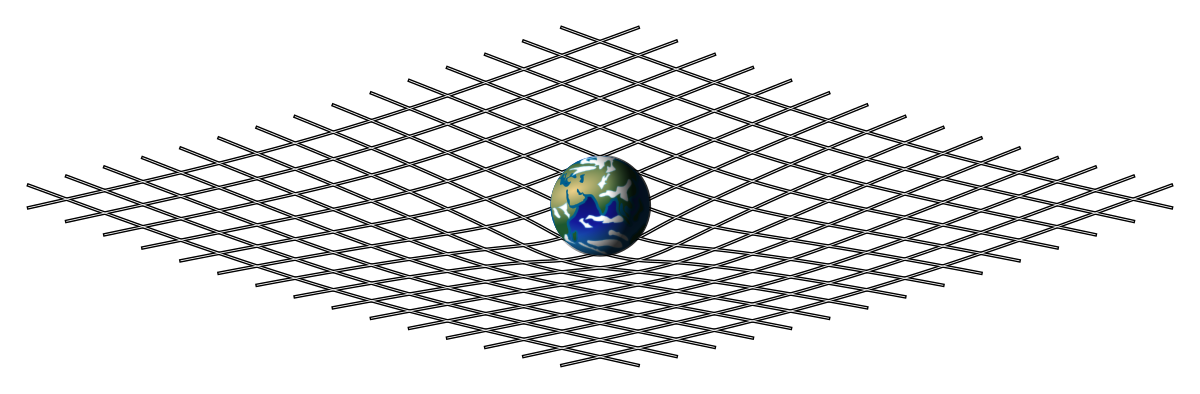
Analogy of spacetime as a lattice, with a grid representing spacetime and a depiction of Earth at its center, illustrating how mass distorts spacetime. Original: Mysid Derivative work: Waddie96, CC BY-SA 3.0, via Wikimedia Commons
This isn't an illusion. Gravity actually drags on the fabric of time itself through gravitational time dilation.
Proving einstein right
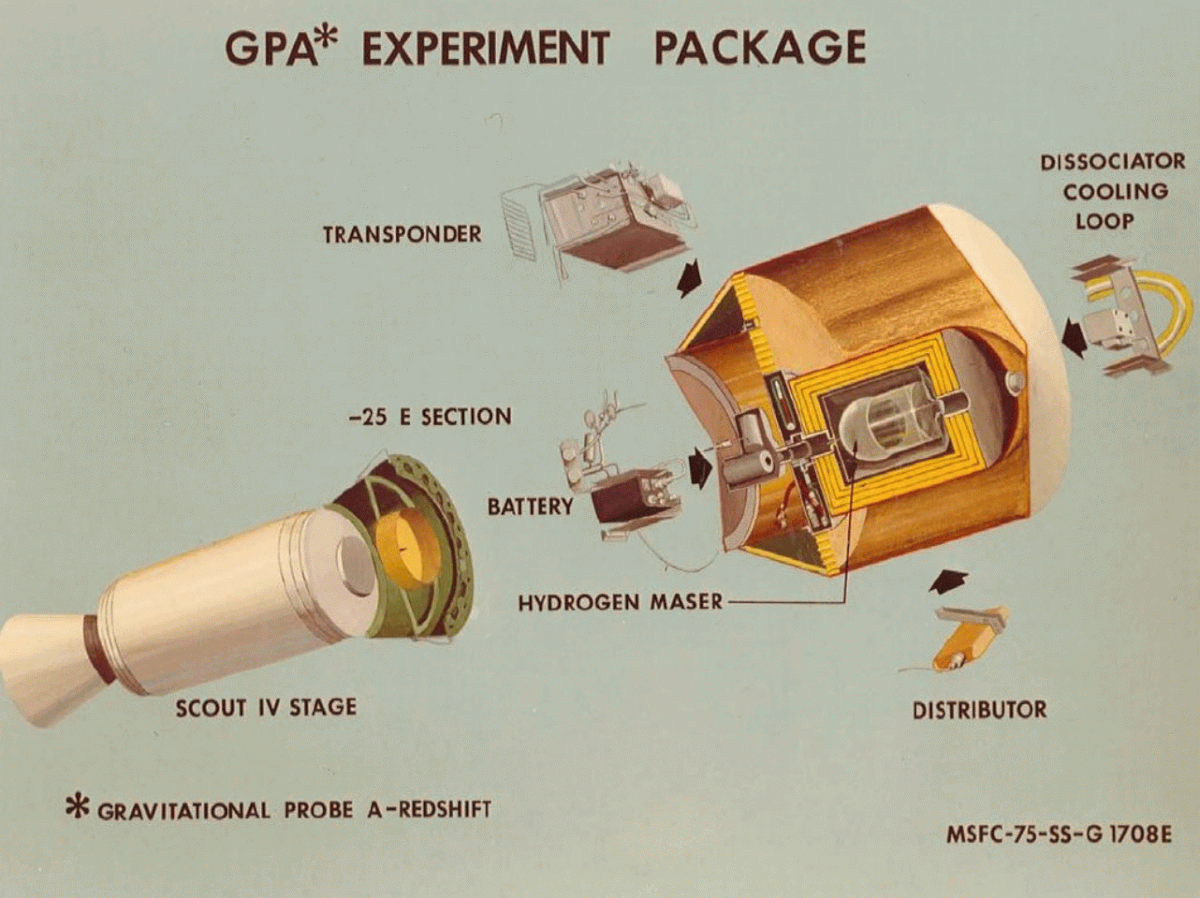
In 1976, NASA launched Gravity Probe A, a rocket carrying an ultra-precise hydrogen maser clock 10,000 kilometers into space. Comparing its ticking to an identical clock on the ground, the space clock ticked slightly faster, gaining a fraction of a second over time.
Diagram illustrating the components of the GPA* Experiment Package, which stands for Gravitational Probe A-Redshift. Benjamin Crowell, CC BY-SA 4.0, via Wikimedia Commons
This confirmed a core prediction of general relativity: time stretches and compresses based on local gravitational potential.
The gps fix
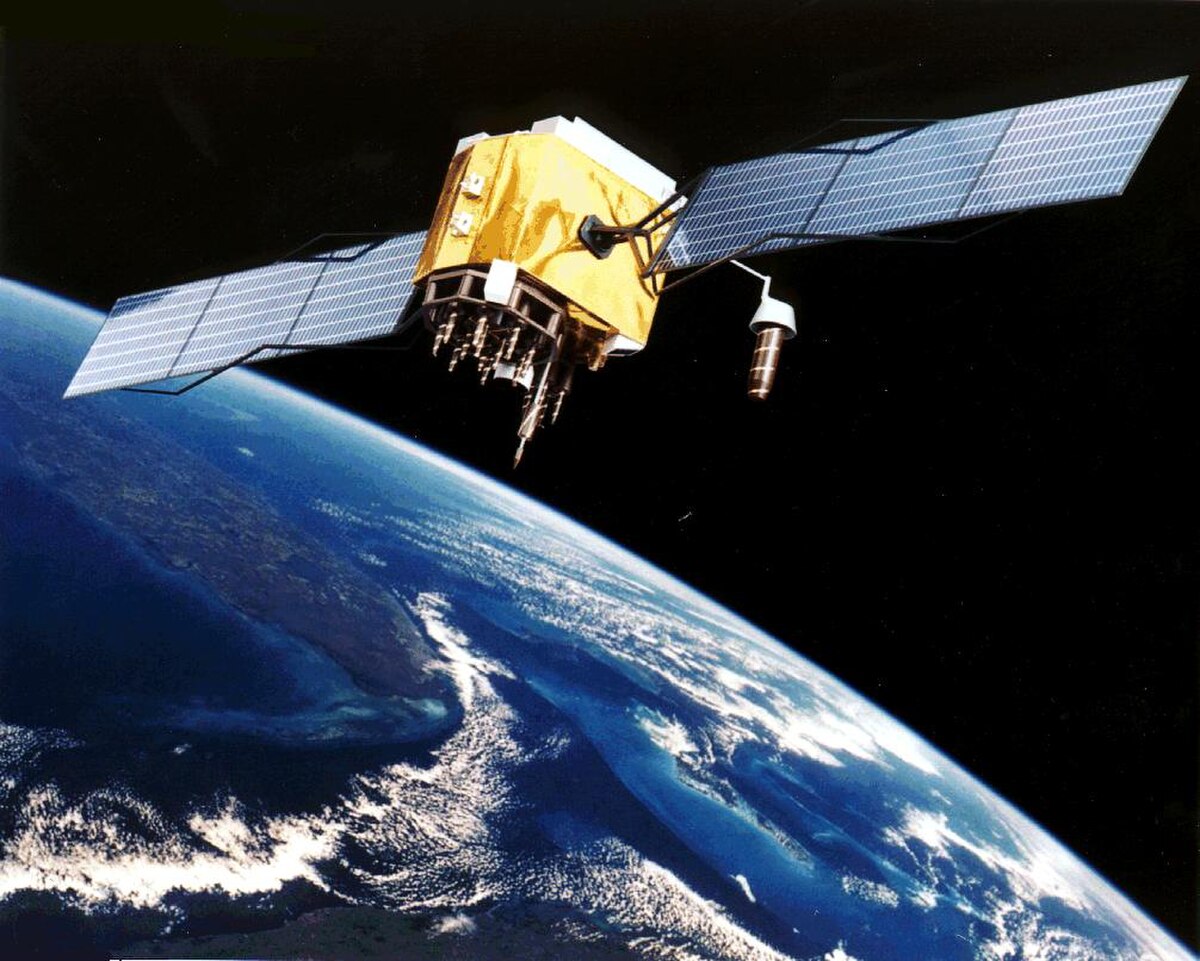
Because of spacetime warping, GPS satellites orbiting high above Earth must constantly adjust their internal clocks. If engineers ignored gravitational time dilation, your phone's location would drift by several miles within a single day.
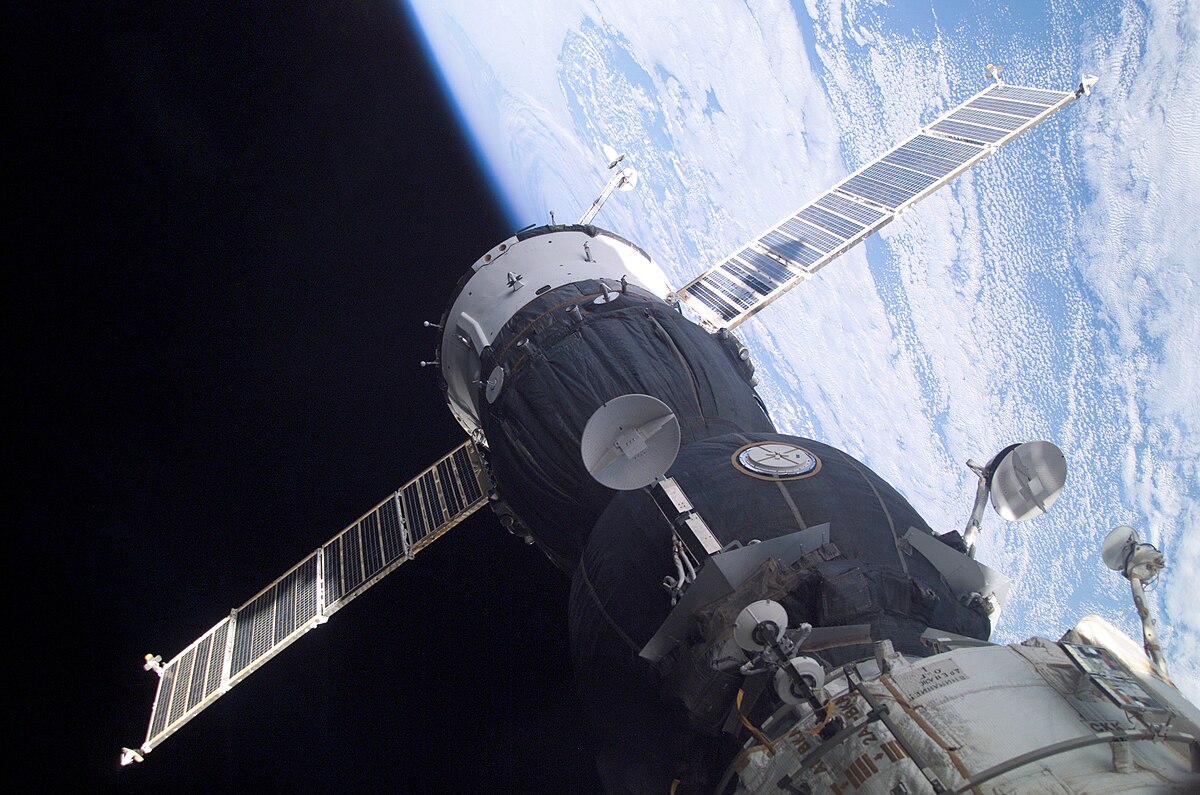
An artistic rendering of a GPS satellite in orbit above Earth, with its solar panels extended. NASA, Public domain, via Wikimedia Commons
Our modern navigation depends entirely on accounting for the fact that the sky lives in a slightly different time than the ground.
How gravity changes the passage of time
Earth's core is roughly 2.5 years younger than its surface because of gravitational time dilation. Albert Einstein first described this effect in 1907 as an outcome of relativity. Clocks positioned at a lower gravitational potential, meaning closer to a massive body, run slower than clocks positioned higher up.
Over the 4.6 billion years of Earth's existence, a clock set 9,000 meters above sea level would end up about 39 hours ahead of a clock at sea level. The difference occurs because mass curves spacetime, altering the passage of proper time for observers located at different points along that gravitational gradient.
How scientists proved time slows down
Physicists first confirmed gravitational time dilation directly in 1959 with the Pound-Rebka experiment. In 1976, NASA tested the effect over long distances by launching Gravity Probe A, which carried an atomic hydrogen maser clock 10,000 kilometers into space. The space clock ticked faster than an identical clock kept on the ground.
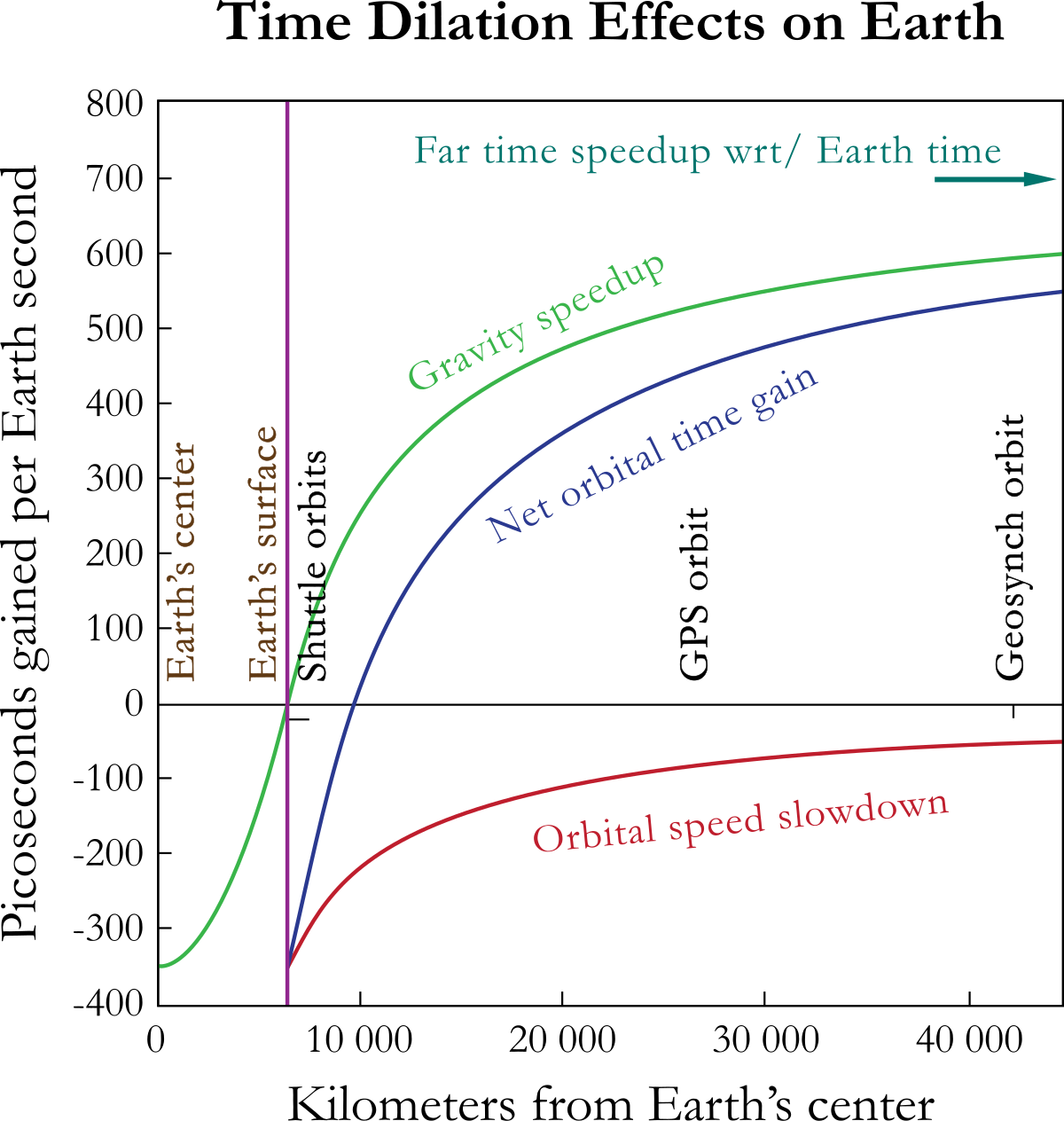
Satellites orbiting far above Earth's gravitational well experience faster clock rates that must be calibrated for navigation systems. Orbit_times.png: P. Fraundorf Derivative work: Spotsaurian (talk), CC BY-SA 3.0, via Wikimedia Commons
The phenomenon also links directly to gravitational redshift. When an object near a heavy mass emits light of a constant frequency, the slowdown of time causes a distant observer to measure that light at a lower frequency.
Play the lesson in edgi and the card is yours. It lands on your Map next to the ideas it connects to, and turns from matte to foil to gold as you learn more around it.
How large is gravitational time dilation on Earth?
Earth-bound experiments measure time differences in nanoseconds. Detectable gaps require extremely precise atomic clocks, large altitude differences, or billions of years of accumulation.
What is gravitational redshift?
Gravitational redshift is the shift of light toward lower frequencies when emitted from a region of strong gravity. Because time runs slower near the mass, an observer farther away sees the wave cycles arrive less frequently.