Special Relativity: why time ticks slower when you move
The Special Theory of Relativity is a physics theory describing the relationship between space and time for objects moving at constant speeds. It proves that time does not tick at the same rate for everyone, because moving clocks run slower than stationary ones. It also establishes that the speed of light in a vacuum is the absolute speed limit of the universe.
By the edgi team We find the most surprising true thing about an idea and build a 60-second lesson around it.
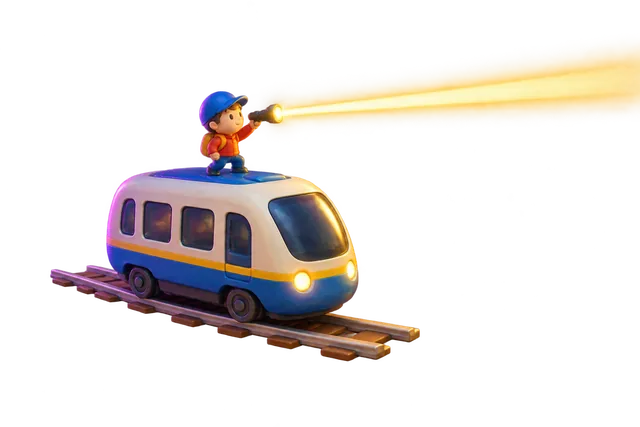
Imagine you are on a train going 50 mph and throw a ball at 10 mph. To a person on the ground, the ball moves at 60 mph. Light does not work that way. Whether you are standing still or moving at near-light speeds, light always passes you at the exact same speed.
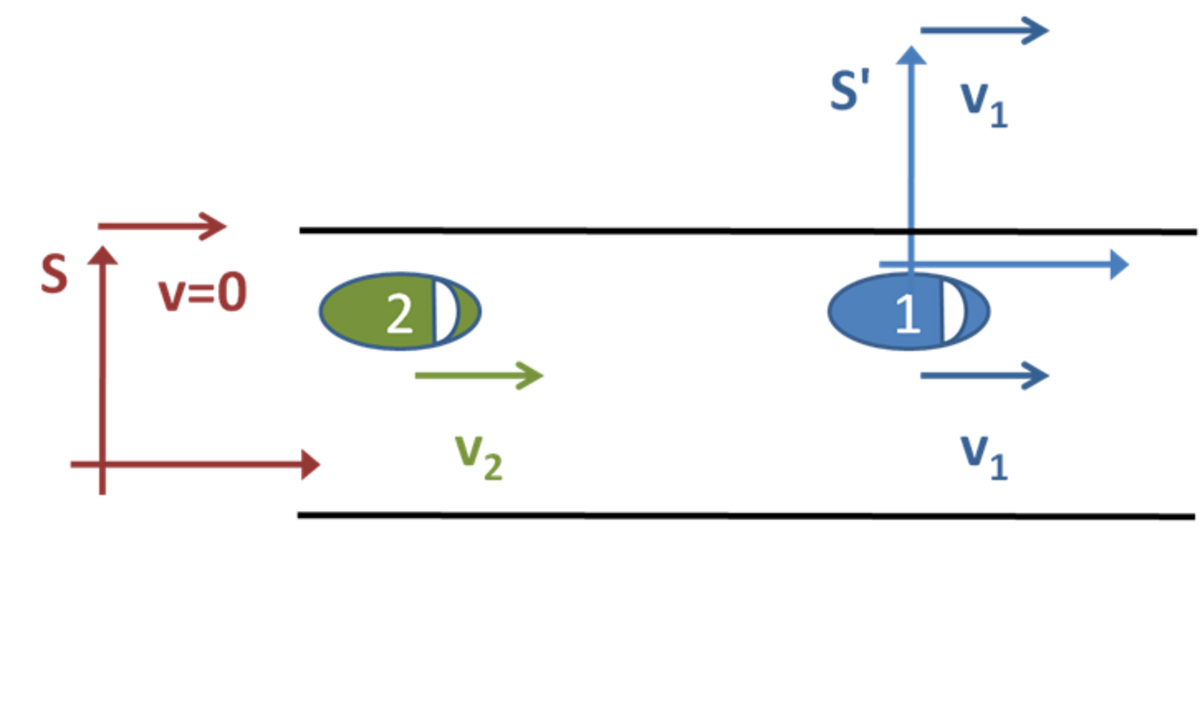
A diagram illustrating two cars moving at different but constant velocities, observed from two inertial frames of reference. Brews ohare, CC BY-SA 3.0, via Wikimedia Commons
Einstein realized that to keep that speed constant, something else had to give. That something was time itself.
The time warp
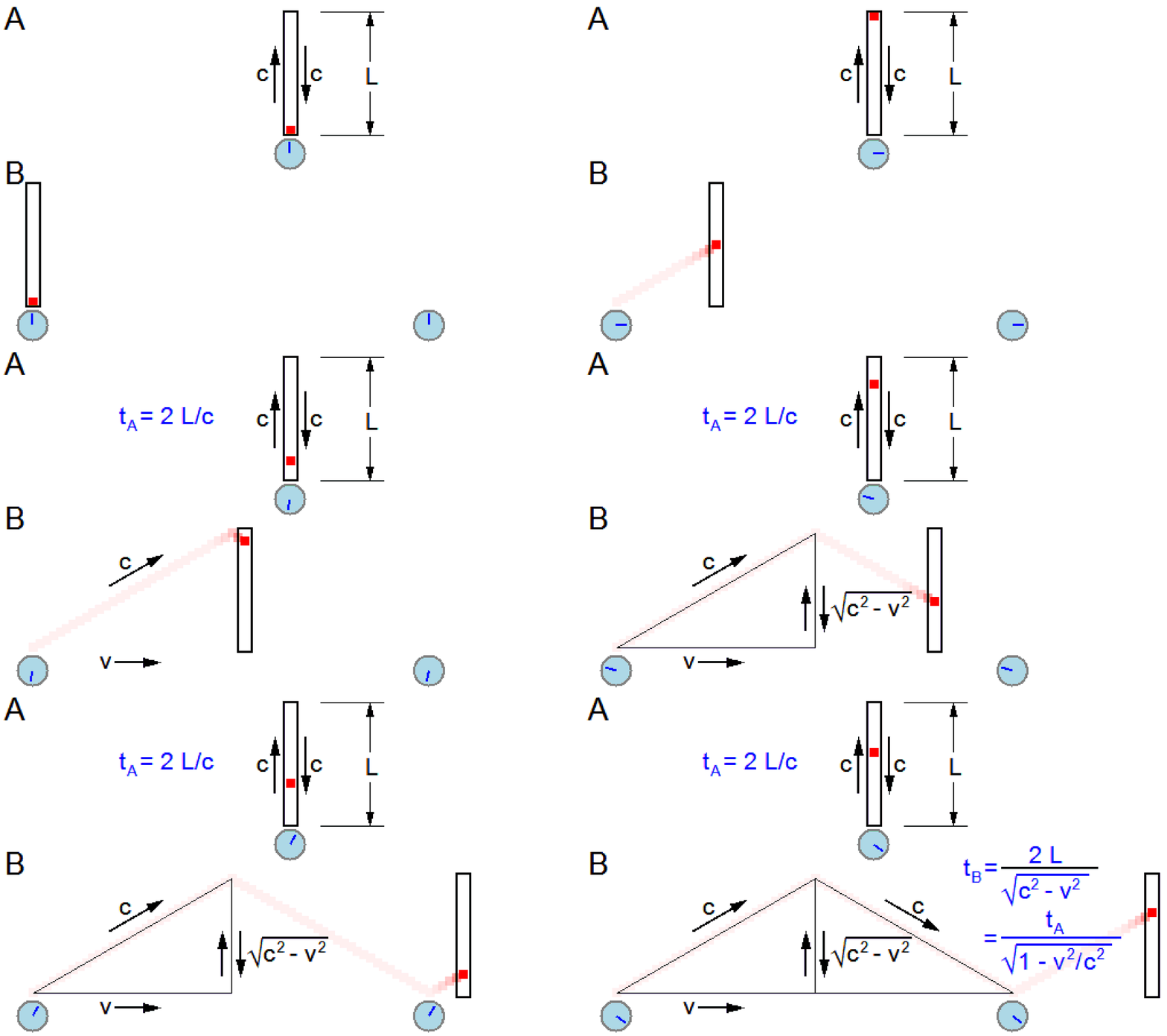
As you move faster through space, you move slower through time. This is called time dilation. It sounds like science fiction, but it is a measurable, daily reality.
Diagram illustrating a light-clock thought experiment to explain time dilation, labeled as Figure 4–3. Prokaryotic Caspase Homolog, CC BY-SA 4.0, via Wikimedia Commons
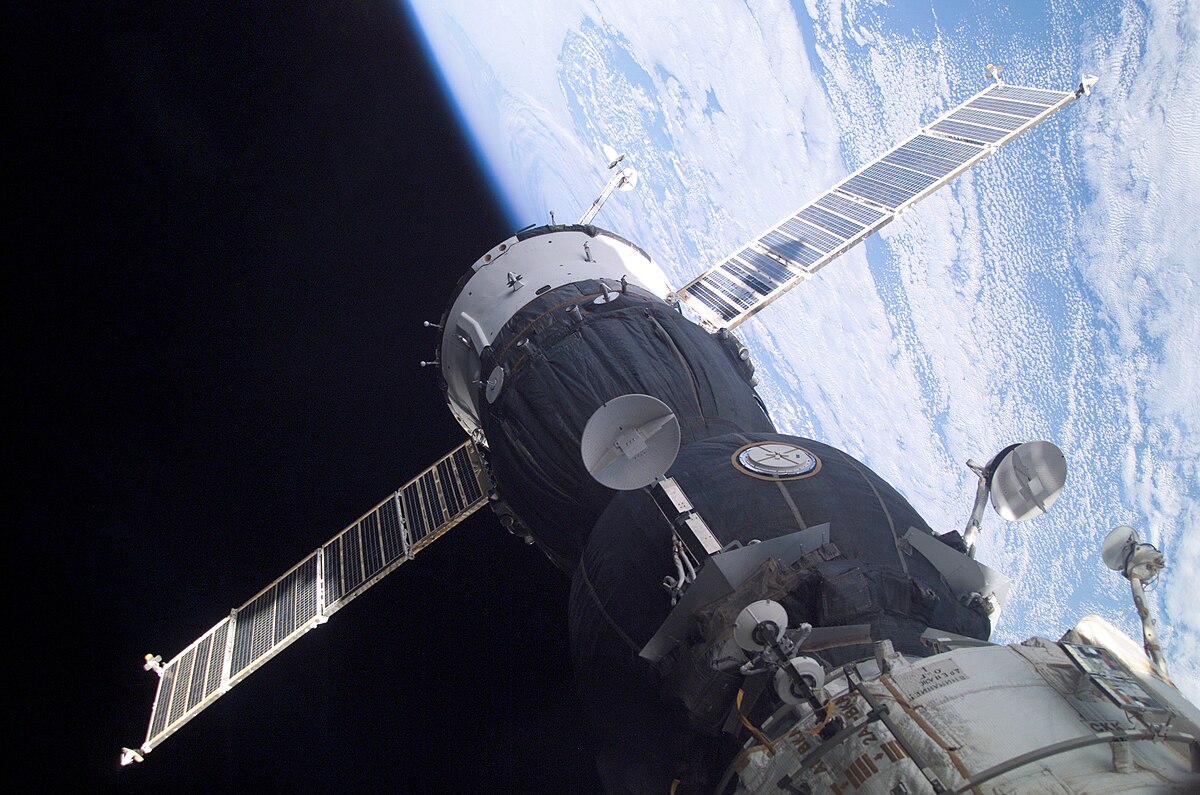
Astronauts on the International Space Station return to Earth about 0.005 seconds younger than they would have been if they had stayed on the ground.
The gps proof
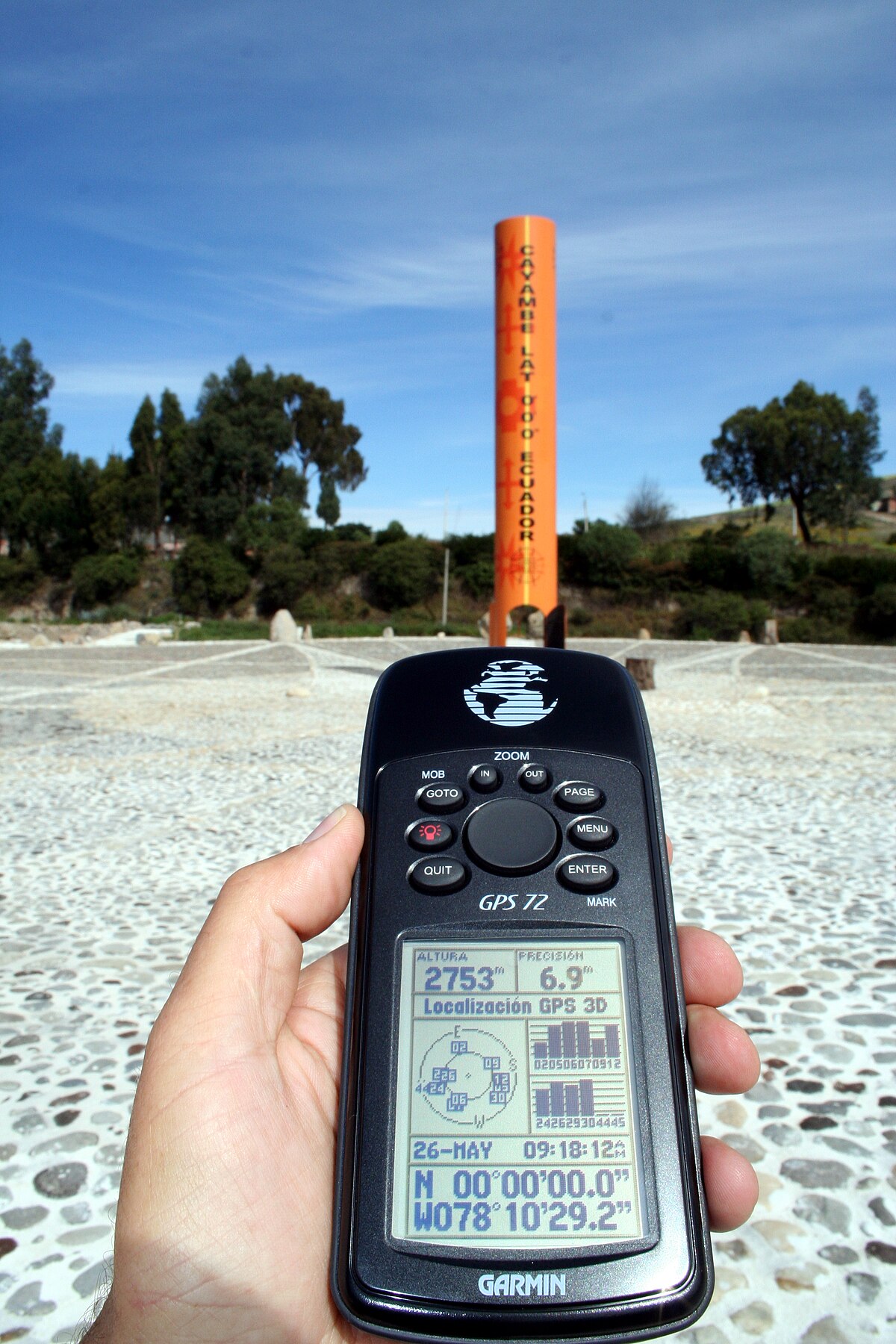
GPS satellites orbit the Earth at high speeds. Because of their velocity, their onboard atomic clocks tick at a different rate than clocks on the ground. If engineers did not use Einstein's equations to correct for this time drift, the GPS on your phone would drift by miles every single day.
Every time you use a map app, you are using a pocket-sized calculator that proves special relativity is real.
A hand holds a Garmin GPS 72 device displaying coordinates N 00°00'00.0" W 078°10'29.2", indicating the equator, with an orange monument in the background. Cristocobo, CC BY-SA 3.0, via Wikimedia Commons
The two rules behind the theory
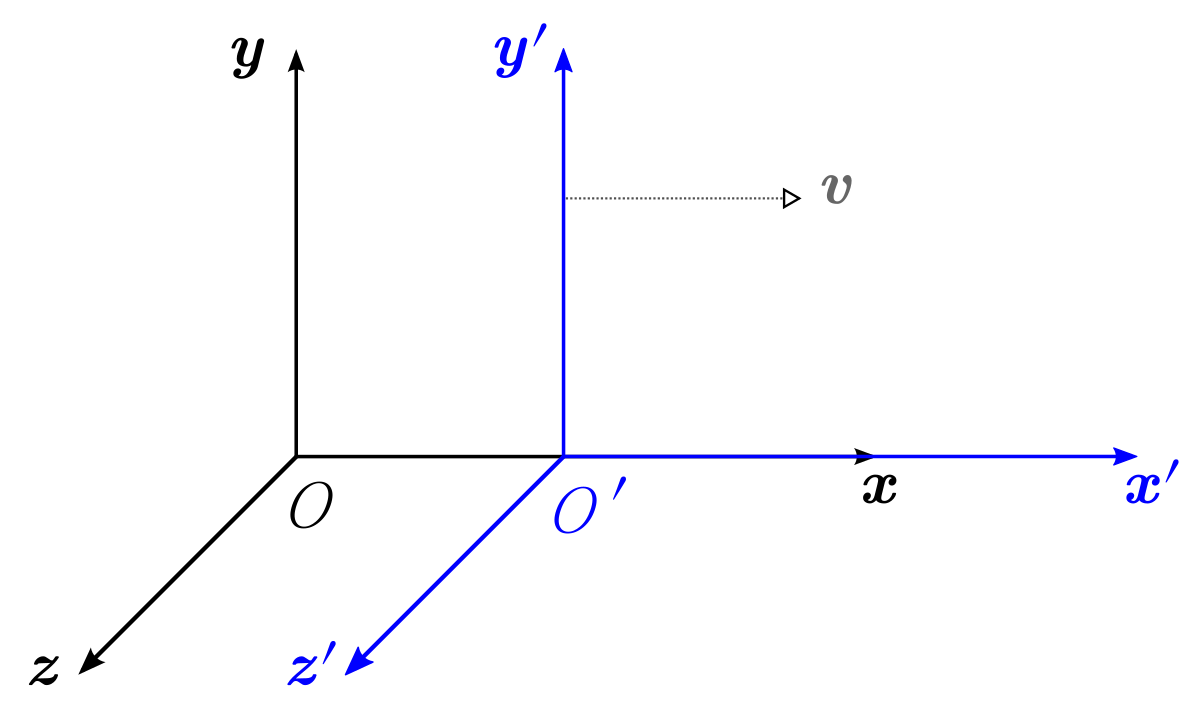
Albert Einstein built the entire theory in 1905 using only two starting rules, called postulates. The first rule is the principle of relativity, originally formulated by Galileo Galilei in 1632. It states that the laws of physics are identical in all inertial reference frames, which are viewpoints moving at constant velocity without accelerating.
Two reference frames moving relative to each other along the horizontal axis illustrate how different observers measure physical events. Krea, CC BY-SA 3.0, via Wikimedia Commons
The second rule states that the speed of light in a vacuum is always the same for all observers, regardless of how fast the light source or the observer is moving. If a train speeds toward a station, a light beam fired from the train travels past a person standing on the platform at the exact same speed as a light beam fired from the station itself. Because light speed cannot change to accommodate motion, space and time must change instead.
What happens at relativistic speeds
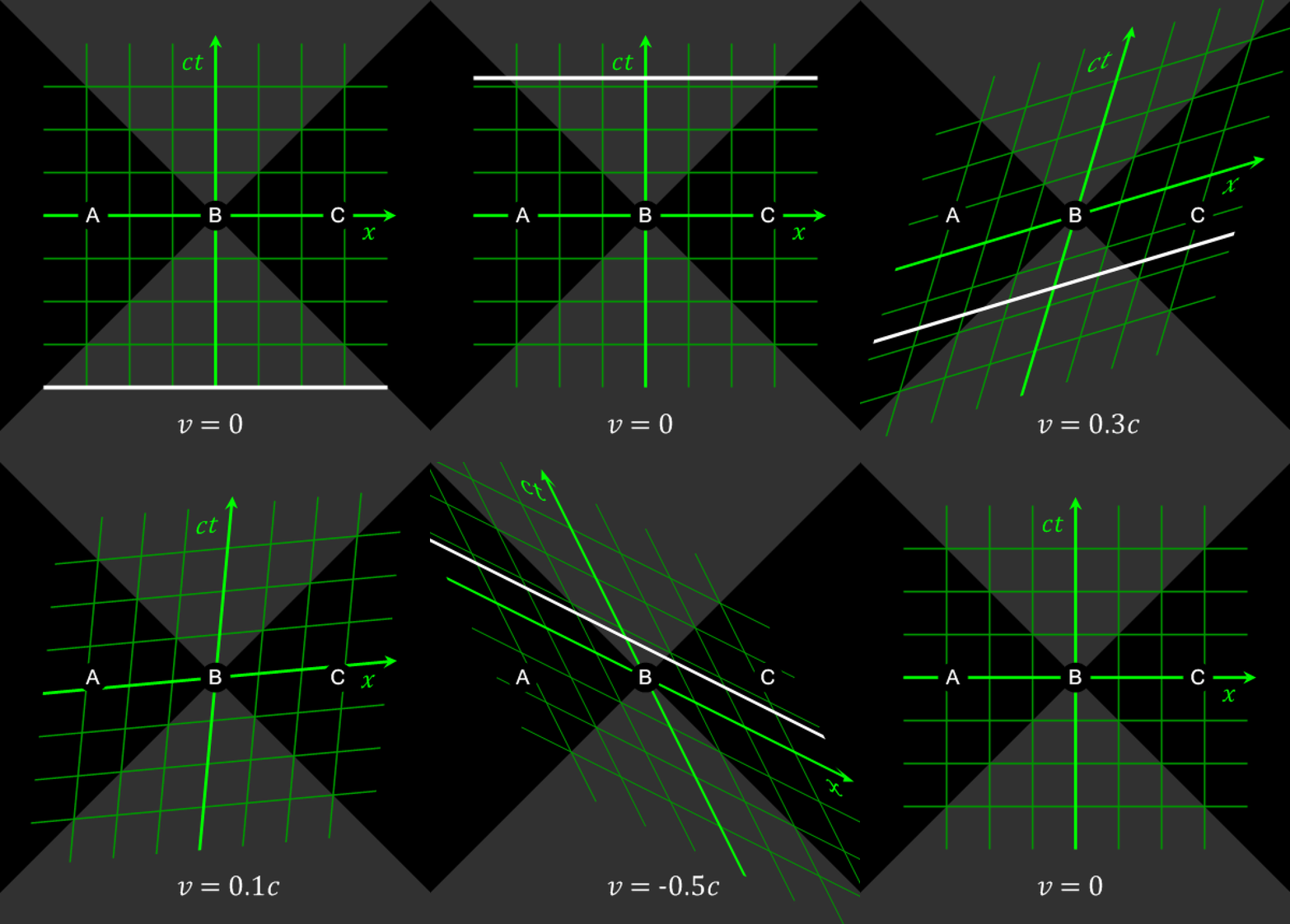
Speeds close to the speed of light are known as relativistic speeds, and they produce strange physical changes. One effect is length contraction, where the distance between two points shrinks from the perspective of an observer in motion. Another is the relativity of simultaneity: two events that occur at the exact same instant for one observer happen at different times according to a moving observer.
The sequence of three distinct events changes order when observed from reference frames traveling at different speeds. User:Acdx, CC BY-SA 4.0, via Wikimedia Commons
Special relativity also replaces standard Euclidean geometry with Lorentzian geometry. In this framework, space and time combine into intervals where velocities no longer add up by simple addition. When combined with other physical laws, these principles produce the formula E = mc², demonstrating that mass and energy are equivalent.
Test yourself
In special relativity, why can observers measure the same light speed?
Their measurements of space and time adjust. Light's speed is the same for observers in relative motion, so measurements of space and time differ rather than light speeds adding like a thrown ball's.
For special relativity, what must GPS account for as satellites move quickly?
Velocity-related clock-rate differences. Relative to Earth, fast-moving satellite clocks tick at a different rate. GPS corrects for that drift so location calculations stay accurate.
For special relativity, what must GPS account for as satellites move quickly?
Velocity-related clock-rate differences. Relative to Earth, fast-moving satellite clocks tick at a different rate. GPS corrects for that drift so location calculations stay accurate.
Play the lesson in edgi and the card is yours. It lands on your Map next to the ideas it connects to, and turns from matte to foil to gold as you learn more around it.
What is the difference between special relativity and general relativity?
Special relativity only applies to observers moving at constant speeds in inertial frames without acceleration. In 1916, Einstein expanded the theory into general relativity to include acceleration and the effects of gravity.
Why do visual observations of fast objects cause confusion?
Information about distant objects cannot travel faster than the speed of light. Because of this speed limit, visual sightings always record events that happened in the past rather than what is happening at the present instant.