Hedge FundsAiming to profit whether markets rise or fall
A hedge fund is a private pool of money from wealthy individuals and institutions that trades liquid investments using complex tools like borrowed money and short selling. Unlike traditional funds that mostly rise and fall with the market, hedge funds aim for an absolute return in both rising and falling markets. They operate with far fewer restrictions than public mutual funds, and typically charge a 2% management fee plus 20% of the gains.
By the edgi team We find the most surprising true thing about an idea and build a 60-second lesson around it.
Most investors are like farmers: they pray for sun and good crops. If the market crashes, they lose money. Hedge funds are designed to be the opposite. Their goal is to make money whether the market goes up or down.
A wide shot of a golden wheat field in Deggendorf, Germany, under a partly cloudy sky. Max Ronnersjö, CC BY-SA 3.0, via Wikimedia Commons
The name comes from hedging, a strategy of balancing bets to minimize risk while maximizing the opportunity to profit from market movement.
The tools of the trade
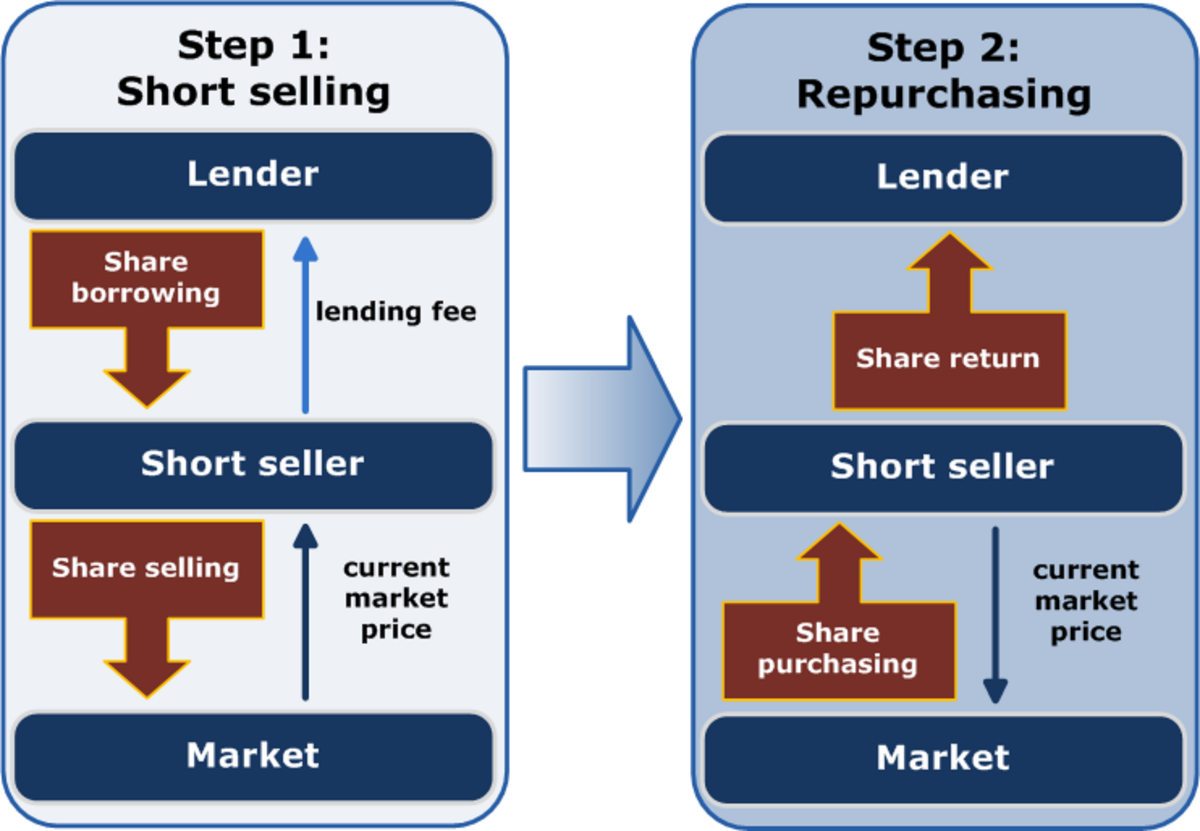
They use short selling, which means selling borrowed stock you do not own, hoping to buy it back later at a lower price. They also use massive leverage, which is just a fancy term for borrowing money to amplify the size of your bets.
Diagram illustrating the two steps of short selling in finance: "Short selling" and "Repurchasing." Step 1 shows a "Lender" providing "Share borrowing" to a "Short seller" for a "lending fee," who… Grochim, CC BY-SA 3.0, via Wikimedia Commons
If you are right, you win big. But if you are wrong, that leverage turns a small mistake into a catastrophe.
The systemic shock
In 1998, a fund called Long-Term Capital Management proved just how dangerous this game can get. Their genius mathematical models predicted market trends perfectly, until the Russian government unexpectedly defaulted on its debt.
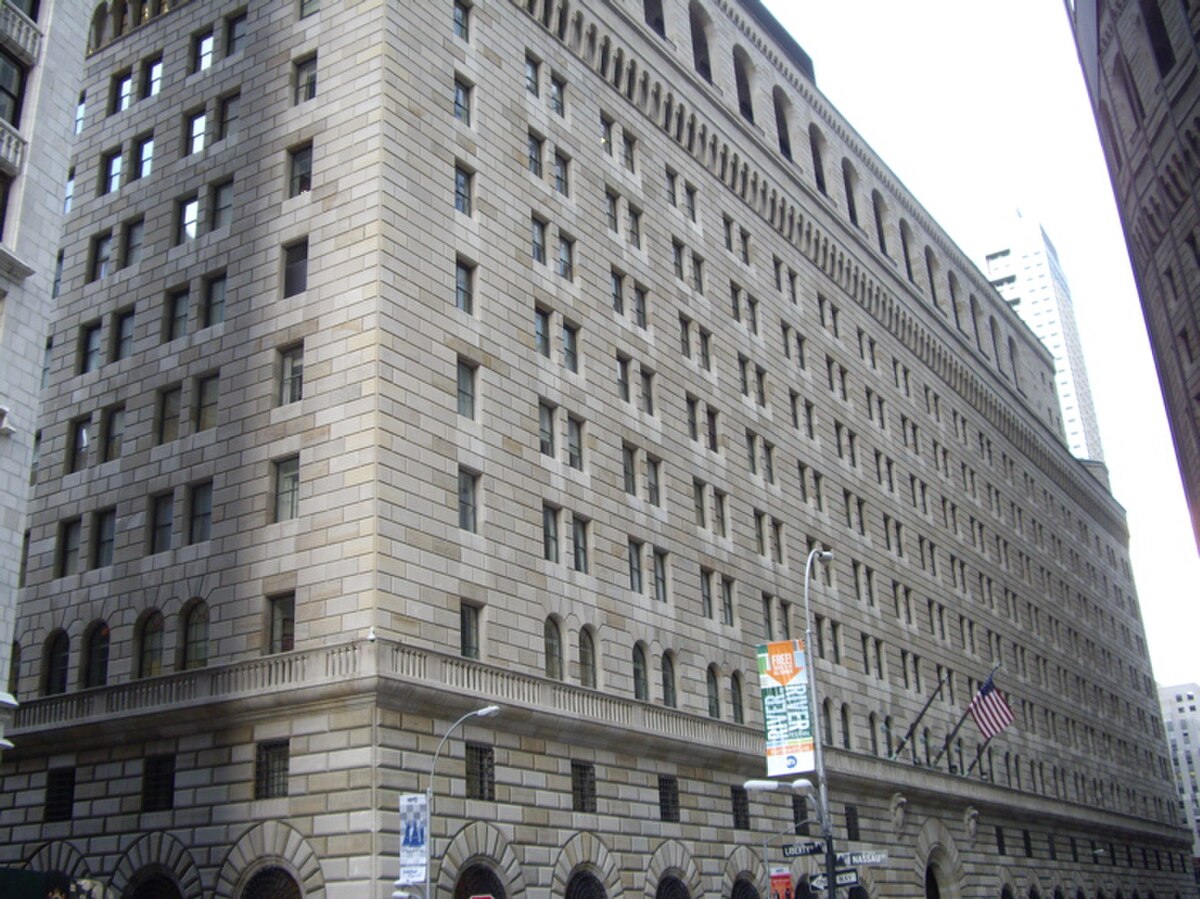
The fund collapsed so hard it threatened systemic risk to the entire global financial system, forcing the Federal Reserve to organize a massive emergency bailout.
Exterior view of the Federal Reserve Bank of New York building at 33 Liberty Street, a large stone building with many windows and an American flag flying outside. Dmadeo, CC BY-SA 3.0, via Wikimedia Commons
How hedge funds make money in any market
Traditional retail funds buy stocks and hope the overall market goes up. Early hedge funds balanced this risk by holding some stocks while simultaneously short selling others. Short selling means borrowing a stock and immediately selling it, hoping its price drops so you can repurchase it cheaper later and pocket the difference.
Modern funds also amplify their positions using leverage, which means borrowing money to take far bigger trading positions than their cash alone allows. They trade derivative instruments and liquid assets, branching into quantitative trading, distressed debt, fixed income, and credit arbitrage. If a fund manager makes the right call, leverage magnifies the gains, but bad bets turn into catastrophic losses just as fast.
The 2-and-20 fee model and who gets to invest
Sociologist Alfred W. Jones is credited with coining the phrase hedged fund, creating the first hedge fund structure in 1949 and developing the classic 2-and-20 compensation structure. Under this model, the fund manager typically takes an annual management fee of 2% of the fund's net asset value, along with a 20% performance fee on any profits earned during the year.
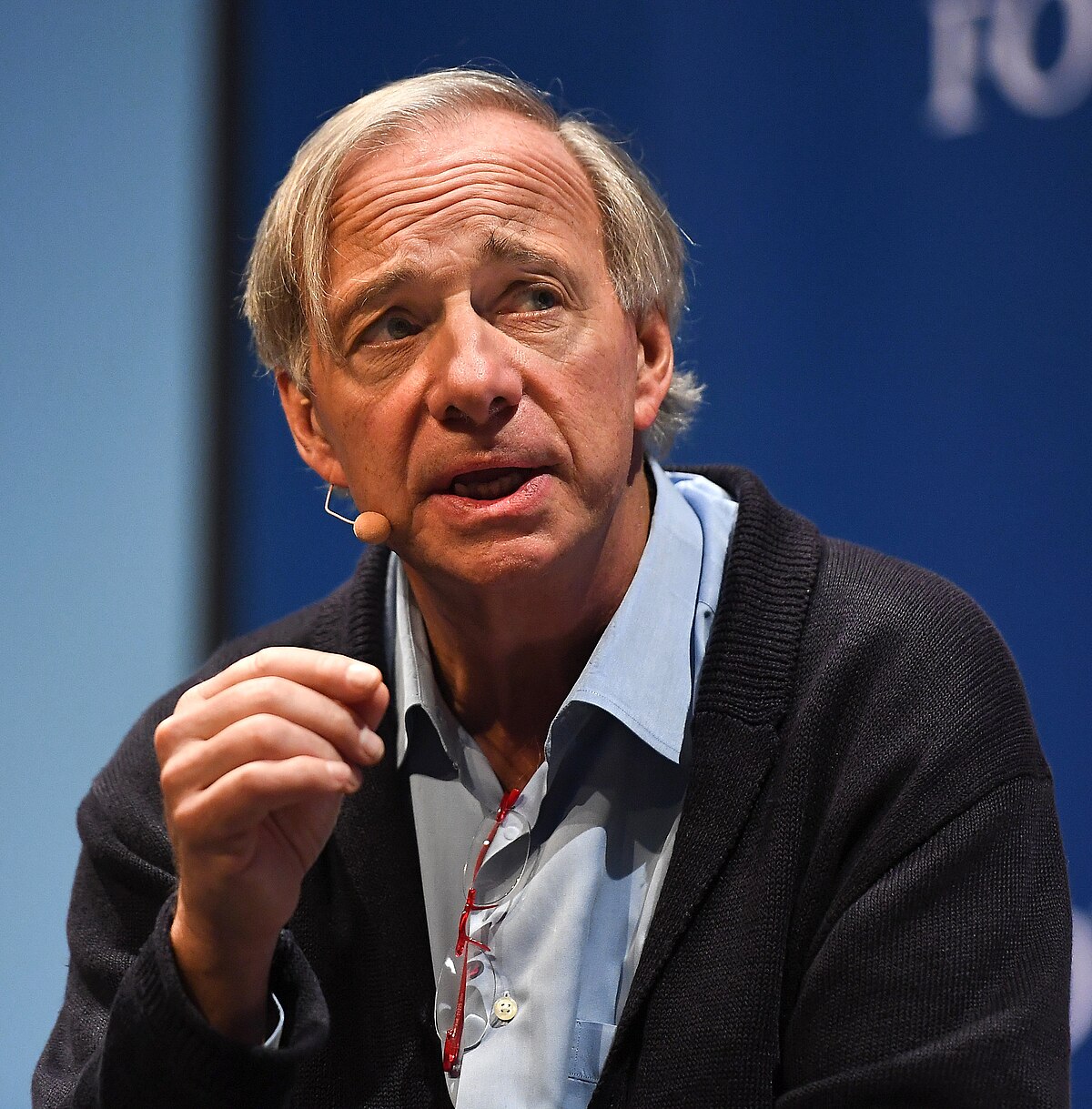
Ray Dalio founded Bridgewater Associates, which had the most assets under management of any hedge fund firm in 2011. Web Summit, CC BY 2.0, via Wikimedia Commons
United States regulations require hedge funds to be marketed only to institutional investors, such as pension funds and endowments, and to high-net-worth individuals. As of February 2011, institutional investors accounted for 61% of all hedge fund capital worldwide.
How hedge funds differ from private equity
Both hedge funds and private equity funds cater to elite investors, but they handle their capital very differently. Private equity funds lock up money in illiquid companies and return capital only after several years. Hedge funds are generally open-ended pools that trade relatively liquid assets.
This liquid structure typically allows hedge fund investors to add or withdraw money periodically based on the fund's net asset value. However, during systemic panics like the 2008 financial crisis, many funds restricted investor withdrawals.
Test yourself
Why would a large fund with hundreds of investors accept only qualified purchasers?
It lets the fund grow without registering. A fund limited to qualified purchasers can exceed 100 investors and still avoid registering as an investment company, which keeps its regulatory burden low.
What does the accredited investor test mainly measure?
Your ability to absorb losses. The test looks at income or net worth. Regulators use wealth as a stand-in for the ability to absorb a total loss and to pay for advice.
A fund borrows 4x its capital and its assets fall 10%. What happens?
It loses about 50% of its capital. With $500 million of assets on $100 million of capital, a 10 percent drop costs $50 million, which is half the capital. Leverage multiplies the loss relative to what investors put in.
Play the lesson in edgi and the card is yours. It lands on your Map next to the ideas it connects to, and turns from matte to foil to gold as you learn more around it.
The industry held an estimated $1.93 trillion in 2008. After a drop during the financial crisis, it reached a record $2.13 trillion in April 2012 and around $3.8 trillion by 2021.
Do hedge fund interventions impact real companies?
Yes. A 2015 study showed that hedge fund activism led to real improvements in corporate asset allocation and higher labor productivity at target firms, though the gains did not always lead to higher wages or more hours for workers.
Which fund was the first hedge fund?
It depends who you ask. Warren Buffett cited the Graham-Newman Partnership, run by Benjamin Graham and Jerry Newman, as an early hedge fund, while Alfred W. Jones is credited with creating the first hedge fund structure in 1949.